Series Six In progress

Tech CEOs

Every other set here cards the person who wrote the thing. This one cards the person who decided it would be built, priced, staffed and — the part this site actually cares about — whether it would be given away.

Being admired is not the bar and neither is being liked. Gates is on this list for the letter that called copying software theft. Huang is on it for a driver the kernel maintainers spent a decade complaining about. Both of them also shipped things nothing else in this collection would exist without.

Roster drafted50/50
Cards locked50/50
Portraits from a verified photo50/50
The working roster

50 names, roughly in the order they took charge

Open the scouting report for the sources behind each claim, or go to a card's own page. Nothing here is final until the set is frozen.

001Legendary
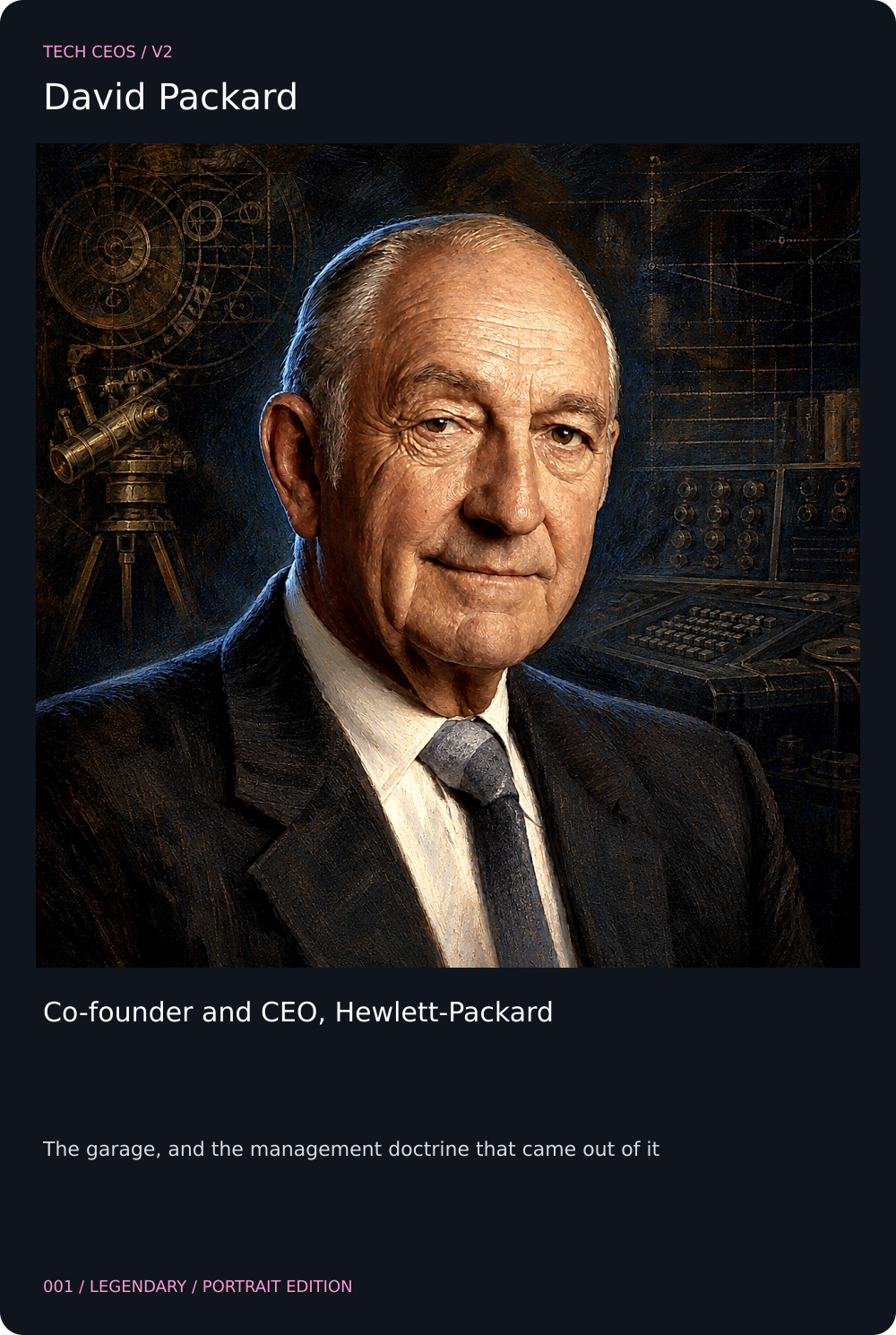
David Packard card front
David PackardCo-founder and CEO, Hewlett-PackardThe garage, and the management doctrine that came out of it
InstrumentsComputingManagement
USA1939–199690

Started HP in a Palo Alto garage in 1939 with Bill Hewlett and $538, and grew it into the template every Valley company copied: engineers running engineering, profit sharing, and an across-the-board pay cut rather than layoffs in a downturn. He set the practice down late in life as The HP Way. The garage is now a California historical landmark.

Locked inCard page
002Legendary
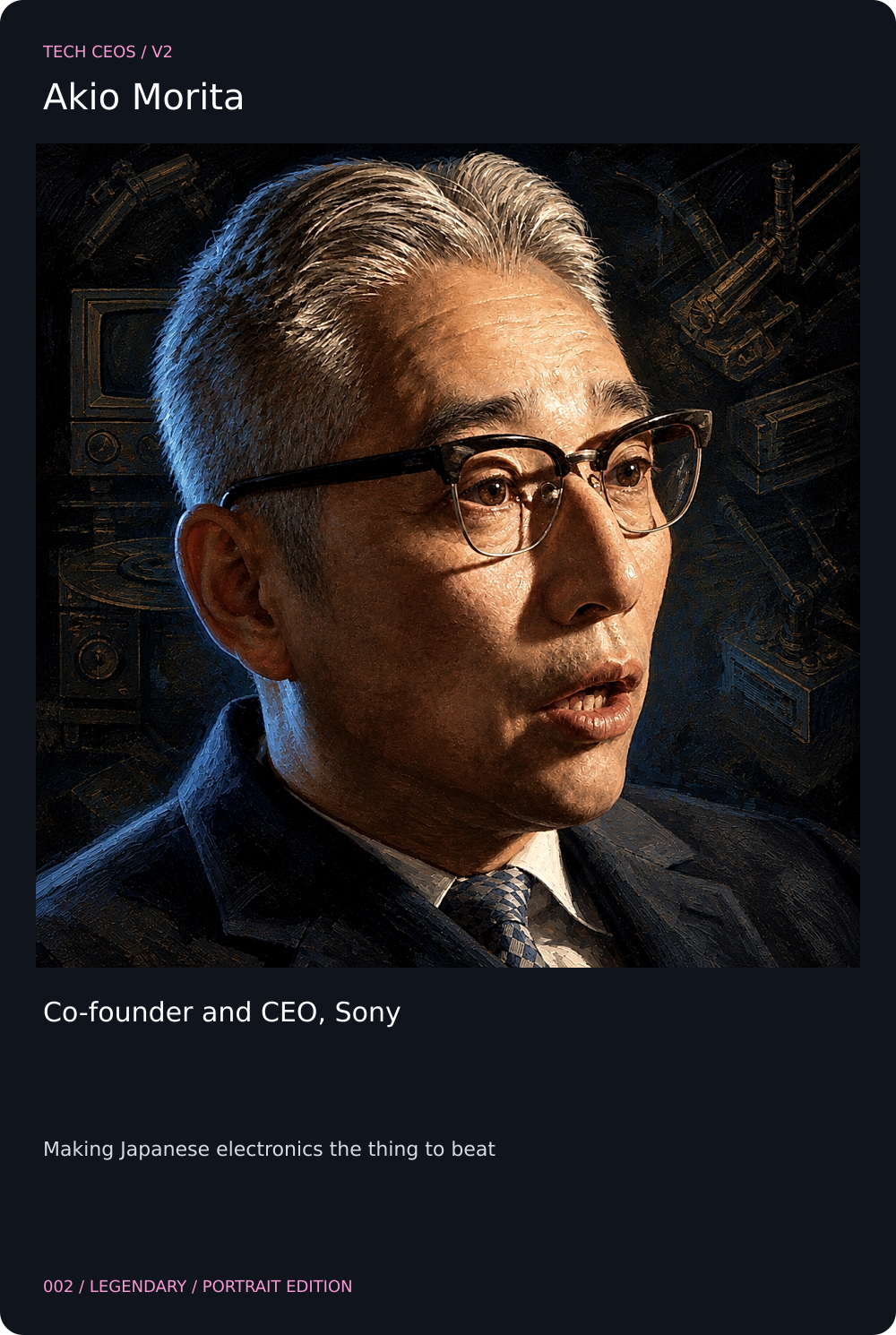
Akio Morita card front
Akio MoritaCo-founder and CEO, SonyMaking Japanese electronics the thing to beat
Consumer electronicsManufacturingGlobal brands
Japan1946–199489

Co-founded Sony in the ruins of postwar Tokyo and spent forty years insisting a Japanese company could sell to the world under its own name rather than someone else’s label. Pushed the transistor radio, the Trinitron and, over his own engineers’ objections, the Walkman, a tape player with no record function that sold hundreds of millions. He also lost the format war with Betamax.

Locked inCard page
003Legendary
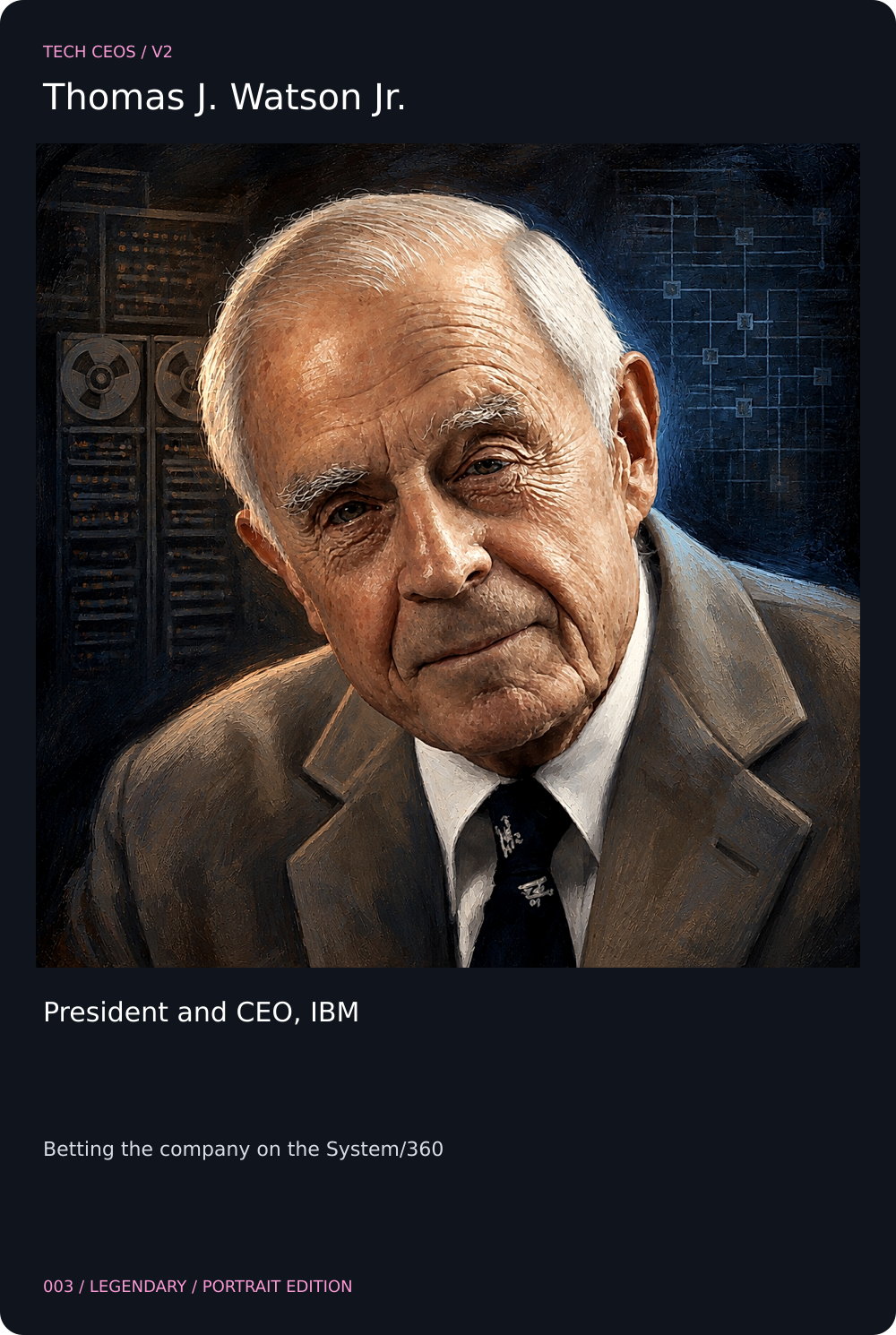
Thomas J. Watson Jr. card front
Thomas J. Watson Jr.President and CEO, IBMBetting the company on the System/360
MainframesCompatibilityCorporate computing
USA1952–197192

Took over his father’s punched-card company and moved it into electronic computing over considerable internal objection. The System/360, announced in 1964 after a development effort usually costed at around $5 billion, was the bet: one architecture spanning the whole product line, so a customer’s software survived the next hardware purchase. Backwards compatibility as a commercial strategy starts here, and mainframes running 360-descended code are still in production sixty years later.

Locked inCard page
004Epic
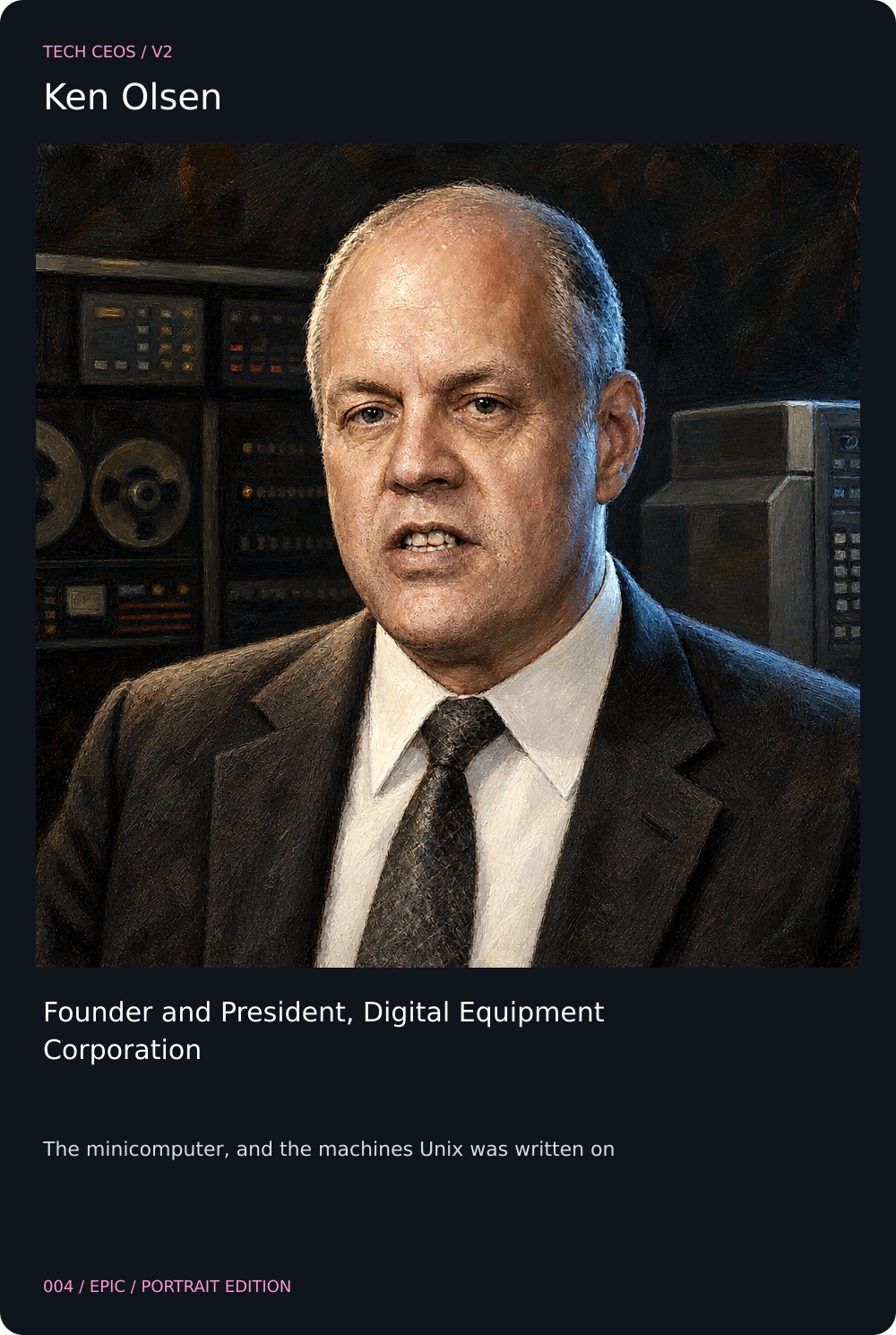
Ken Olsen card front
Ken OlsenFounder and President, Digital Equipment CorporationThe minicomputer, and the machines Unix was written on
MinicomputersPDPVAX
USA1957–199286

Founded DEC in 1957 and built computers people could put their hands on, at a time when a computer meant a room you booked time in. The PDP-7 and PDP-11 are where Unix and C were written; the VAX and VMS ran a generation of university and research computing. He also spent the 1980s dismissing the personal computer, and DEC was sold to Compaq six years after he left.

Locked inCard page
005Legendary
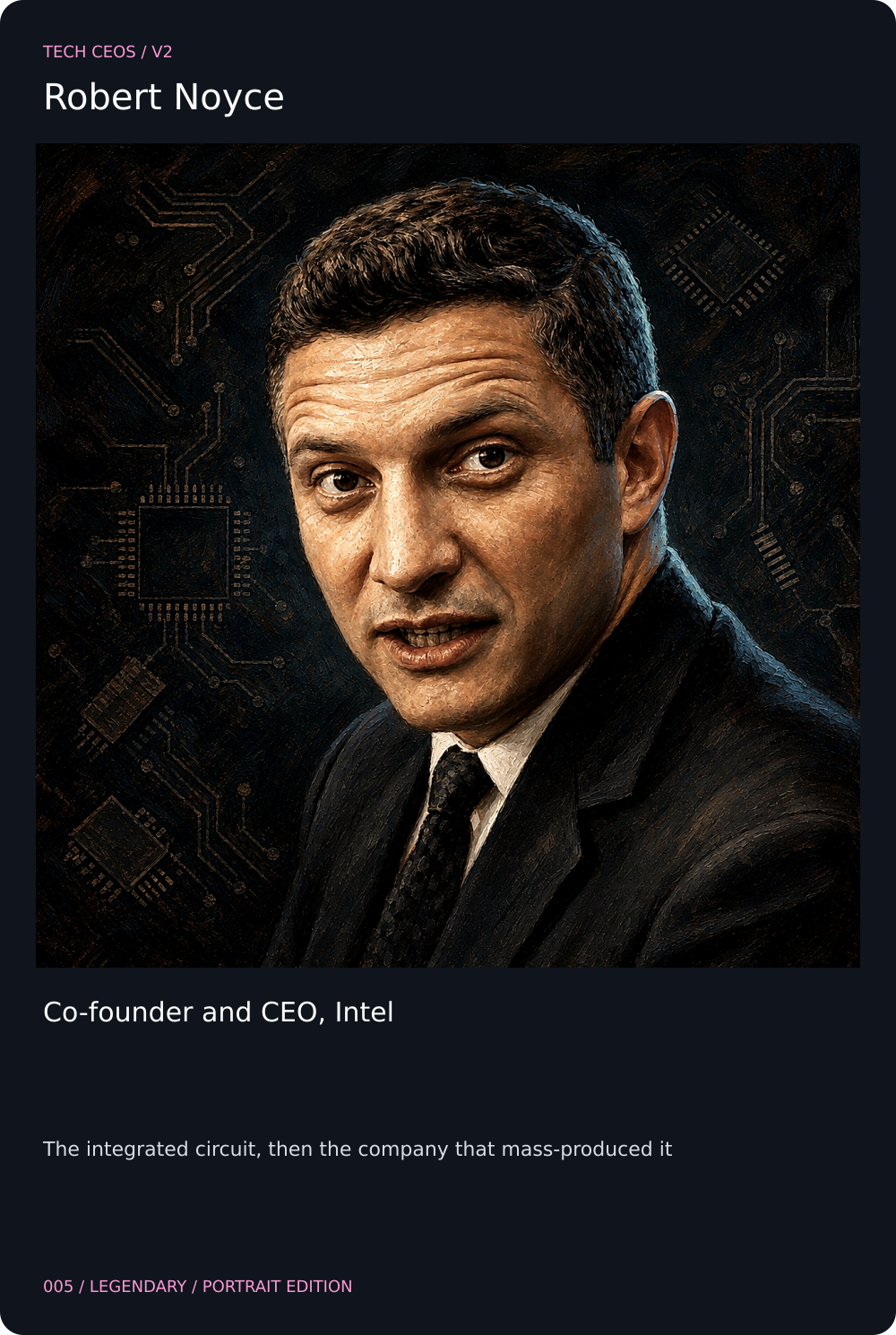
Robert Noyce card front
Robert NoyceCo-founder and CEO, IntelThe integrated circuit, then the company that mass-produced it
SemiconductorsIntegrated circuitsFounding
USA1957–199093

Co-invented the silicon integrated circuit at Fairchild, independently of Jack Kilby at Texas Instruments, then co-founded Intel with Gordon Moore in 1968 to build memory and, later, microprocessors. He ran it with the open-plan, no-reserved-parking informality that became the industry’s house style. He was called the Mayor of Silicon Valley, and the eight who walked out of Shockley Semiconductor with him seeded most of what followed.

Locked inCard page
006Legendary
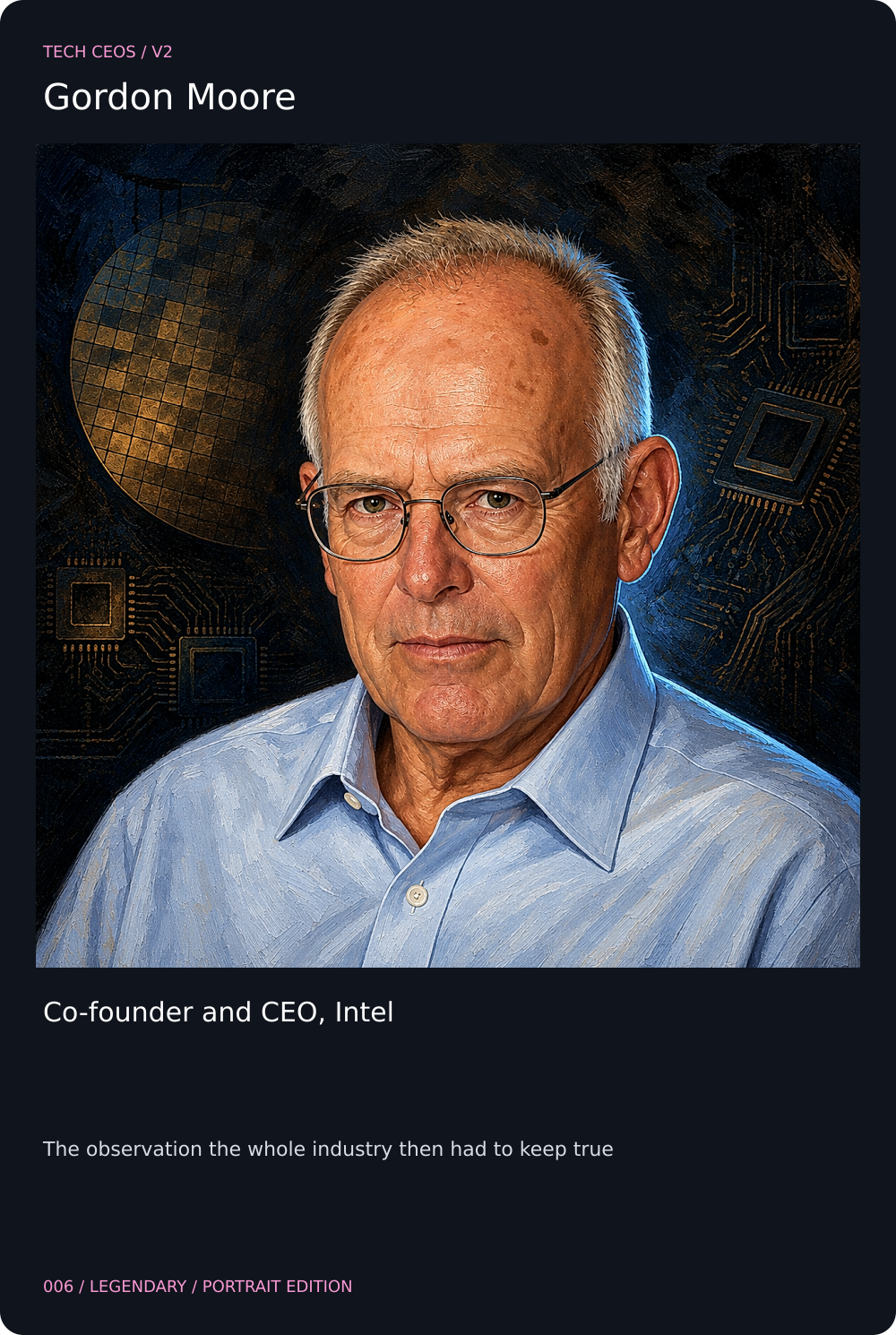
Gordon Moore card front
Gordon MooreCo-founder and CEO, IntelThe observation the whole industry then had to keep true
SemiconductorsProcess technologyForecasting
USA1965–202392

Wrote a short article for Electronics magazine in 1965 noting that the number of components on a chip had been doubling on a regular cadence and would keep doing so. Moore’s law was a market observation that turned into a roadmap the semiconductor industry then organised itself around, decade after decade. He was Intel’s CEO from 1975 to 1987, through the period that made the microprocessor the company’s business.

Locked inCard page
007Iconic
Bill Gates card front
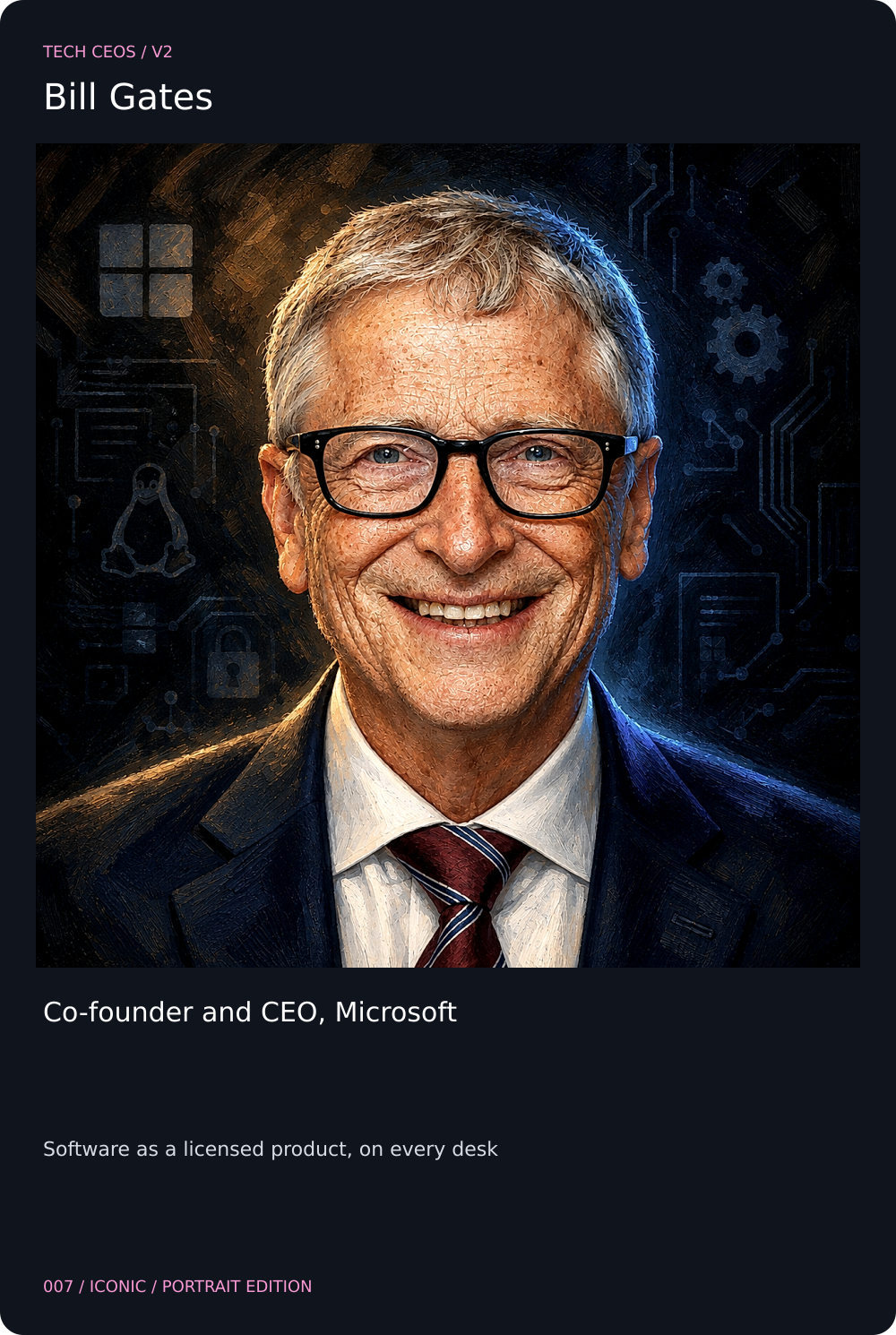
Bill GatesCo-founder and CEO, MicrosoftSoftware as a licensed product, on every desk
Operating systemsLicensingApplications
USA1975–200897

Understood before anyone that the money was in the software, not the machine, and structured the 1980 MS-DOS deal with IBM to keep the right to license it to everybody else. His 1976 Open Letter to Hobbyists, which called copying Altair BASIC theft, is the document free software spent twenty years arguing with. Microsoft was found to have violated the Sherman Act in 2000.

Locked inCard page
008Iconic
Steve Jobs card front
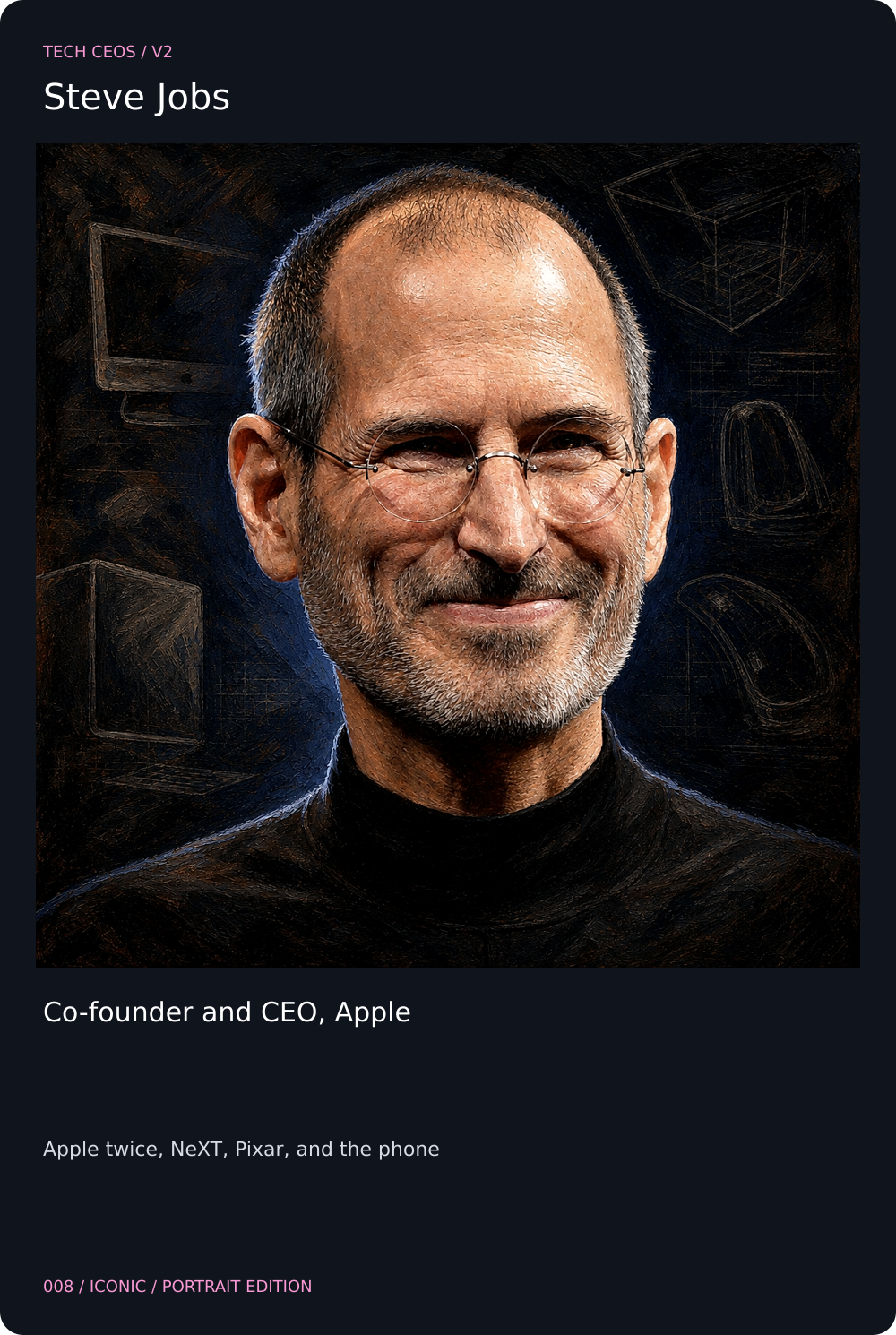
Steve JobsCo-founder and CEO, AppleApple twice, NeXT, Pixar, and the phone
Personal computingProduct designConsumer devices
USA1976–201199

Co-founded Apple in 1976, was forced out in 1985, founded NeXT, bought Pixar, and returned in 1997 to a company close to insolvency. What came back with him mattered technically as well as commercially: NeXTSTEP became macOS and iOS, putting a BSD-derived Unix under hundreds of millions of consumer machines, and Apple’s KHTML fork became WebKit. The iPhone reset what a computer is.

Locked inCard page
009Legendary
Larry Ellison card front
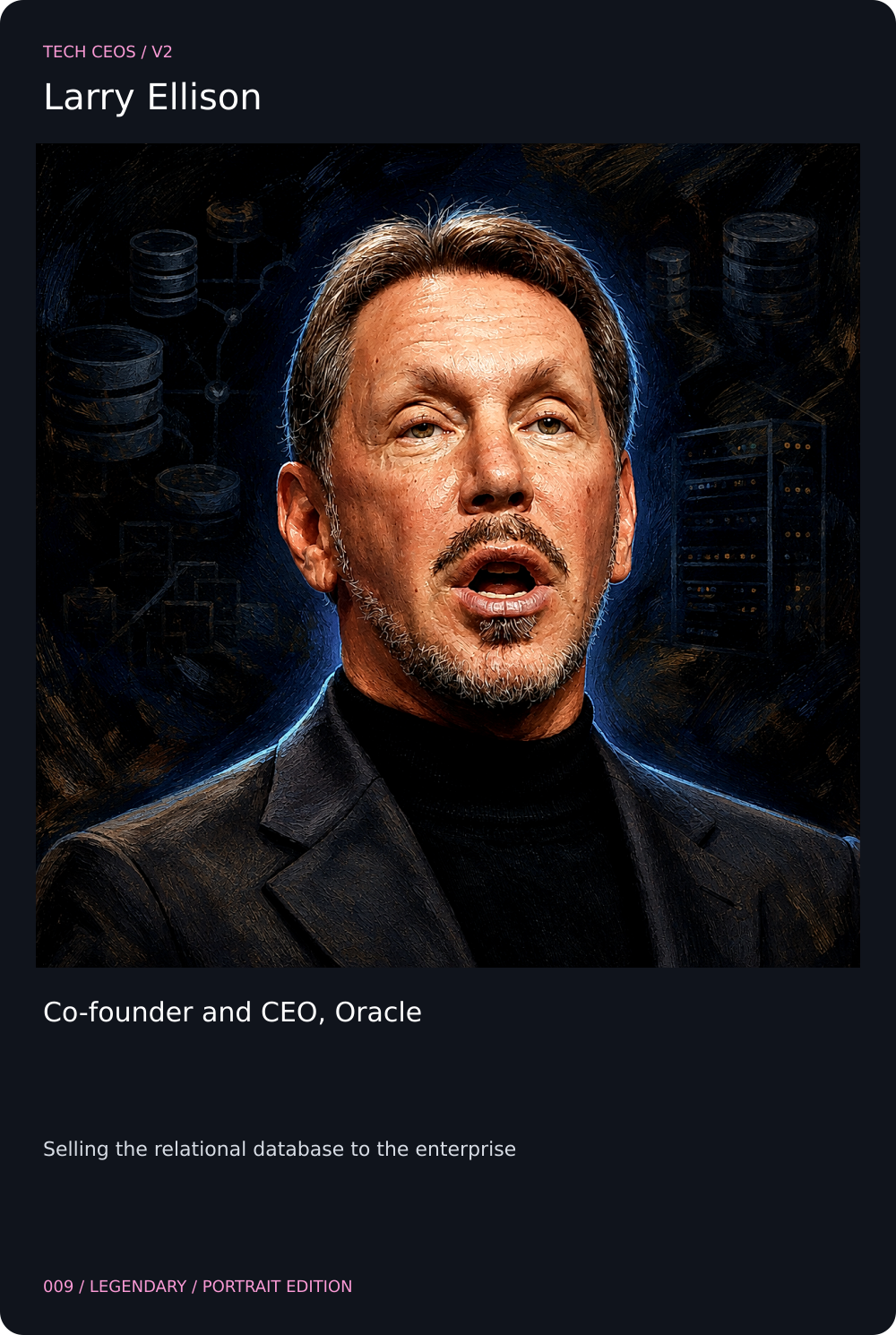
Larry EllisonCo-founder and CEO, OracleSelling the relational database to the enterprise
DatabasesEnterprise softwareAcquisitions
USA1977–201490

Read Codd’s paper on the relational model and shipped a commercial product from it before IBM did, then spent thirty-seven years as CEO making Oracle the enterprise system of record, largely by acquisition: PeopleSoft, Siebel, and in 2010 Sun. That made Oracle the steward of Java and MySQL, and the plaintiff in Google v. Oracle. The Supreme Court ruled fair use in 2021.

Locked inCard page
010Epic
N. R. Narayana Murthy card front
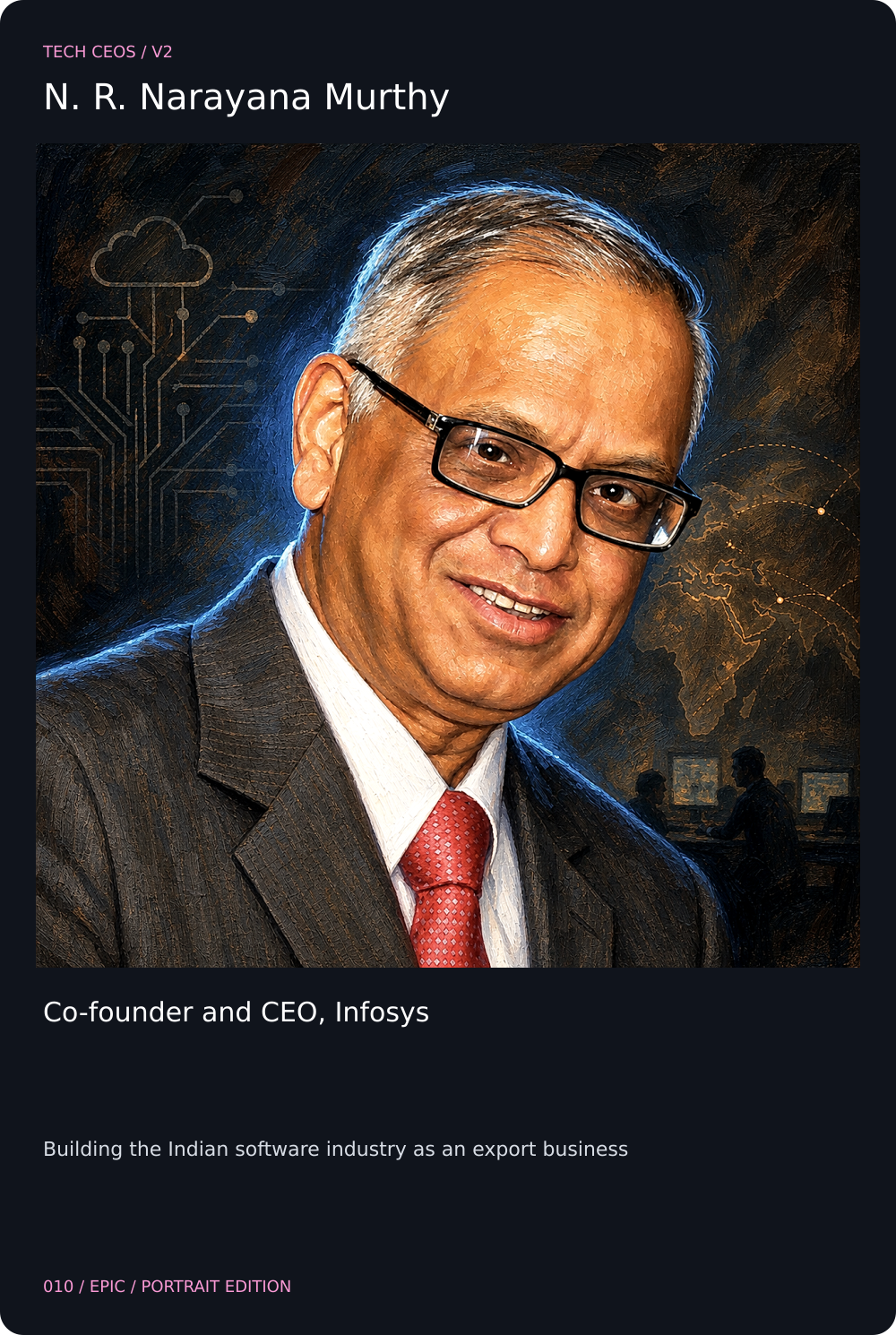
N. R. Narayana MurthyCo-founder and CEO, InfosysBuilding the Indian software industry as an export business
IT servicesOffshore deliveryCorporate governance
India1981–201484

Founded Infosys in 1981 with six colleagues and seed money borrowed from his wife, and built it into the company that made offshore software delivery a credible global business rather than a cost-cutting rumour. Infosys became the first India-registered company listed on Nasdaq, in 1999. Domestically he was as known for insisting on Western-standard disclosure and governance at a time when neither was expected of an Indian firm.

Locked inCard page
011Epic
Masayoshi Son card front
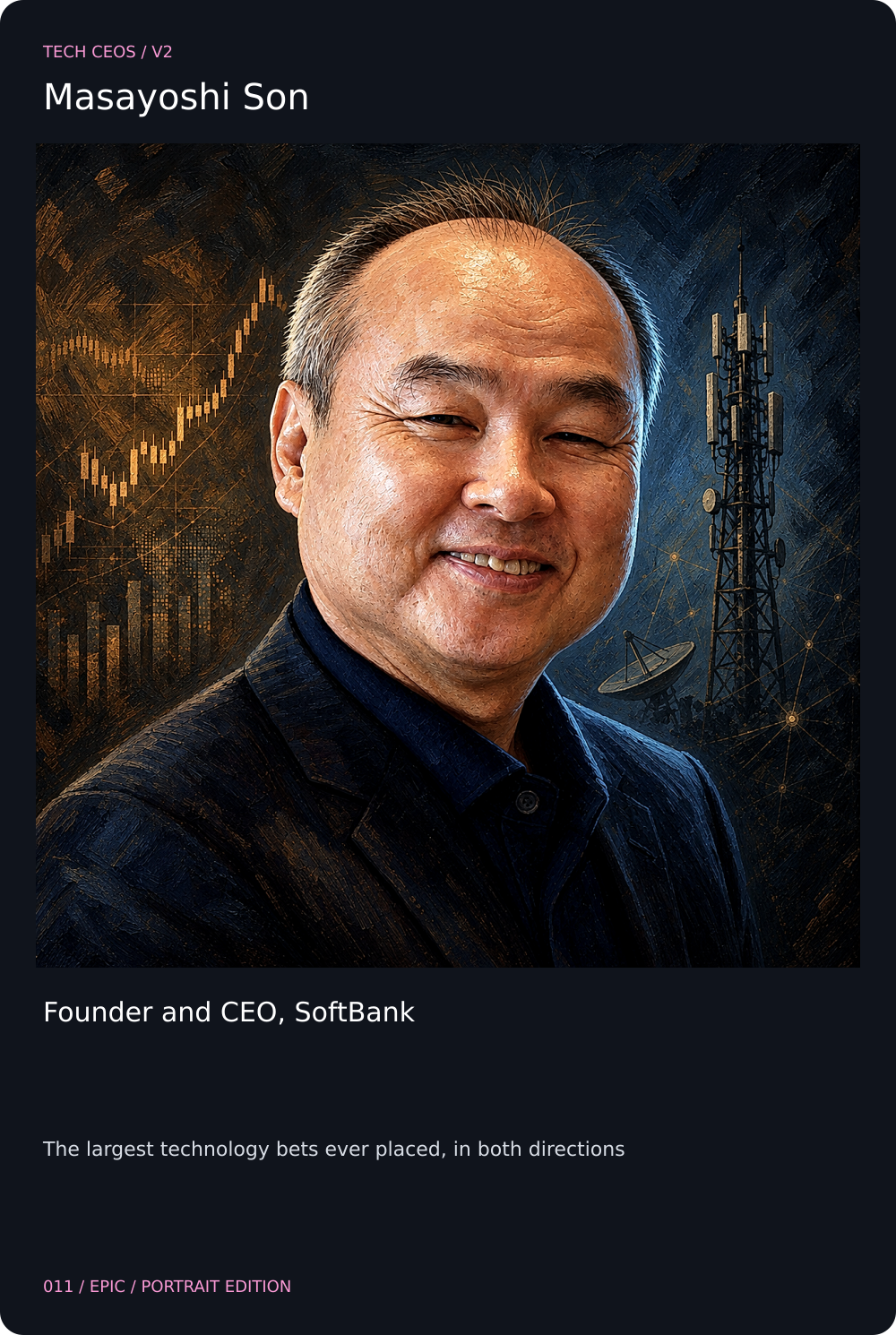
Masayoshi SonFounder and CEO, SoftBankThe largest technology bets ever placed, in both directions
InvestmentTelecomsSemiconductors
Japan1981–82

Built SoftBank from software distribution into a telecoms operator and then the most consequential technology investor alive. An early stake in Alibaba, bought for around $20 million, returned tens of billions. He acquired Arm, whose instruction set is in essentially every phone on earth, for about $32 billion in 2016, and launched the $100 billion Vision Fund, which then produced WeWork.

Locked inCard page
012Epic
Michael Dell card front
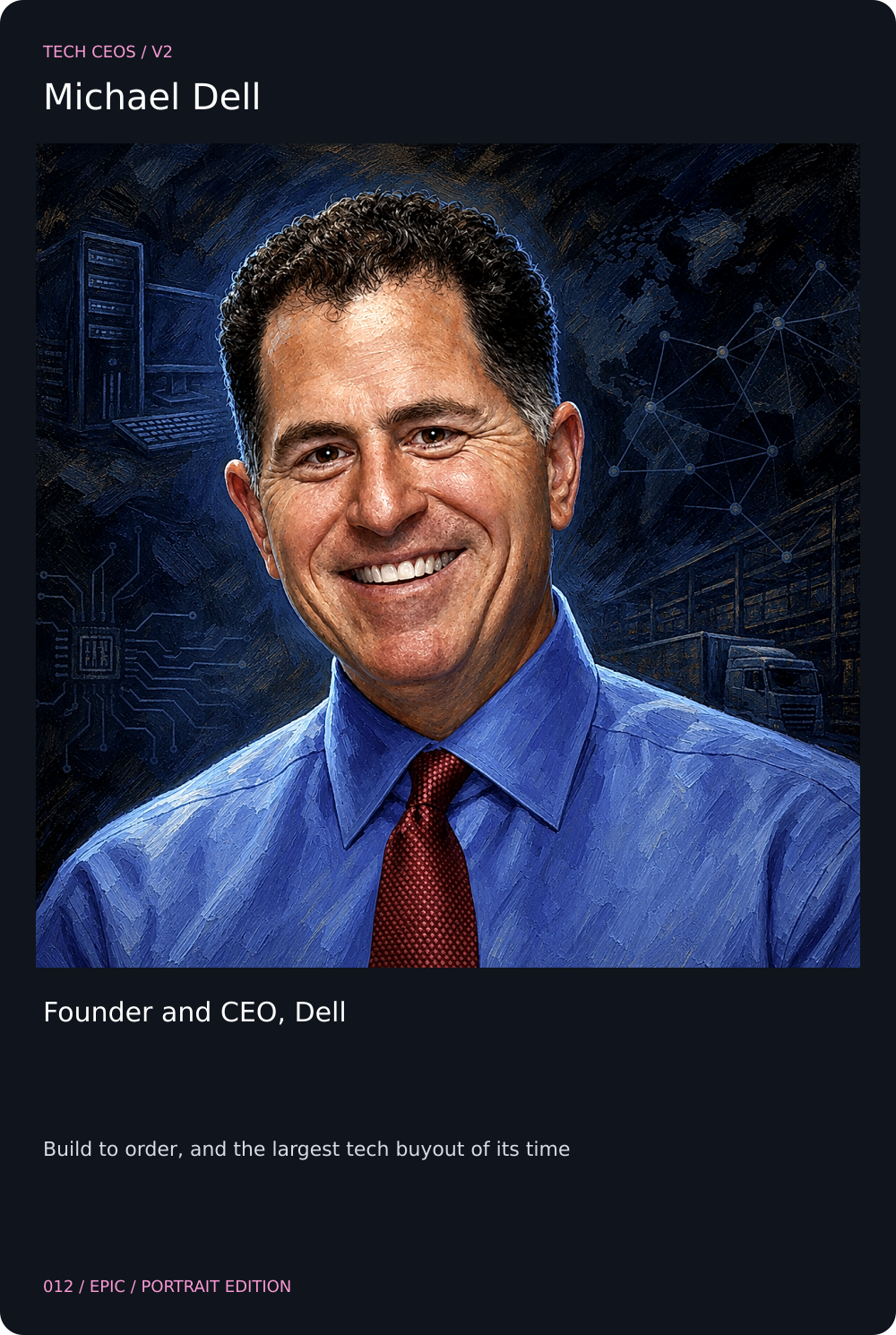
Michael DellFounder and CEO, DellBuild to order, and the largest tech buyout of its time
PCsSupply chainEnterprise hardware
USA1984–83

Started assembling PCs in a University of Texas dorm room in 1984 and turned direct sales and negative working capital into a manufacturing weapon: the customer paid before the supplier did. He took the company private in a $24.4 billion buyout in 2013, then bought EMC, and with it VMware, for about $67 billion in 2016.

Locked inCard page
013Legendary
Scott McNealy card front
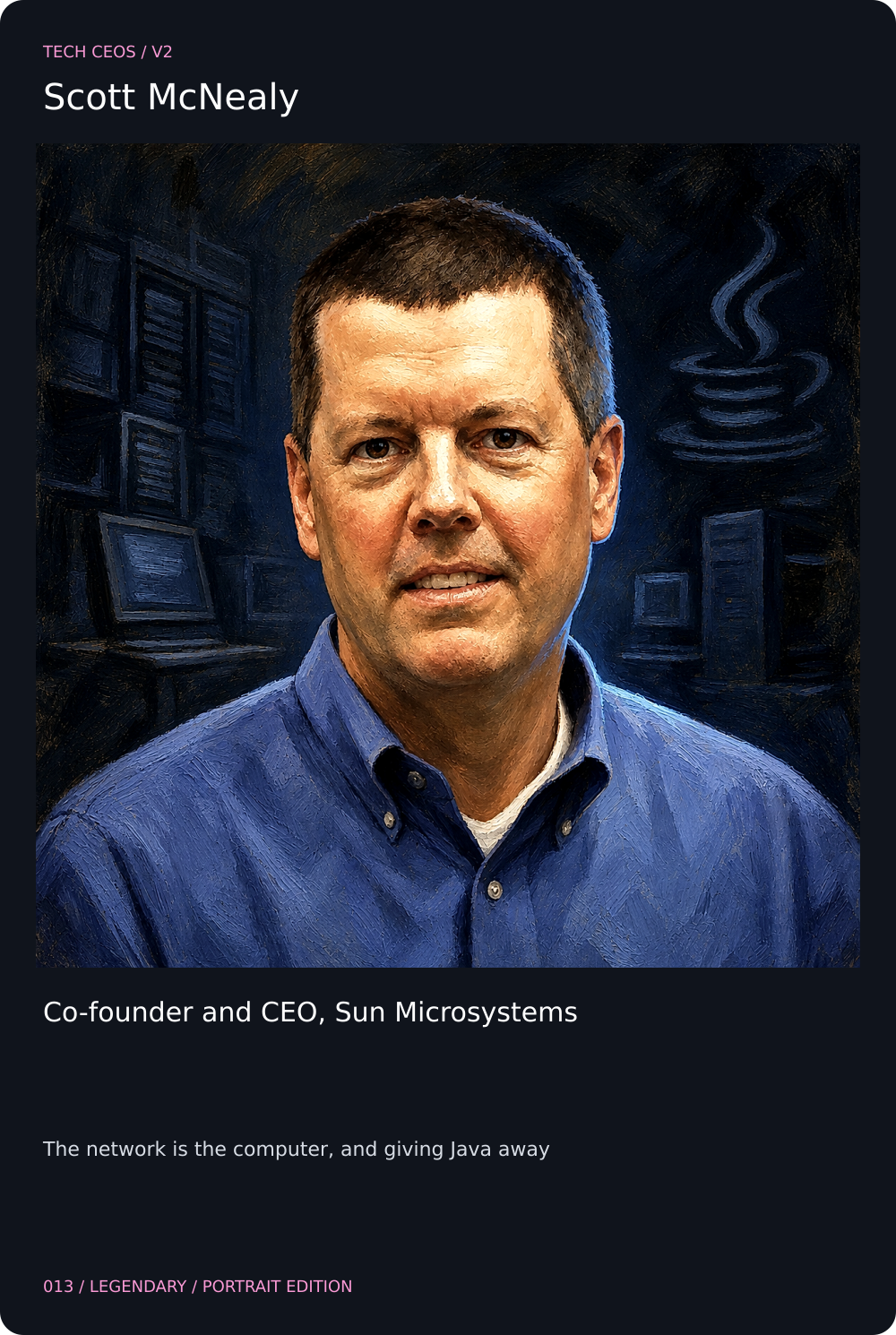
Scott McNealyCo-founder and CEO, Sun MicrosystemsThe network is the computer, and giving Java away
WorkstationsJavaOpen source
USA1984–200688

Ran Sun for twenty-two years and shipped an extraordinary amount of what the internet was built on: NFS, SPARC, Solaris and Java. Sun published NFS as an open specification, released OpenSolaris in 2005 and put Java under the GPL in 2006, decisions that outlived the company since OpenJDK is what most Java runs on today. Commodity Linux boxes killed the workstation business.

Locked inCard page
014Iconic
Morris Chang card front
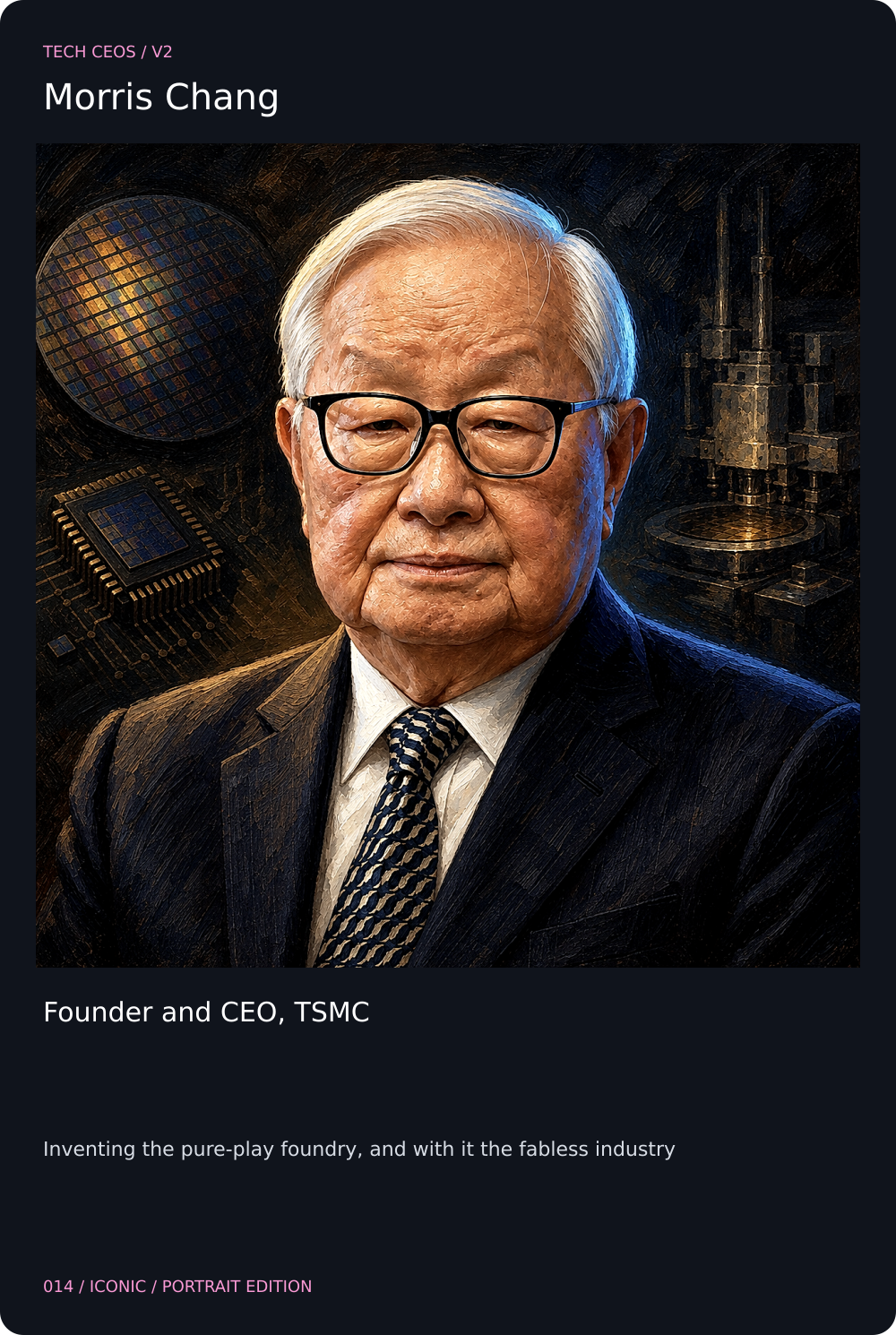
Morris ChangFounder and CEO, TSMCInventing the pure-play foundry, and with it the fabless industry
SemiconductorsManufacturingFoundry model
Taiwan / USA1987–201896

Spent twenty-five years at Texas Instruments, then founded TSMC in 1987 on a proposition nobody had tried: a chip factory that designs nothing of its own and therefore never competes with its customers. That decision is why a company can exist with brilliant chip designers and no fab, which is to say why Nvidia, AMD and Apple Silicon exist in their current form.

Locked inCard page
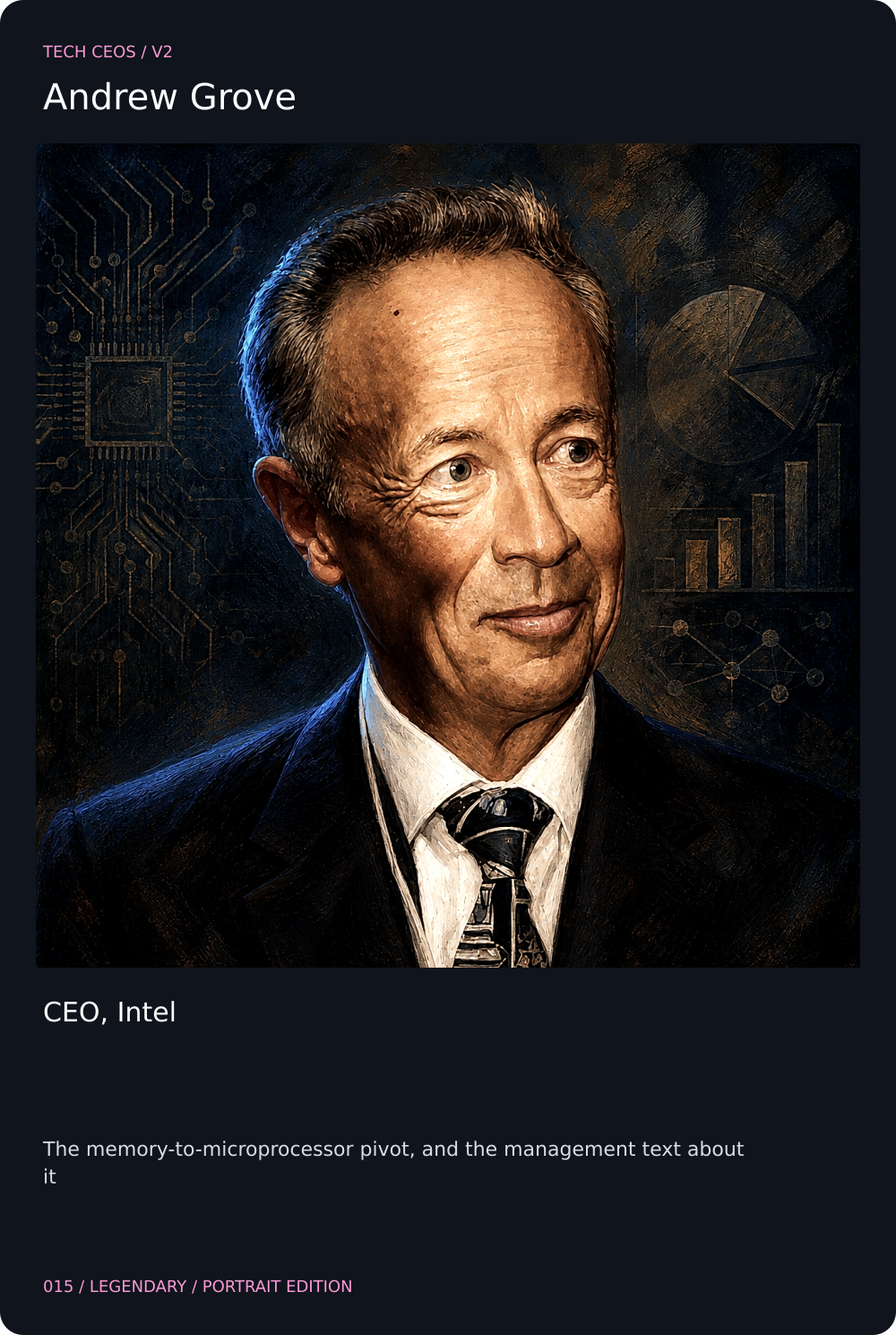
015Legendary
Andrew Grove card front
Andrew GroveCEO, IntelThe memory-to-microprocessor pivot, and the management text about it
SemiconductorsManagementManufacturing
Hungary / USA1968–200591

Escaped Hungary in 1956, joined Intel as its first hire, and as CEO from 1987 to 1998 pushed the company out of the memory business it was founded on and into microprocessors, after Japanese competitors made DRAM unprofitable. He wrote the discipline up in High Output Management and Only the Paranoid Survive. Intel’s revenue grew roughly tenfold on his watch.

Locked inCard page
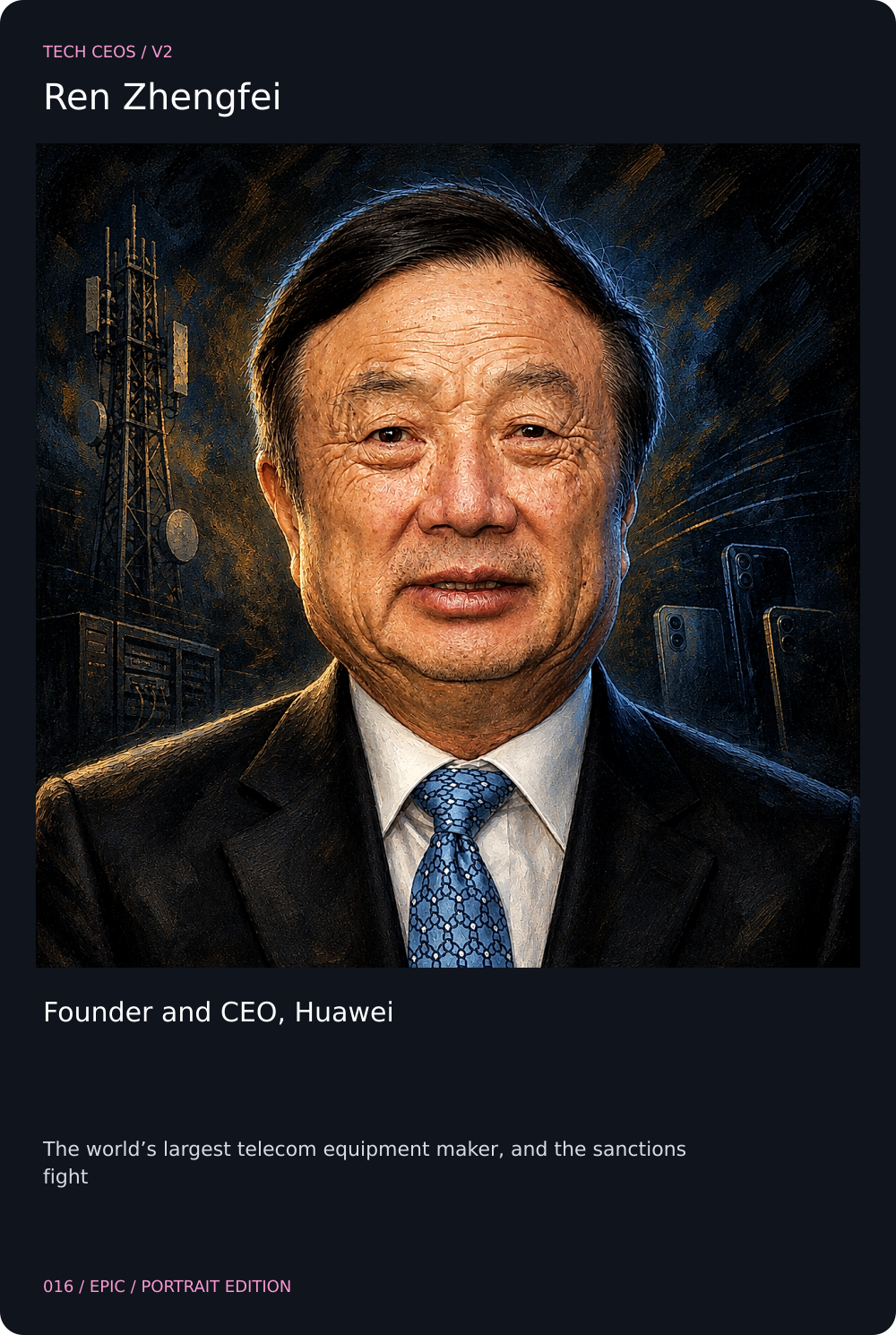
016Epic
Ren Zhengfei card front
Ren ZhengfeiFounder and CEO, HuaweiThe world’s largest telecom equipment maker, and the sanctions fight
Telecom equipmentSmartphonesGeopolitics
China1987–85

Founded Huawei in Shenzhen in 1987 reselling telephone switches, and built the largest supplier of telecommunications equipment on earth. US restrictions from 2019 cut the company off from advanced chips and Google’s Android services, and the response was to fund substitutes in the open: HarmonyOS, and openEuler and openGauss handed to a Chinese open source foundation.

Locked inCard page
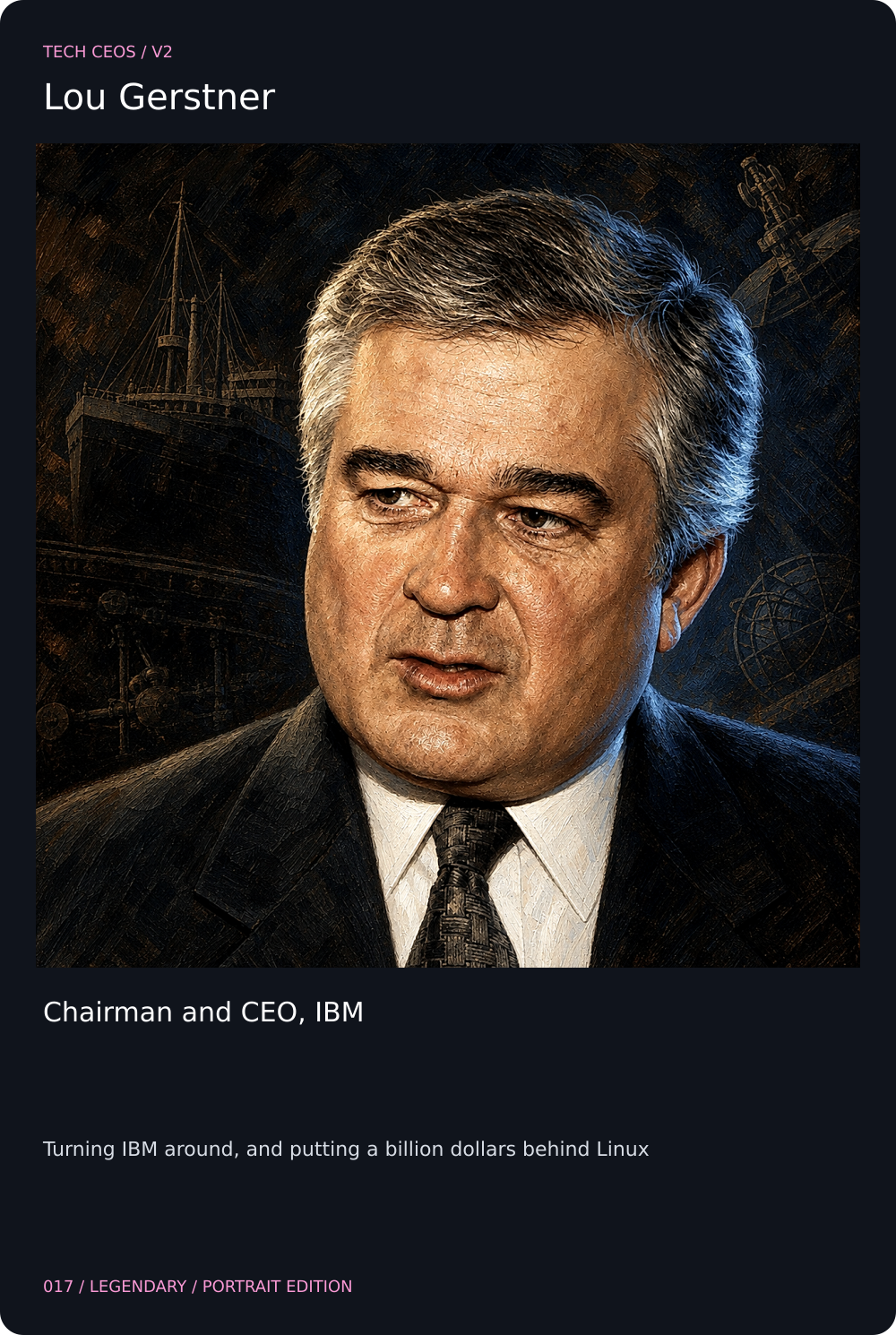
017Legendary
Lou Gerstner card front
Lou GerstnerChairman and CEO, IBMTurning IBM around, and putting a billion dollars behind Linux
EnterpriseServicesLinux
USA1993–200288

Arrived from RJR Nabisco in 1993 at an IBM losing billions and widely expected to be broken up, kept it whole, and pivoted it from hardware to services. The decision that matters here was announced in 2000: roughly a billion dollars of IBM investment into Linux, plus lawyers and patent cover. Nothing did more to make Linux acceptable in enterprise procurement.

Locked inCard page
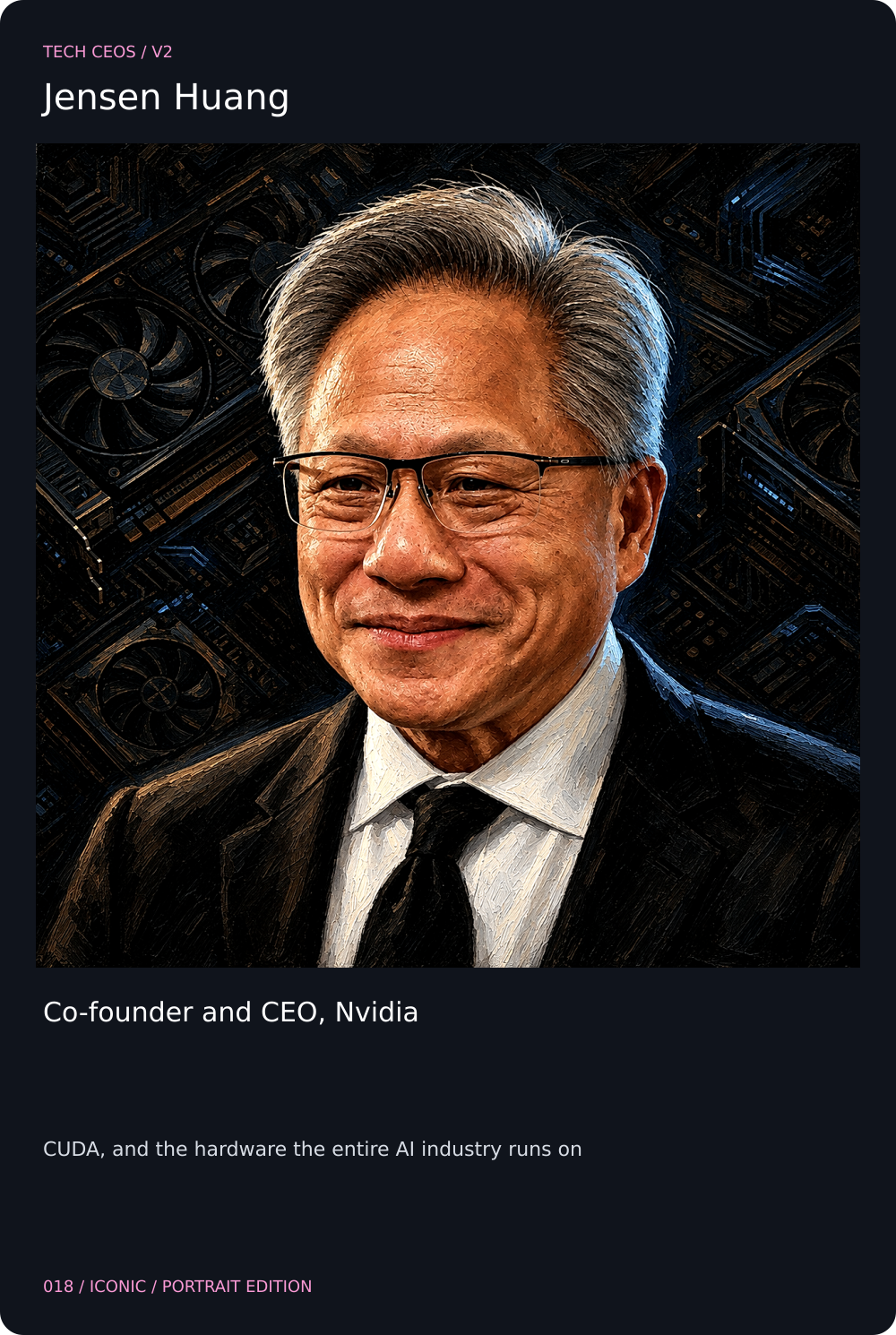
018Iconic
Jensen Huang card front
Jensen HuangCo-founder and CEO, NvidiaCUDA, and the hardware the entire AI industry runs on
GPUsCUDAAI infrastructure
Taiwan / USA1993–97

Co-founded Nvidia in 1993 to build graphics chips for games, then funded CUDA, a way to run general computation on them, long before there was a market for it. When deep learning arrived, the hardware and the programming model were already there. The open source relationship is two-sided: the proprietary Linux driver drew Torvalds’ famous 2012 insult, and the kernel modules were opened in 2022.

Locked inCard page
019Legendary
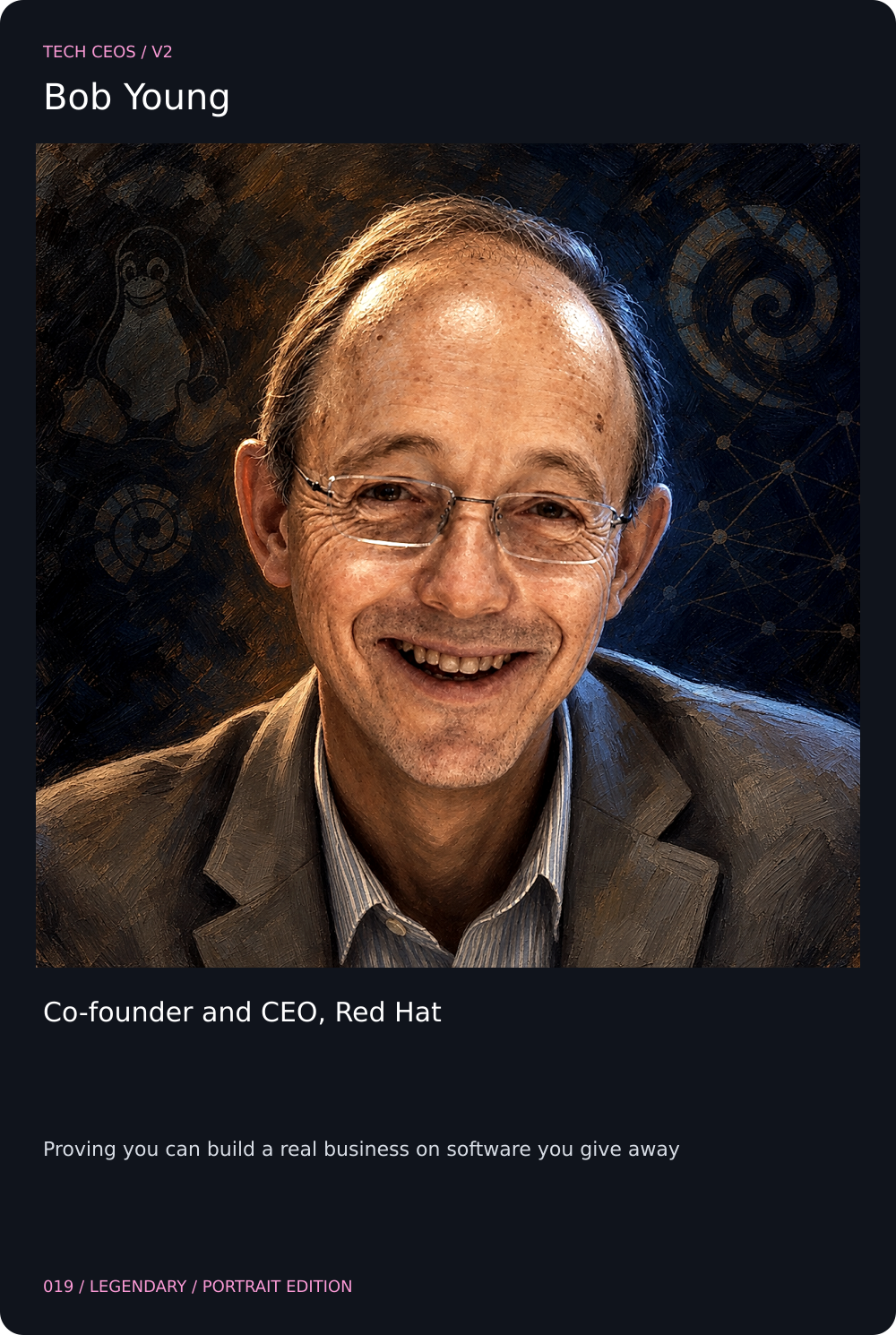
Bob Young card front
Bob YoungCo-founder and CEO, Red HatProving you can build a real business on software you give away
Linux distributionsOpen source businessSubscriptions
Canada / USA1993–199989

Sold Linux CDs out of a catalogue business, co-founded Red Hat with Marc Ewing, and worked out the argument that made open source investable: nobody pays for the bits, they pay for support, certification and someone to call. Red Hat’s 1999 IPO was one of the largest first-day gains in Nasdaq history, and the moment Wall Street conceded free software was a business.

Locked inCard page
020Iconic
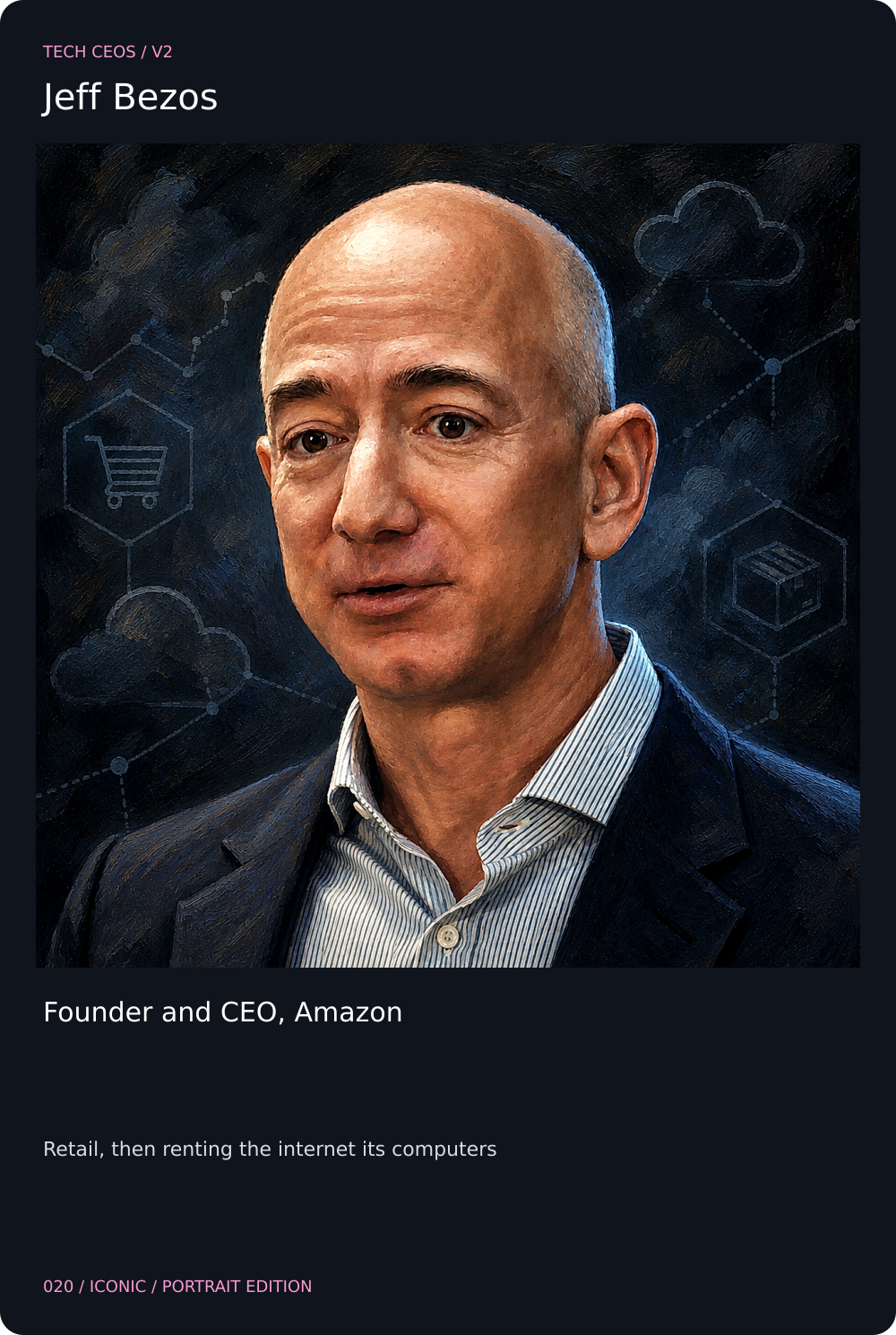
Jeff Bezos card front
Jeff BezosFounder and CEO, AmazonRetail, then renting the internet its computers
E-commerceCloudLogistics
USA1994–202196

Started an online bookshop in 1994 and ran it for twenty-seven years on deliberately thin margins and reinvestment, which is how it outlasted competitors optimising for quarterly profit. The decision with the deepest technical consequences was internal: an API mandate that every team expose its data over service interfaces, which turned Amazon’s own plumbing into AWS in 2006.

Locked inCard page
021Epic
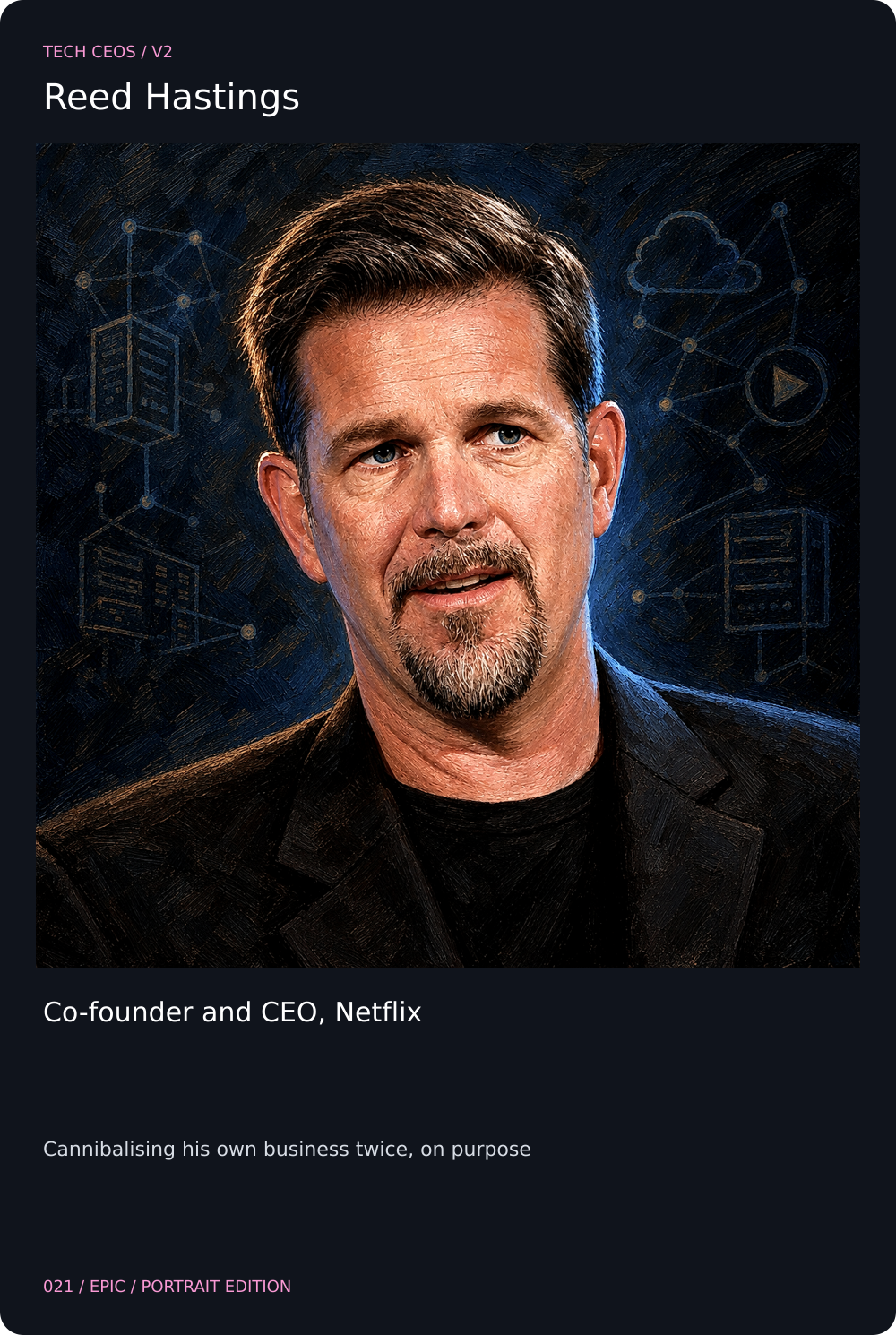
Reed Hastings card front
Reed HastingsCo-founder and CEO, NetflixCannibalising his own business twice, on purpose
StreamingDistributed systemsCulture
USA1997–202385

Co-founded Netflix as a DVD-by-post service in 1997, launched streaming in 2007 against his own profitable business, then commissioned originals against the studios he licensed from. Netflix engineering shaped how the industry runs services at scale and published most of it: Chaos Monkey, Hystrix, Eureka and Zuul all shipped as open source, and chaos engineering came out of that work.

Locked inCard page
022Epic
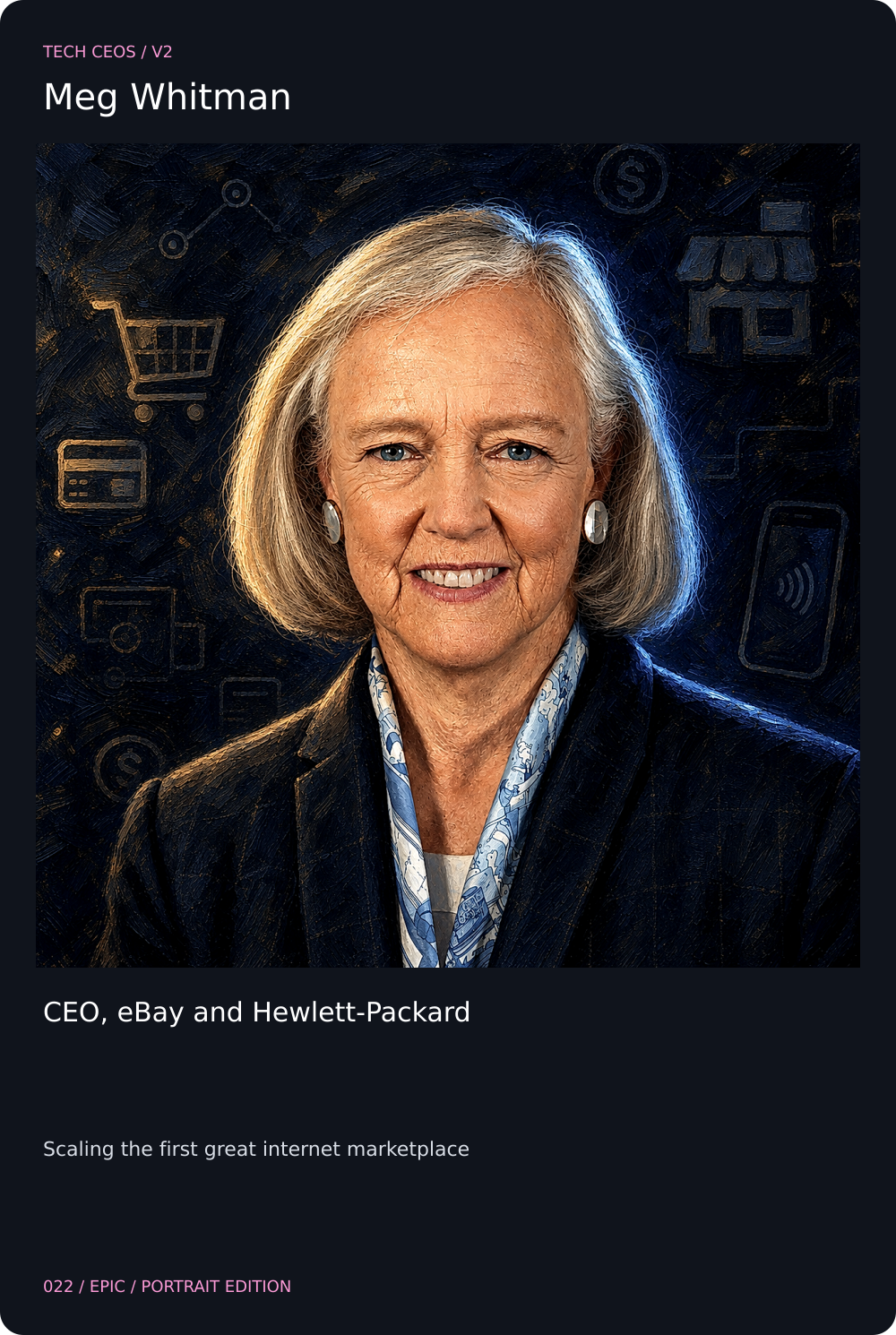
Meg Whitman card front
Meg WhitmanCEO, eBay and Hewlett-PackardScaling the first great internet marketplace
MarketplacesPaymentsEnterprise
USA1998–201880

Joined eBay in 1998 when it had a few dozen employees and left in 2008 with tens of thousands, having turned an auction site into proof that strangers would transact online at scale, and having bought PayPal in 2002, which mattered more to the internet than the auctions did. She later ran HP through its split into HP Inc and HPE.

Locked inCard page
023Legendary
Diane Greene card front
Diane GreeneCo-founder and CEO, VMwareMaking virtualisation work on commodity x86
VirtualisationData centresCloud
USA1998–201987

Co-founded VMware in 1998 and ran it for a decade, shipping the thing everyone had been told was impractical: efficient virtualisation of an x86 architecture never designed for it. The consequence is the modern data centre. Server consolidation, live migration and the economics that made public cloud viable all rest on that work. She later ran Google Cloud.

Locked inCard page
024Iconic
Larry Page card front
Larry PageCo-founder and CEO, Google and AlphabetPageRank, then giving away the mobile operating system
SearchAndroidInfrastructure
USA1998–201996

Co-invented PageRank as a Stanford graduate student and co-founded Google in 1998, serving as CEO twice. Two decisions on his watch had enormous open source consequence: Android was released permissively and given to handset makers, which is why most phones run a Linux kernel, and Chromium was open-sourced, which is why nearly every non-Safari browser is a Chromium derivative.

Locked inCard page
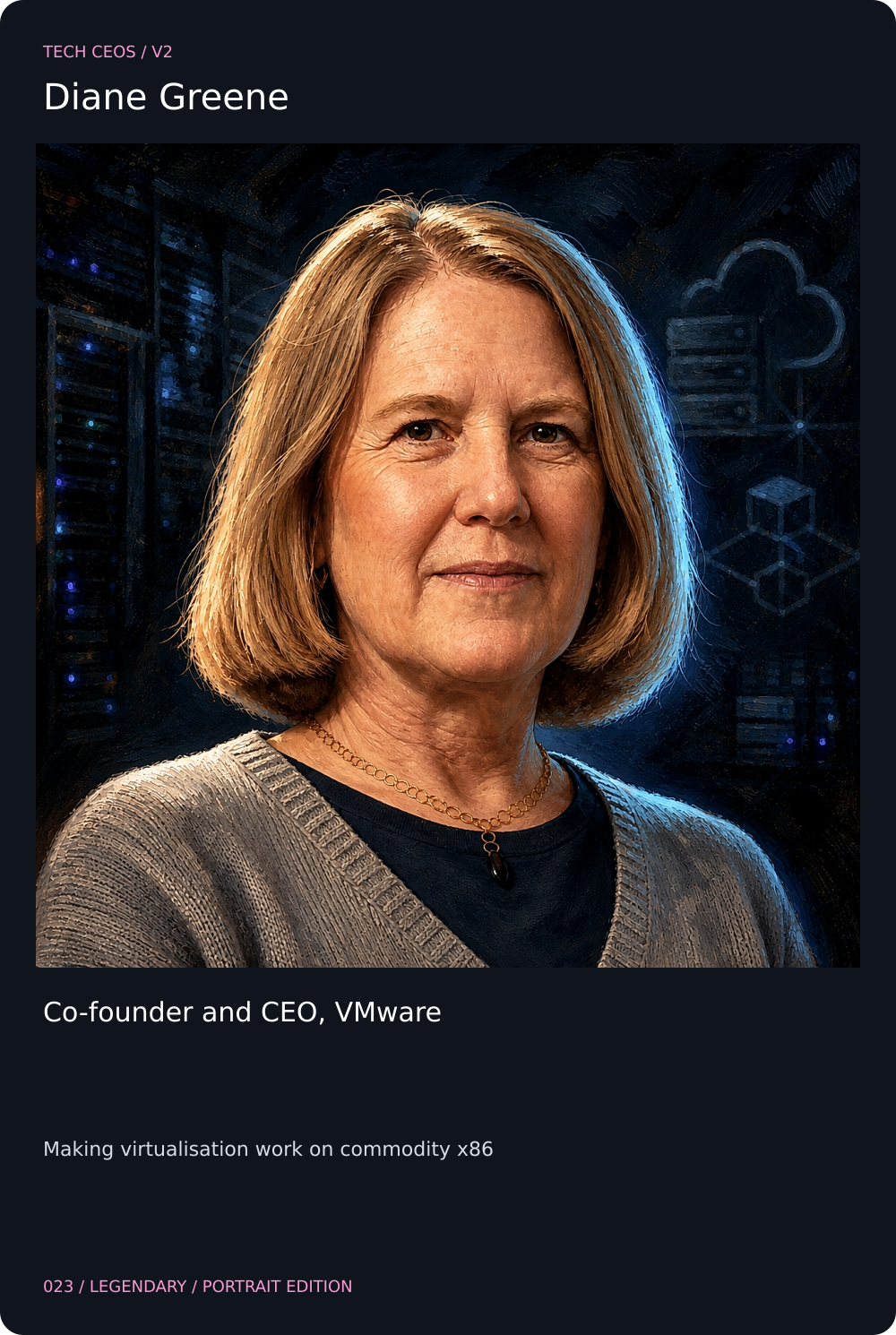
025Epic
Marc Benioff card front
Marc BenioffFounder and CEO, SalesforceThe End of Software, and the subscription model that replaced it
SaaSEnterpriseCloud
USA1999–84

Left Oracle to found Salesforce in 1999 behind a marketing campaign built on a red circle struck through the word Software, and made multi-tenant applications delivered over a browser the default way businesses buy anything. Almost every enterprise product now sold by subscription, including most open source companies’ commercial tiers, operates in the category he legitimised.

Locked inCard page
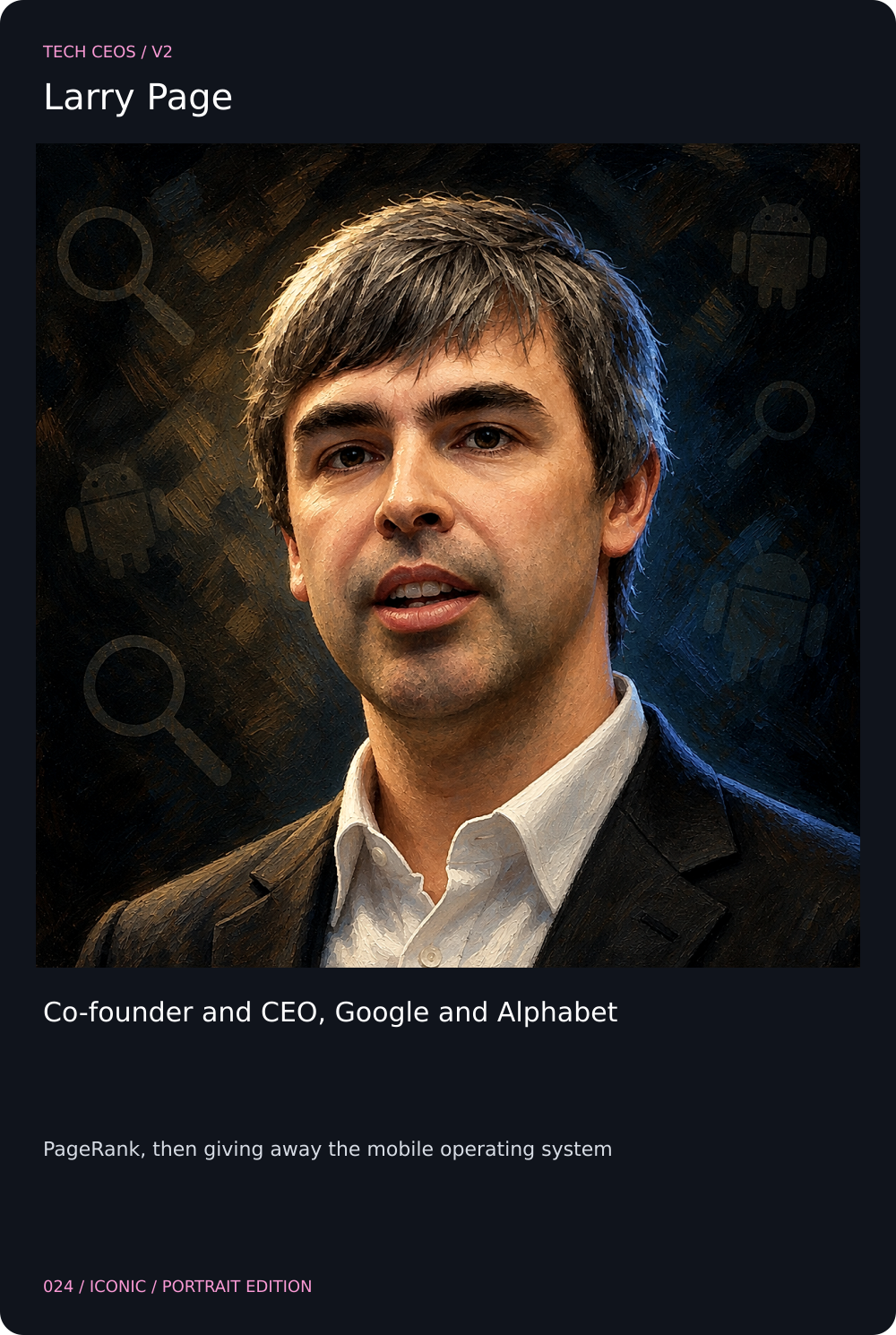
026Epic
Jack Ma card front
Jack MaFounder and CEO, AlibabaBuilding China’s commerce infrastructure from an apartment
E-commercePaymentsCloud
China1999–201984

A former English teacher who founded Alibaba in his Hangzhou apartment in 1999, beat eBay in China with Taobao, and solved the trust problem with an escrow payment system that became Alipay. Alibaba’s 2014 New York listing raised about $25 billion, the largest IPO in history at the time. Dubbo and RocketMQ are Apache projects that came out of the company.

Locked inCard page
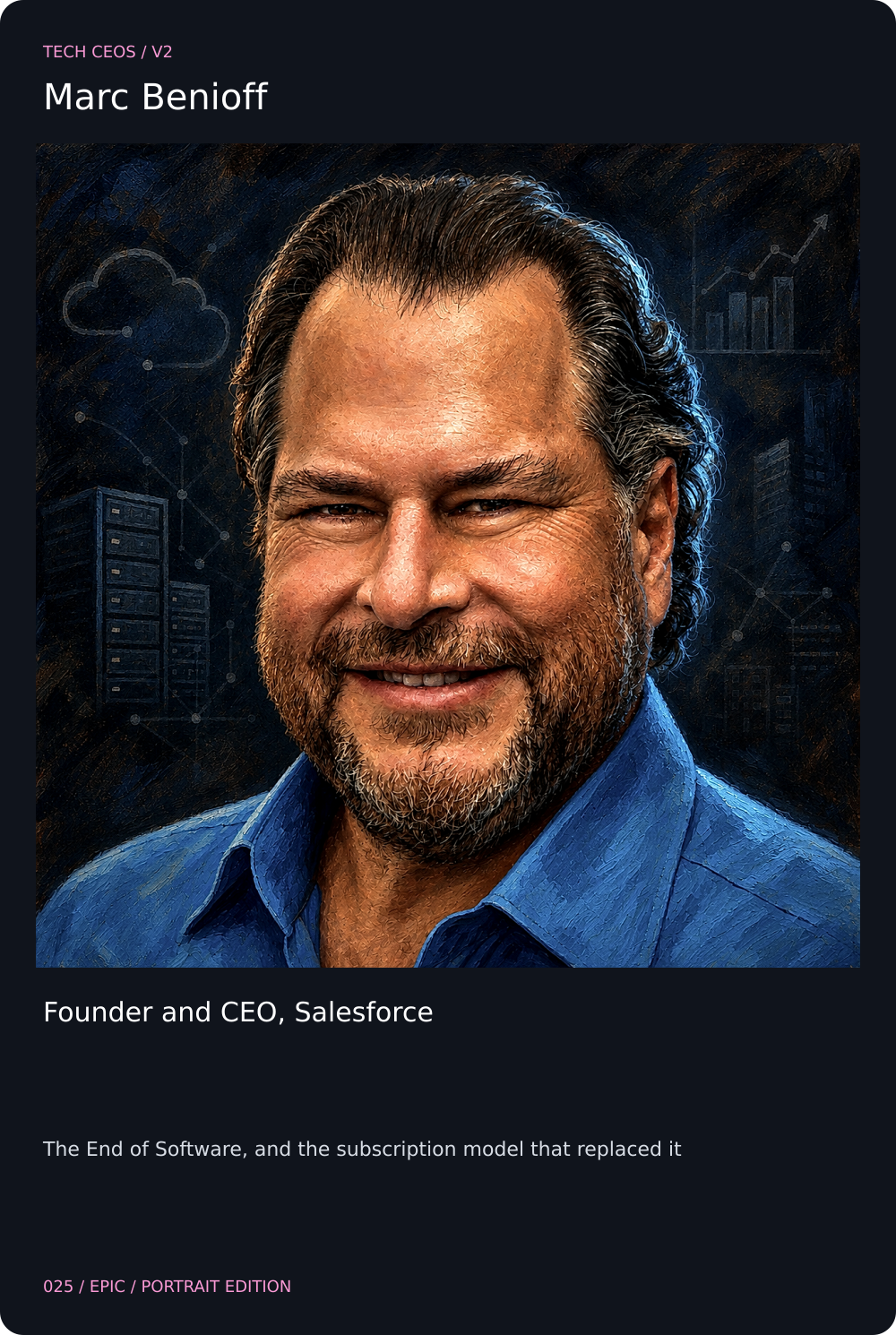
027Epic
Mårten Mickos card front
Mårten MickosCEO, MySQL ABThe billion-dollar exit that made open core a category
DatabasesOpen source businessSecurity
Finland2001–80

Ran MySQL AB from 2001 and sold it to Sun in 2008 for about a billion dollars, the most anyone had paid for an open source company. MySQL was the M in LAMP, so the deal proved a freely licensed database with a paid support tier could be worth as much as a proprietary one. He later ran Eucalyptus and HackerOne.

Locked inCard page
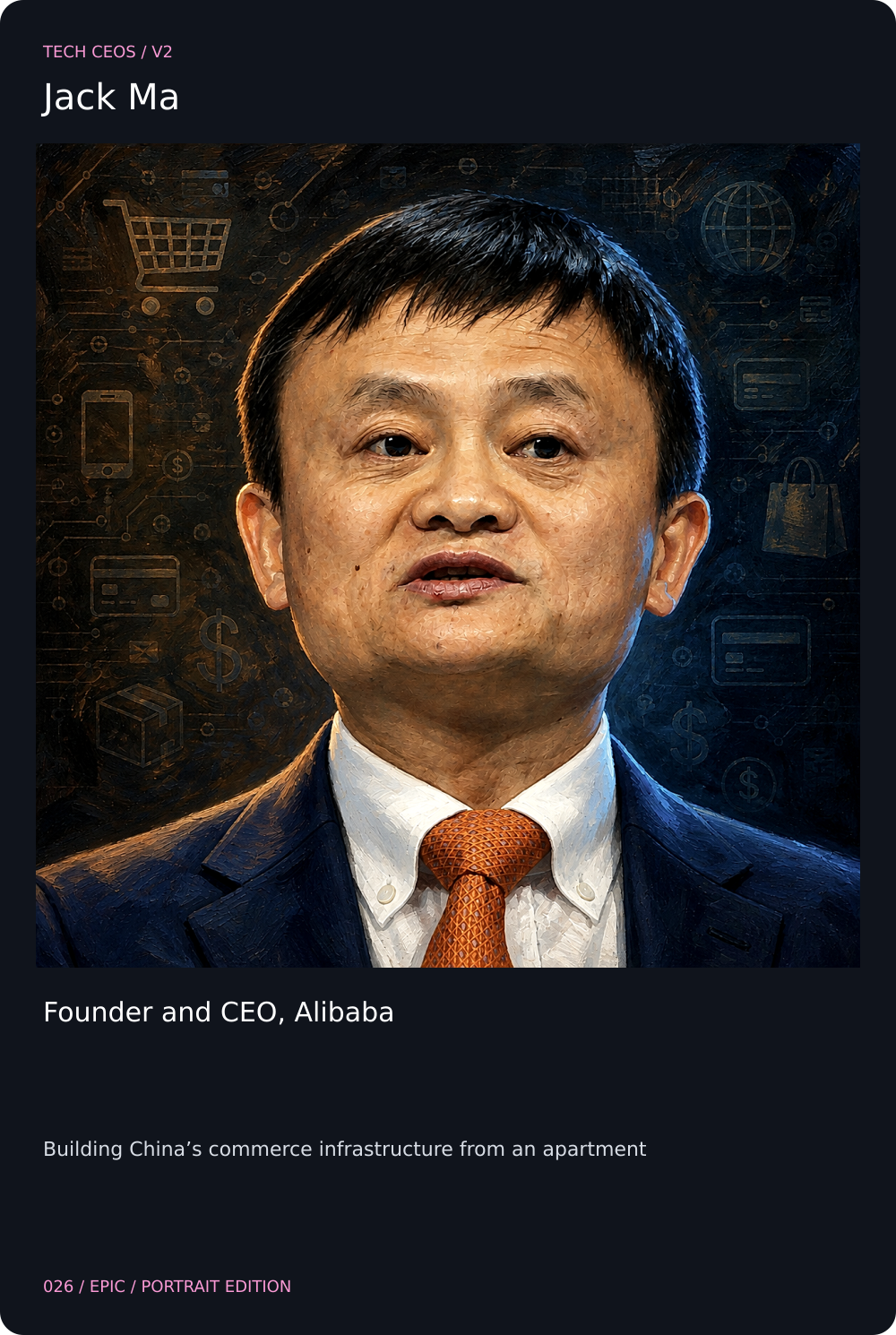
028Epic
Eric Schmidt card front
Eric SchmidtCEO, Google; previously CEO, NovellTurning a research culture into an operating company
SearchAdvertisingEnterprise
USA1997–202083

Worked on Unix tooling early, was CTO at Sun during the Java years and CEO of Novell, then ran Google from 2001 to 2011, hired as adult supervision for two founders in their twenties. He built the advertising machine and the management structure that carried the company from a few hundred people to tens of thousands, and presided over the Android and YouTube acquisitions.

Locked inCard page
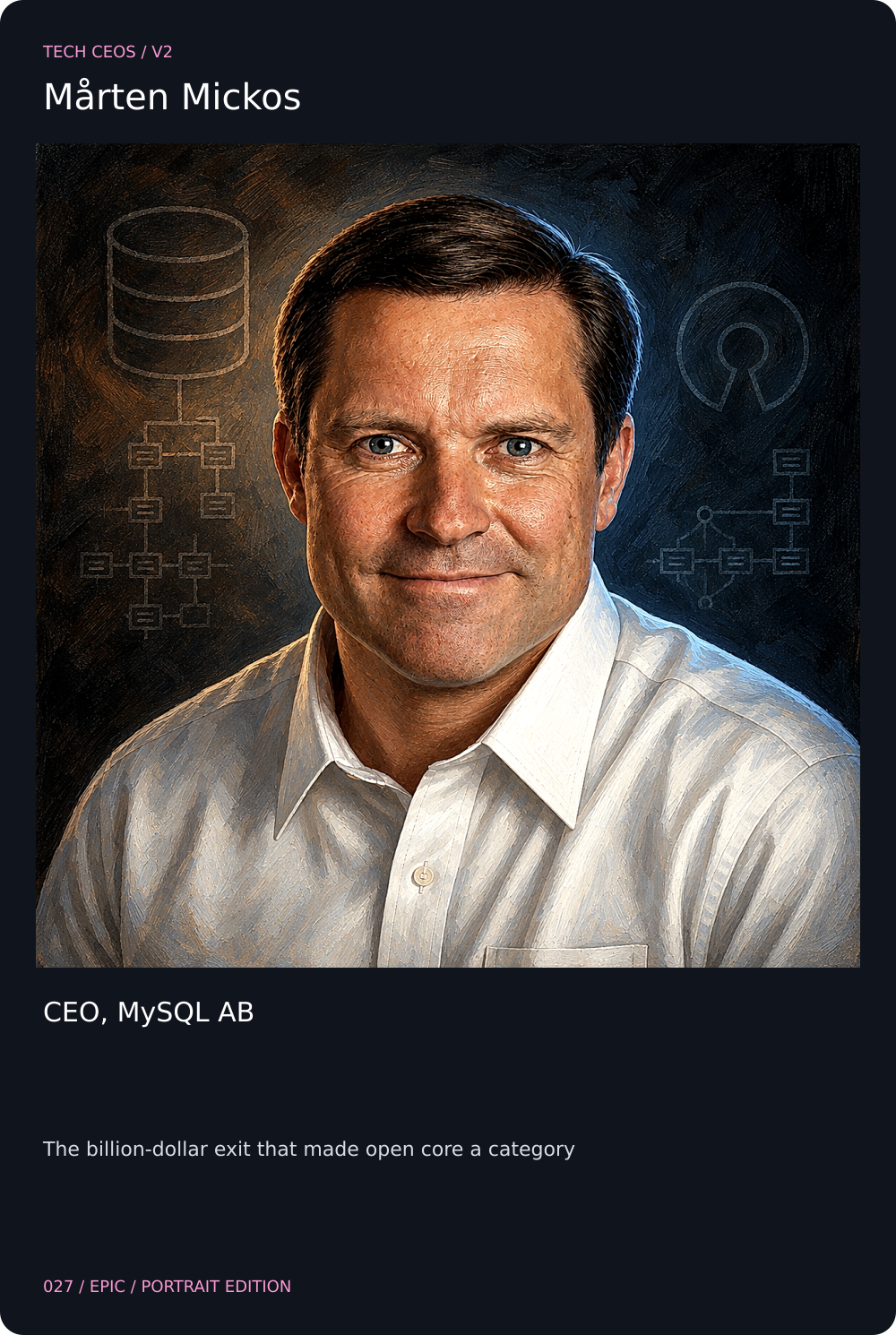
029Iconic
Mark Zuckerberg card front
Mark ZuckerbergFounder and CEO, MetaThree billion users, React, PyTorch and open-weight models
Social platformsOpen sourceAI
USA2004–94

Founded Facebook in a Harvard dorm in 2004 and still runs the company two decades and about three billion users later, through Cambridge Analytica, the Instagram and WhatsApp deals, and the pivot to Meta. The open source record is enormous and largely separate from the reputational one: React, PyTorch, GraphQL, RocksDB, the Open Compute Project, and the Llama open-weight models.

Locked inCard page
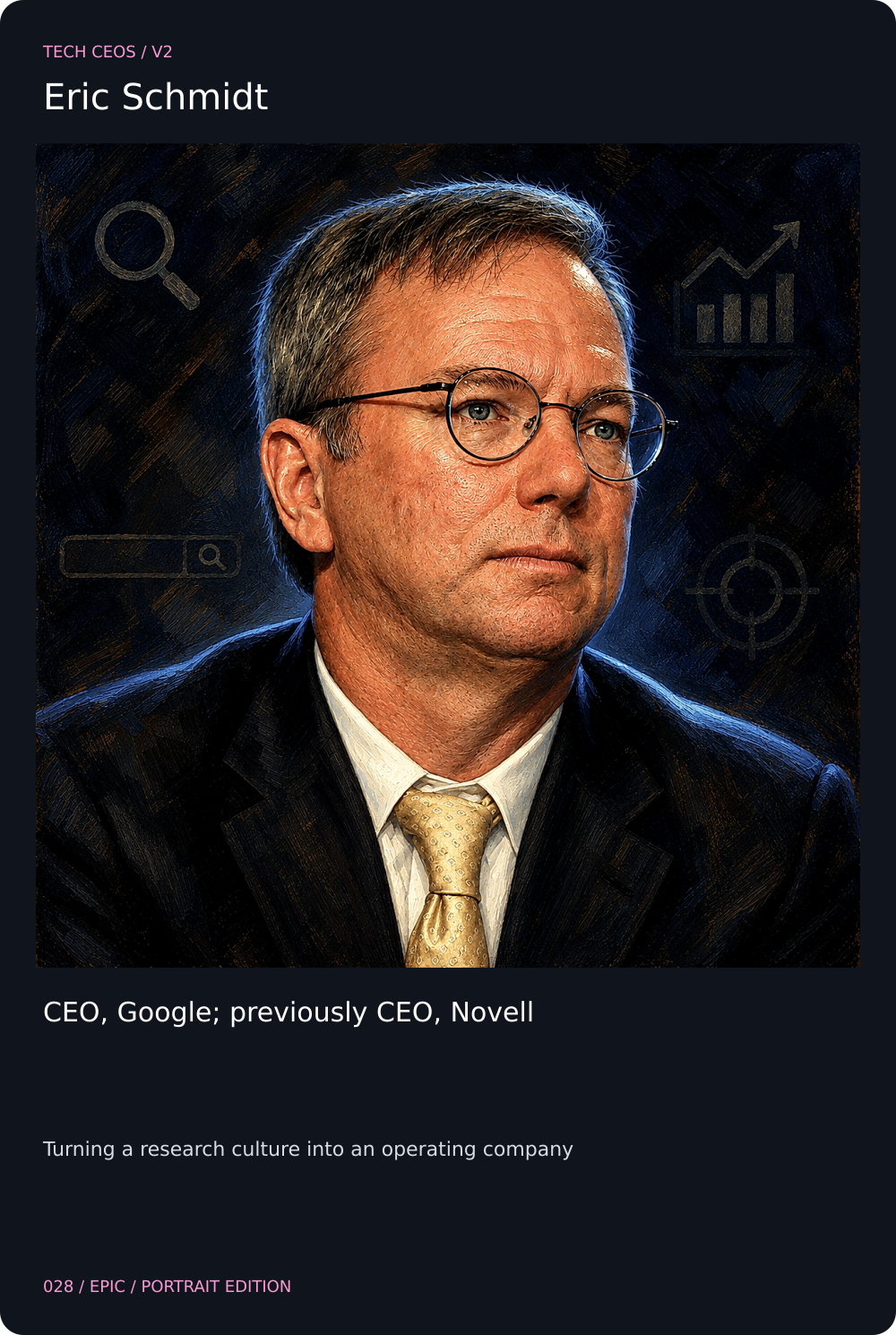
030Epic
Tobias Lütke card front
Tobias LütkeFounder and CEO, ShopifyA Rails core contributor who kept the company on Rails
E-commerceRubyDeveloper platforms
Germany / Canada2004–80

Tried to sell snowboards online in 2004, found the available software unusable, and wrote his own in Ruby on Rails, early enough that he became a Rails core contributor while doing it. Shopify grew into the platform behind millions of storefronts and remains one of the largest Ruby deployments anywhere, with Liquid, its templating language, released as open source.

Locked inCard page
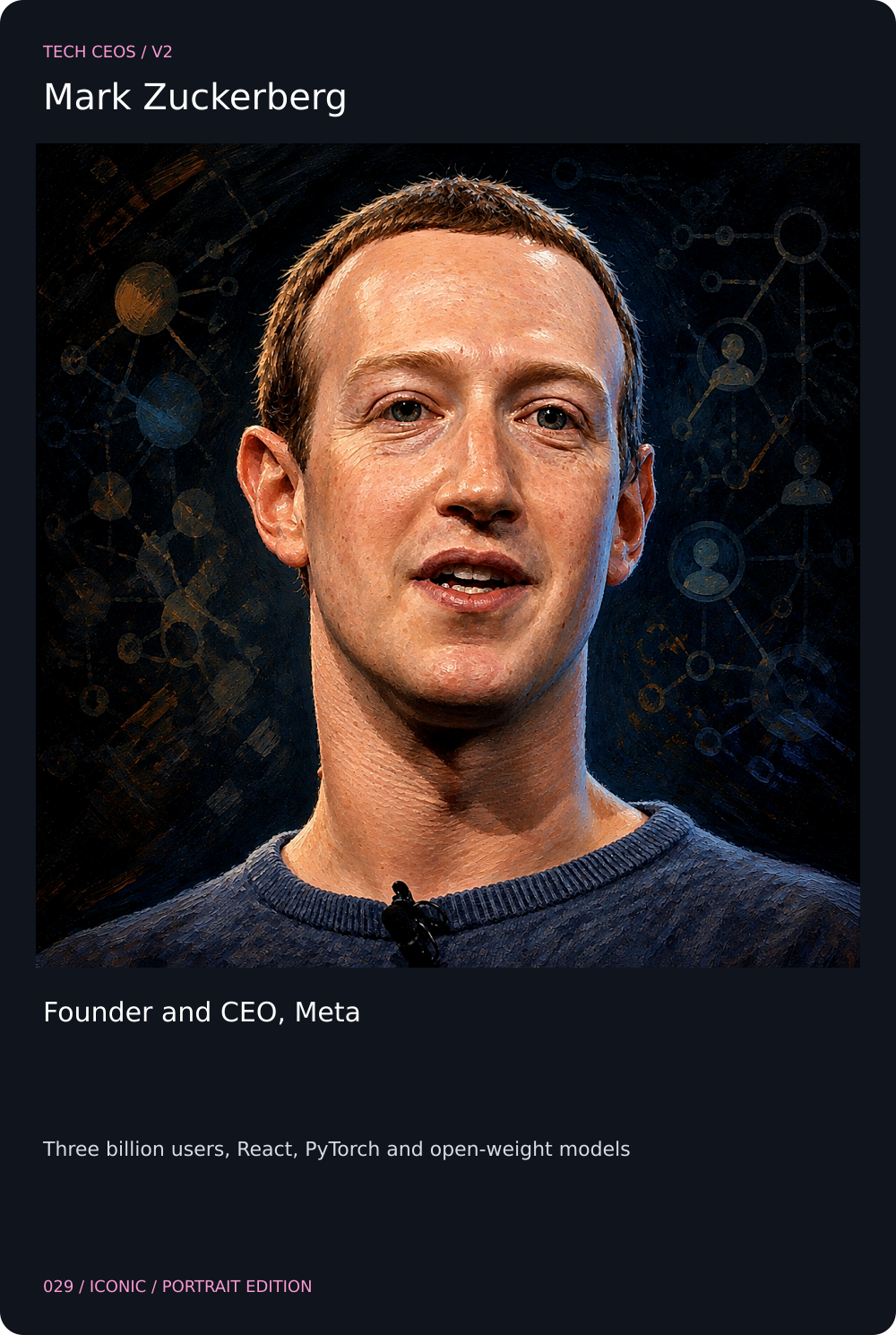
031Iconic
Elon Musk card front
Elon MuskCEO, Tesla, SpaceX and XRockets, electric cars, and releasing the patents
AerospaceAutomotiveSocial platforms
South Africa / USA2002–93

Runs several companies at once and has changed at least two industries: SpaceX made orbital launch reusable and drove cost per kilogram down by an order of magnitude, and Tesla made electric cars something people wanted rather than tolerated. In 2014 Tesla pledged not to enforce its patents against anyone using them in good faith. He bought Twitter for $44 billion in 2022.

Locked inCard page
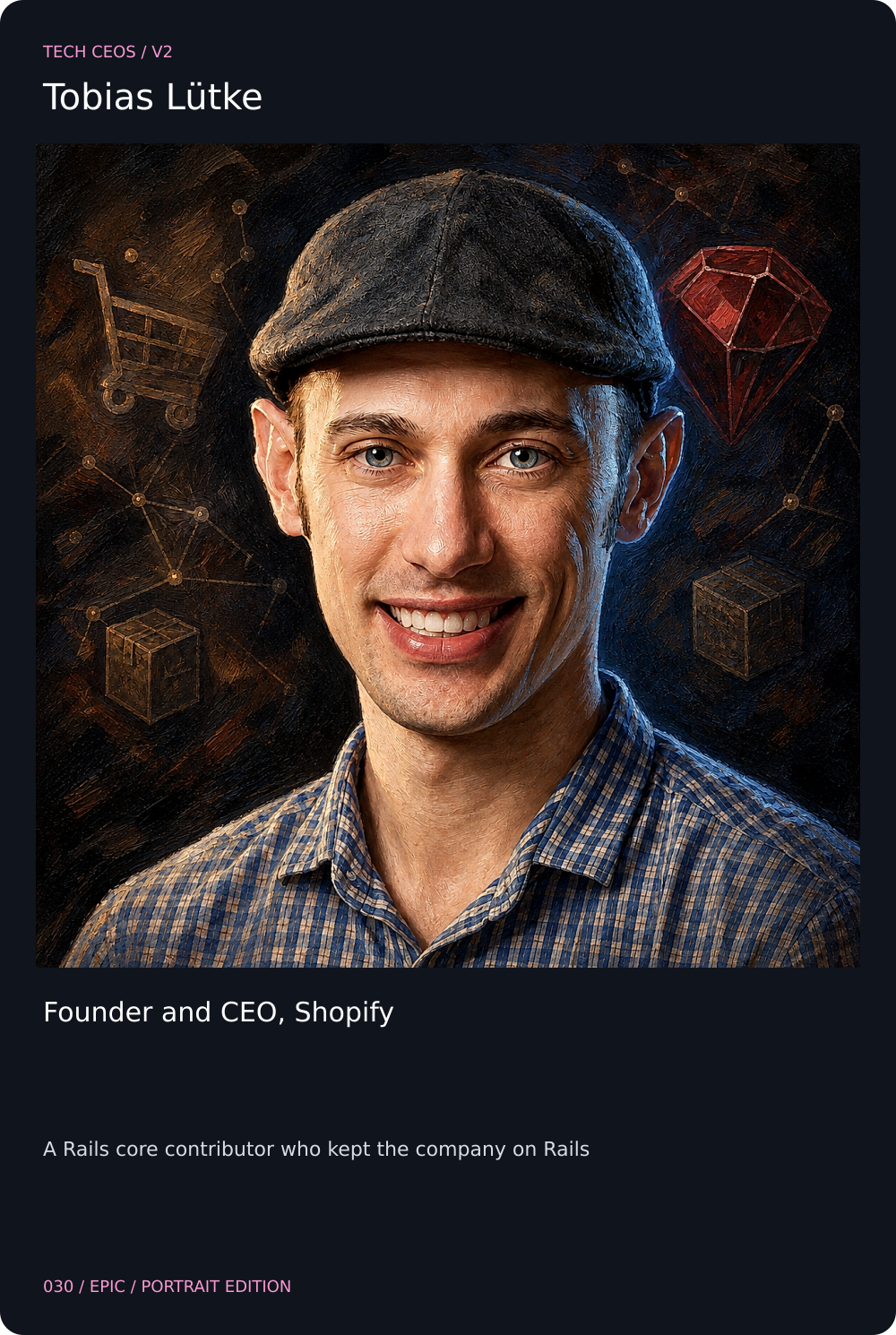
032Rare
Daniel Ek card front
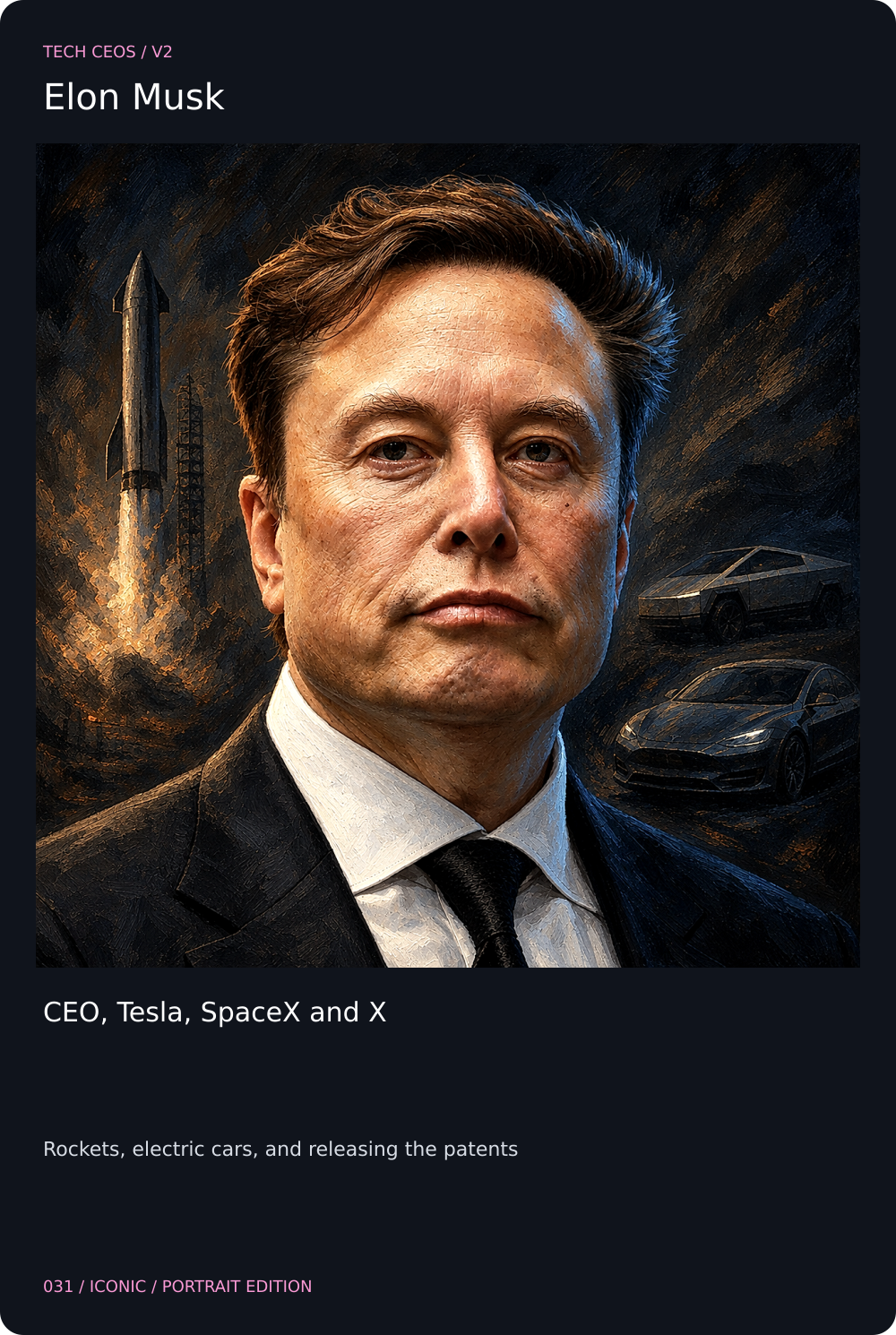
Daniel EkCo-founder and CEO, SpotifyMaking streaming better than piracy
StreamingLicensingDeveloper tooling
Sweden2006–76

Co-founded Spotify in Stockholm in 2006 with an engineering goal that sounds trivial and was not: a track had to start playing faster than a pirated file on your own disk. The early peer-to-peer work solved it, and the licensing deals dragged the record industry into a model it had spent a decade litigating against. Spotify also gave the industry Backstage.

Locked inCard page
033Legendary
Andy Jassy card front
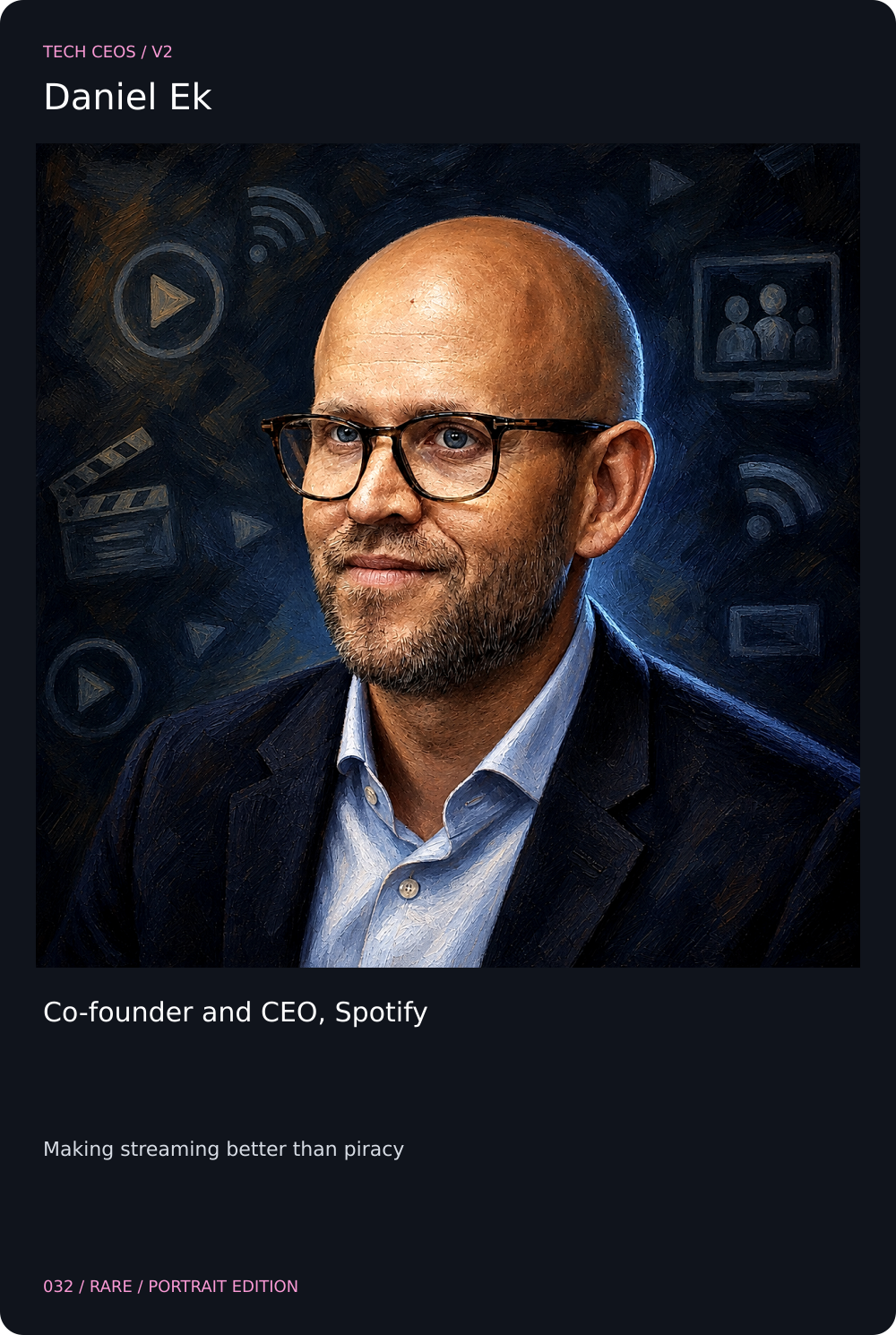
Andy JassyFounder of AWS; CEO, AmazonBuilding the cloud, and the licence backlash it caused
CloudInfrastructureEnterprise
USA2003–89

Wrote the original business plan for what became AWS and ran it from 2006 until succeeding Bezos in 2021. AWS turned computing into a utility. It also set off the defining licensing fight of the era: Elastic, MongoDB and Redis changed licences over managed services built on their code, and Amazon forked Elasticsearch into OpenSearch, later donated to the Linux Foundation.

Locked inCard page
034Legendary
Chris Wanstrath card front
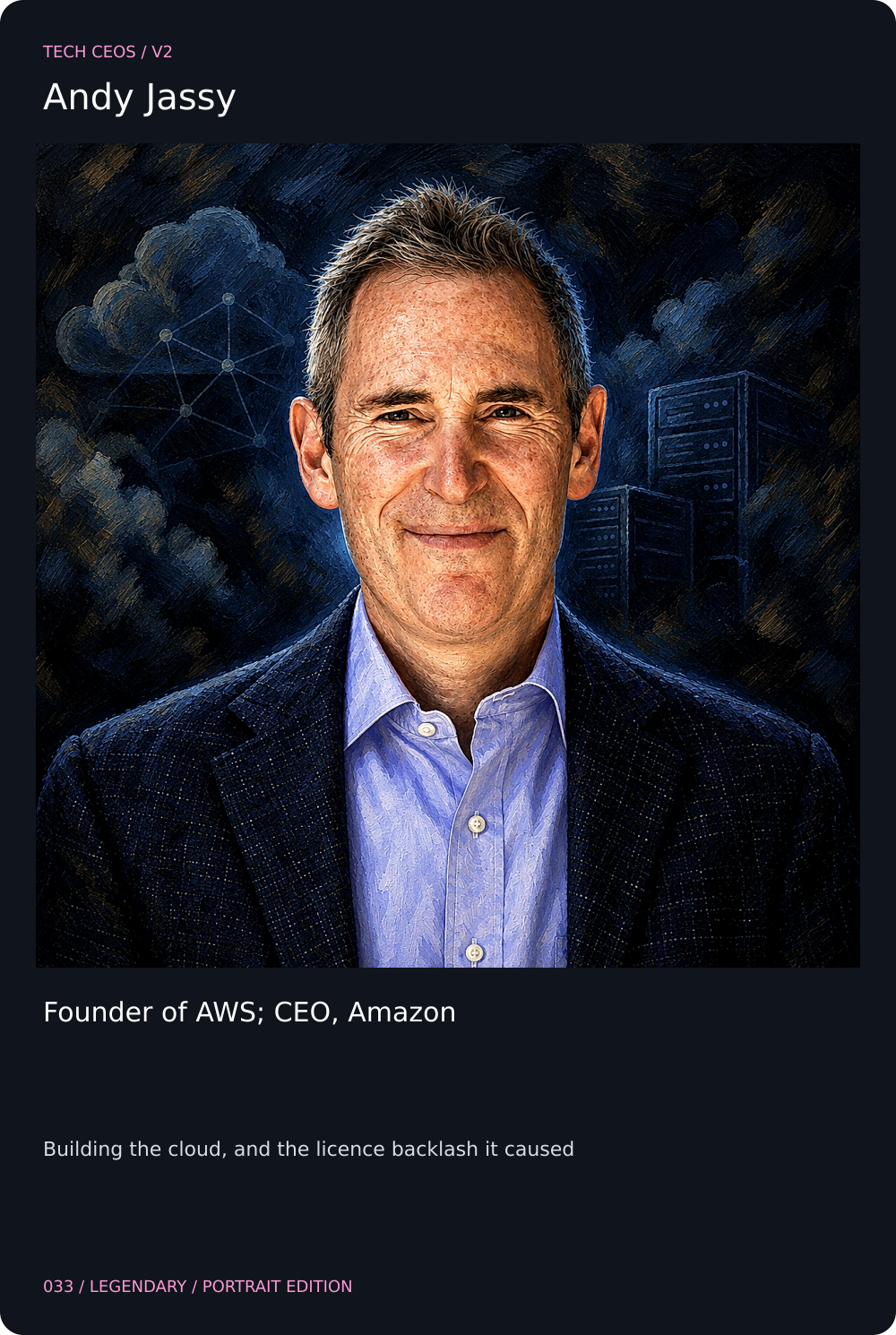
Chris WanstrathCo-founder and CEO, GitHubThe place the world’s open source moved to
Developer platformsGitCollaboration
USA2008–201888

Co-founded GitHub in 2008 and was CEO through the period when it became the default home of open source, largely by making the pull request a social object rather than a mailing-list patch. The company was bootstrapped for four years, ran on a famously flat structure that later came apart, and sold to Microsoft for $7.5 billion in 2018.

Locked inCard page
035Epic
Jim Whitehurst card front
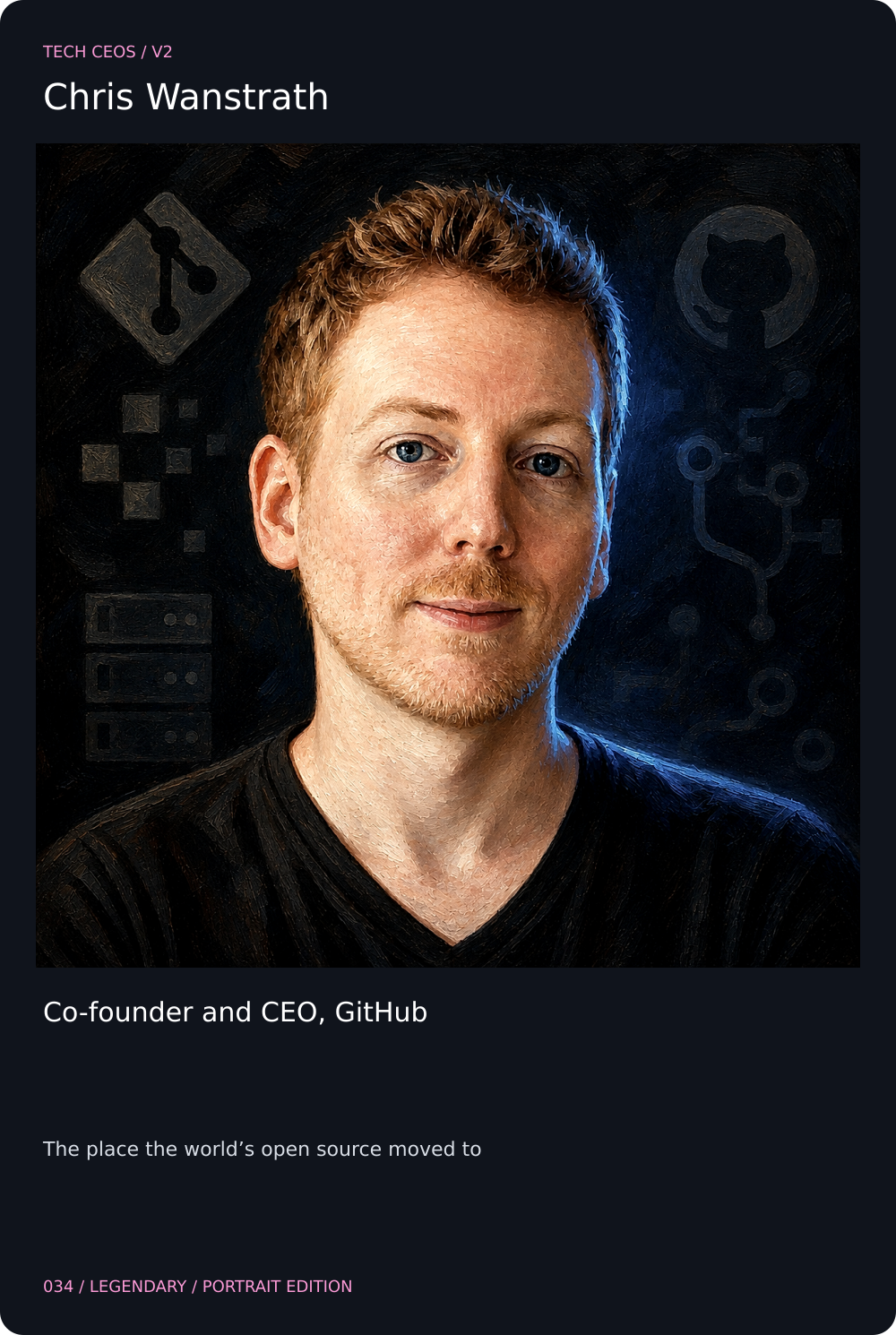
Jim WhitehurstCEO, Red HatTaking an open source company past three billion in revenue
LinuxOpen source businessEnterprise
USA2008–202083

Came from Delta Air Lines to run Red Hat in 2008 and grew it from about $500 million to over $3 billion in annual revenue, the first open source company at that scale, before selling to IBM for $34 billion in 2019. He wrote The Open Organization, and backed the OpenShift bet on Kubernetes early.

Locked inCard page
036Epic
Matthew Prince card front
Matthew PrinceCo-founder and CEO, CloudflareA free tier that quietly became internet infrastructure
CDNSecurityEdge computing
USA2009–82

Co-founded Cloudflare in 2009 with Michelle Zatlyn and Lee Holloway and gave away DDoS protection and a CDN to anyone who asked, which is why a large share of the web now passes through it. The company open-sourced Quiche, Pingora and the Workers runtime, funded Let’s Encrypt, and runs Project Galileo for civil society sites at no charge.

Locked inCard page
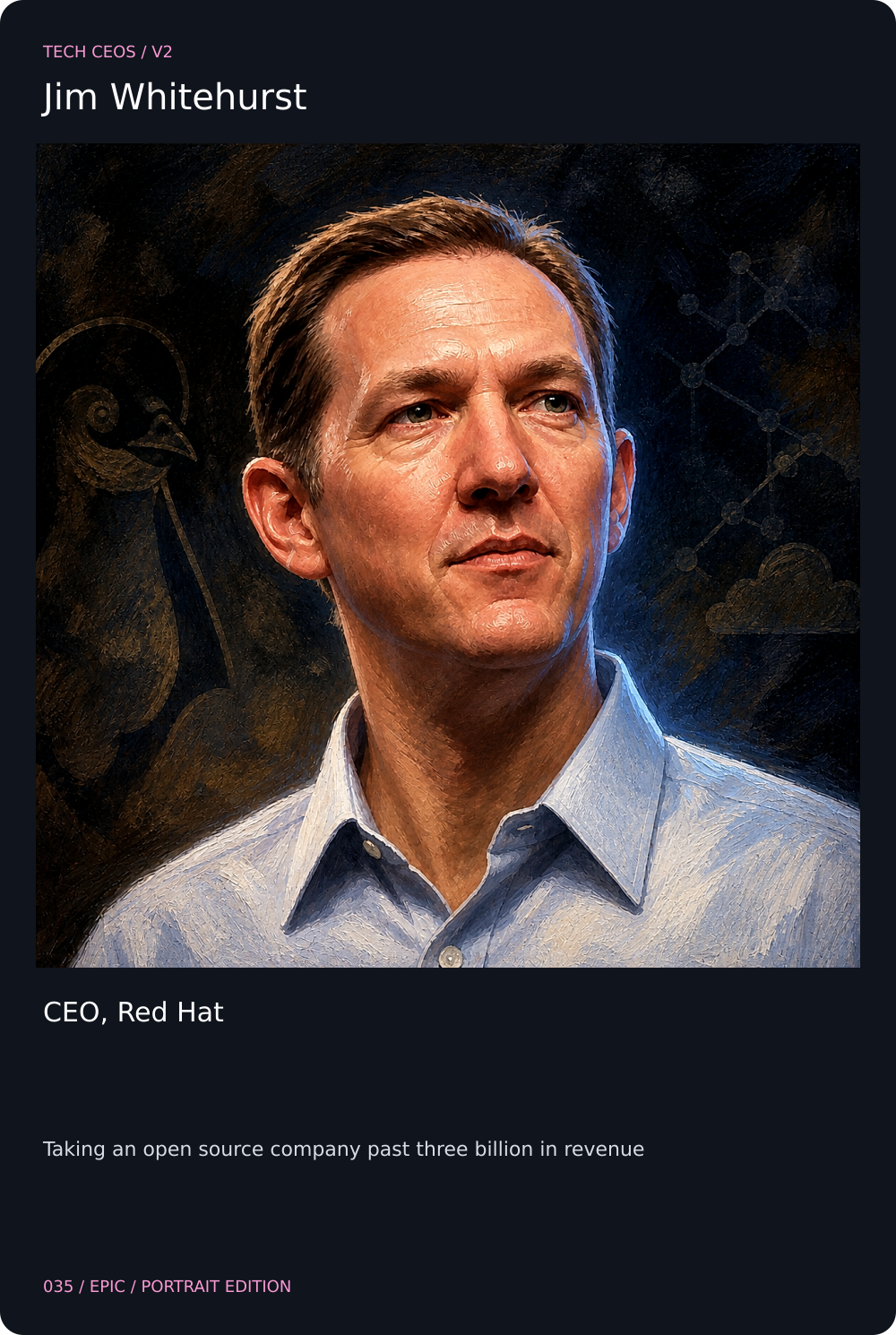
037Epic
Patrick Collison card front
Patrick CollisonCo-founder and CEO, StripeSeven lines of code instead of a merchant account
PaymentsDeveloper platformsAPIs
Ireland2010–82

Founded Stripe with his brother John in 2010, when accepting a card online meant weeks of paperwork with a bank, and replaced it with an API you could integrate in an afternoon. The company set the standard for what developer documentation is expected to look like, and open-sourced Sorbet, a gradual type checker for Ruby now used well beyond Stripe.

Locked inCard page
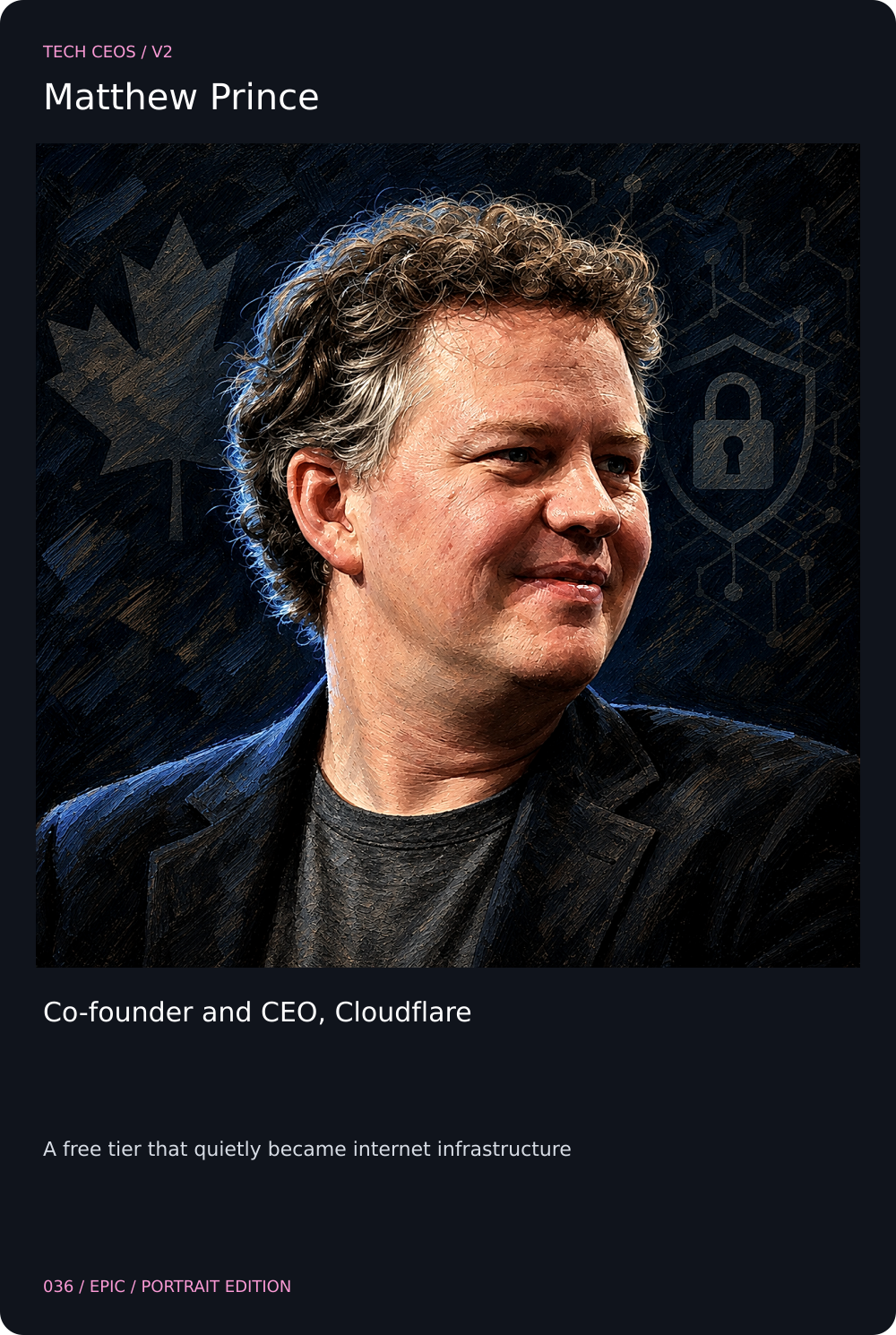
038Legendary
Tim Cook card front
Tim CookCEO, AppleOperating the largest company in the world, and Swift
Supply chainConsumer devicesSilicon
USA1998–90

Joined Apple in 1998 and rebuilt its supply chain into the most efficient operation in consumer electronics, then took over in 2011 and grew the company past a three trillion dollar valuation. The move to Apple Silicon was the largest architecture migration any consumer platform has attempted. Apple open-sourced Swift in 2015 and funds LLVM, Clang and WebKit.

Locked inCard page
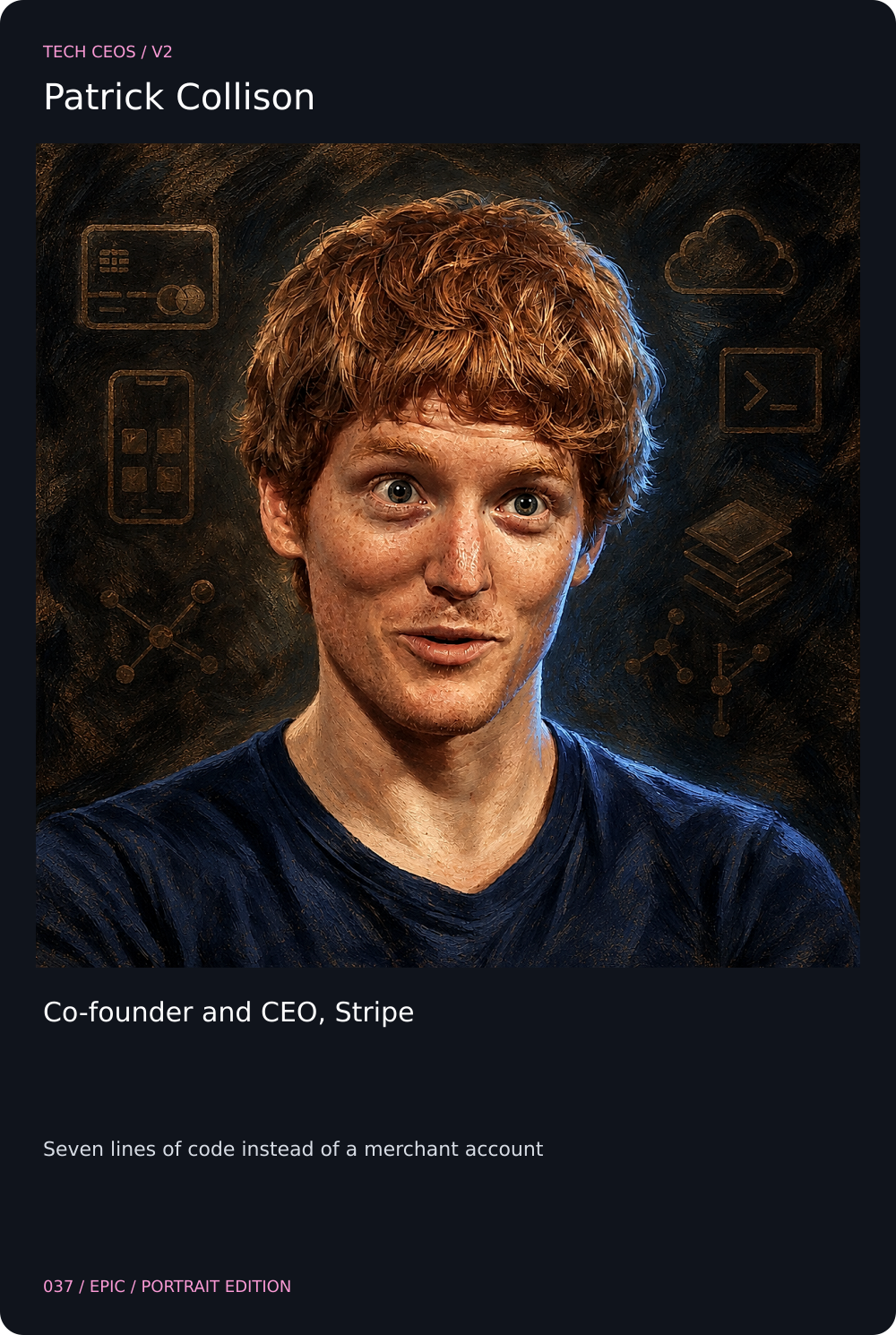
039Epic
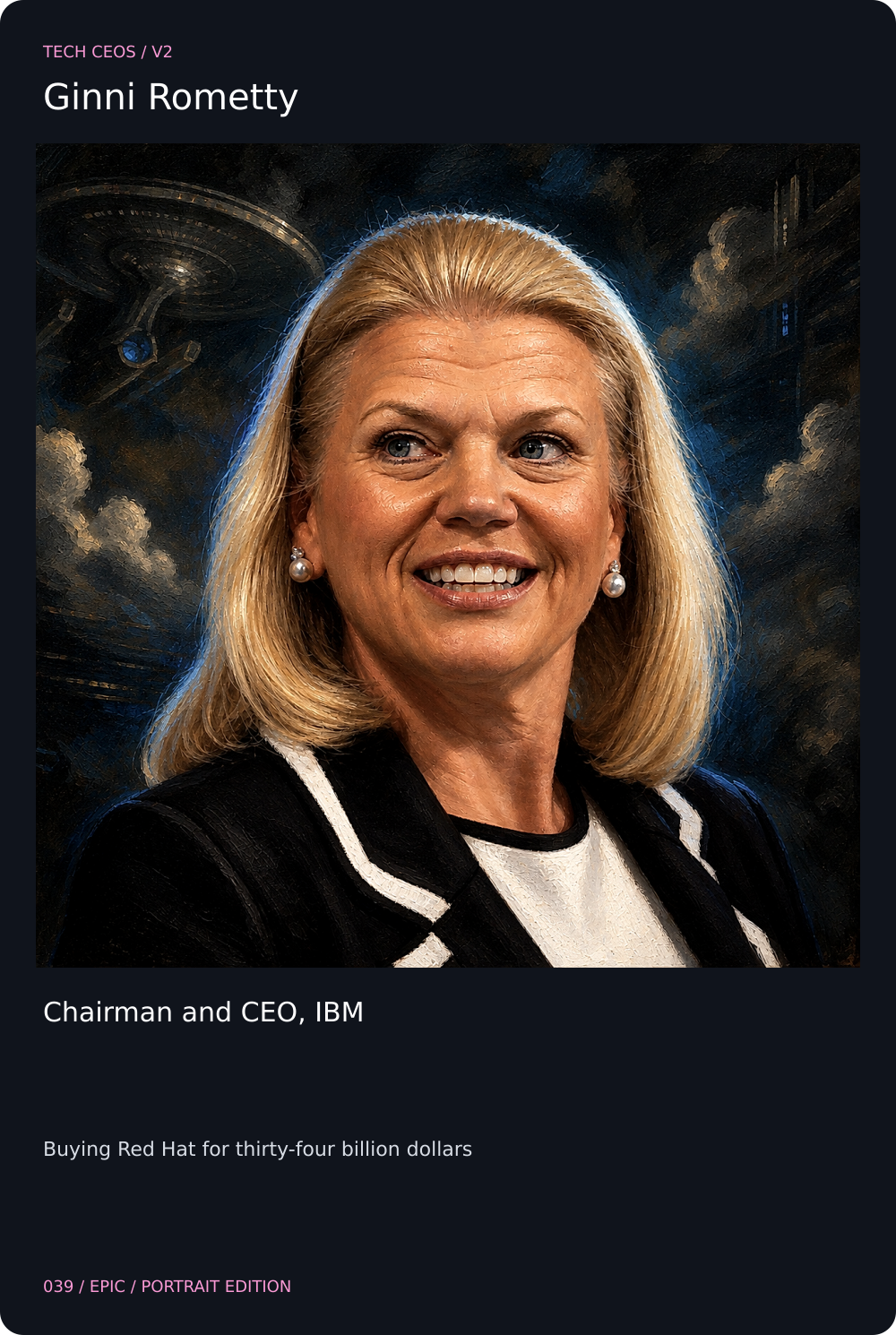
Ginni Rometty card front
Ginni RomettyChairman and CEO, IBMBuying Red Hat for thirty-four billion dollars
EnterpriseCloudHybrid infrastructure
USA1981–202079

Joined IBM as a systems engineer in 1981 and became its first woman CEO in 2012, running the company through a long and contested revenue decline as it shifted toward cloud. The decision she will be remembered for is the 2019 acquisition of Red Hat for $34 billion, structured to leave Red Hat operating independently, which is why the community did not scatter.

Locked inCard page
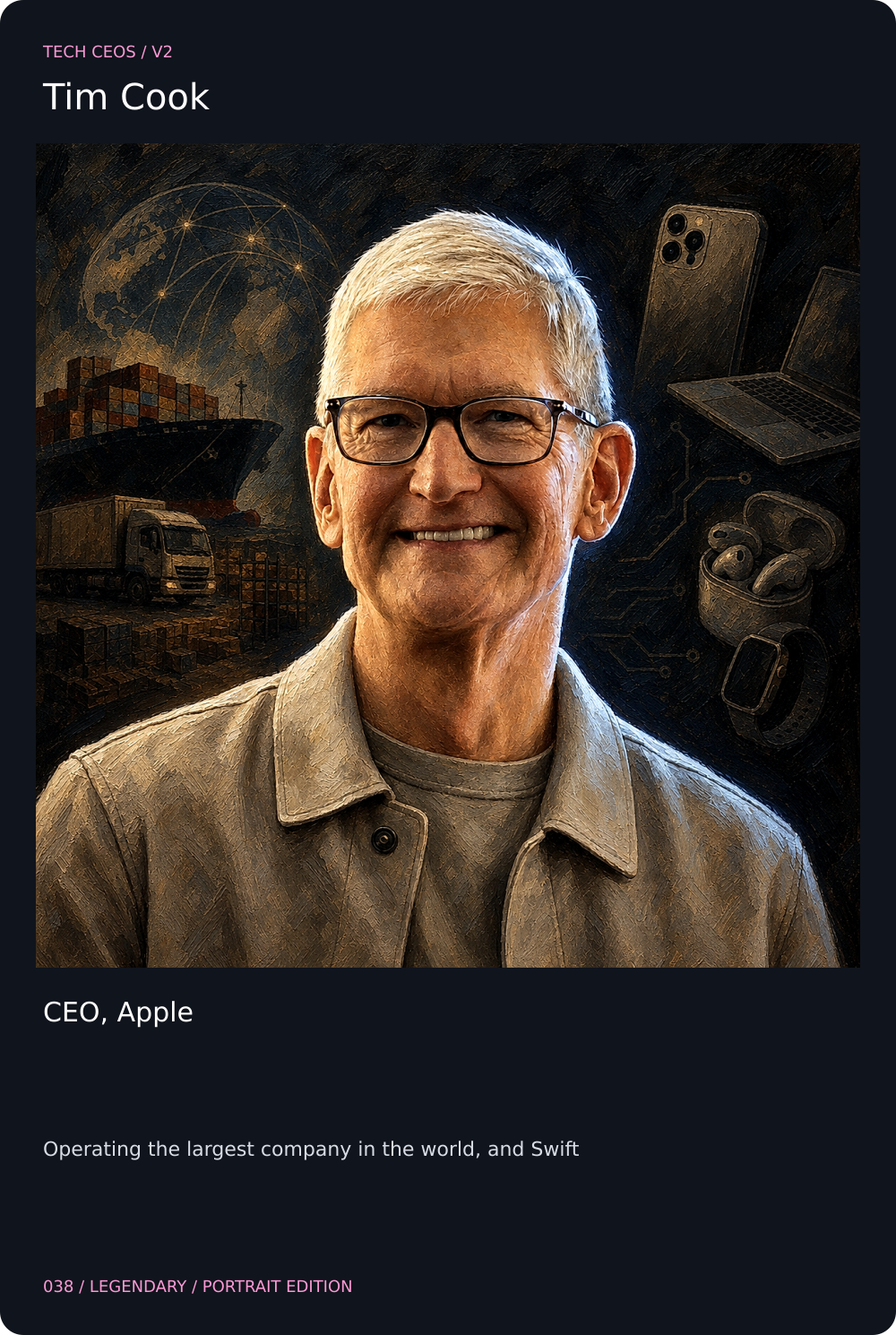
040Epic
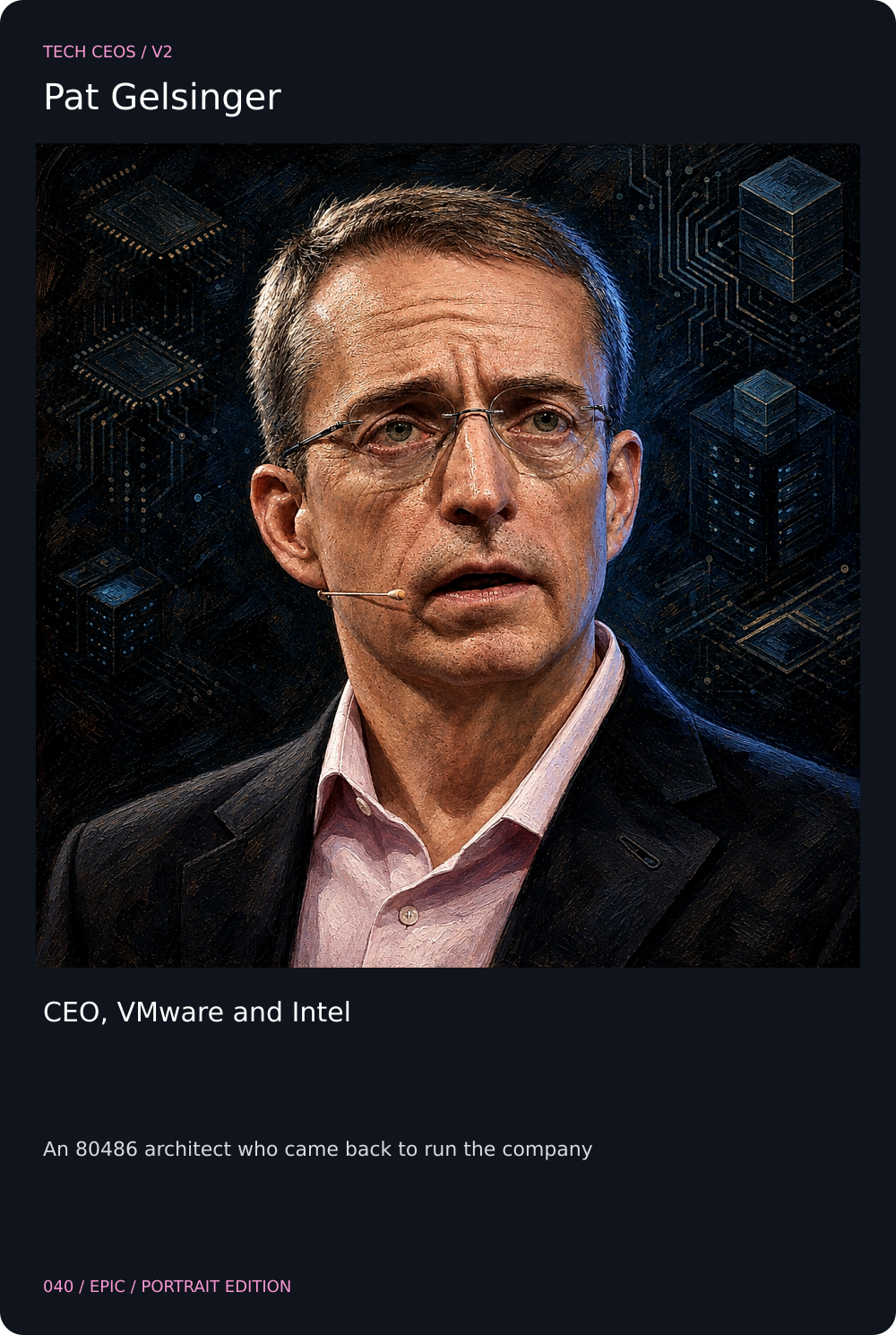
Pat Gelsinger card front
Pat GelsingerCEO, VMware and IntelAn 80486 architect who came back to run the company
ProcessorsVirtualisationManufacturing
USA1979–202480

Joined Intel at eighteen, led the design of the 80486 and became the company’s first CTO, then ran VMware from 2012 through its Kubernetes pivot, then returned as Intel’s CEO in 2021 to attempt the hardest turnaround in the industry: rebuilding leading-edge manufacturing against TSMC. He left in 2024 with that unfinished.
Locked inCard page
041Iconic
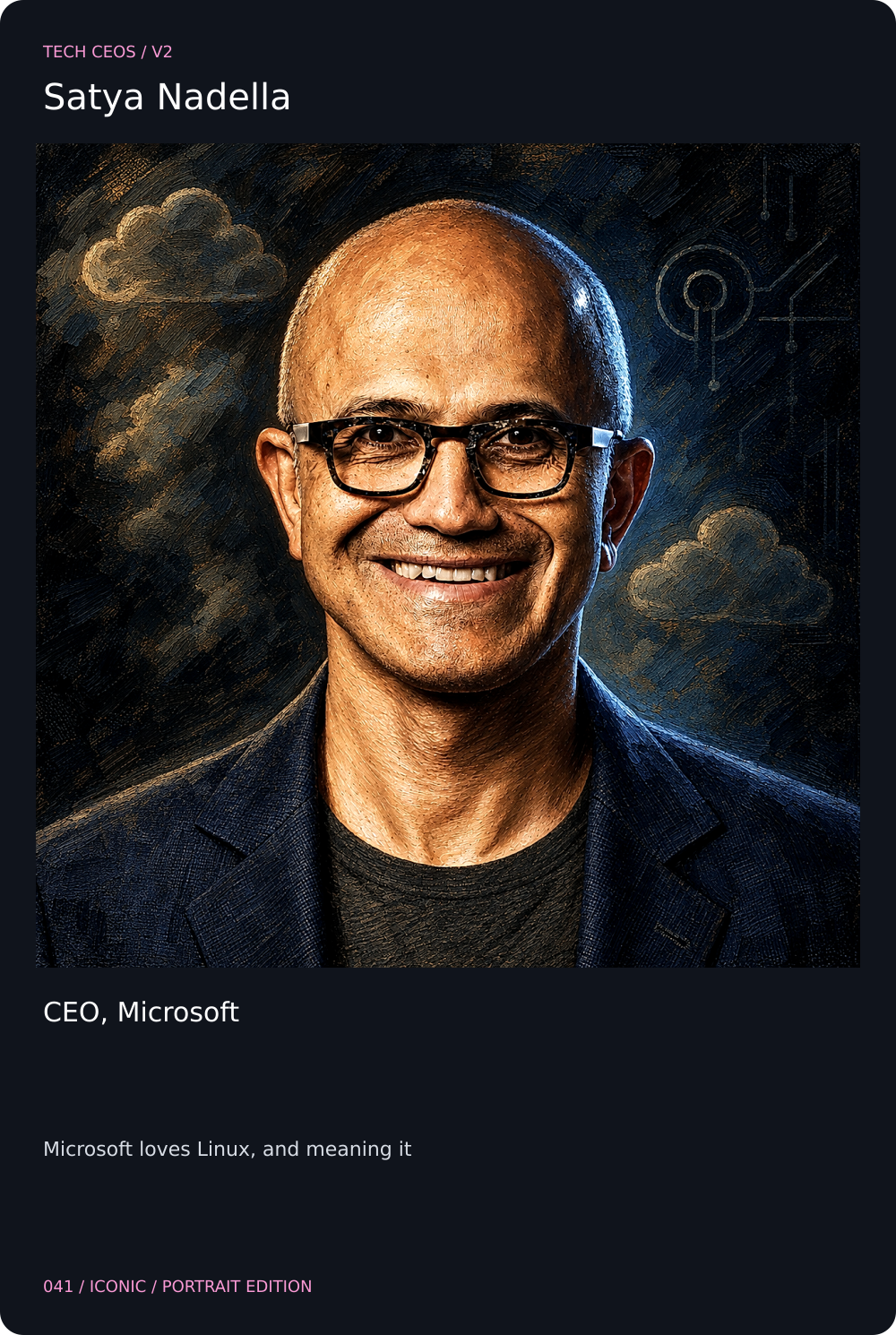
Satya Nadella card front
Satya NadellaCEO, MicrosoftMicrosoft loves Linux, and meaning it
CloudOpen sourceAI
India / USA1992–95

Took over Microsoft in 2014, a company whose previous CEO had called Linux a cancer, and reversed the posture completely: .NET open-sourced and cross-platform, the Linux kernel shipped inside Windows as WSL, VS Code released under MIT, Microsoft joining the Linux Foundation, and GitHub bought for $7.5 billion in 2018 and left to run itself.

Locked inCard page
042Iconic
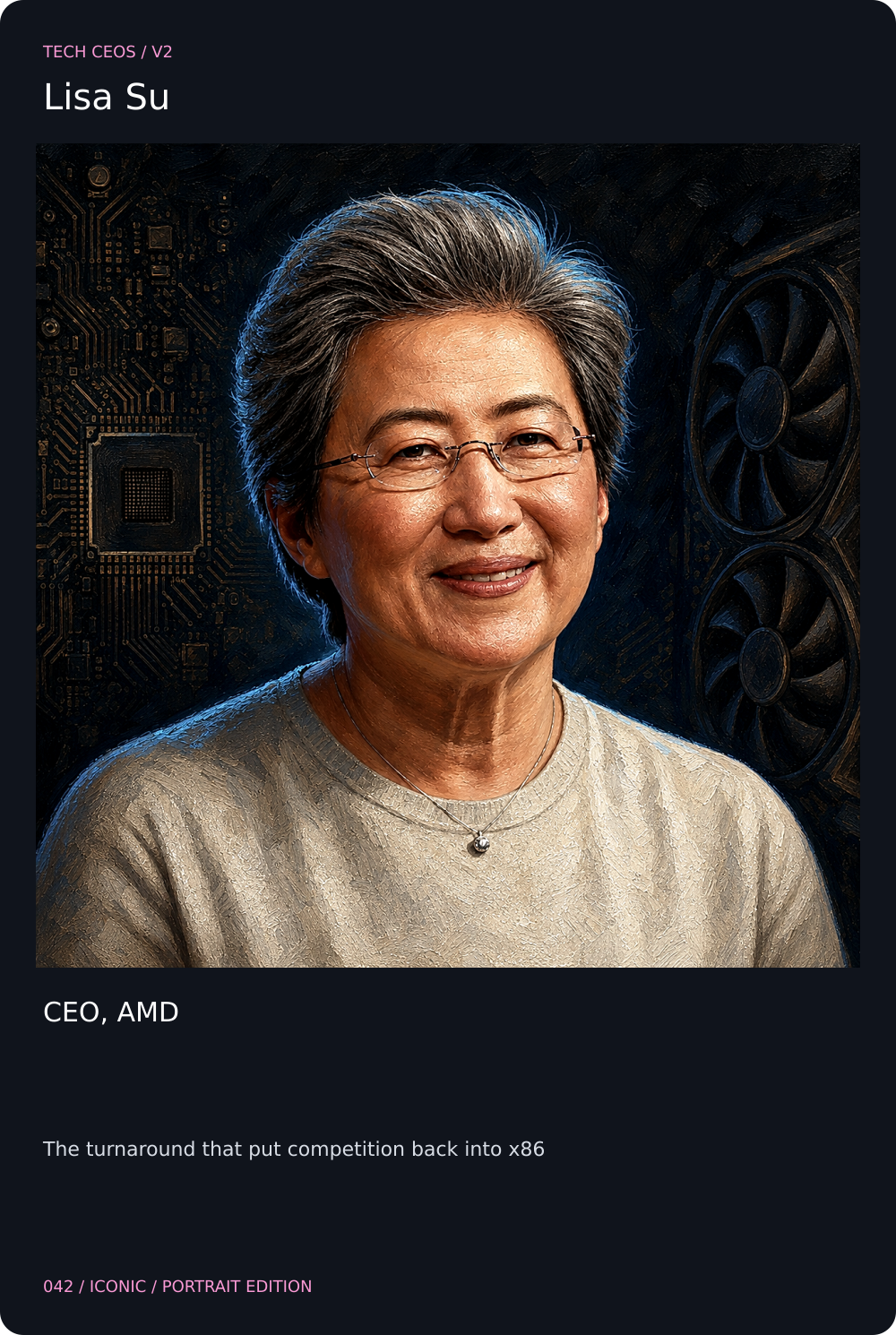
Lisa Su card front
Lisa SuCEO, AMDThe turnaround that put competition back into x86
ProcessorsGPUsSemiconductors
Taiwan / USA2012–92

An MIT-trained semiconductor engineer with real silicon credentials, she took over an AMD near collapse in 2014, bet everything on the Zen architecture and a chiplet strategy, and turned it into a company that took server share from Intel and grew its market value more than fiftyfold. AMD’s ROCm stack is open source, the only credible open alternative to CUDA.

Locked inCard page
043Epic
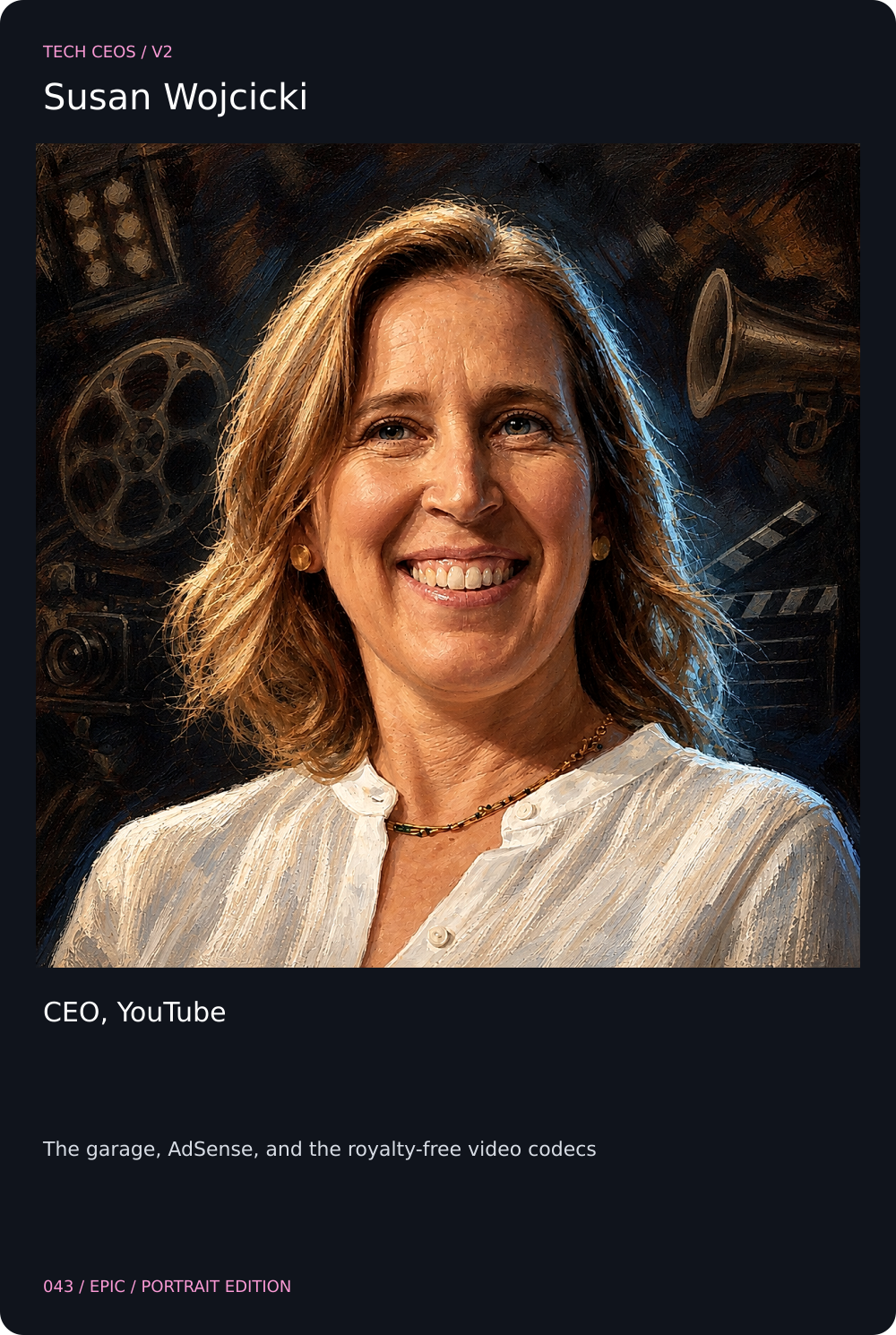
Susan Wojcicki card front
Susan WojcickiCEO, YouTubeThe garage, AdSense, and the royalty-free video codecs
VideoAdvertisingCodecs
USA1998–202482

Rented her Menlo Park garage to Google’s founders in 1998, became employee sixteen, built AdSense into the business that funded the free web, argued for buying YouTube in 2006, and ran it from 2014 to 2023. The open thread runs through the codecs: Google released VP8 and VP9 royalty-free, then AV1 through the Alliance for Open Media. She died in 2024.

Locked inCard page
044Epic
Sid Sijbrandij card front
Sid SijbrandijCo-founder and CEO, GitLabOpen core, an all-remote company, and a handbook anyone can read
DevOpsOpen coreRemote work
Netherlands2012–78

Turned Dmitriy Zaporozhets’ side project into a company in 2012 and took it public in 2021, running one of the few genuinely successful open core businesses: the community edition stays free and self-hostable while the enterprise tiers pay the bills. GitLab has been all-remote from the start and publishes its entire internal handbook in public.

Locked inCard page
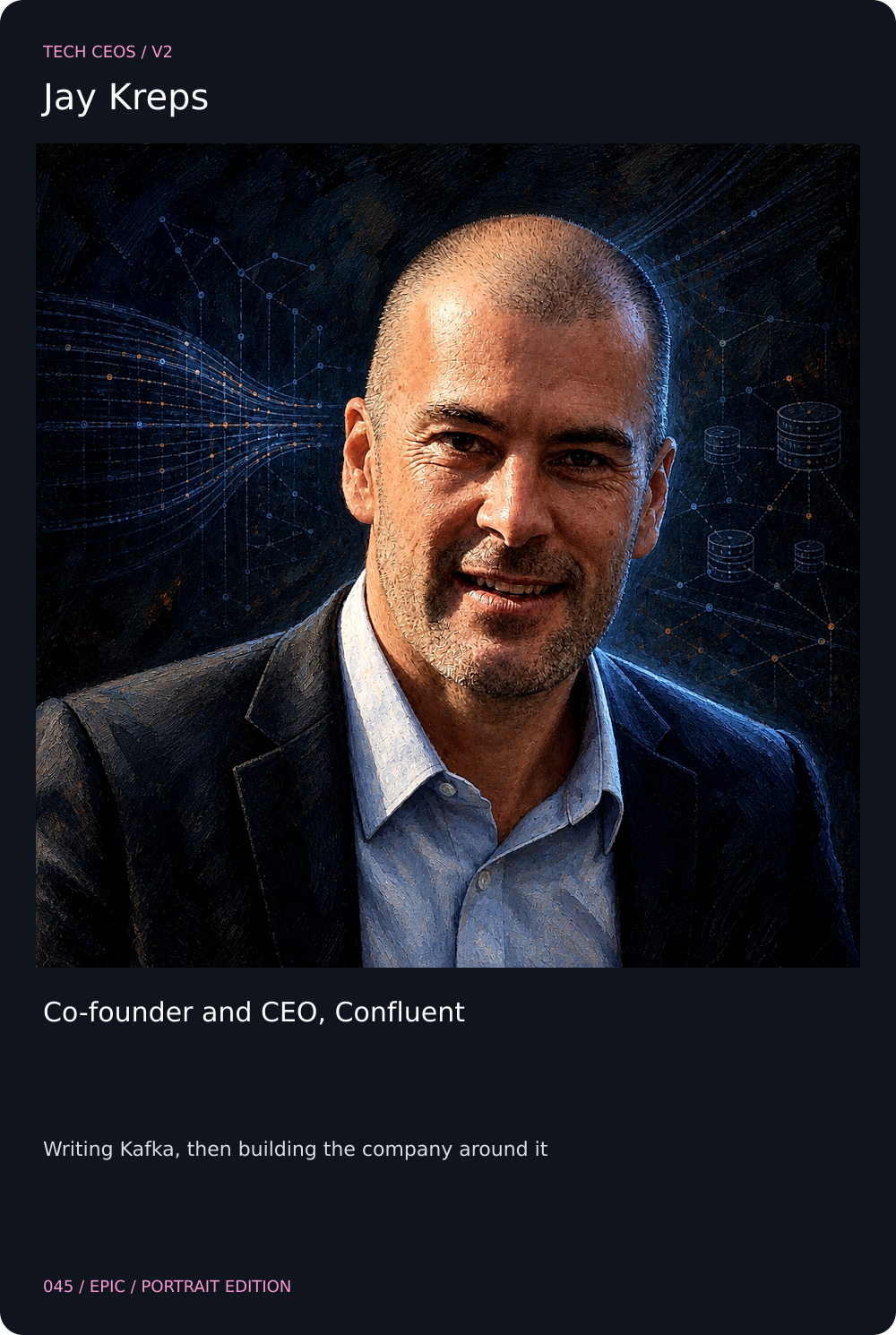
045Epic
Jay Kreps card front
Jay KrepsCo-founder and CEO, ConfluentWriting Kafka, then building the company around it
Streaming dataDistributed systemsOpen source business
USA2010–79

Co-created Apache Kafka at LinkedIn to solve the company’s own data-pipeline mess, wrote The Log, the essay that taught a generation of engineers to think of state as a replayable stream, and left in 2014 to found Confluent around it. Kafka is now infrastructure at most large companies, and Confluent went public in 2021.

Locked inCard page
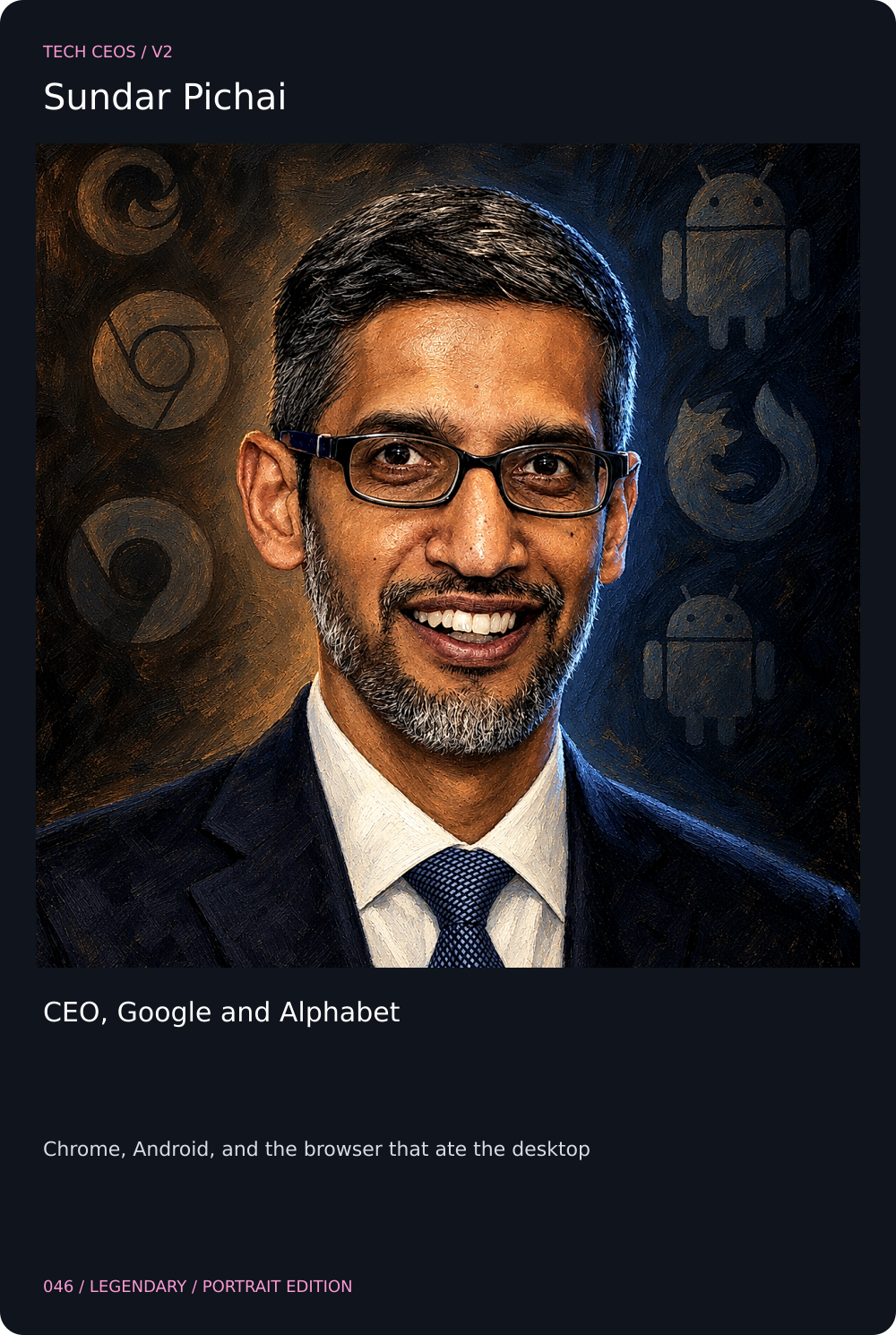
046Legendary
Sundar Pichai card front
Sundar PichaiCEO, Google and AlphabetChrome, Android, and the browser that ate the desktop
BrowsersAndroidAI
India / USA2004–90

Made his name arguing internally that Google should build a browser at all, shipped Chrome in 2008 and took it from nothing to dominant, picking up Android and Chrome OS on the way before becoming CEO in 2015. Google under him released TensorFlow, Kubernetes, Go and Chromium, while facing antitrust rulings over the businesses that pay for all of it.

Locked inCard page
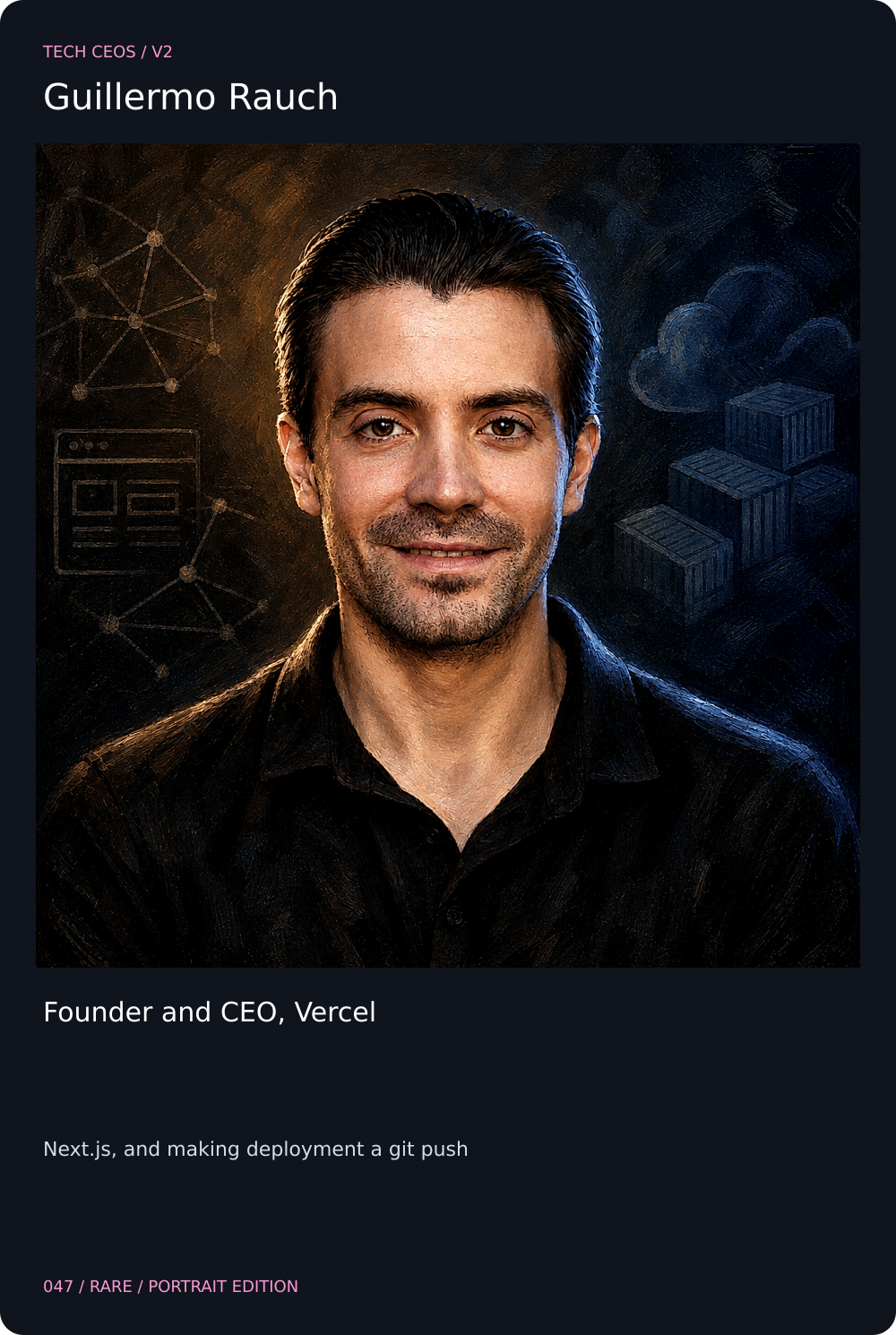
047Rare
Guillermo Rauch card front
Guillermo RauchFounder and CEO, VercelNext.js, and making deployment a git push
Web frameworksDeploymentJavaScript
Argentina / USA2010–76

Wrote socket.io and mongoose before founding the company now called Vercel, which maintains Next.js, the most used React framework, and turned preview deployments on every pull request into a baseline expectation rather than a luxury. He is also the clearest example of the open-core tension of his generation: the framework is MIT, the hosting is the business.

Locked inCard page
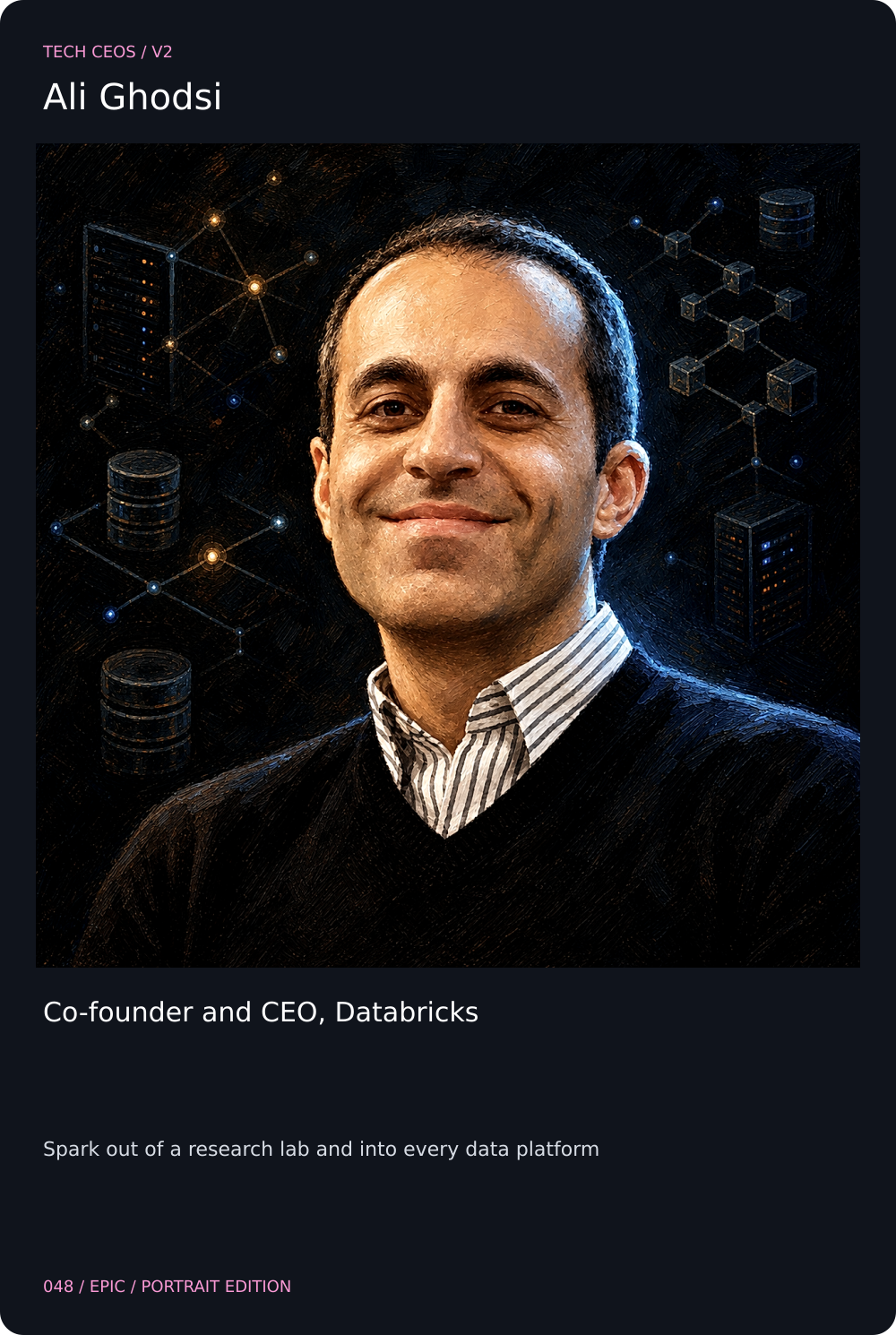
048Epic
Ali Ghodsi card front
Ali GhodsiCo-founder and CEO, DatabricksSpark out of a research lab and into every data platform
Data platformsDistributed computingAI
Iran / Sweden / USA2013–81

One of the Berkeley AMPLab researchers behind Apache Spark, which replaced MapReduce as the default way to process large datasets, and CEO of Databricks since 2016. The company has kept releasing the substrate rather than hoarding it: Delta Lake, MLflow, Unity Catalog and the Dolly models were all open-sourced, and it bought MosaicML and Tabular to keep the open table format from fragmenting.

Locked inCard page
049Epic
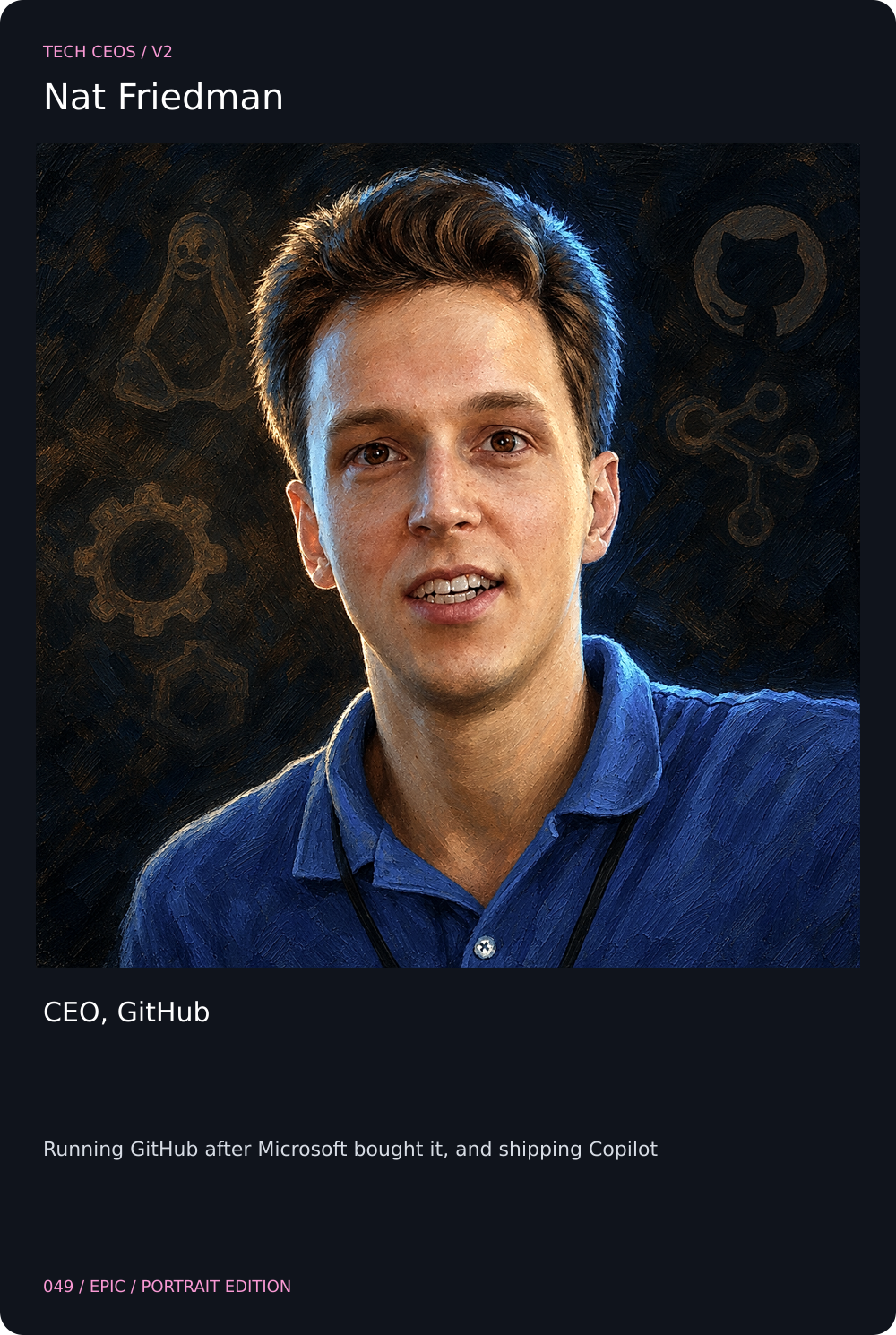
Nat Friedman card front
Nat FriedmanCEO, GitHubRunning GitHub after Microsoft bought it, and shipping Copilot
Developer platformsOpen sourceAI tooling
USA1999–82

Co-founded Ximian with Miguel de Icaza, carded in Series One, working on GNOME and Mono, then ran GitHub from 2018 to 2021, the years when the community expected Microsoft to ruin it. Instead private repositories became free, Actions and Codespaces shipped, and the Arctic Code Vault buried a snapshot of open source in a Norwegian mine.

Locked inCard page
050Iconic
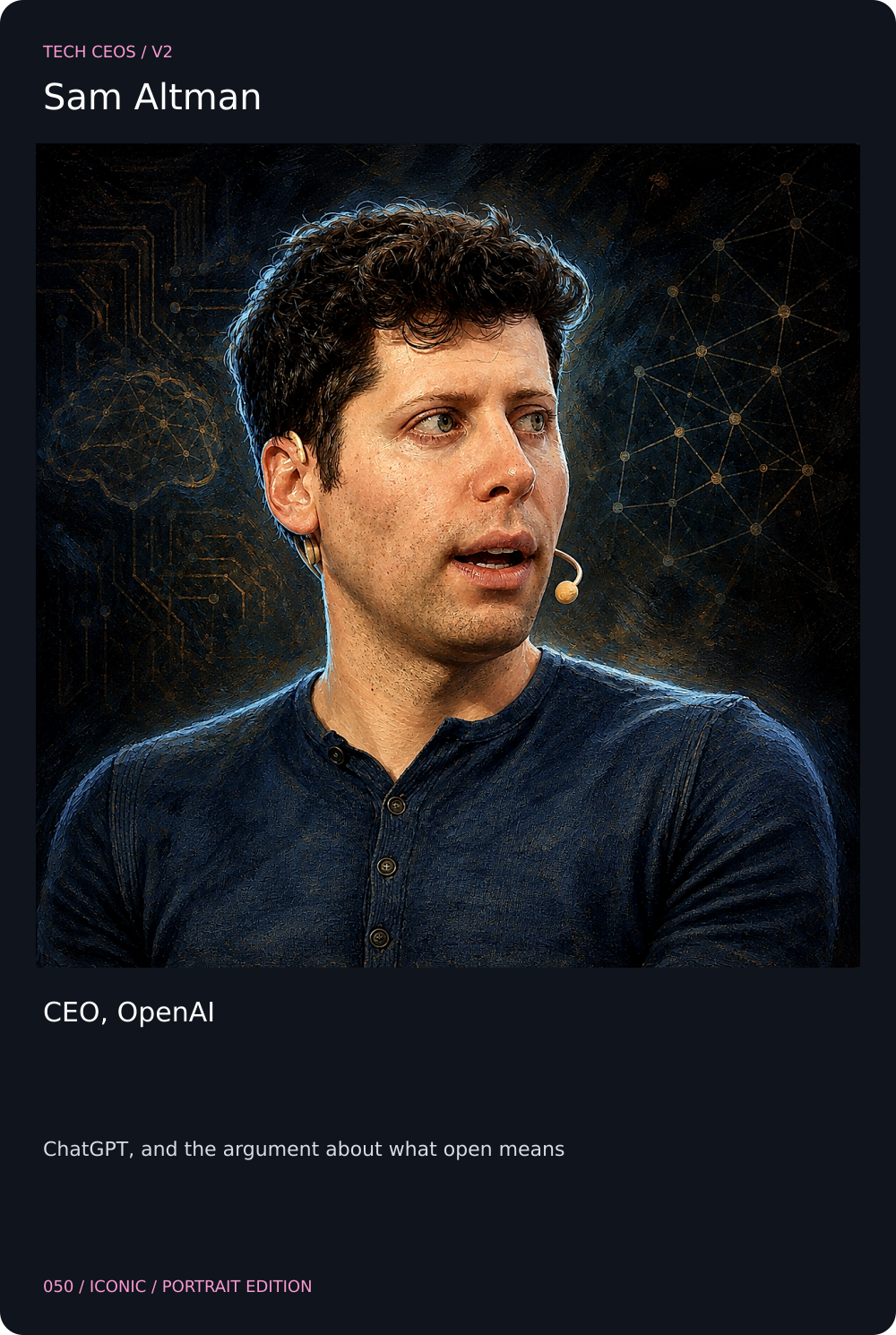
Sam Altman card front
Sam AltmanCEO, OpenAIChatGPT, and the argument about what open means
AIStartupsCapital
USA2005–94

Ran Y Combinator from 2014 to 2019, then OpenAI, where ChatGPT reached a hundred million users faster than any consumer product before it and forced every large technology company to reorganise around one technology. He was fired by his own board in November 2023 and reinstated five days later. The name is the permanent argument: frontier models closed, Whisper and gpt-oss open.

Locked inCard page
Not missing

Already in the collection

No name appears in two series, so these 15 founders and chief executives are not repeated here. Shuttleworth, Mullenweg and Hykes ran companies too; they were carded for what they built first.

Selection

What earns a card

Ran it

Chief executive, founder, or both

They held the job and made the calls. A brilliant CTO or a famous investor does not qualify here; several people on this list are carded for a single decision they signed off on.

Consequential

The industry moved

A market appeared, a business model became standard, an architecture won, or a company the size of a country changed direction. Personal wealth is not the measure and is not scored.

Open

What they gave away is scored

This is an open source card collection, so every card carries an openness number: code released, standards published, patents pledged, platforms left open. It is a judgement and you are welcome to argue with it.

Honest

The bad decisions get printed too

An antitrust ruling, a licence fight, a driver the kernel maintainers hated. Several people here spent years on the opposing side of the arguments this site was founded on, and the scouting reports say so.

Who are we missing?

Fifty slots across eighty-five years of the industry means the cuts were severe, and there are obvious names not on this list. Nominate someone, challenge a stat line, or rewrite a scouting report. Every card starts as a pull request.