Series Five In progress

Women in Tech

One hundred and eighty years, from the first published algorithm to the people auditing models today. The first compiler, the first assembler, the ARM instruction set, the Apollo guidance software, TF-IDF, zero-knowledge proofs, differential privacy and the code of conduct in your repository.

Series One of this collection has forty-seven cards and not one woman on any of them. That is the honest reason this set exists, and it is not a flattering one.

Roster drafted50/50
Cards locked50/50
Portraits from a verified photo50/50
The working roster

50 names, ordered by set number

Open the scouting report for the paper, patent or repository behind each claim, or go to a card's own page. Nothing here is final until the set is frozen.

001Iconic
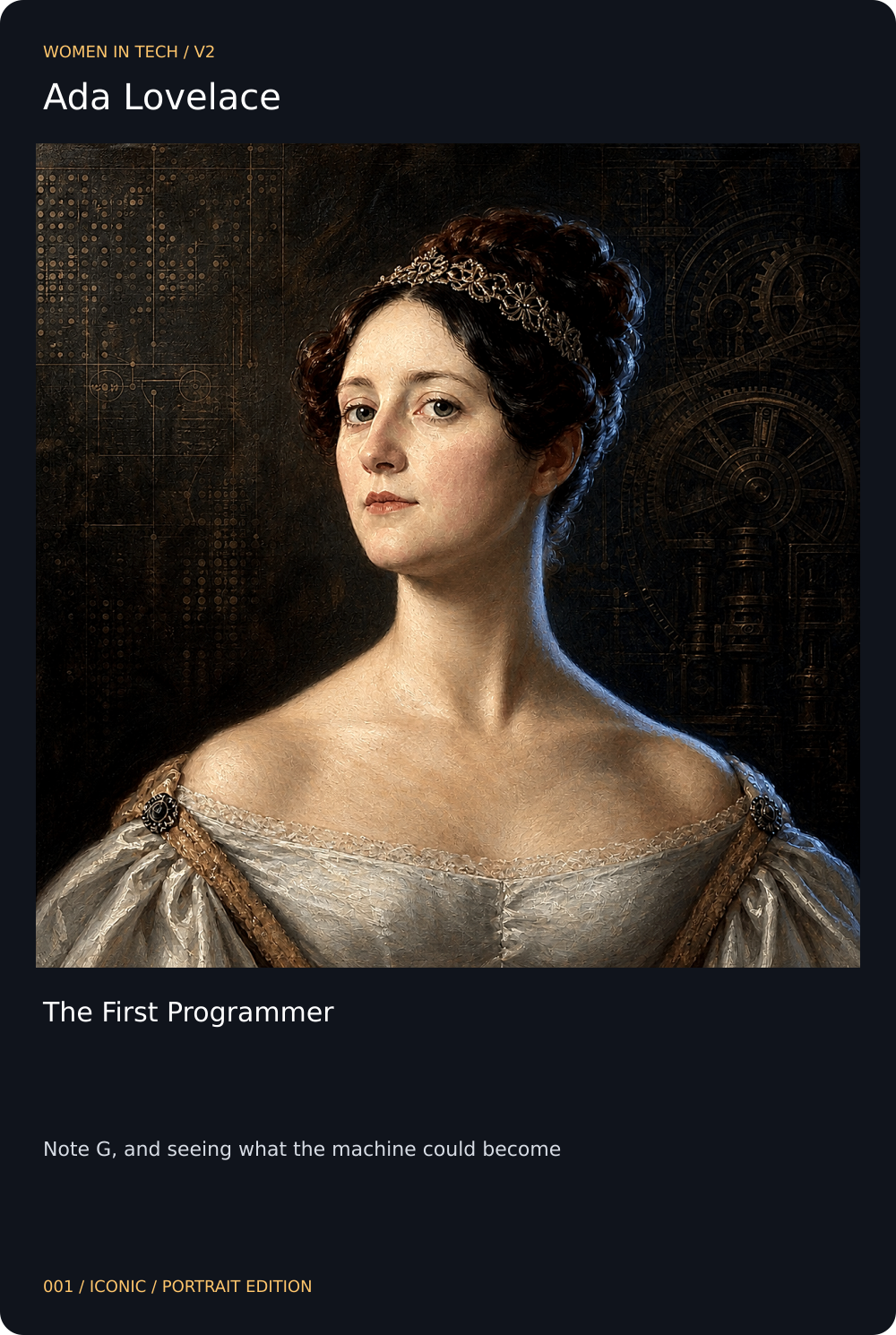
Ada Lovelace card front
Ada LovelaceThe First ProgrammerNote G, and seeing what the machine could become
AlgorithmsAnalytical EngineComputing theory
England1815-185297

Her 1843 notes on Babbage’s Analytical Engine ran three times longer than the paper she was translating and contained Note G, a step-by-step method for computing Bernoulli numbers that is generally read as the first published algorithm. More striking is that she argued the machine could act on things other than numbers, which nobody else did for a century.

Locked inCard page
002Iconic
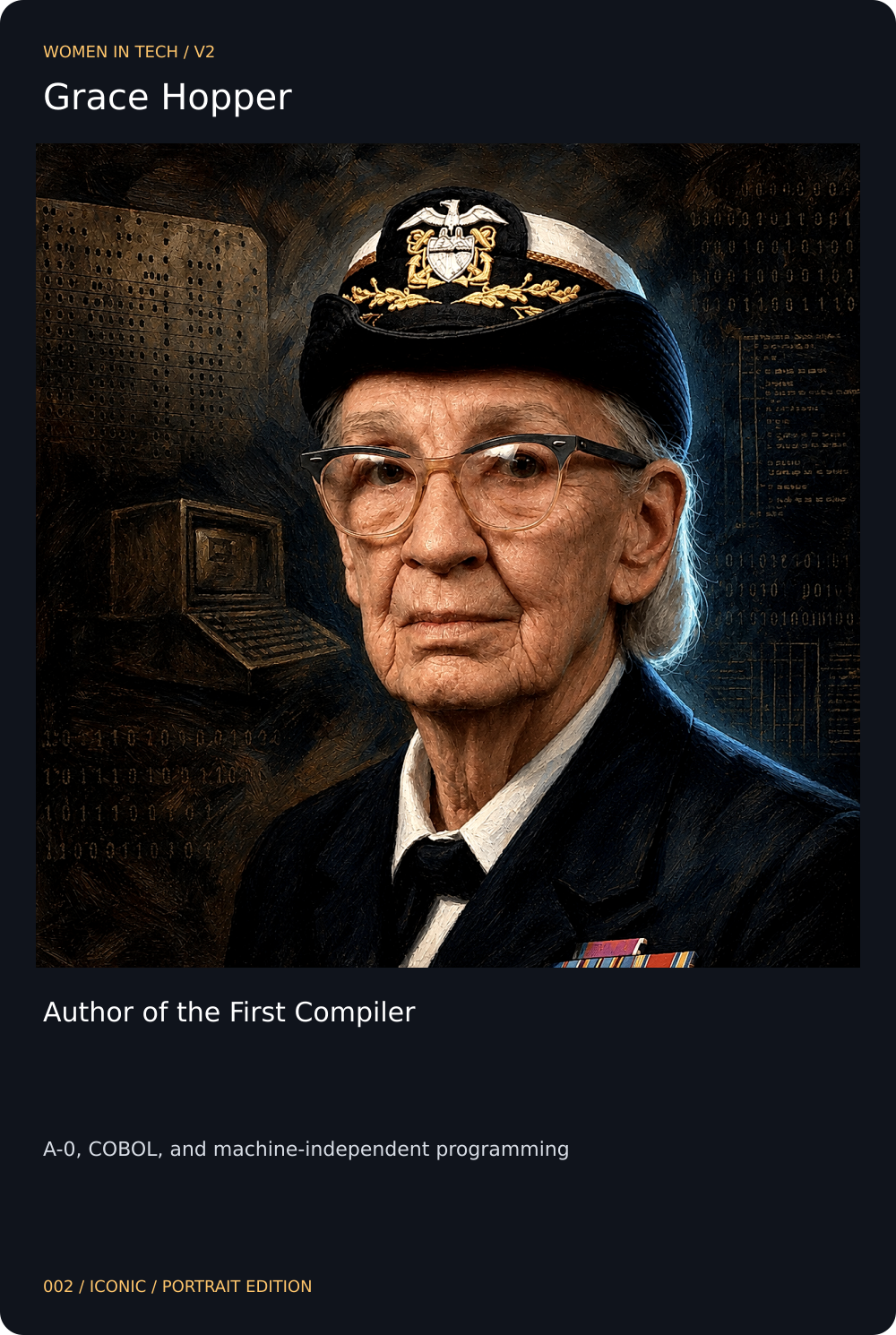
Grace Hopper card front
Grace HopperAuthor of the First CompilerA-0, COBOL, and machine-independent programming
CompilersCOBOLProgramming languages
USA1944-199298

Wrote the A-0 system in 1952, the first compiler, against a field that told her computers could only do arithmetic. Drove the design of FLOW-MATIC and then COBOL, which put business programming into something close to English and ran the world’s finance for decades. Rear Admiral, and the reason anyone says a program has a bug.

Locked inCard page
003Iconic
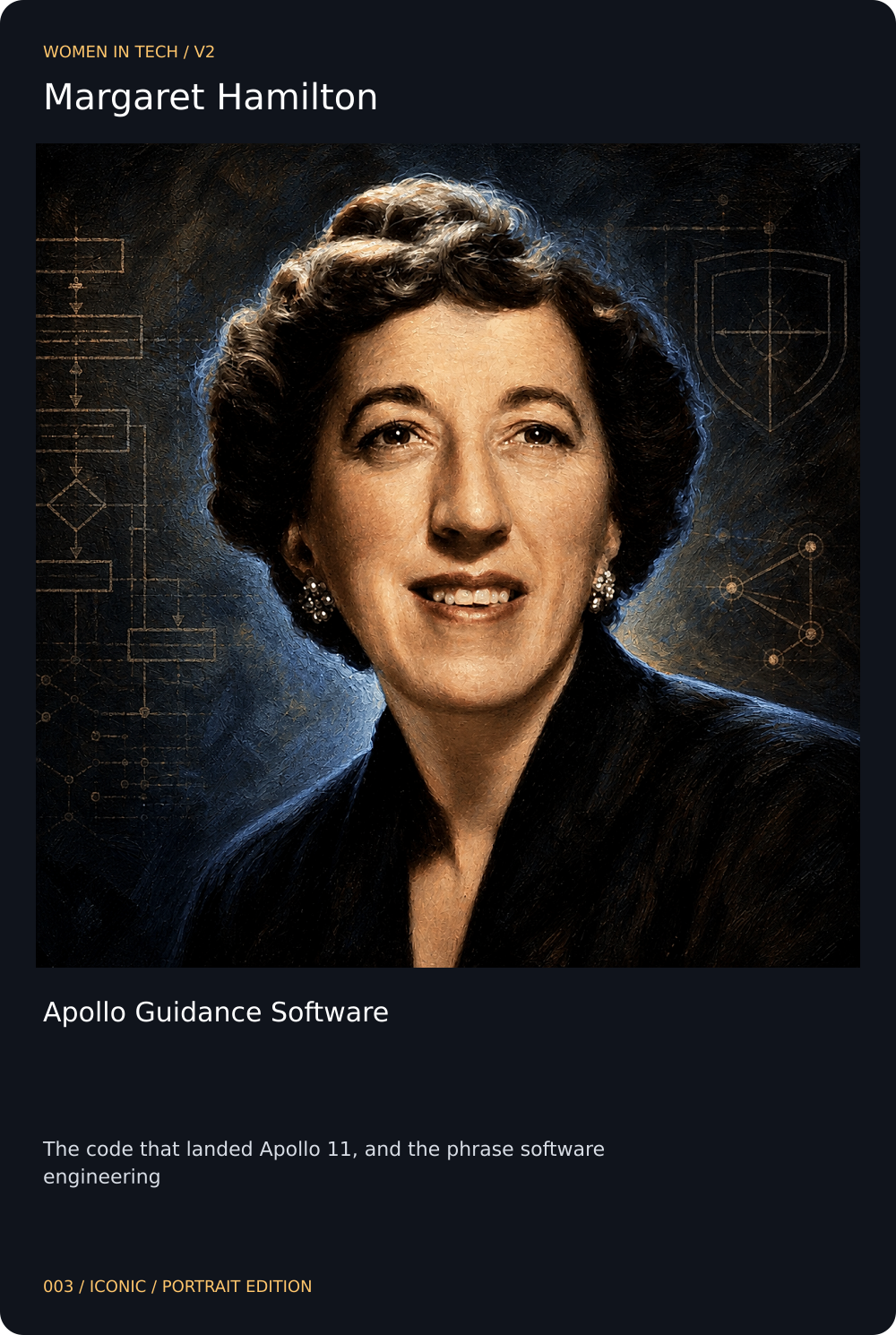
Margaret Hamilton card front
Margaret HamiltonApollo Guidance SoftwareThe code that landed Apollo 11, and the phrase software engineering
Flight softwareFault toleranceSoftware engineering
USA1965-present96

Led the team that wrote the Apollo onboard flight software at MIT, including the priority scheduling that let the guidance computer shed lower-priority work during the 1202 alarms three minutes before the lunar landing rather than fail. She coined the term software engineering, partly to get the discipline taken seriously.

Locked inCard page
004Legendary
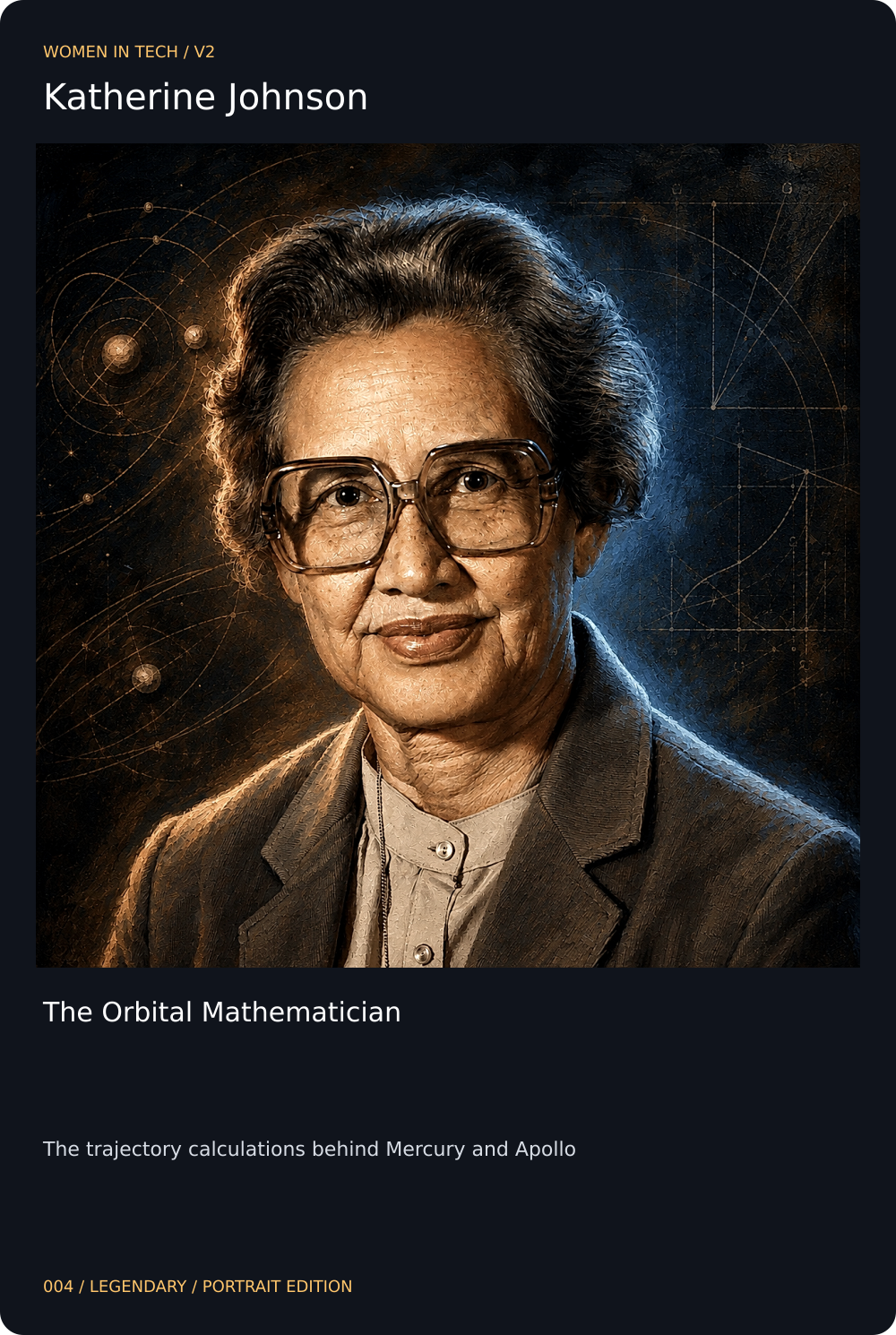
Katherine Johnson card front
Katherine JohnsonThe Orbital MathematicianThe trajectory calculations behind Mercury and Apollo
Orbital mechanicsNumerical analysisSpaceflight
USA1953-198692

Computed trajectories for Alan Shepard’s flight and the Apollo missions at NASA Langley. When the agency moved to electronic computers for John Glenn’s orbit, Glenn asked for her to check the machine’s numbers by hand before he would fly. Co-authored a 1960 report on orbital calculation, unusual for a woman at Langley then.

Locked inCard page
005Epic
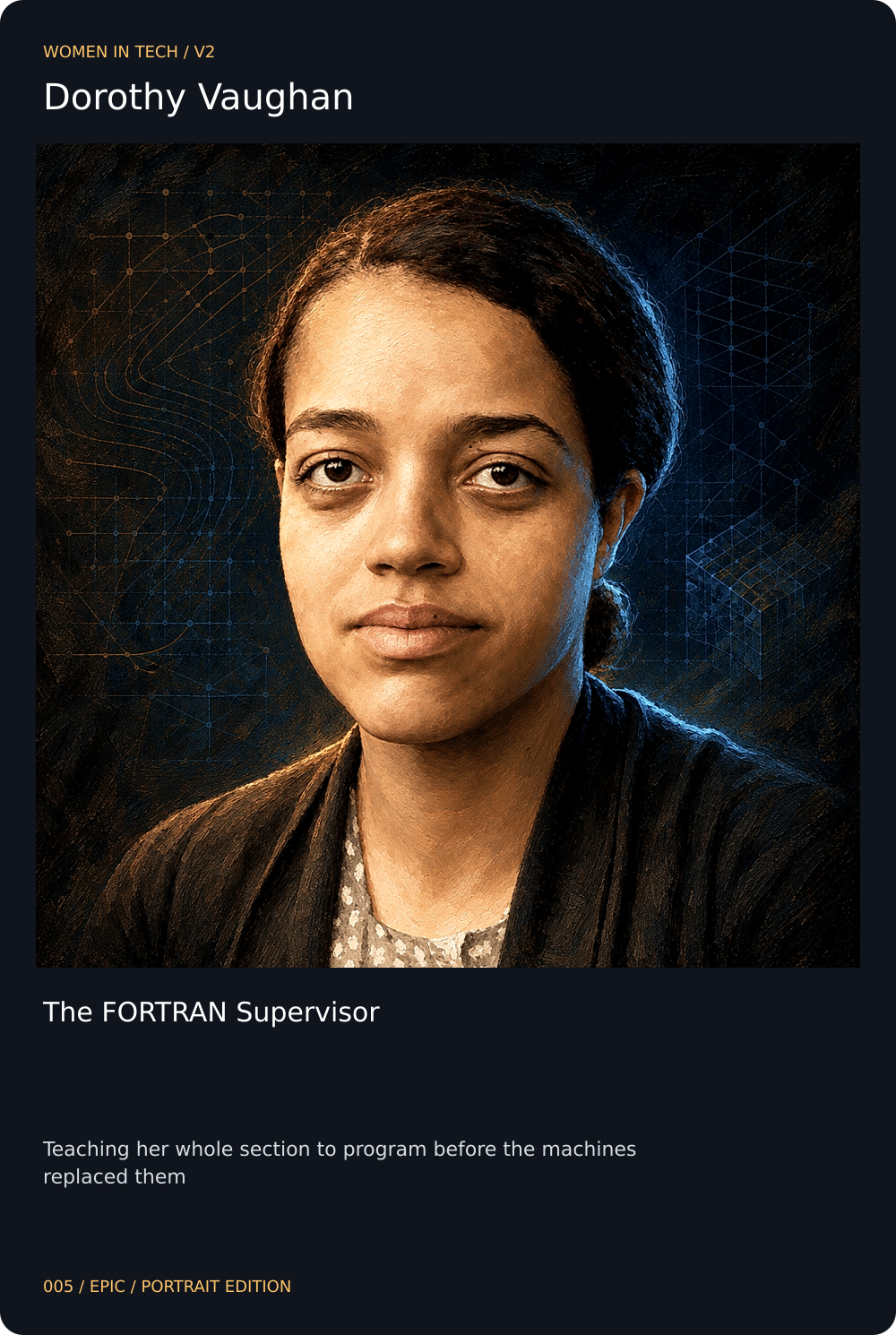
Dorothy Vaughan card front
Dorothy VaughanThe FORTRAN SupervisorTeaching her whole section to program before the machines replaced them
FORTRANNumerical computingTeam leadership
USA1943-197187

NASA’s first Black supervisor, running the segregated West Area Computing unit. Seeing that the arriving IBM machines would make human computers obsolete, she taught herself FORTRAN and then taught her staff, moving the whole group into programming rather than out of work. That is a rarer kind of technical foresight than the usual sort.

Locked inCard page
006Legendary
Jean Bartik card front
Jean BartikOne of the Six ENIAC ProgrammersProgramming the first electronic computer, then teaching it to store programs
ENIACStored-program computersEarly programming
USA1945-195189

One of the six women who programmed ENIAC by physically rewiring it, working from logic diagrams because no programming language or manual existed. They were called operators and left out of the 1946 press photographs. She went on to help convert ENIAC to a stored-program machine and to work on BINAC and UNIVAC.

Locked inCard page
007Epic
Betty Holberton card front
Betty HolbertonAuthor of the Sort-Merge GeneratorENIAC, the first generator program, and readable console design
Early programmingSortingHuman factors
USA1945-1980s86

ENIAC programmer who went on to write the sort-merge generator for UNIVAC, an early instance of a program that writes a program. She argued for the UNIVAC console being grey rather than black on human-factors grounds, worked on the C-10 instruction set, and later contributed to the COBOL and FORTRAN standards.

Locked inCard page
008Legendary
Kathleen Booth card front
Kathleen BoothInventor of Assembly LanguageThe first assembly language and its assembler
Assembly languageMachine architectureEarly neural networks
UK1947-196288

Wrote what is generally considered the first assembly language, for the ARC2 and later APE(X)C machines at Birkbeck, and the assembler to go with it. Co-wrote some of the earliest books on how to program and design these machines, and did early work applying neural network ideas to character recognition in the late 1950s.

Locked inCard page
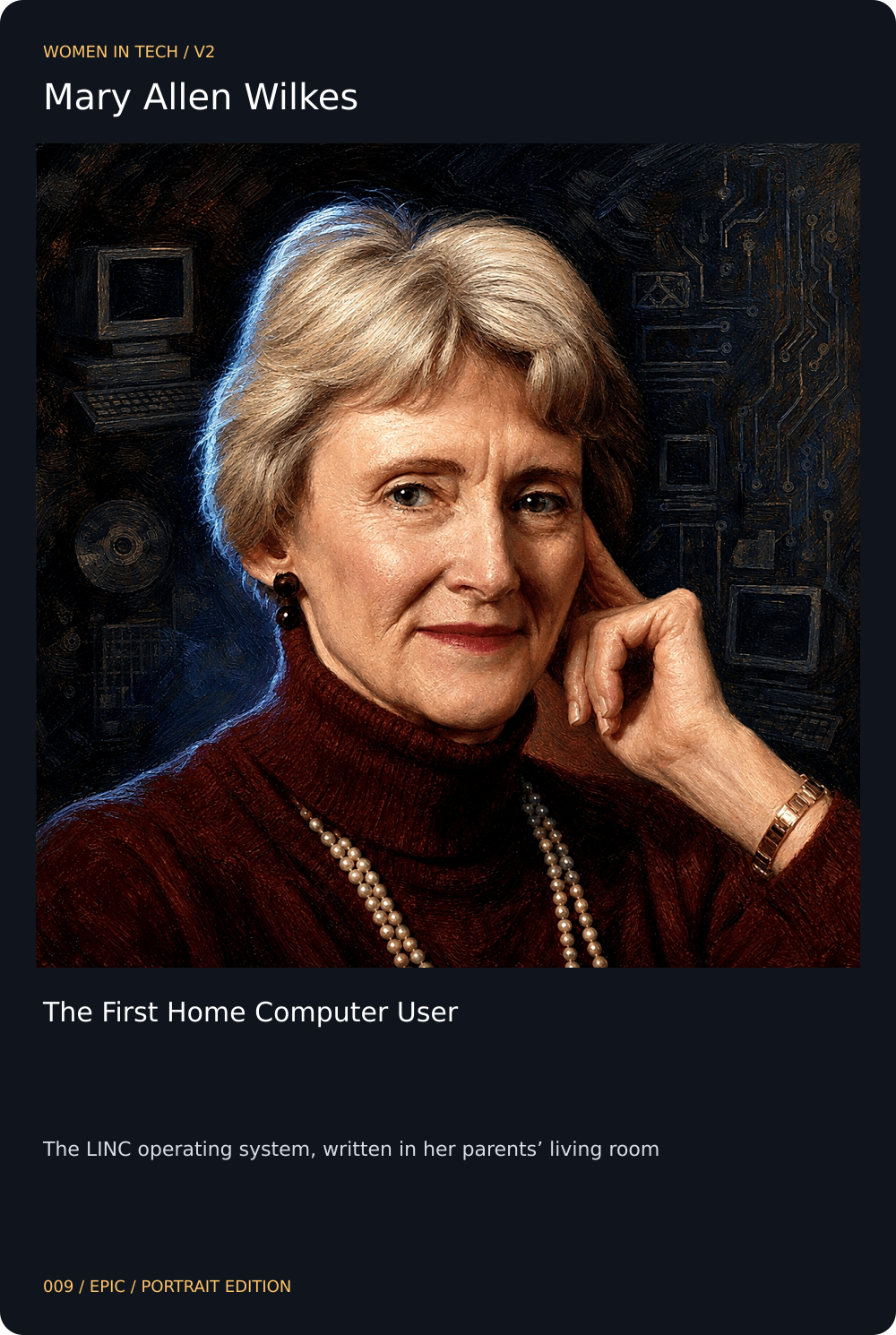
009Epic
Mary Allen Wilkes card front
Mary Allen WilkesThe First Home Computer UserThe LINC operating system, written in her parents’ living room
Operating systemsPersonal computingInteractive systems
USA1959-197285

Wrote LAP6, the operating system for the LINC, one of the first interactive personal computers. In 1965 she took a LINC home and used it there, which makes her plausibly the first person to have a computer in their house. LAP6 supported real-time text editing on a machine with two kilowords of memory.

Locked inCard page
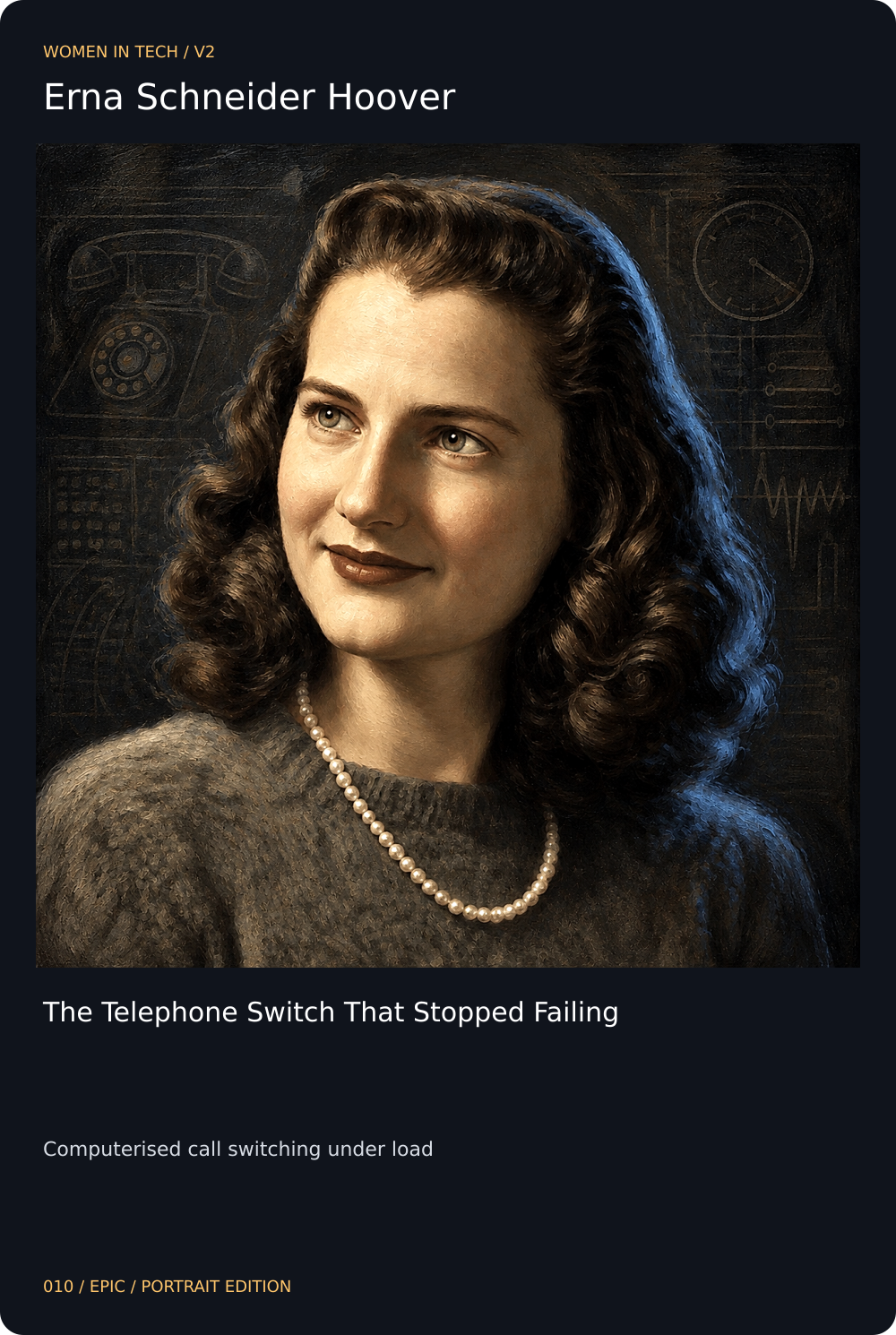
010Epic
Erna Schneider Hoover card front
Erna Schneider HooverThe Telephone Switch That Stopped FailingComputerised call switching under load
TelephonyReal-time systemsLoad control
USA1954-198785

At Bell Labs she designed a computerised switching system that monitored incoming call rates and prioritised work to stop exchanges collapsing under peak load, holding one of the first software patents for it. She reportedly sketched the design while in hospital after giving birth, and became the first woman supervisor of a technical department there.

Locked inCard page
011Legendary
Elizabeth Feinler card front
Elizabeth FeinlerKeeper of the Early InternetThe ARPANET directory, and the top-level domains
ARPANETDNSInternet infrastructure
USA1972-198989

Ran the Network Information Center at SRI, which was the ARPANET’s directory, help desk and registry, publishing the Resource Handbook and maintaining the HOSTS.TXT file that every machine on the network relied on. Her group proposed the domain naming scheme that gave us .com, .edu, .gov, .mil, .net and .org.

Locked inCard page
012Legendary
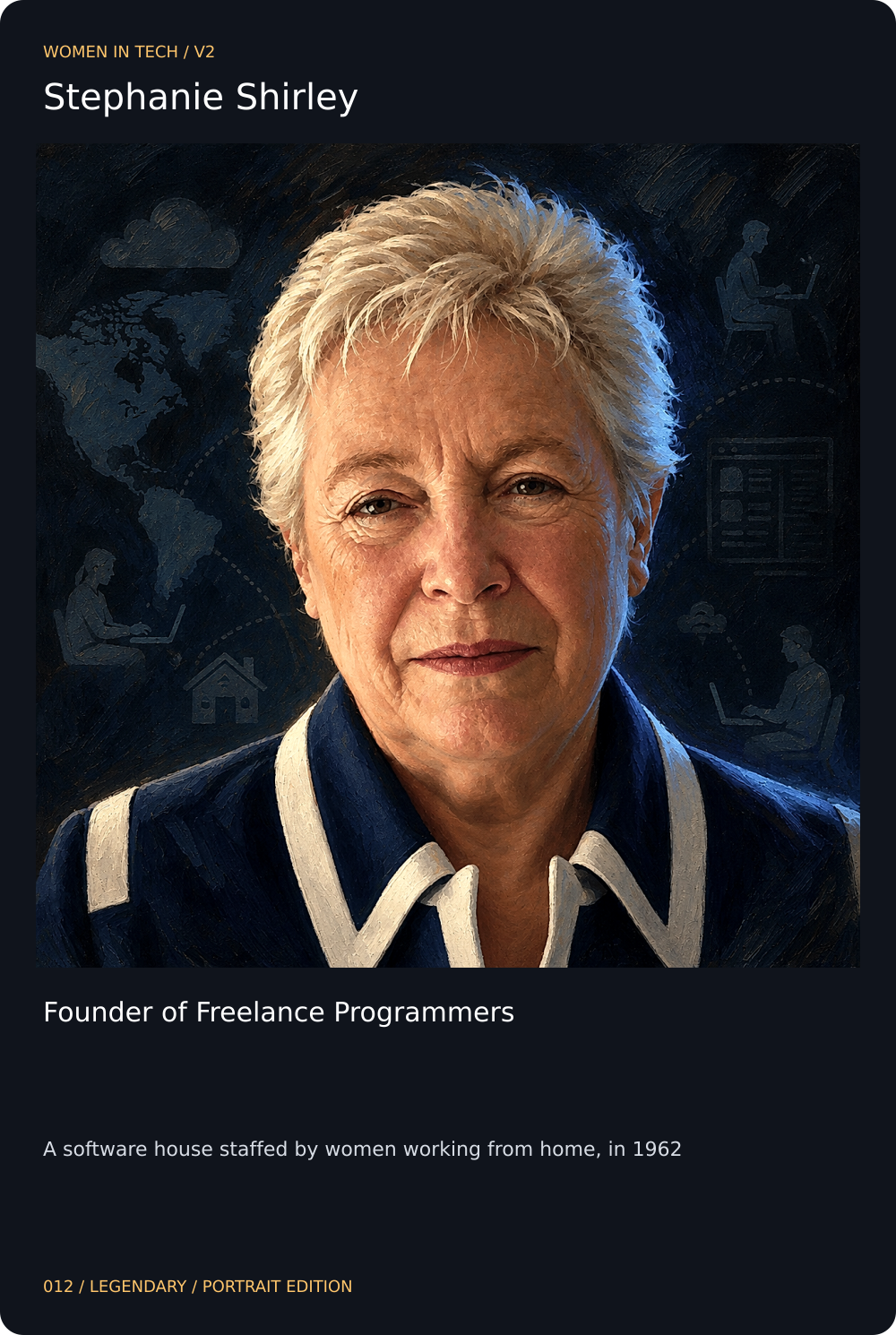
Stephanie Shirley card front
Stephanie ShirleyFounder of Freelance ProgrammersA software house staffed by women working from home, in 1962
Software businessDistributed workEmployee ownership
UK1962-199388

Founded Freelance Programmers with six pounds, staffing it almost entirely with women programming from home around their children, decades before remote work had a name. Signed her business letters Steve because Stephanie was not getting replies. The company wrote the Concorde black box flight recorder software and she later gave much of her wealth away.

Locked inCard page
013Legendary
Joan Clarke card front
Joan ClarkeCryptanalyst, Hut 8Breaking naval Enigma at Bletchley Park
CryptanalysisEnigmaSignals intelligence
UK1940-197788

One of the very few women doing cryptanalytic rather than clerical work at Bletchley Park, in the Hut 8 team attacking naval Enigma, and a practitioner of Banburismus. She was initially classified as a linguist because the pay grades had no category for a woman cryptanalyst. The work stayed secret for decades, so the record of it is thinner than it should be.

Locked inCard page
014Epic
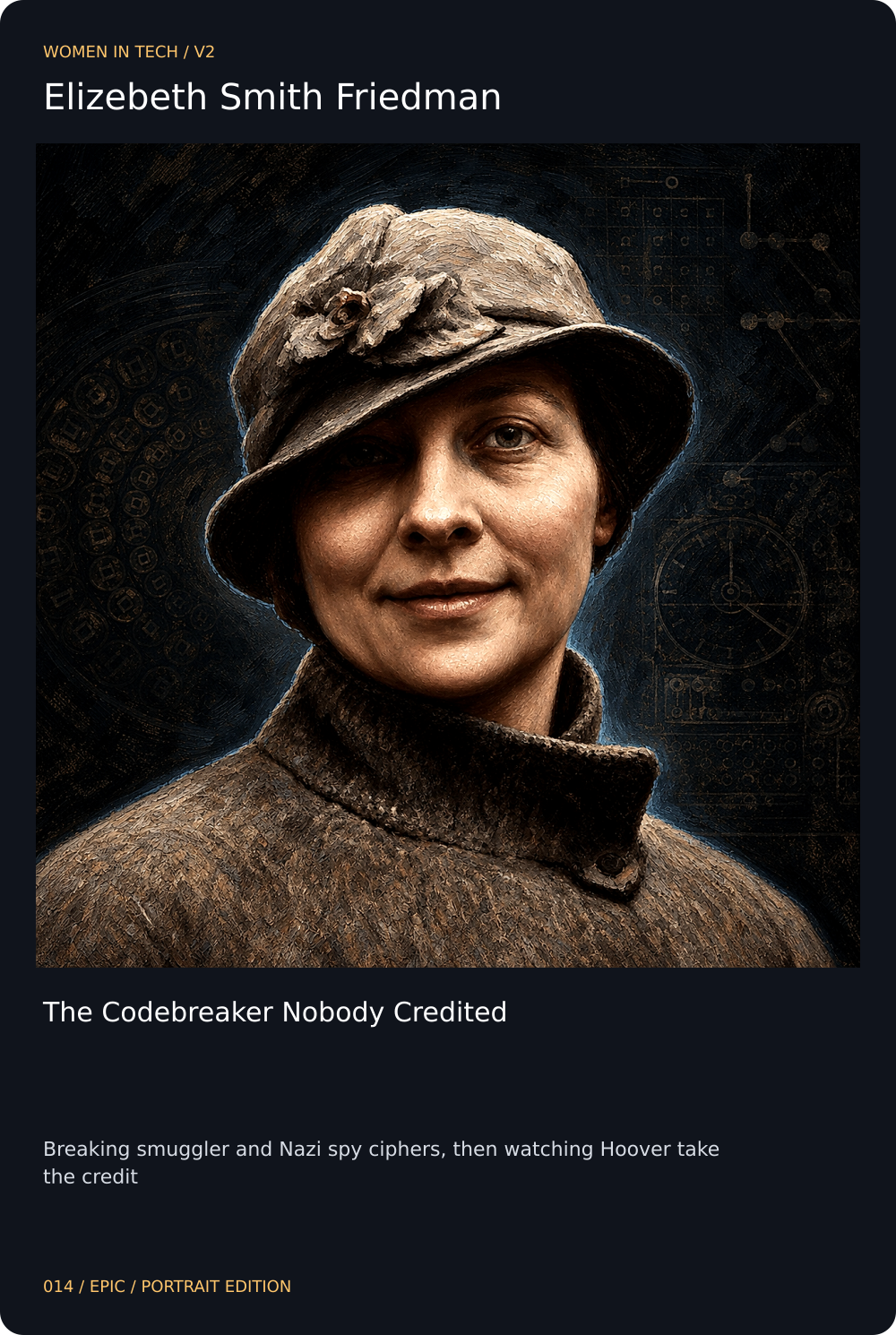
Elizebeth Smith Friedman card front
Elizebeth Smith FriedmanThe Codebreaker Nobody CreditedBreaking smuggler and Nazi spy ciphers, then watching Hoover take the credit
CryptanalysisCounterintelligenceSignals intelligence
USA1917-194686

Broke the ciphers of rum-runners during Prohibition and testified about it in court, then during the war ran the unit that broke the Enigma traffic of a Nazi spy ring in South America. The FBI publicly claimed those results. Her files stayed classified until 2008, which is why her husband William is the famous Friedman.

Locked inCard page
015Epic
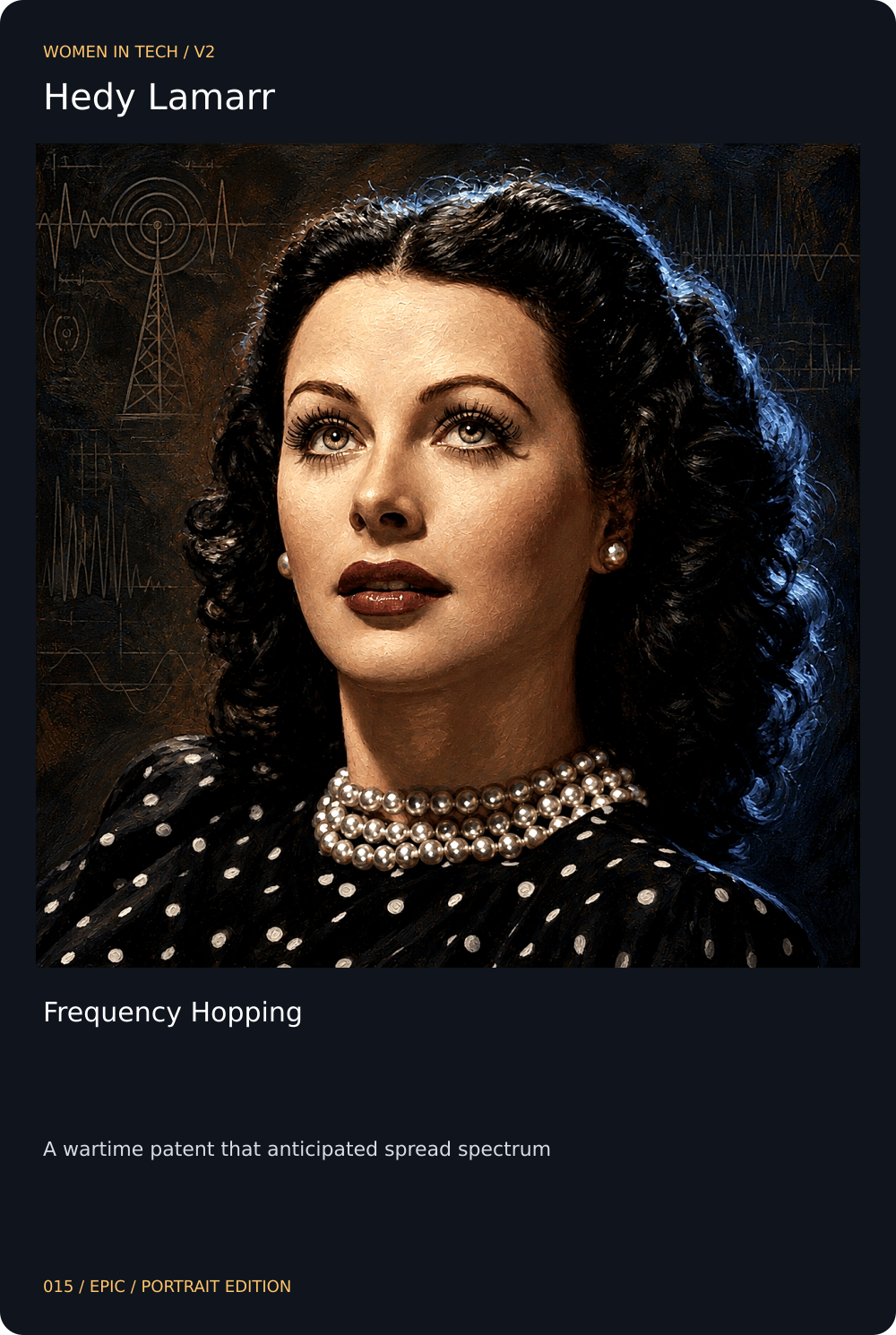
Hedy Lamarr card front
Hedy LamarrFrequency HoppingA wartime patent that anticipated spread spectrum
Spread spectrumRadioSignal security
Austria / USA1941-195984

With composer George Antheil, patented a frequency-hopping scheme in 1942 to stop radio-guided torpedoes being jammed, synchronised by a mechanism borrowed from player pianos. The Navy shelved it. The underlying idea is an ancestor of the spread-spectrum techniques used in later secure and wireless communication, and the patent was allowed to lapse unpaid.

Locked inCard page
016Iconic
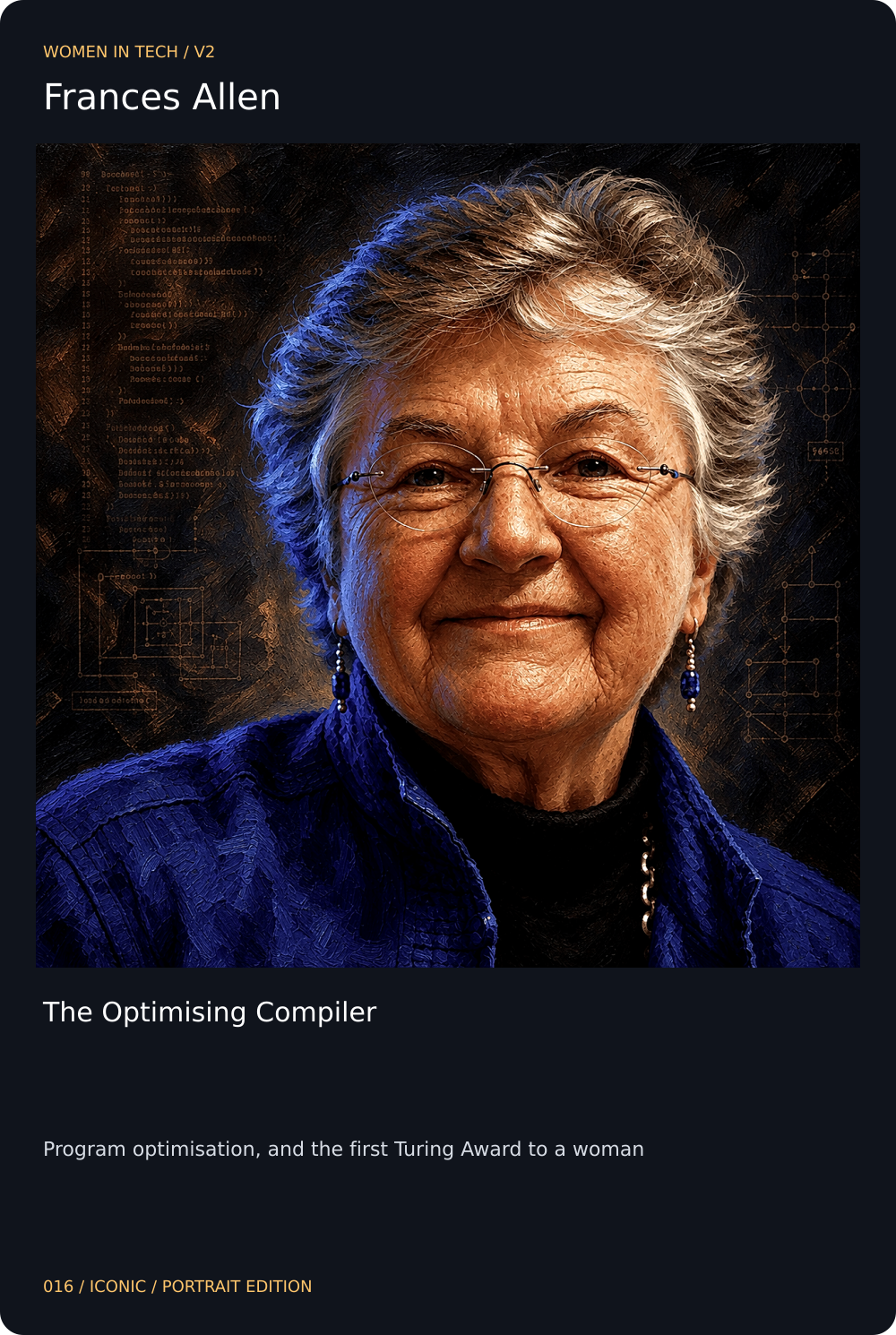
Frances Allen card front
Frances AllenThe Optimising CompilerProgram optimisation, and the first Turing Award to a woman
CompilersProgram optimisationParallel computing
USA1957-201093

Spent a career at IBM building the theory and practice of compiler optimisation: control flow analysis, data flow analysis, the interprocedural work that every modern compiler still does. Her 1966 paper on program optimisation is foundational. In 2006 she became the first woman to receive the Turing Award, thirty-nine years after the award began.

Locked inCard page
017Iconic
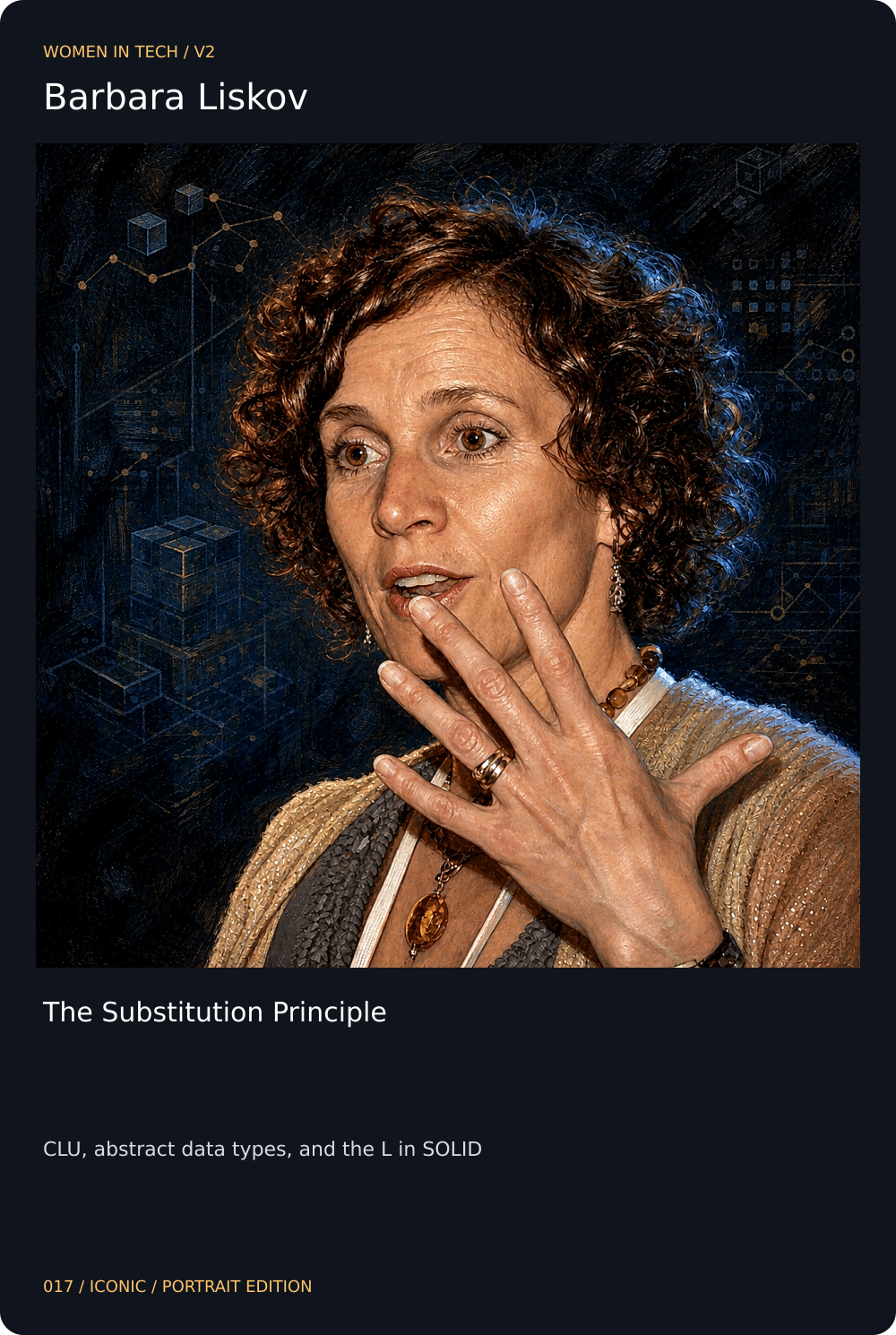
Barbara Liskov card front
Barbara LiskovThe Substitution PrincipleCLU, abstract data types, and the L in SOLID
Programming languagesData abstractionDistributed systems
USA1968-present94

Designed CLU, which introduced abstract data types, iterators and a serious treatment of exceptions, and which shows up in the ancestry of most modern languages. The Liskov substitution principle is the L in SOLID. Also did foundational work on Byzantine fault tolerance with Miguel Castro. Turing Award, 2008.

Locked inCard page

018Iconic
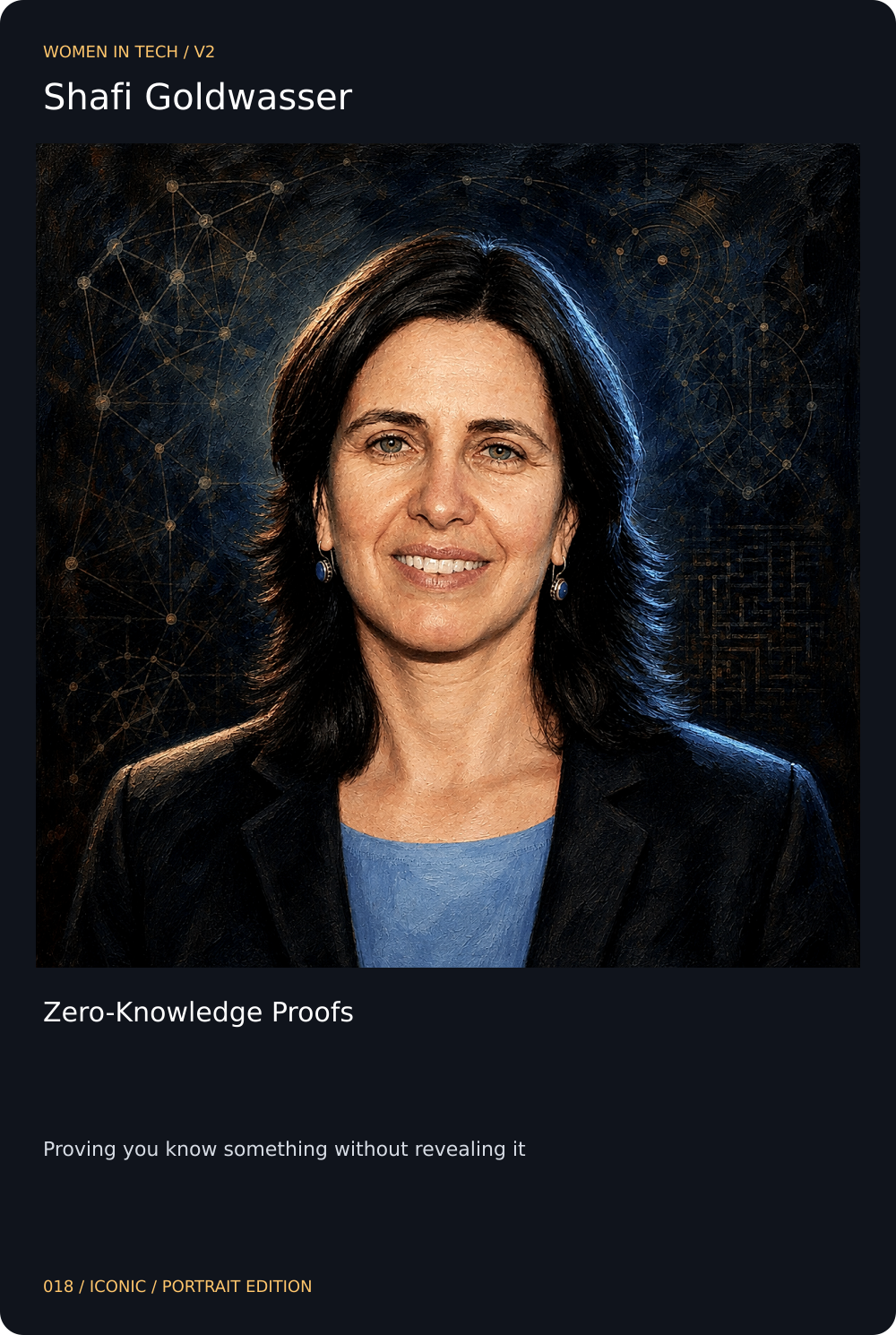
Shafi Goldwasser card front
Shafi GoldwasserZero-Knowledge ProofsProving you know something without revealing it
CryptographyComplexity theoryZero-knowledge
Israel / USA1982-present93

With Silvio Micali and Charles Rackoff, introduced zero-knowledge interactive proofs, and with Micali the definition of semantic security that made modern encryption provable rather than merely unbroken. Two-time Godel Prize winner and Turing Award, 2012. Every zk-rollup and privacy protocol shipping today is standing on that 1985 paper.

Locked inCard page
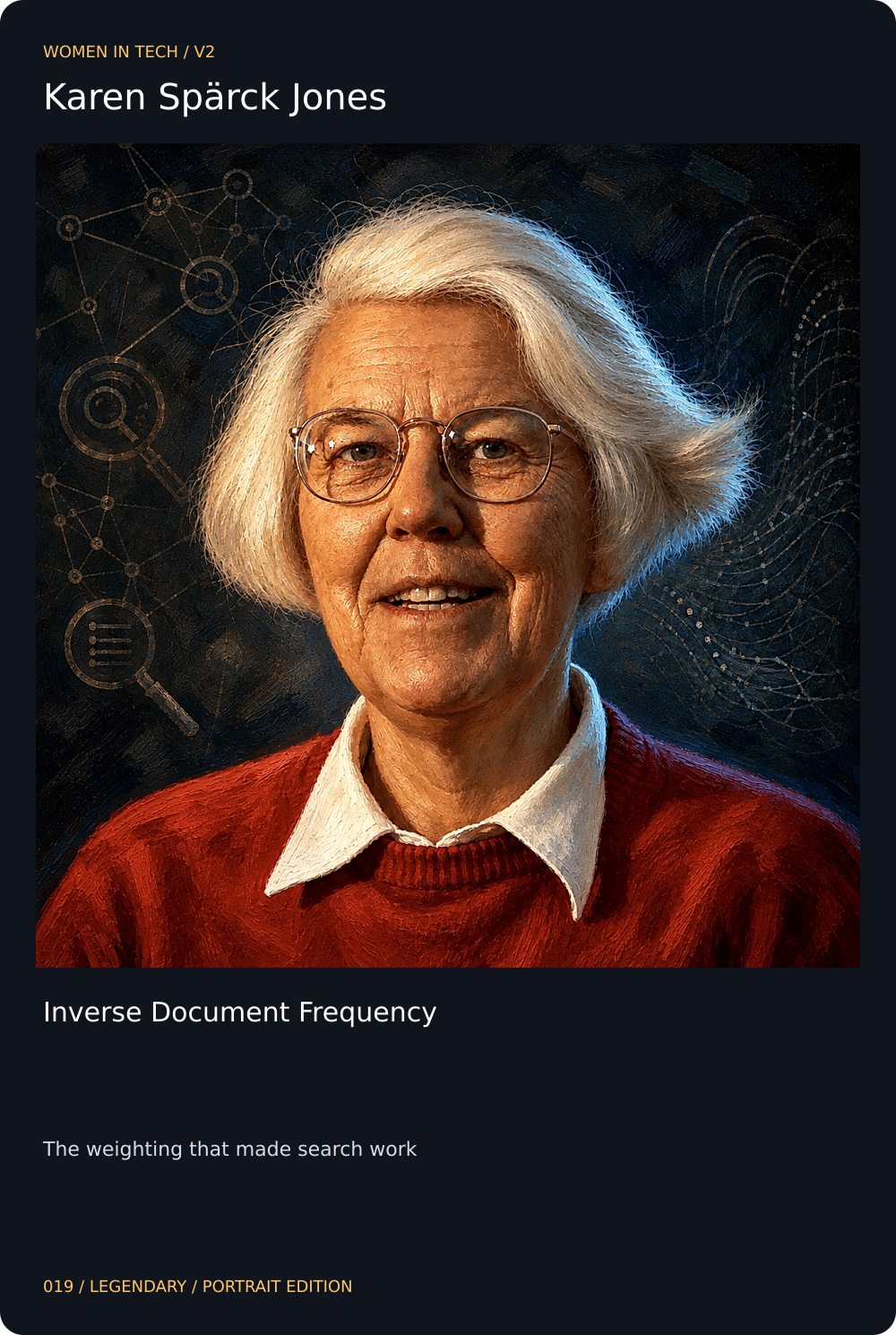
019Legendary
Karen Spärck Jones card front
Karen Spärck JonesInverse Document FrequencyThe weighting that made search work
Information retrievalNatural language processingSearch
UK1964-200790

Her 1972 paper introduced inverse document frequency: rare terms tell you more than common ones. TF-IDF underpinned search engines for thirty years and is still the baseline every ranking system is measured against. She argued throughout her career that computing was too important to be left to men, and said so in those words.

Locked inCard page
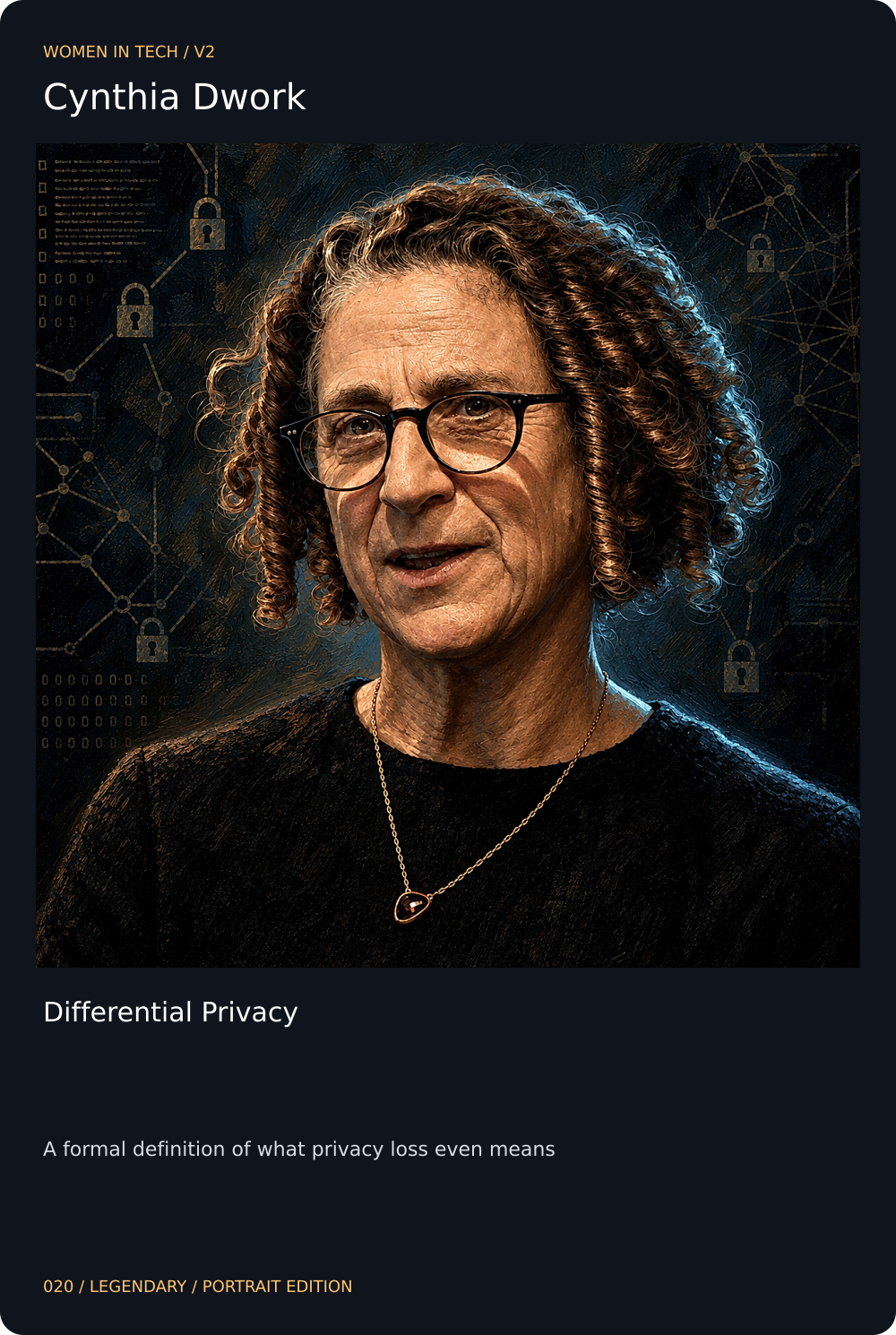
020Legendary
Cynthia Dwork card front
Cynthia DworkDifferential PrivacyA formal definition of what privacy loss even means
PrivacyCryptographyAlgorithmic fairness
USA2006-present90

Co-invented differential privacy, which gave a mathematical definition to the amount of information a data release leaks about any one person, replacing a field of ad-hoc anonymisation that kept being broken. It is now in the US Census, Apple’s telemetry and Google’s. She also co-authored early work on proof-of-work and on algorithmic fairness.

Locked inCard page
021Legendary
Anita Borg card front
Anita BorgFounder of SystersBuilding the network, and the conference that carries her name
Operating systemsCommunity buildingAdvocacy
USA1987-200389

An OS researcher who built a fault-tolerant Unix and a memory architecture analysis tool, and who in 1987 started Systers, the first email network for women in computing. Co-founded the Grace Hopper Celebration and the Institute for Women and Technology. The conference now draws tens of thousands a year.

Locked inCard page
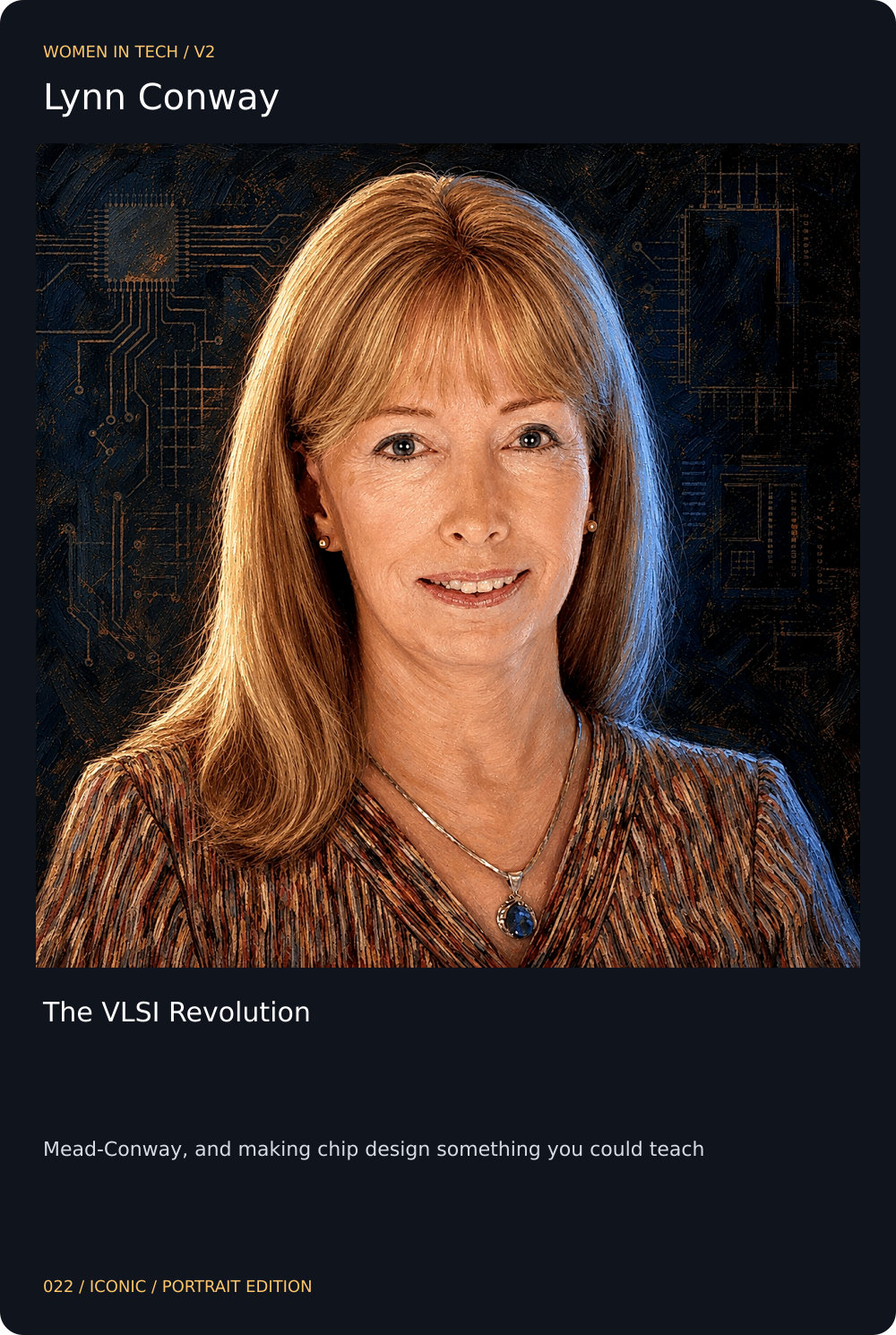
022Iconic
Lynn Conway card front
Lynn ConwayThe VLSI RevolutionMead-Conway, and making chip design something you could teach
VLSI designComputer architectureDesign methodology
USA1964-202494

Invented dynamic instruction scheduling at IBM in the 1960s, was fired when she transitioned, and rebuilt her career from scratch. At Xerox PARC she and Carver Mead created the VLSI design methodology and the textbook that let universities teach chip design, then set up MOSIS so students could actually fabricate. Modern semiconductors are organised the way she said they should be.

Locked inCard page
023Iconic
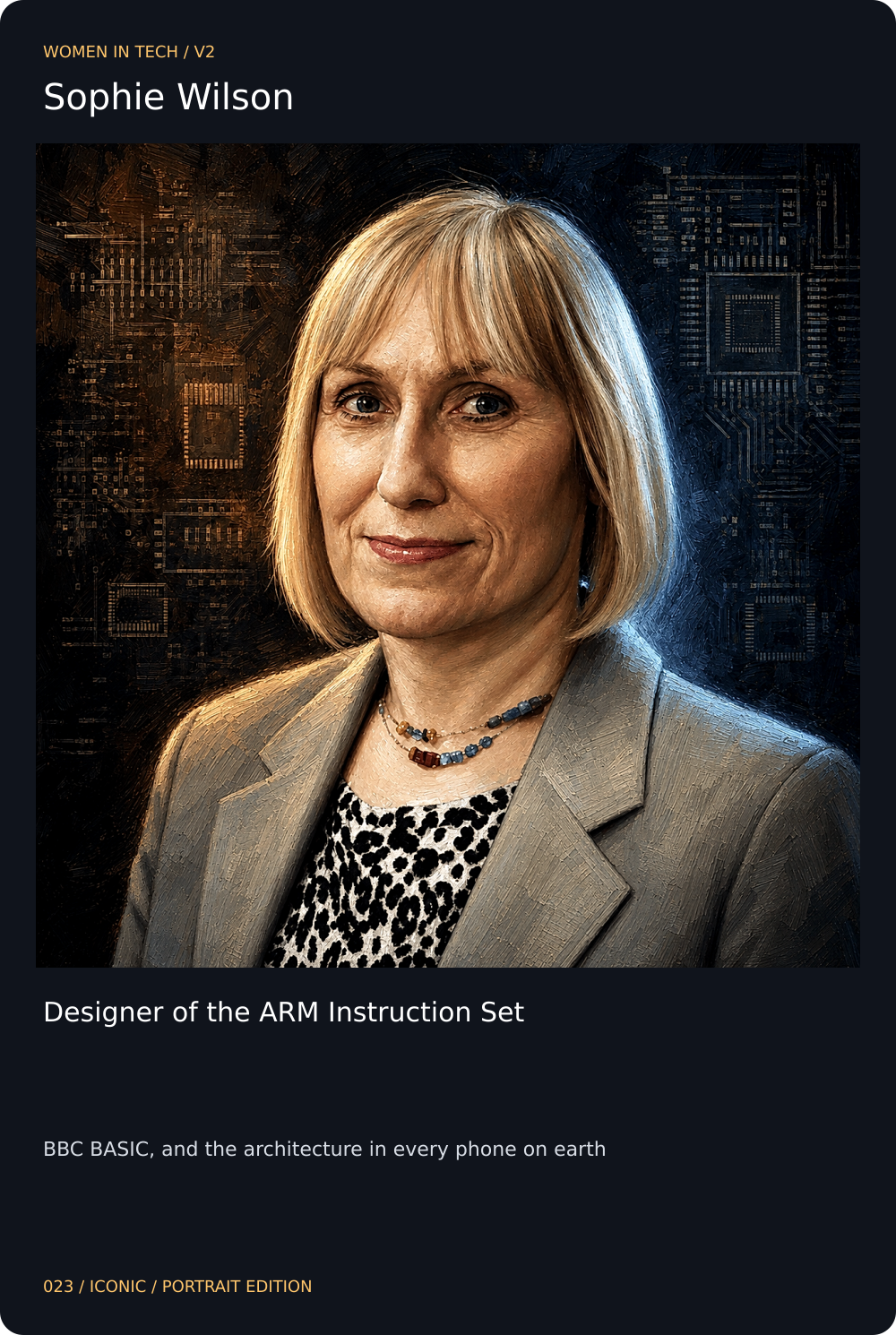
Sophie Wilson card front
Sophie WilsonDesigner of the ARM Instruction SetBBC BASIC, and the architecture in every phone on earth
Instruction set designMicroprocessorsProgramming languages
UK1981-present95

Wrote BBC BASIC, then designed the original ARM instruction set with Steve Furber, a RISC architecture so efficient the first silicon ran on leakage current when its power was accidentally disconnected. There are now more ARM cores in the world than any other processor architecture, by a wide margin. Later designed the FirePath processor at Broadcom.

Locked inCard page
024Legendary
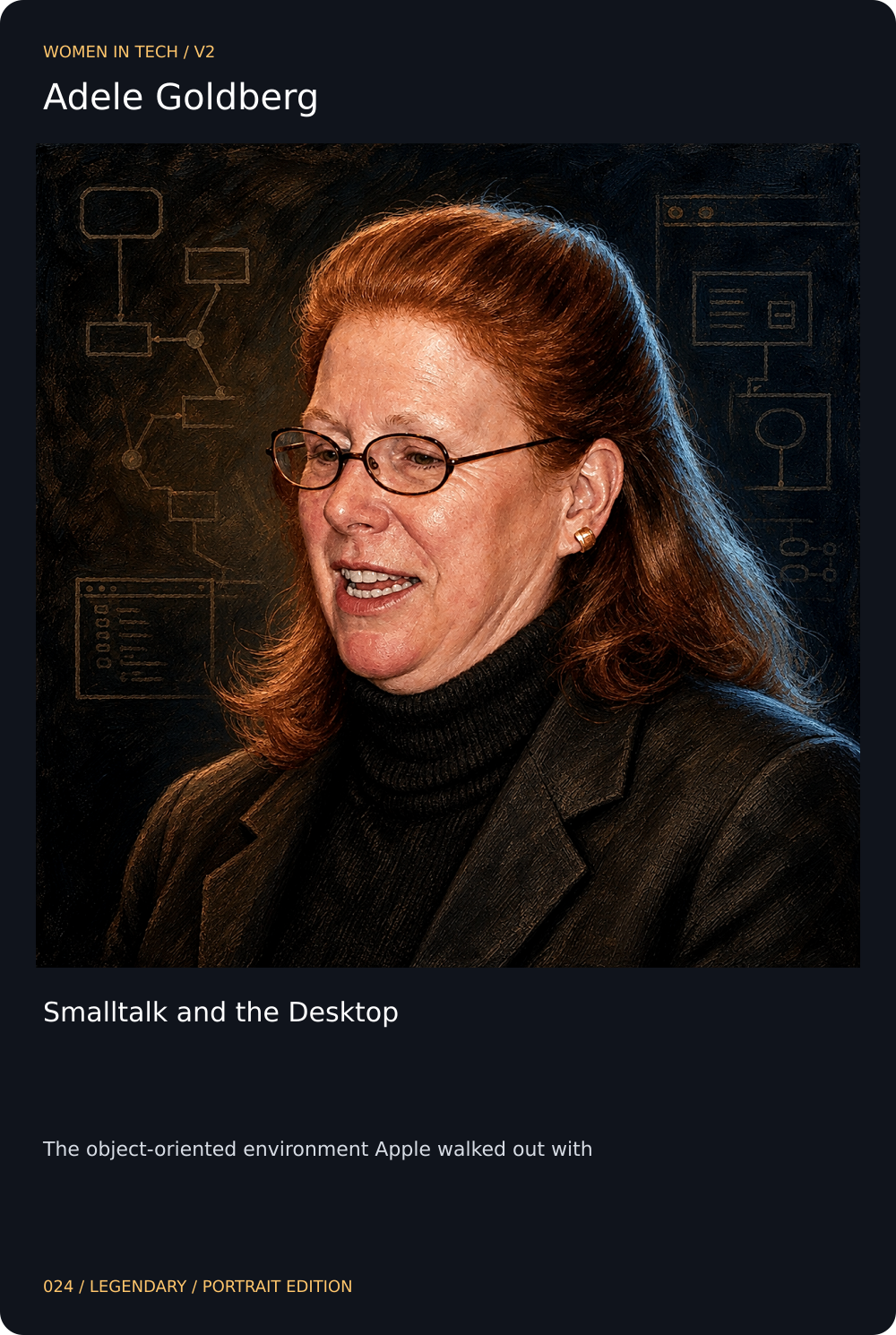
Adele Goldberg card front
Adele GoldbergSmalltalk and the DesktopThe object-oriented environment Apple walked out with
Object-oriented programmingSmalltalkInteractive environments
USA1973-present91

At Xerox PARC she developed Smalltalk-80 with Alan Kay and Dan Ingalls and wrote the books that let anyone else learn it. She objected to demonstrating it to Steve Jobs and was overruled by management; the Macintosh interface followed. Smalltalk is where object-oriented programming and the modern IDE both actually come from.

Locked inCard page
025Legendary
Susan Kare card front
Susan KareThe Icons You Grew Up WithThe Macintosh interface, one pixel at a time
Interface designIconographyTypography
USA1983-present90

Designed the original Macintosh icons, fonts and cursors on graph paper, inventing a visual grammar for direct manipulation that nobody had needed before. The Command key symbol, the trash can, the watch cursor and the Happy Mac are hers. Later did the same work for NeXT, Microsoft and IBM. Her bitmaps are in MoMA.

Locked inCard page
026Legendary
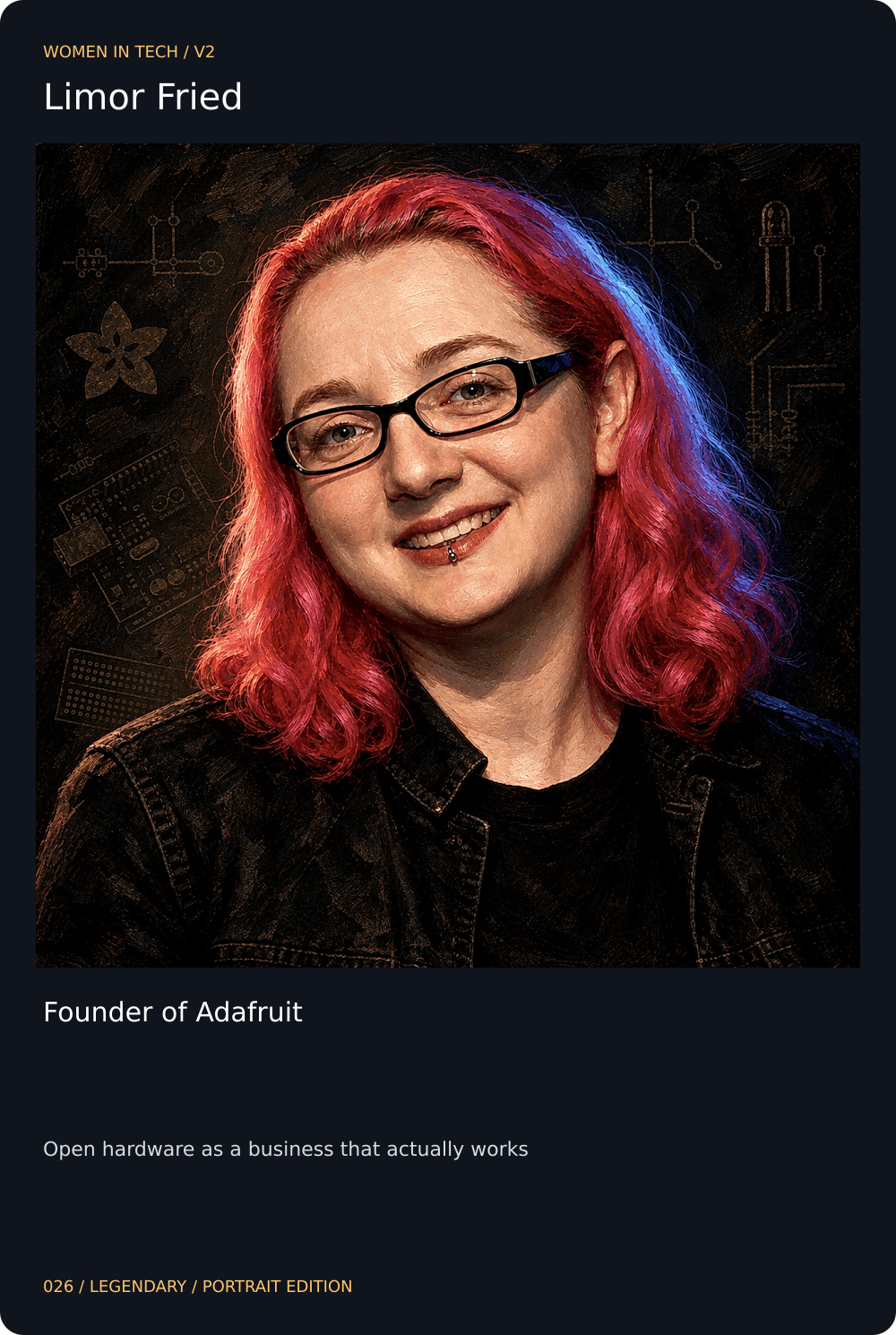
Limor Fried card front
Limor FriedFounder of AdafruitOpen hardware as a business that actually works
Open hardwareElectronics educationManufacturing
USA2005-present88

Founded Adafruit from an MIT dorm room and built it into a substantial manufacturer that publishes its schematics, board files and firmware openly, alongside thousands of free tutorials. Leads CircuitPython, which put a REPL on microcontrollers and made embedded programming approachable. Proved open hardware can be a real company rather than a gesture.

Locked inCard page
027Legendary
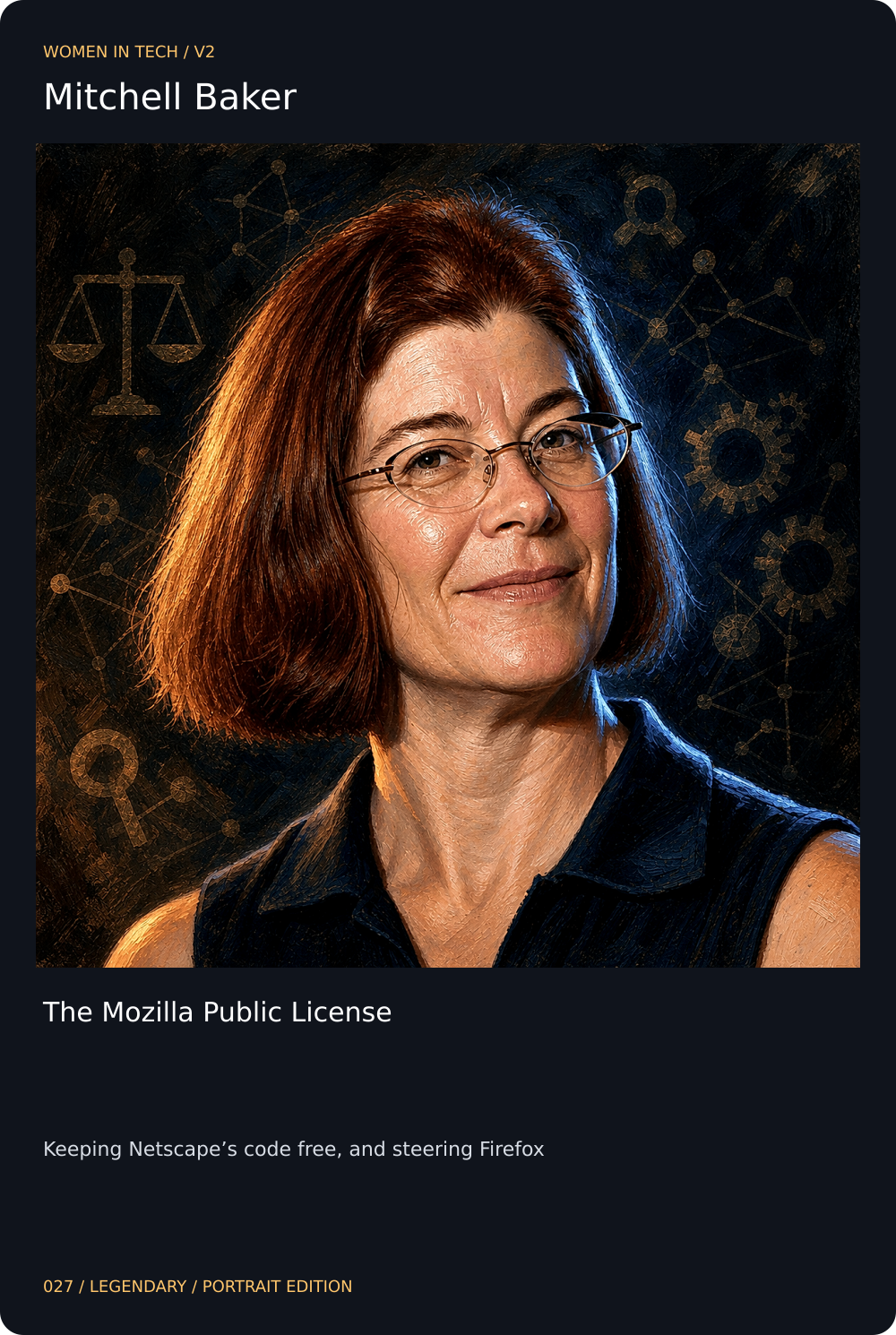
Mitchell Baker card front
Mitchell BakerThe Mozilla Public LicenseKeeping Netscape’s code free, and steering Firefox
Open source licensingGovernanceBrowsers
USA1998-present90

Wrote the Mozilla Public License and led the Mozilla project through the open-sourcing of Netscape, the years when it looked dead, and the rise of Firefox, which broke Internet Explorer’s monopoly and dragged web standards forward. Chaired the Mozilla Foundation for two decades of arguing that the browser should answer to users.

Locked inCard page
028Legendary
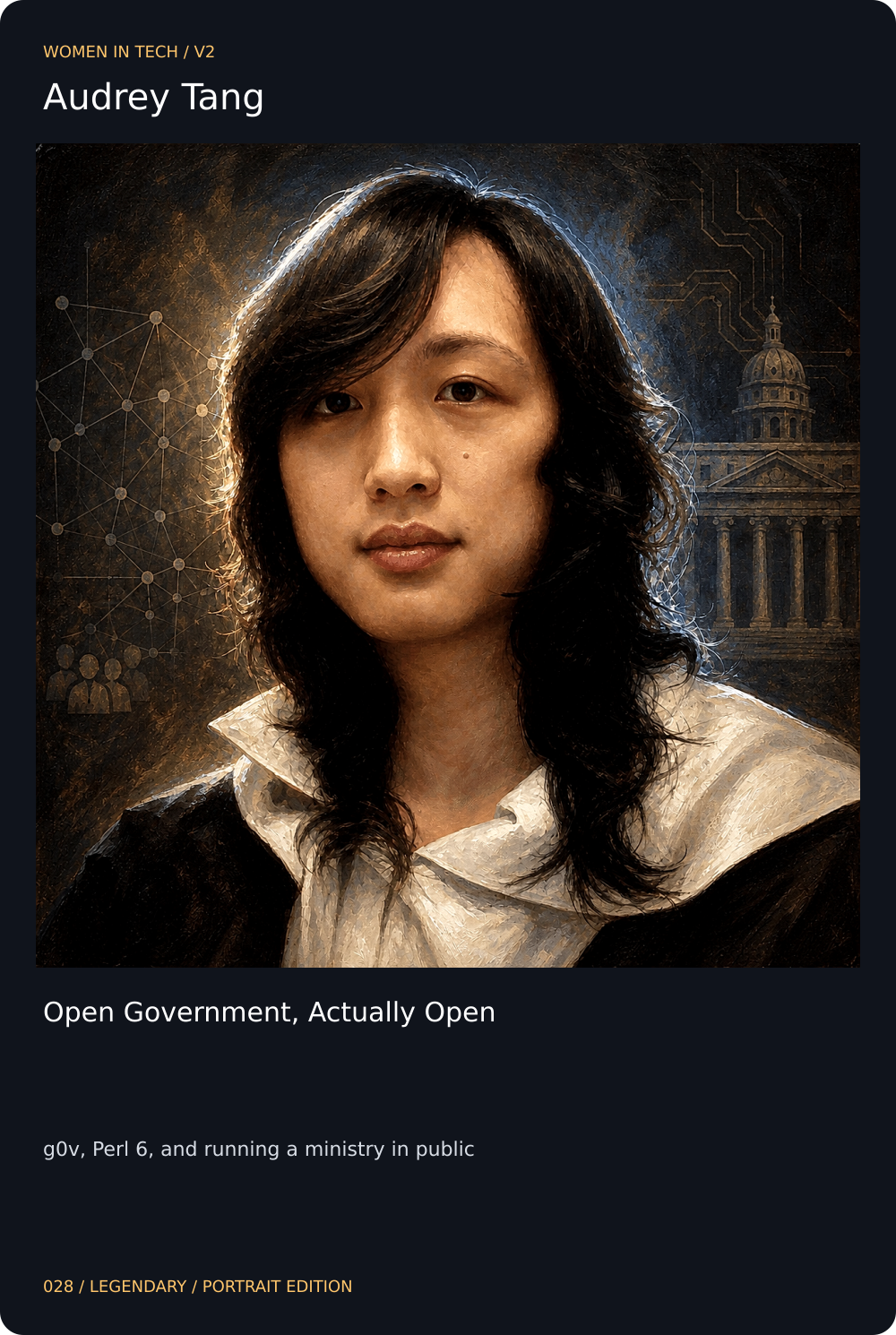
Audrey Tang card front
Audrey TangOpen Government, Actually Openg0v, Perl 6, and running a ministry in public
Civic technologyOpen governmentProgramming languages
Taiwan2005-present89

Worked on Pugs, the first usable Perl 6 implementation, and on Haskell and Perl tooling, then became a central figure in g0v, the Taiwanese civic hacking community that forks government websites into working versions. As Taiwan’s digital minister she published transcripts of essentially every meeting she took, and used participatory tooling like vTaiwan on real policy.

Locked inCard page
029Epic
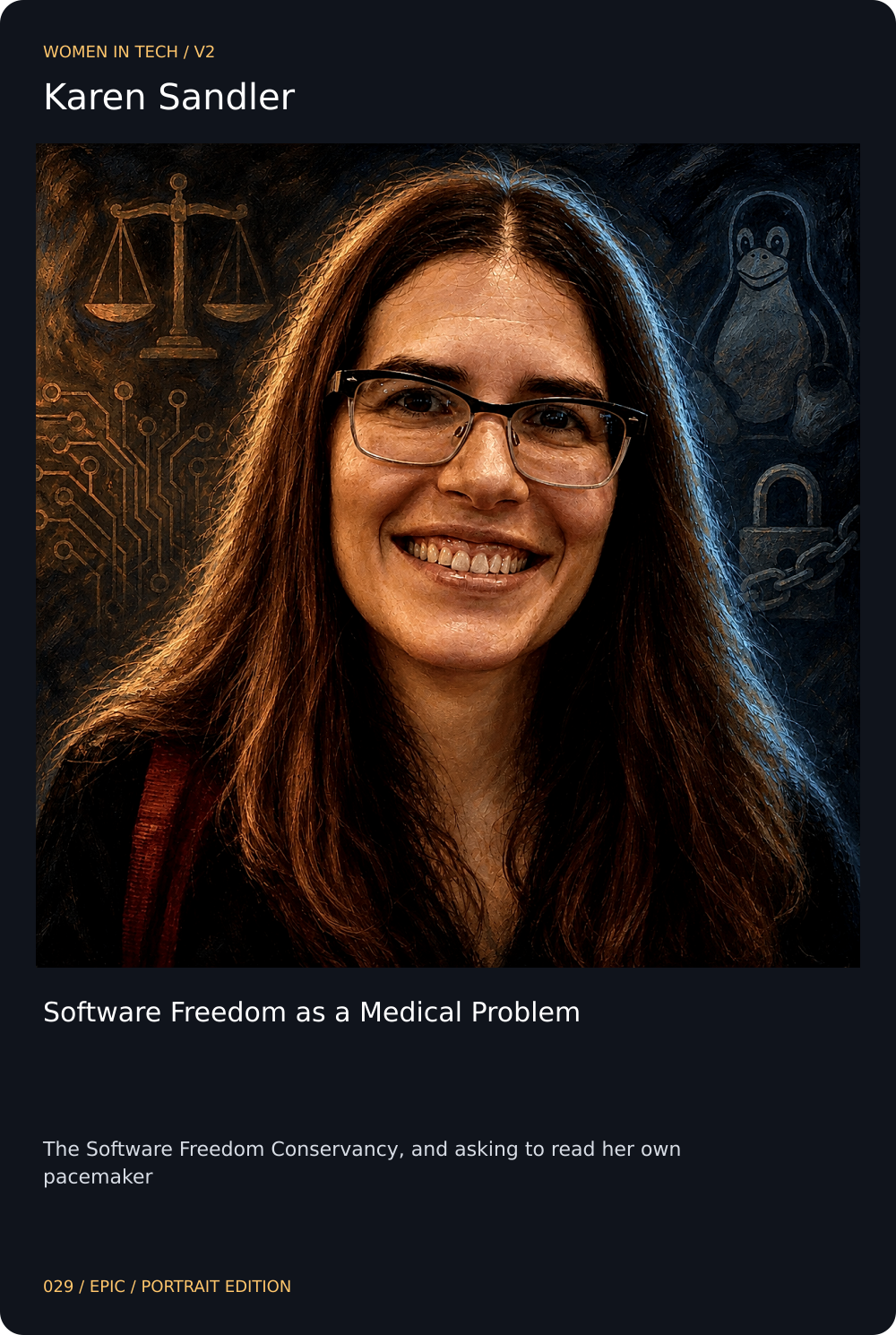
Karen Sandler card front
Karen SandlerSoftware Freedom as a Medical ProblemThe Software Freedom Conservancy, and asking to read her own pacemaker
Software freedomLicensing enforcementNonprofit governance
USA2005-present85

Executive director of the Software Freedom Conservancy, which provides the legal and financial home for a long list of open source projects and does the unglamorous work of GPL enforcement. A lawyer with a heart condition, she has made the argument for auditable code concrete by asking to see the source of the defibrillator implanted in her chest, and being refused.

Locked inCard page
030Epic
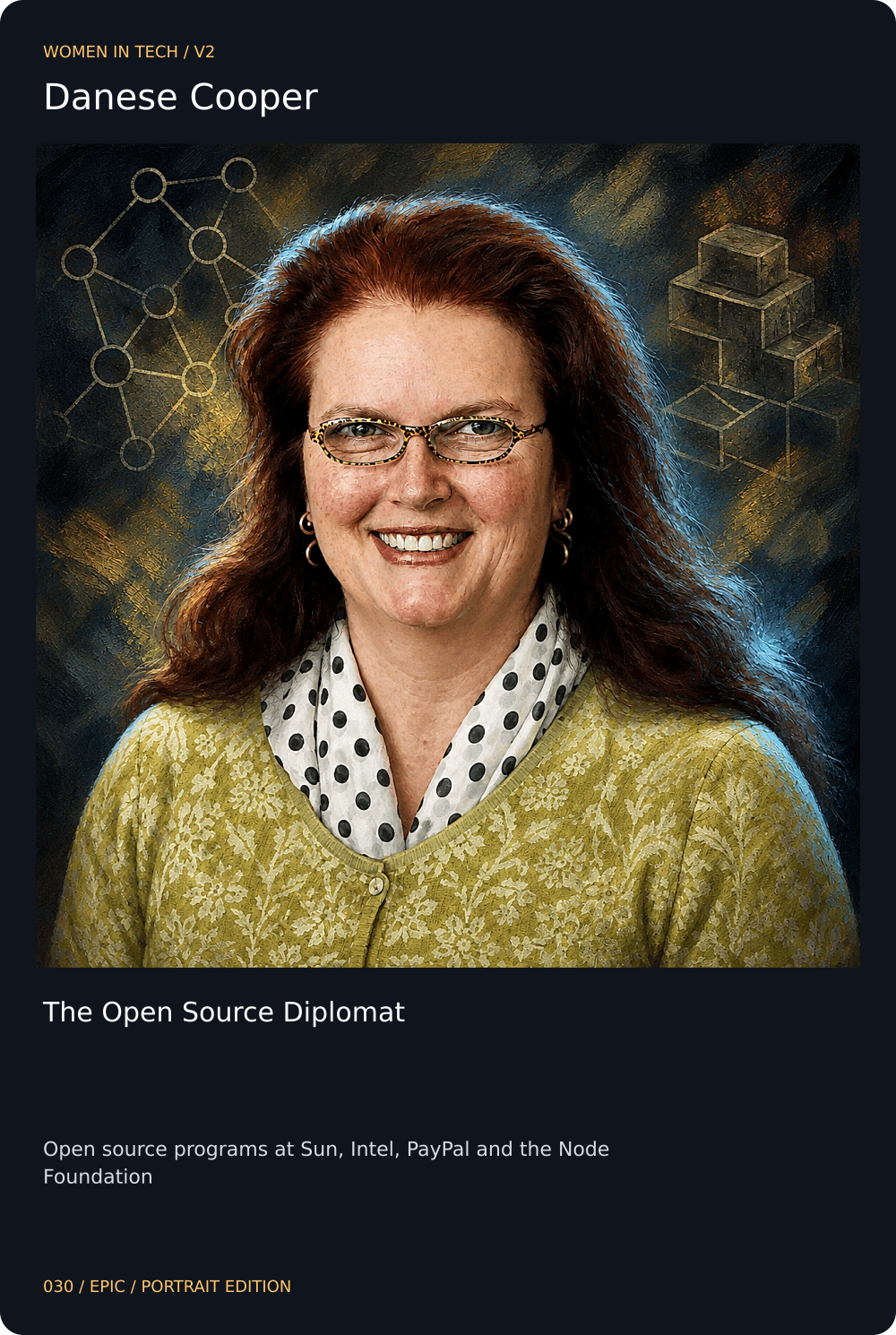
Danese Cooper card front
Danese CooperThe Open Source DiplomatOpen source programs at Sun, Intel, PayPal and the Node Foundation
Open source strategyFoundationsCorporate policy
USA1999-present84

Ran open source at Sun during the OpenSolaris and OpenOffice years, then at Intel, PayPal and Wikimedia, and chaired the Node.js Foundation through the io.js reconciliation. Served on the OSI board. Much of what a corporate open source program office does was invented by her arguing with lawyers, repeatedly, for twenty years.

Locked inCard page
031Epic
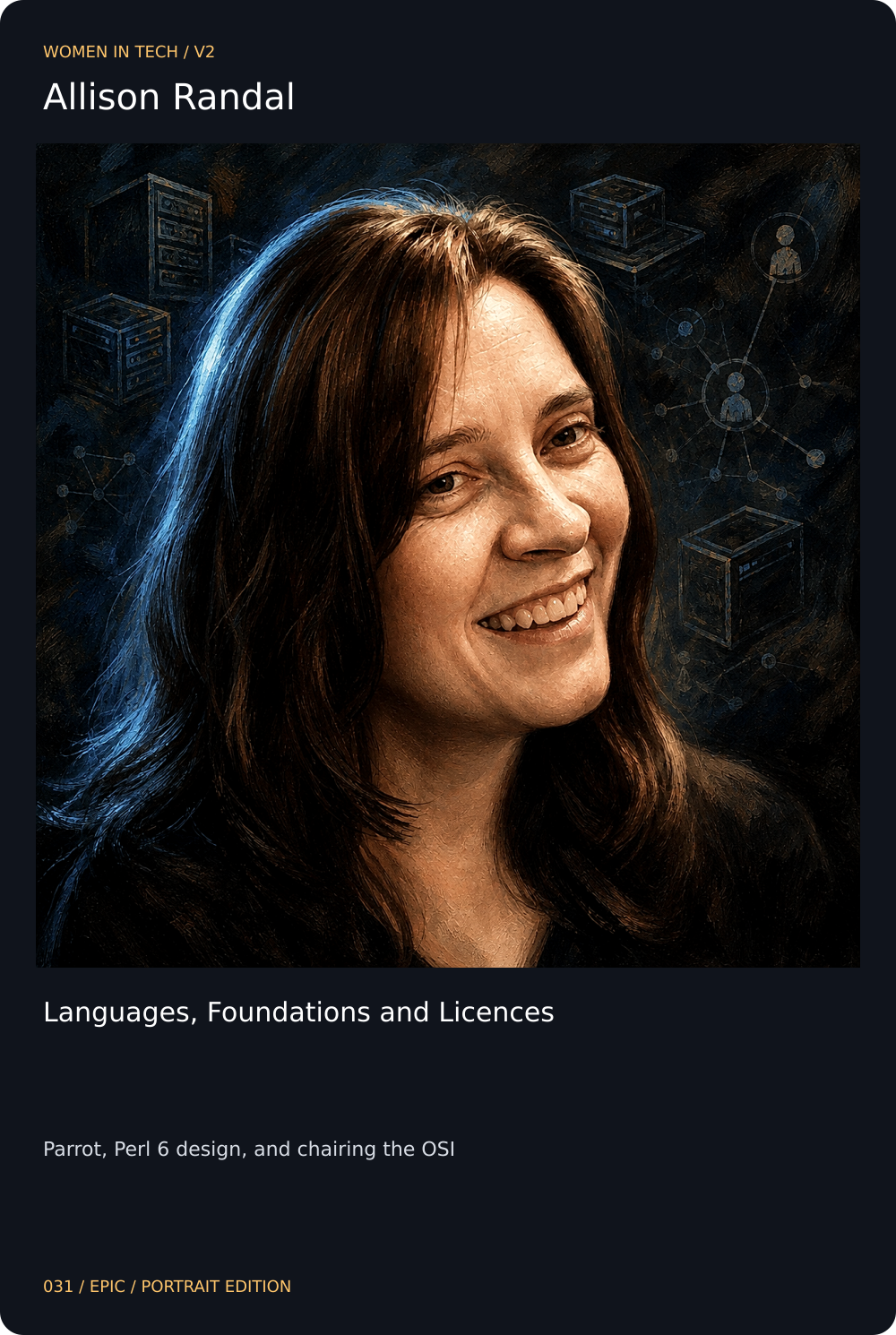
Allison Randal card front
Allison RandalLanguages, Foundations and LicencesParrot, Perl 6 design, and chairing the OSI
Virtual machinesOpen source governanceLicensing
USA2001-present83

Led the Parrot virtual machine and worked on the Perl 6 design, then served as president of the Perl Foundation, chair of the Open Source Initiative, on the board of the Python Software Foundation, and at Canonical and HP on OpenStack. One of the few people equally credible on a language runtime and on licence text.
Locked inCard page
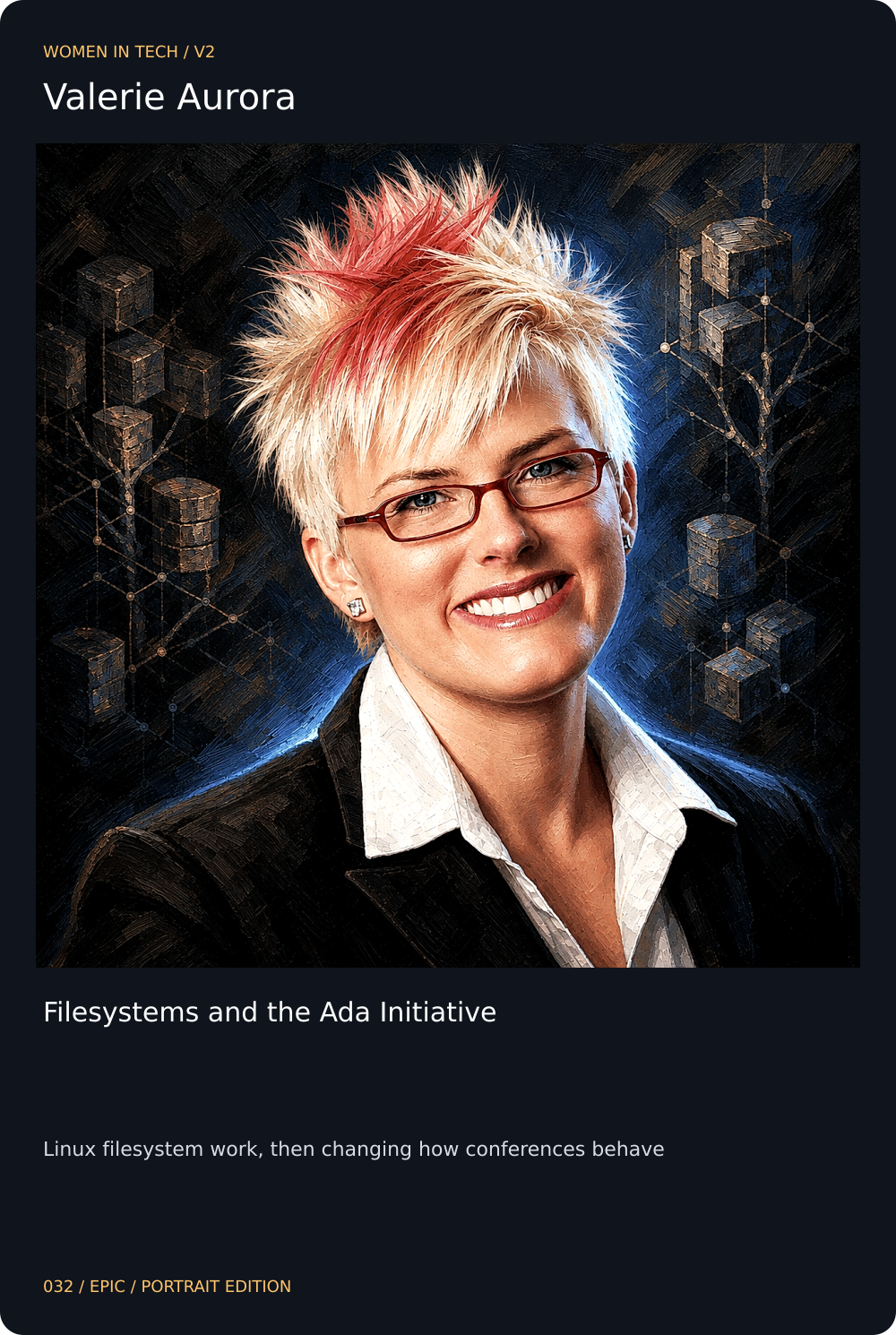
032Epic
Valerie Aurora card front
Valerie AuroraFilesystems and the Ada InitiativeLinux filesystem work, then changing how conferences behave
Linux filesystemsKernel developmentCommunity standards
USA2002-present83

Worked on Linux filesystems including ext4, ChunkFS and union mounts, and wrote a long-running series on filesystem design for LWN. Co-founded the Ada Initiative, whose example anti-harassment policy was adopted across a large part of the conference circuit and materially changed what open source events tolerate.

Locked inCard page
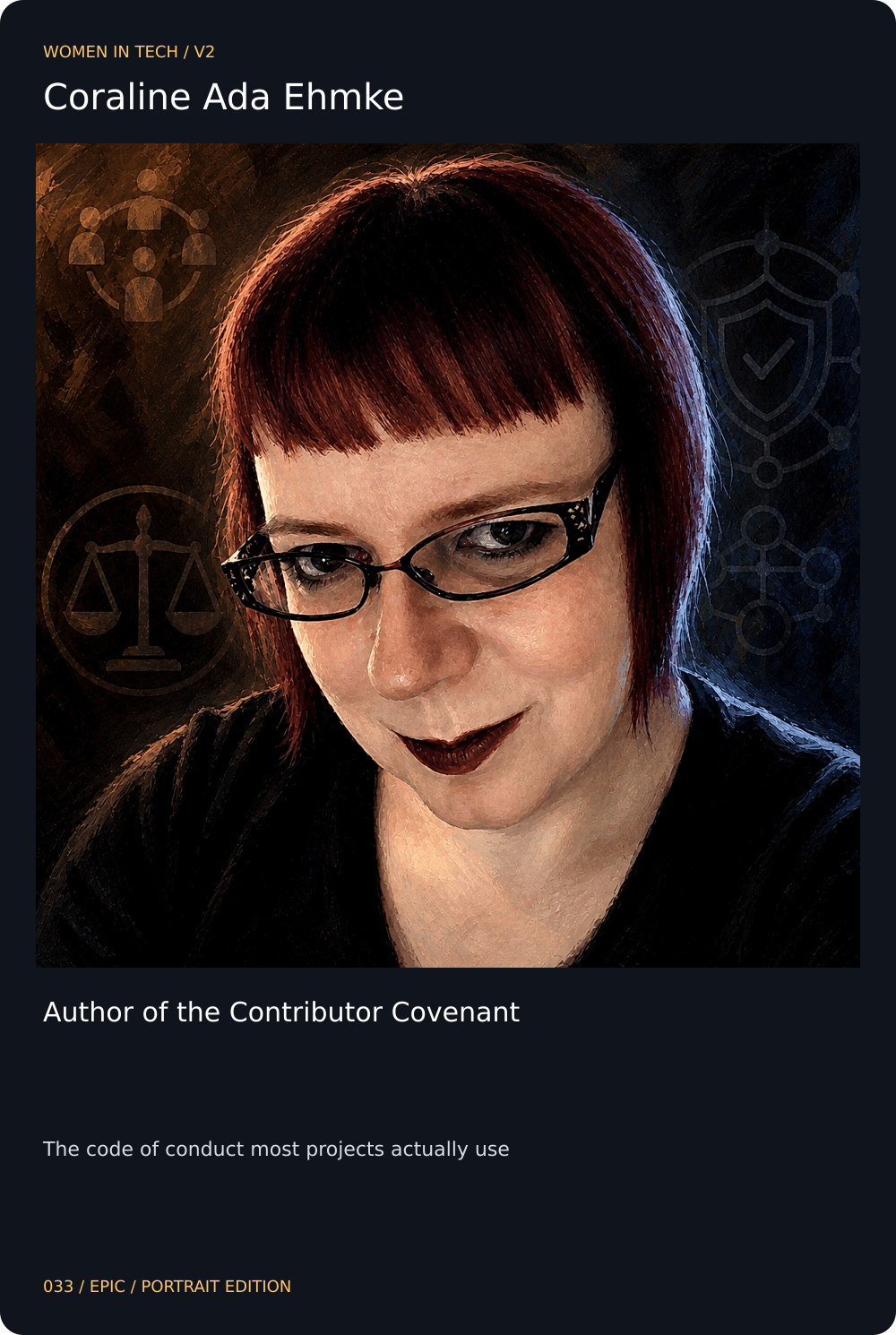
033Epic
Coraline Ada Ehmke card front
Coraline Ada EhmkeAuthor of the Contributor CovenantThe code of conduct most projects actually use
Community governanceCodes of conductEthical licensing
USA2014-present84

Wrote the Contributor Covenant in 2014; it has since been adopted by well over a hundred thousand projects including Linux, Rails and Kubernetes, and it is the reason most repositories have a CODE_OF_CONDUCT.md at all. Also created the Hippocratic License and the Organization for Ethical Source, and took a great deal of abuse for both.

Locked inCard page
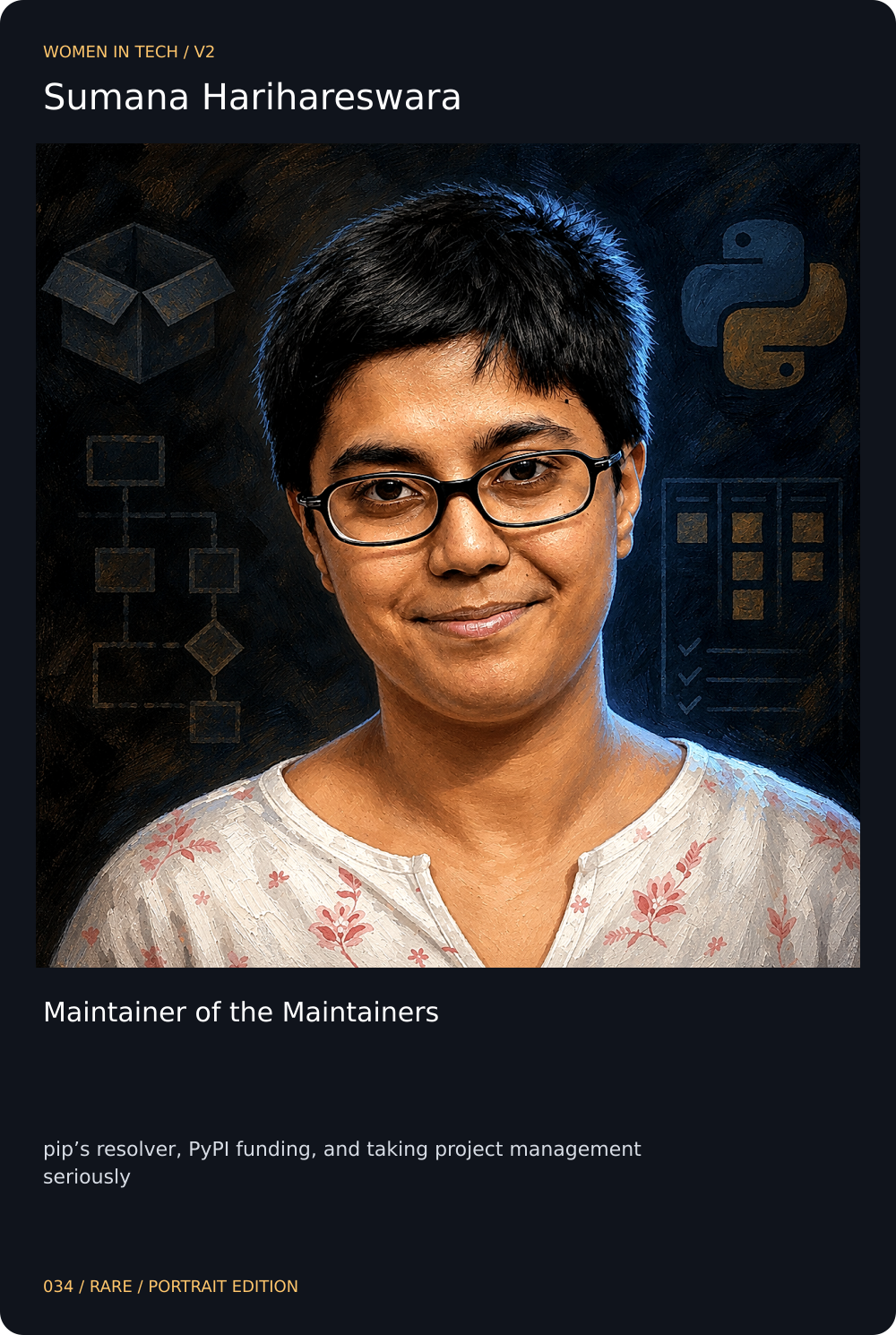
034Rare
Sumana Harihareswara card front
Sumana HarihareswaraMaintainer of the Maintainerspip’s resolver, PyPI funding, and taking project management seriously
Python packagingProject managementOpen source sustainability
USA2010-present80

Led the successful grant-funded work to replace pip’s dependency resolver, a change every Python user benefits from and almost nobody noticed. Has worked on Wikimedia engineering community, Zulip and MediaWiki, and writes seriously about the unglamorous parts of open source: release management, funding, and how maintainers burn out.

Locked inCard page
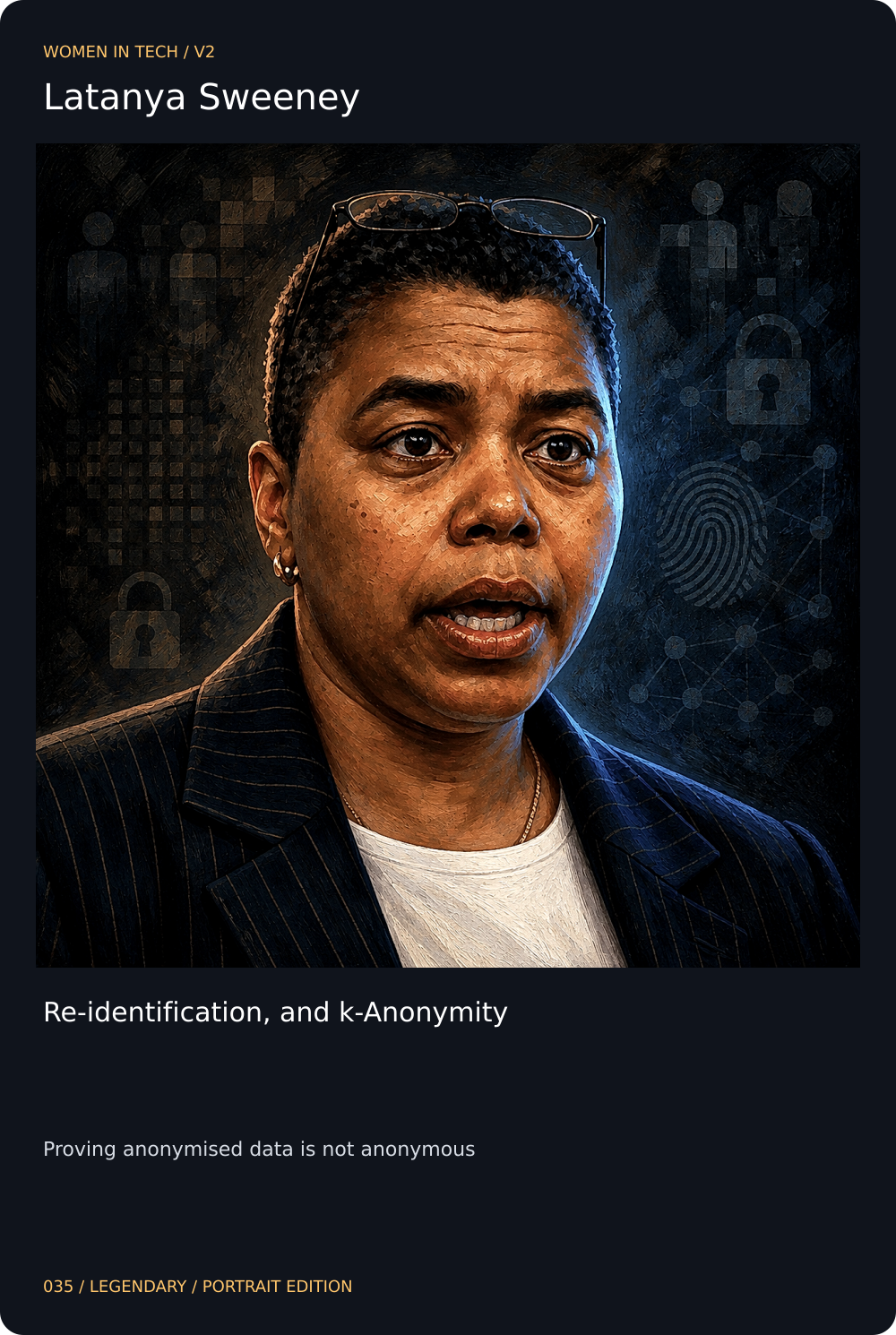
035Legendary
Latanya Sweeney card front
Latanya SweeneyRe-identification, and k-AnonymityProving anonymised data is not anonymous
Data privacyRe-identificationTechnology policy
USA1997-present88

Showed that 87 percent of Americans could be uniquely identified from ZIP code, birth date and sex, then demonstrated it by re-identifying the Massachusetts governor’s medical records in a public dataset and mailing them to him. Proposed k-anonymity in response. Later served as chief technologist at the FTC and published work on discrimination in online ad delivery.

Locked inCard page
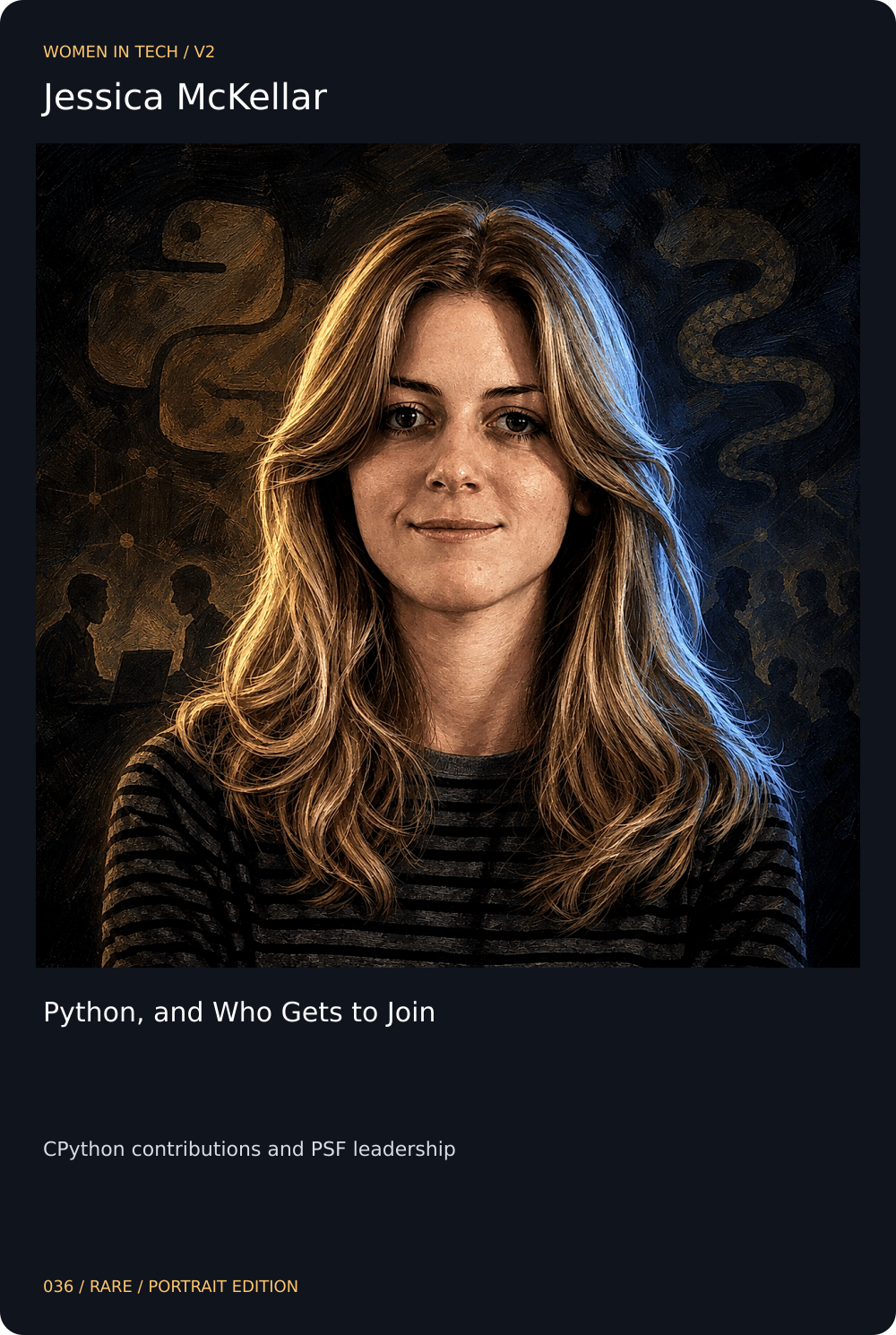
036Rare
Jessica McKellar card front
Jessica McKellarPython, and Who Gets to JoinCPython contributions and PSF leadership
PythonOpen source communityDeveloper education
USA2010-present79

CPython contributor, Python Software Foundation director and Twisted maintainer who did a large amount of the outreach work that widened who shows up to Python: Boston Python’s beginner workshops moved the local user group to roughly a third women, which nobody had managed before. Co-wrote a book on Twisted and taught a great deal for free.

Locked inCard page
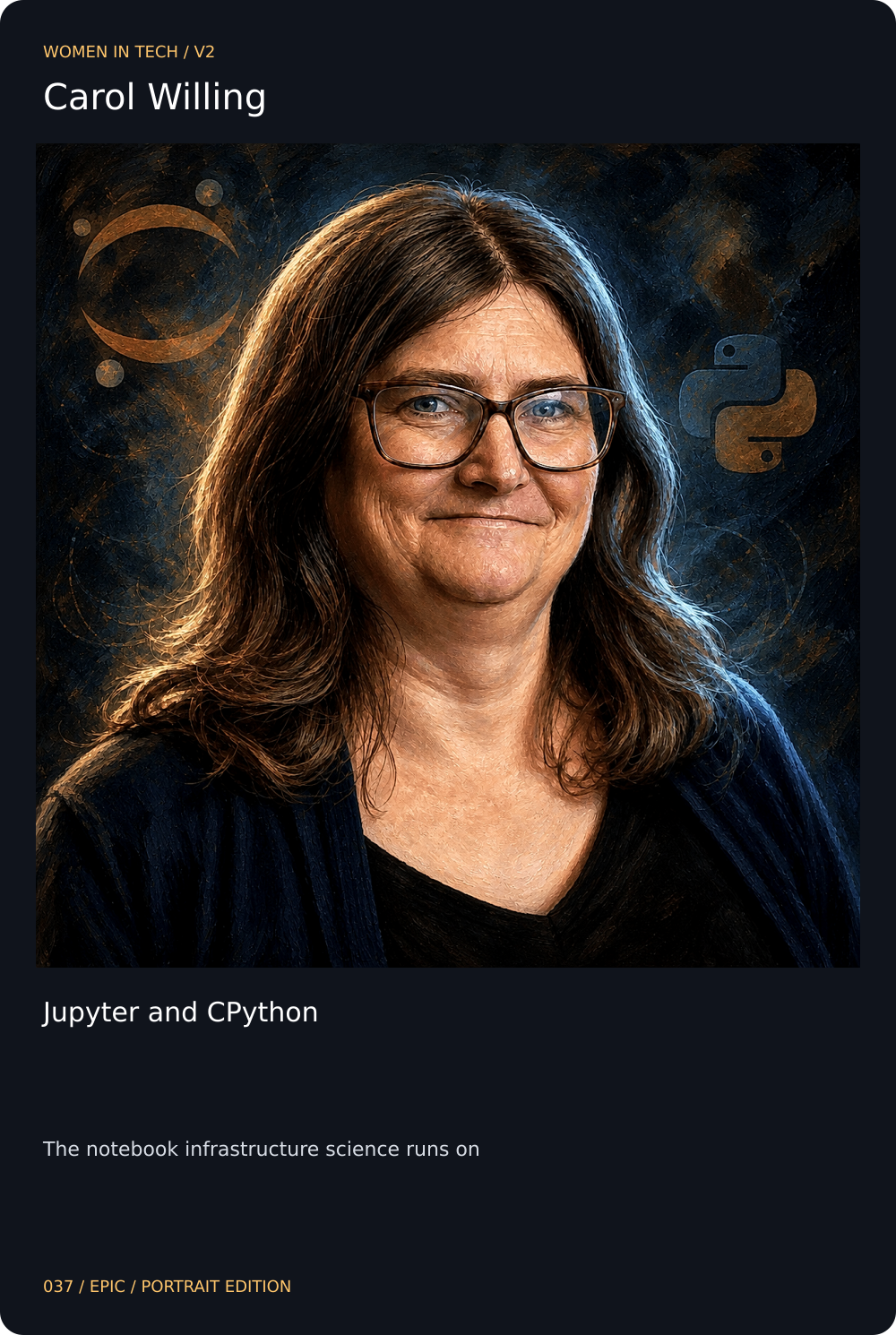
037Epic
Carol Willing card front
Carol WillingJupyter and CPythonThe notebook infrastructure science runs on
JupyterPython coreScientific computing
USA2015-present82

Project Jupyter steering council member and CPython core developer who has done a great deal of the work on JupyterHub and Binder, the pieces that turn a notebook from a file on someone’s laptop into shared, reproducible infrastructure. Served as a Python Steering Council member and does the release and mentoring work that keeps both projects running.

Locked inCard page
038Legendary
Julia Evans card front
Julia EvansThe ZinesExplaining systems programming so people actually understand it
Systems programmingDebuggingTechnical writing
Canada2013-present85

Writes hand-drawn zines and a long-running blog that explain strace, tcpdump, DNS, containers, git internals and networking better than the manuals do, mostly by working through her own confusion in public. Wrote a Ruby profiler and various debugging tools. An enormous number of engineers learned how their machine works from her drawings.

Locked inCard page
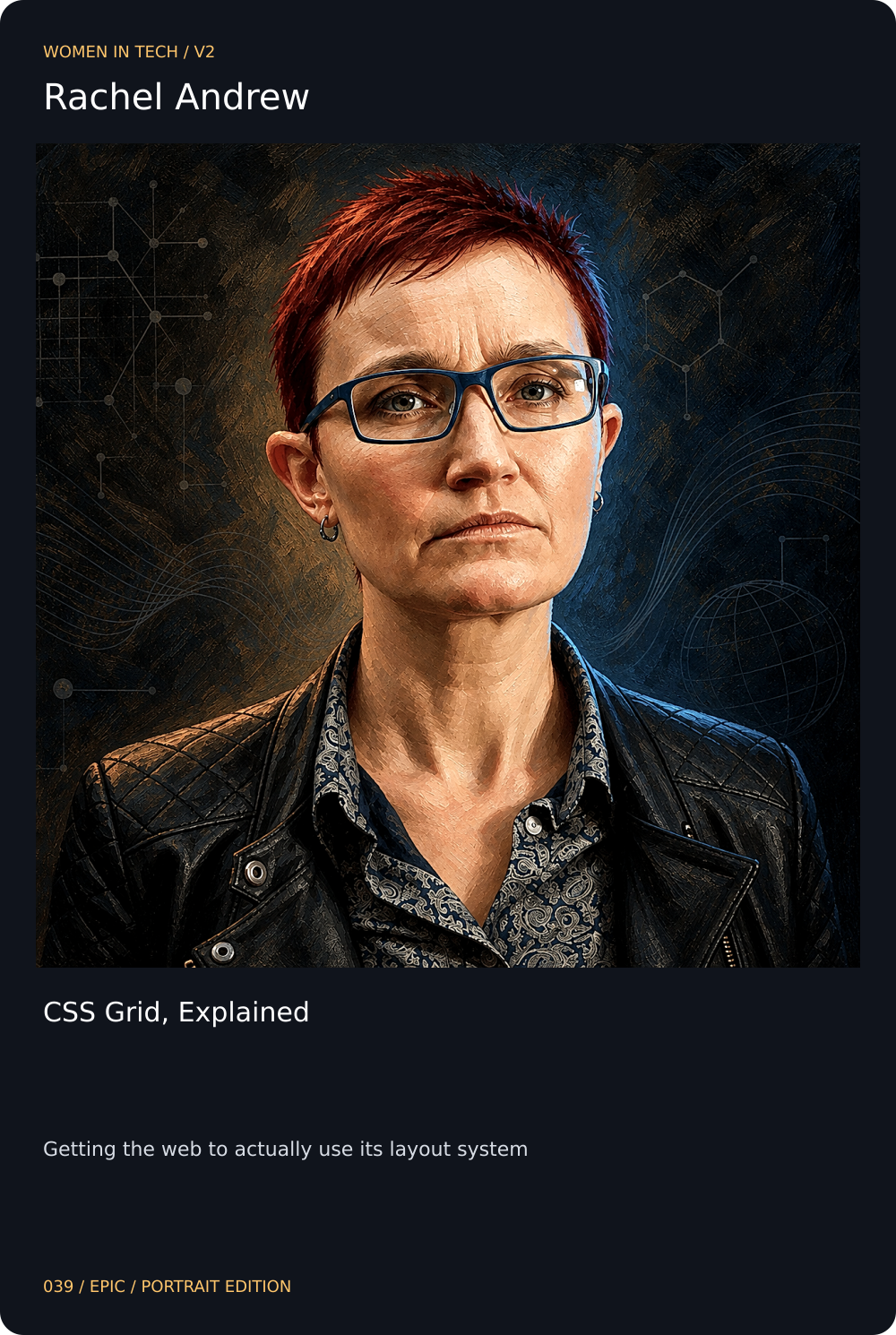
039Epic
Rachel Andrew card front
Rachel AndrewCSS Grid, ExplainedGetting the web to actually use its layout system
CSSWeb standardsTechnical writing
UK2001-present83

CSS Working Group invited expert and the person who did more than anyone to get CSS Grid understood and adopted, through Grid by Example, years of writing and a great deal of patient explanation. Later editor in chief of Smashing Magazine and now on the Chrome developer relations team writing the platform documentation.

Locked inCard page
040Epic
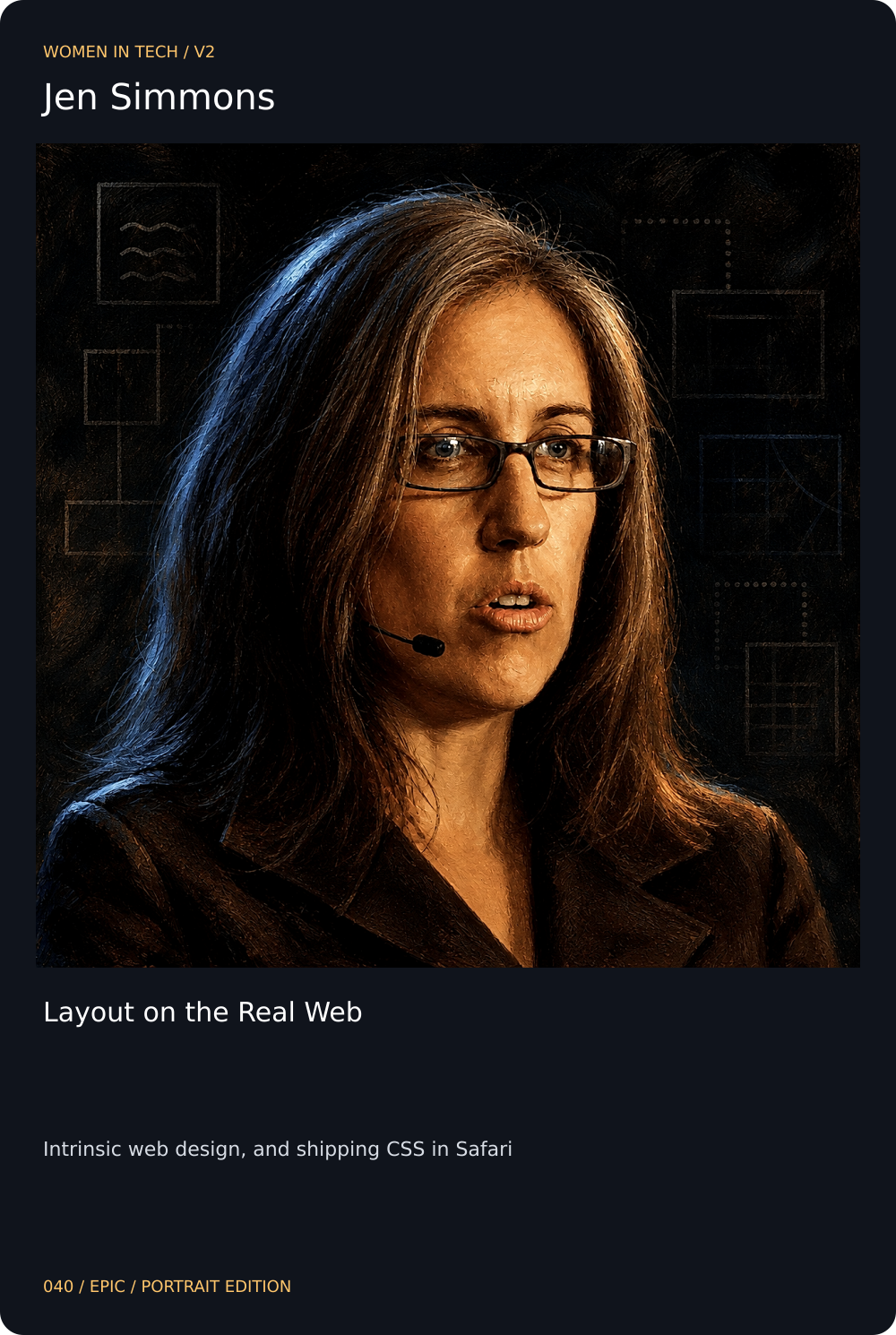
Jen Simmons card front
Jen SimmonsLayout on the Real WebIntrinsic web design, and shipping CSS in Safari
CSSLayoutBrowser engineering
USA2013-present82

Coined intrinsic web design for the layout approach Grid and Flexbox actually enable, and spent years demonstrating it in public so designers would stop rebuilding 2010 in a modern browser. Worked on Firefox developer tools including the Grid inspector, and is now an Apple evangelist and CSS Working Group member shipping the features in Safari.

Locked inCard page
041Epic
Lea Verou card front
Lea VerouCSS, and the Tools Around ItPrism, Mavo, and CSS Working Group membership
CSSOpen source librariesWeb standards
Greece / USA2011-present82

Wrote Prism, the syntax highlighter running on a very large share of technical sites, and a run of small widely-used libraries. CSS Working Group invited expert who has driven several specs including colour functions, wrote CSS Secrets, and researches end-user programming at MIT. Nearly everything she makes is MIT licensed and on GitHub.

Locked inCard page
042Rare
Sarah Drasner card front
Sarah DrasnerAnimation, Vue and Developer ExperienceVue core team, SVG animation, and leading platform teams
VueWeb animationDeveloper experience
USA2016-present79

Vue core team member who wrote much of the animation documentation and a well-regarded book on SVG animation, then led developer experience at Netlify, Google and Azure. Her writing on animation performance and on running engineering teams is widely read, and she has published a large amount of demo code for free.

Locked inCard page
043Epic
Léonie Watson card front
Léonie WatsonAccessibility in the StandardsW3C board, and making the platform work with a screen reader
AccessibilityWeb standardsScreen readers
UK2010-present82

A blind engineer who has served on the W3C Board of Directors, co-chaired the Web Applications Working Group and worked on the accessibility of HTML, ARIA and the Web Audio API from inside the specs rather than filing bugs from outside. Runs TetraLogical and has spent years teaching developers what their markup actually sounds like.

Locked inCard page
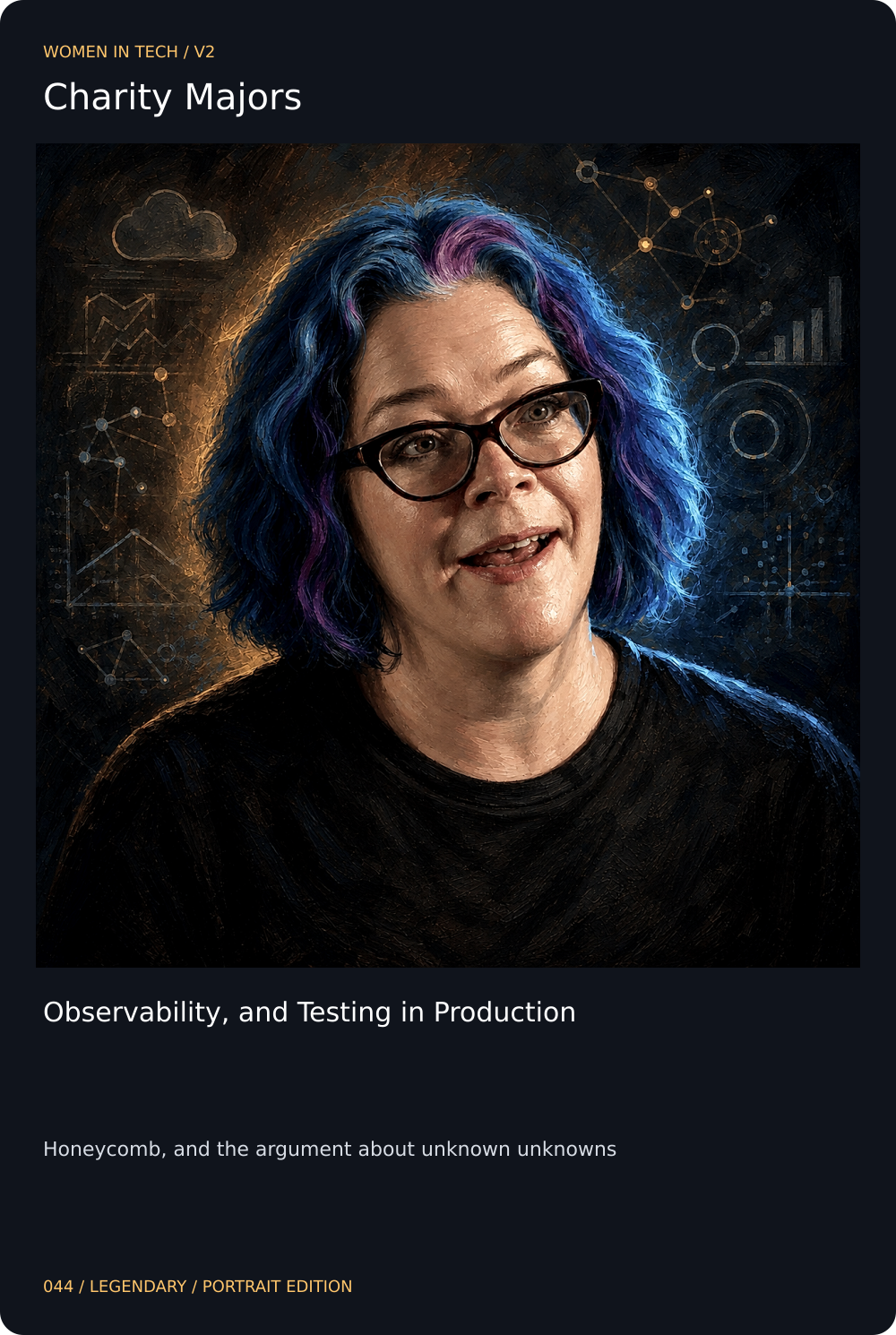
044Legendary
Charity Majors card front
Charity MajorsObservability, and Testing in ProductionHoneycomb, and the argument about unknown unknowns
ObservabilityOperationsDistributed systems
USA2016-present85

Co-founded Honeycomb and made the case that dashboards of pre-aggregated metrics cannot answer questions you did not think to ask, which reframed monitoring into observability and high-cardinality events. Co-wrote Observability Engineering and Database Reliability Engineering, and has been relentlessly, usefully rude about the idea that you can avoid testing in production.

Locked inCard page
045Epic
Liz Fong-Jones card front
Liz Fong-JonesSRE in the OpenSite reliability practice, OpenTelemetry advocacy, and organising
Site reliabilityObservabilityLabour organising
USA2011-present82

Was a Google SRE for over a decade, then principal developer advocate at Honeycomb, pushing OpenTelemetry and publishing a great deal on SLOs and reliability practice that teams actually adopt. Also one of the more visible organisers in the tech worker movement, which cost her something and which she has been candid about.

Locked inCard page
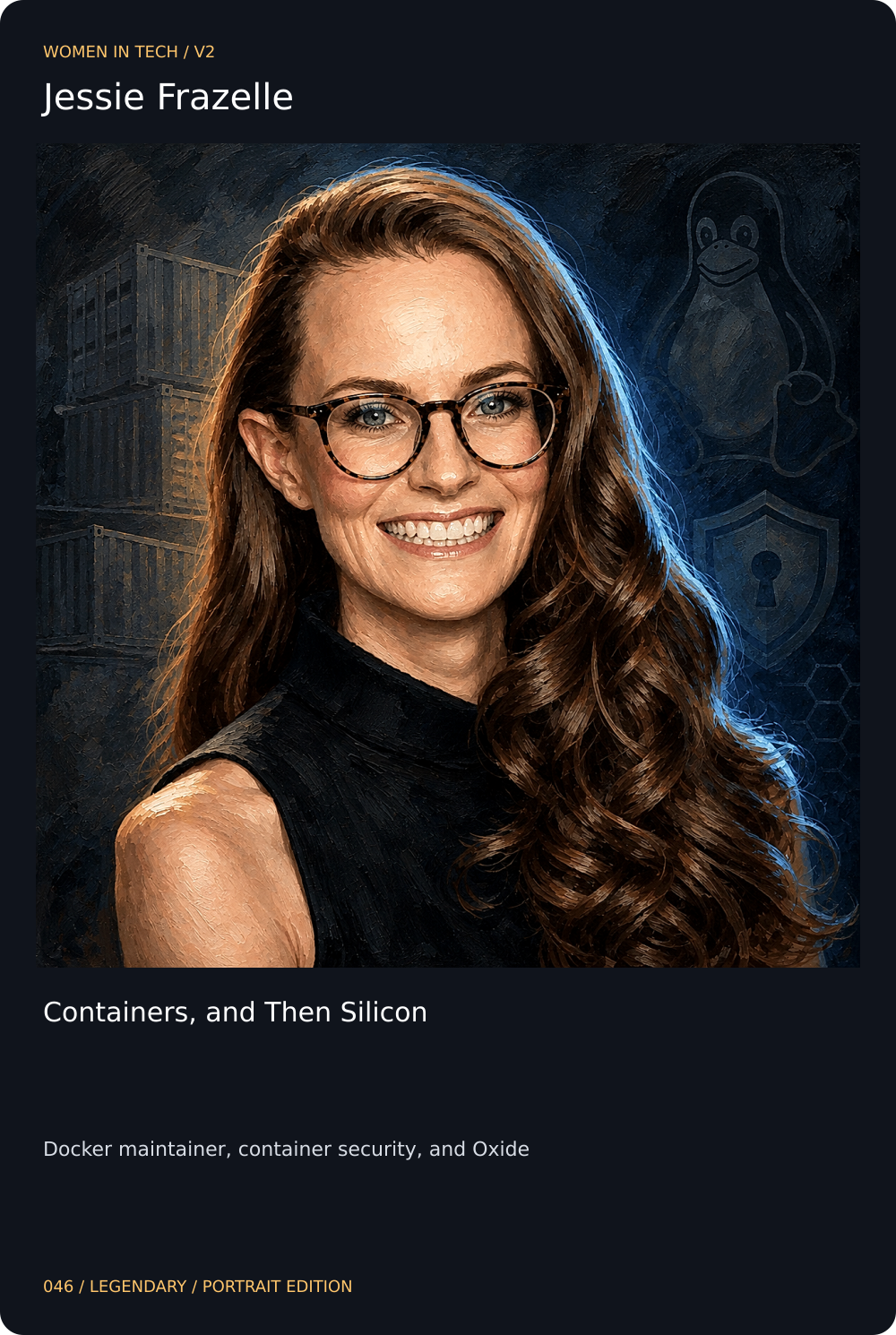
046Legendary
Jessie Frazelle card front
Jessie FrazelleContainers, and Then SiliconDocker maintainer, container security, and Oxide
ContainersLinux securityHardware
USA2014-present85

A core Docker maintainer during the years containers took over, known for running absolutely everything in one including desktop applications, and for the seccomp and AppArmor work on container isolation. Later worked on Kubernetes and GitHub, then co-founded Oxide Computer to build servers with an open firmware stack, which is a much harder version of the same argument.

Locked inCard page
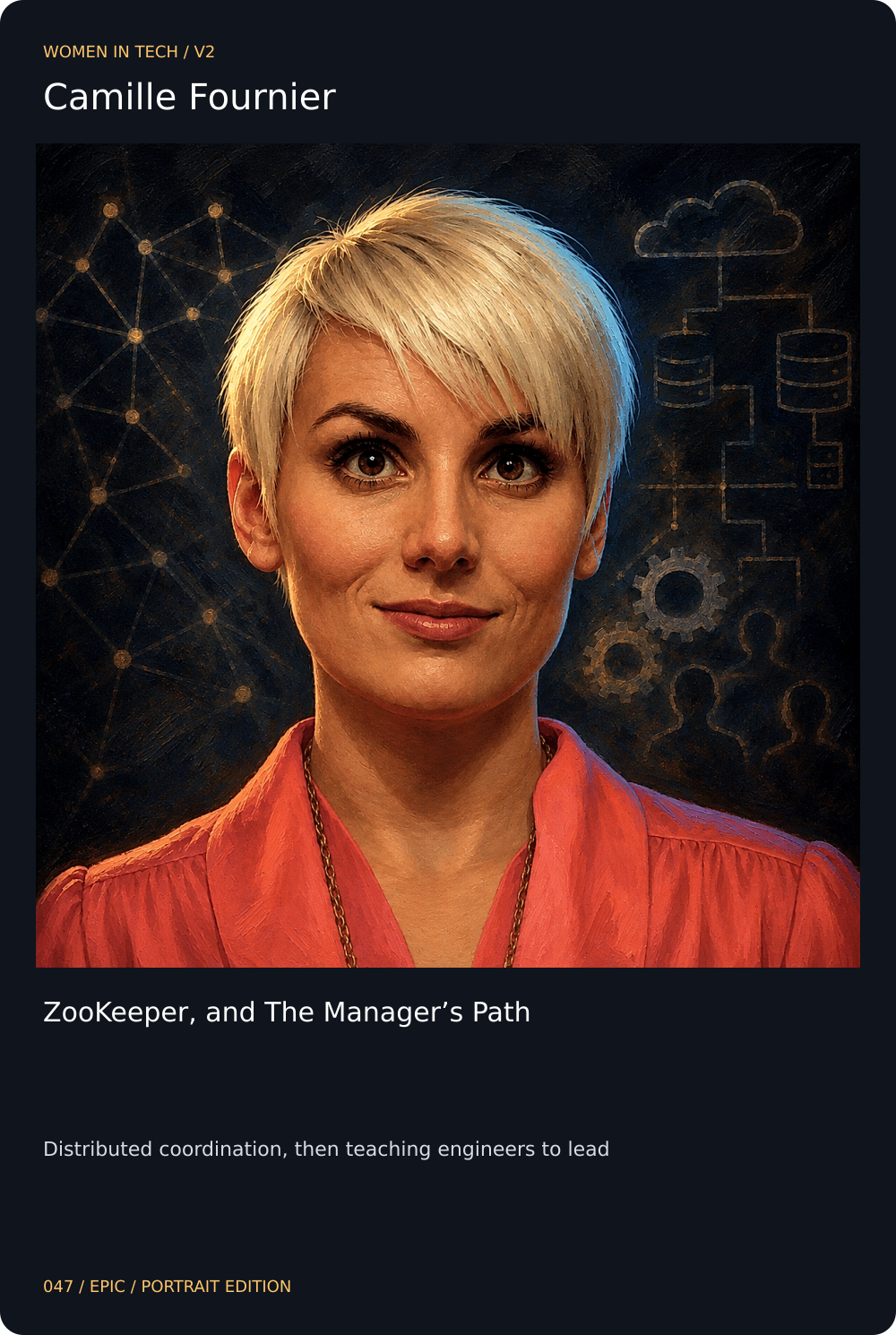
047Epic
Camille Fournier card front
Camille FournierZooKeeper, and The Manager’s PathDistributed coordination, then teaching engineers to lead
Distributed systemsEngineering leadershipApache projects
USA2011-present83

Apache ZooKeeper committer and project chair, and CTO of Rent the Runway, then head of platform engineering at Two Sigma. Wrote The Manager’s Path, which is the book most engineers are handed when they first lead a team, and which is unusually honest about the parts of the job that are not fun.

Locked inCard page
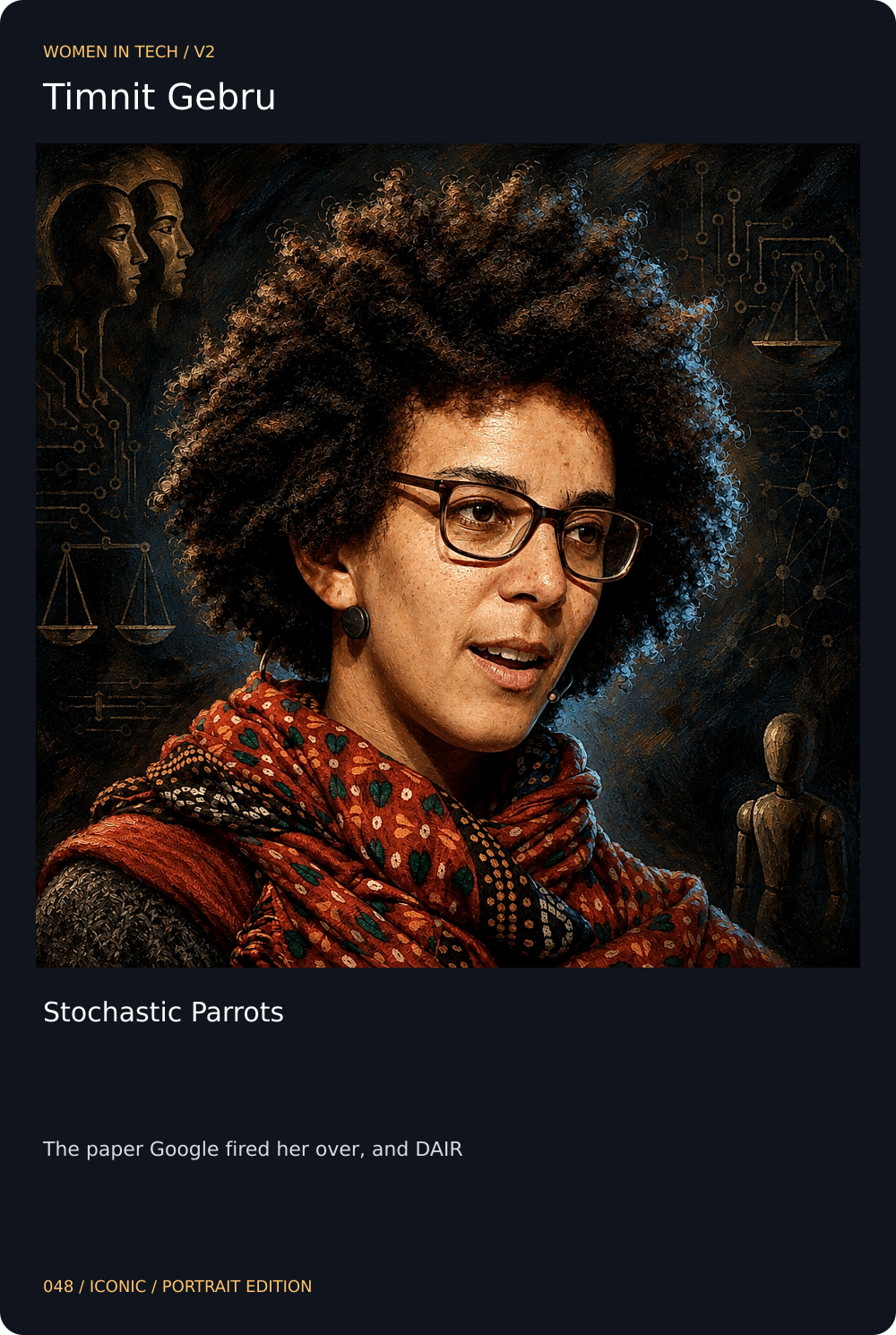
048Iconic
Timnit Gebru card front
Timnit GebruStochastic ParrotsThe paper Google fired her over, and DAIR
Algorithmic biasAI ethicsResearch independence
Ethiopia / USA2017-present90

Co-authored Gender Shades with Joy Buolamwini, measuring commercial face recognition error rates that reached 34 percent for darker-skinned women against near zero for lighter-skinned men, which forced public changes from IBM and Microsoft. Co-led Google’s ethical AI team until her exit over the Stochastic Parrots paper, then founded DAIR to do the research outside a company.

Locked inCard page
049Legendary
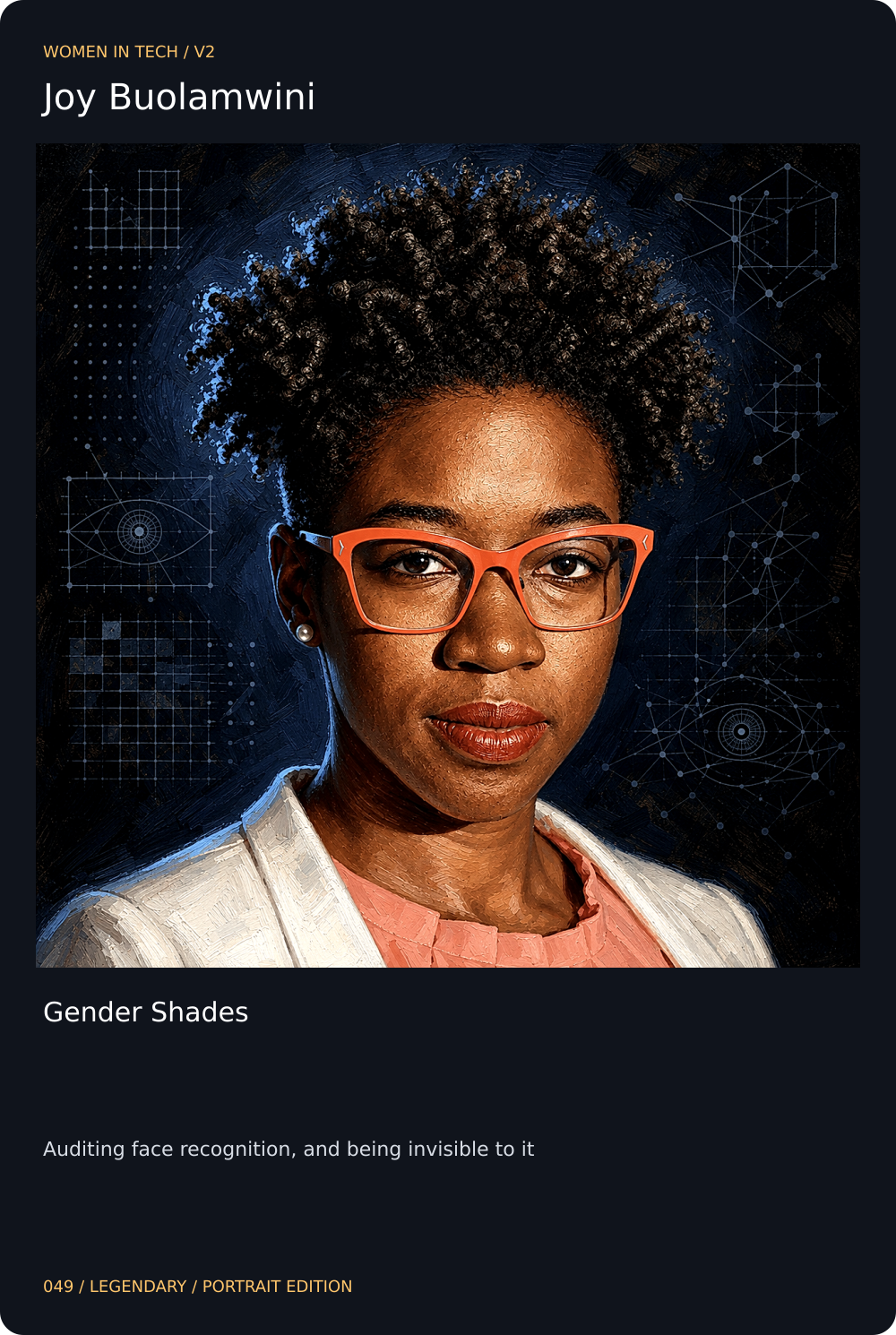
Joy Buolamwini card front
Joy BuolamwiniGender ShadesAuditing face recognition, and being invisible to it
Algorithmic auditingComputer visionPolicy
Ghana / USA2016-present88

Found as an MIT student that face detection would not see her face until she put on a white mask, and turned that into Gender Shades, a systematic audit of commercial classifiers by skin tone and gender. Founded the Algorithmic Justice League. The work fed directly into moratoria on police use of face recognition in several US cities.

Locked inCard page
050Epic
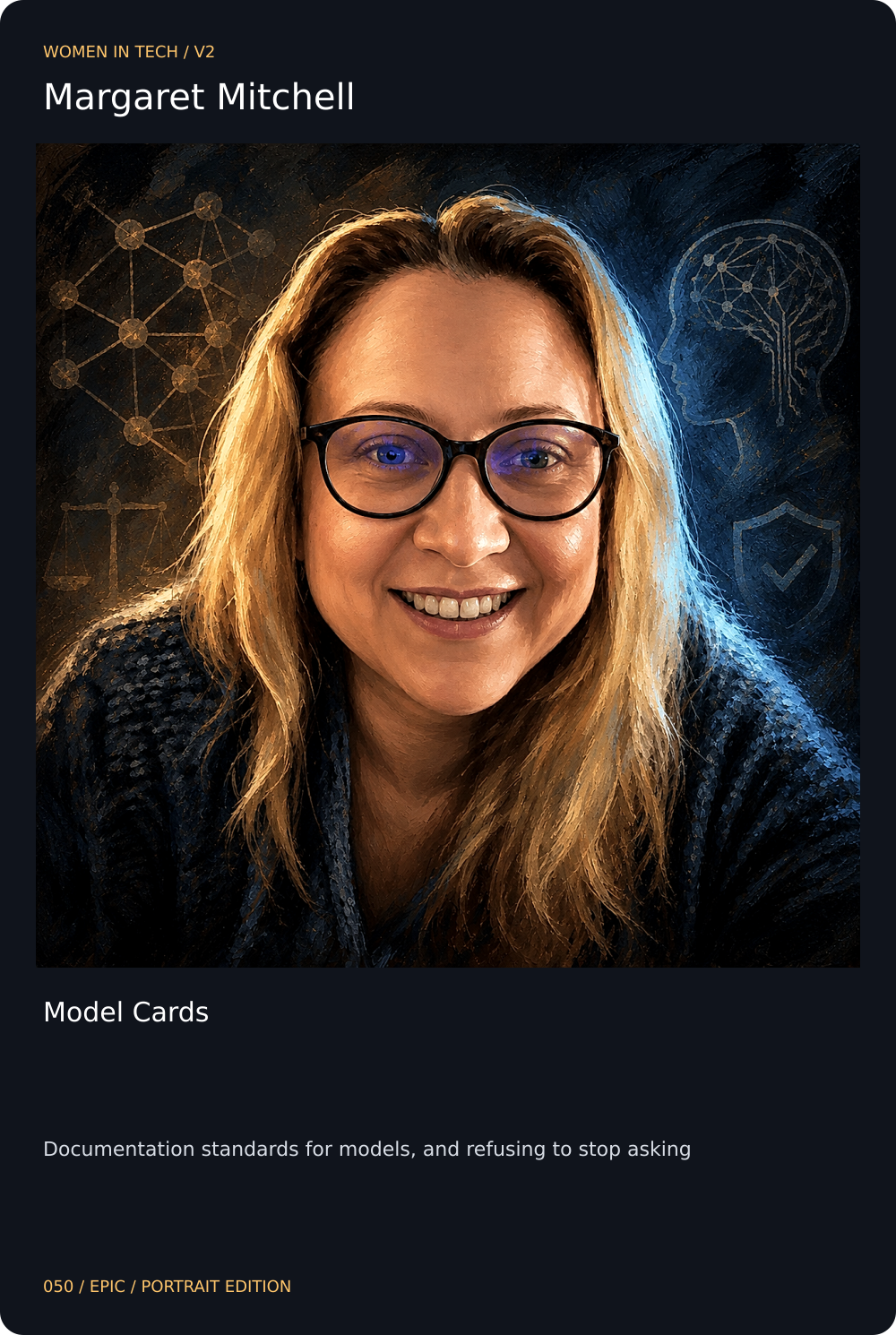
Margaret Mitchell card front
Margaret MitchellModel CardsDocumentation standards for models, and refusing to stop asking
Model documentationAI ethicsEvaluation
USA2018-present84

Founded and co-led Google’s ethical AI team, and first-authored Model Cards for Model Reporting, which proposed that a released model should ship with a document stating its intended use, its evaluation data and where it performs worse. Hugging Face made model cards a default. She was fired alongside Gebru and is now chief ethics scientist at Hugging Face.

Locked inCard page
Not missing

Already in the collection

No name appears in two series, so these 15 are not repeated here. A set like this looking as though it forgot Radia Perlman would be worse than the duplication.

Selection

What earns a card

Built it

A thing that exists

A compiler, an instruction set, a filesystem, a licence, a dataset, a proof. Being first woman to hold a job title is not the qualification; shipping the thing is.

Open

Giving it away counts double

This is an open source card series, so code, weights, specs and teaching are scored explicitly. The openness number is a judgement and you are welcome to argue with it.

Documented

Cite the paper or the repo

Every card links the artefact behind the claim. Several of these careers were classified, uncredited or attributed to someone else at the time, which is noted where it applies.

Real faces

No invented likenesses

A portrait is painted from an identified photograph, credited to its source. Where no usable photograph exists the card carries no face. That rule costs this set six portraits.

Who are we missing?

Fifty slots across a hundred and eighty years means the cuts were severe, and there are obvious names not on this list. Nominate someone, challenge a stat line, or rewrite a scouting report. Every card starts as a pull request.