Series Two In progress

Hacking Legends

The second set. Phone phreaks, worm authors, disclosure architects and the defenders who cleaned up after all of them — 30 cards for the people who found the holes in the software the world runs on.

This set is being built in public. Copy is drafted, stats are in flux, and 30 of 30 cards are illustrated so far. What you see below is the working roster.

Roster drafted29/30
Cards locked10/30
Artwork rendered30/30
The working roster

30 names, so far

Open the scouting report for the full write-up and the sources behind it, or go to a card's own page. Nothing here is final until the set is frozen — argue with any of it on GitHub.

001Iconic
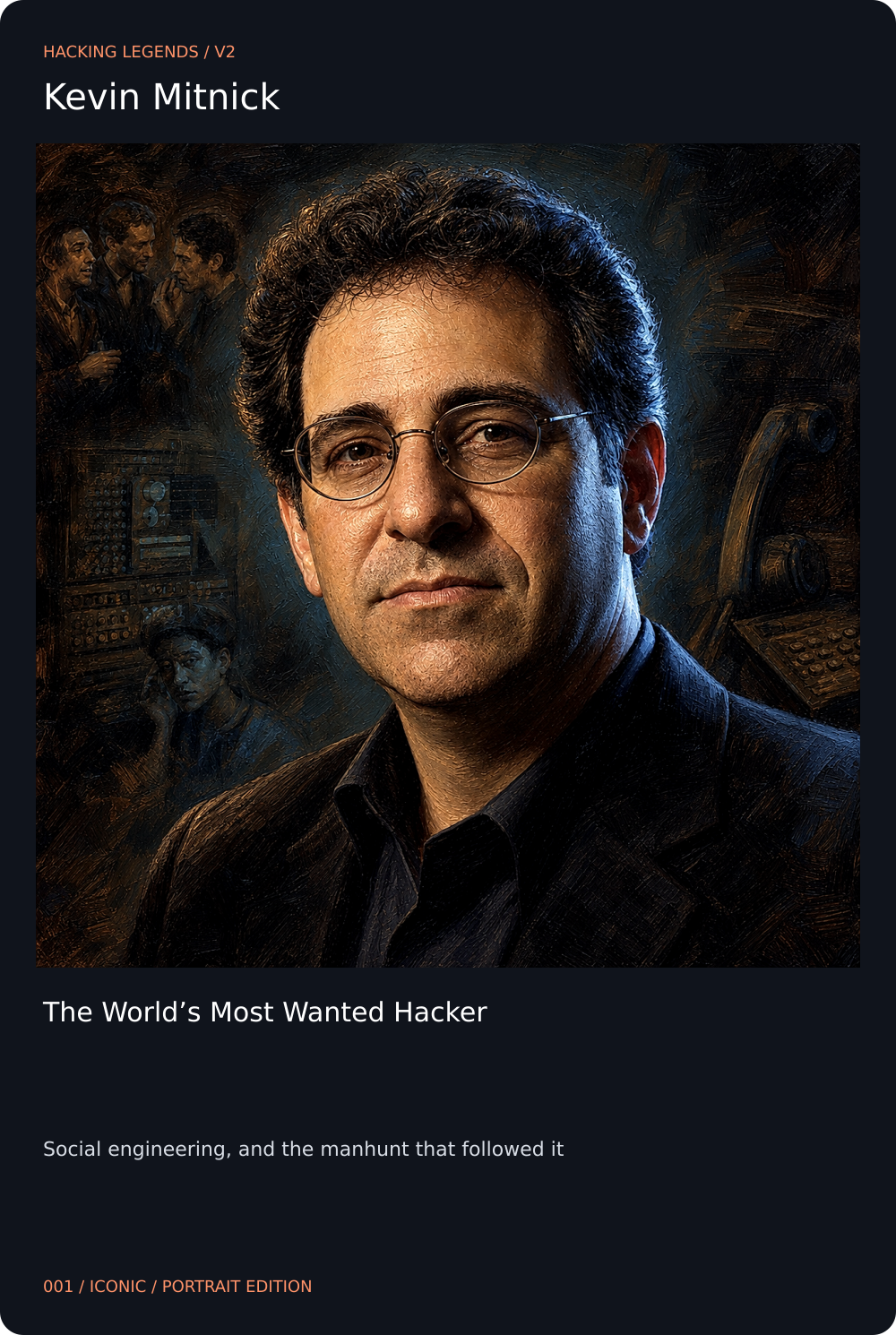
Kevin Mitnick card front
Kevin Mitnick“Condor”The World’s Most Wanted HackerSocial engineering, and the manhunt that followed it
Social engineeringPhone phreakingTelecom
USA1979–202398

Talked his way into more networks than he ever broke into. A teenage phone phreak who became the FBI’s most-wanted hacker, was captured in 1995, served five years, and came out the other side as a security consultant and author of The Art of Deception. He made the industry admit the obvious: the person on the phone is the vulnerability.

Locked inCard page
002Iconic
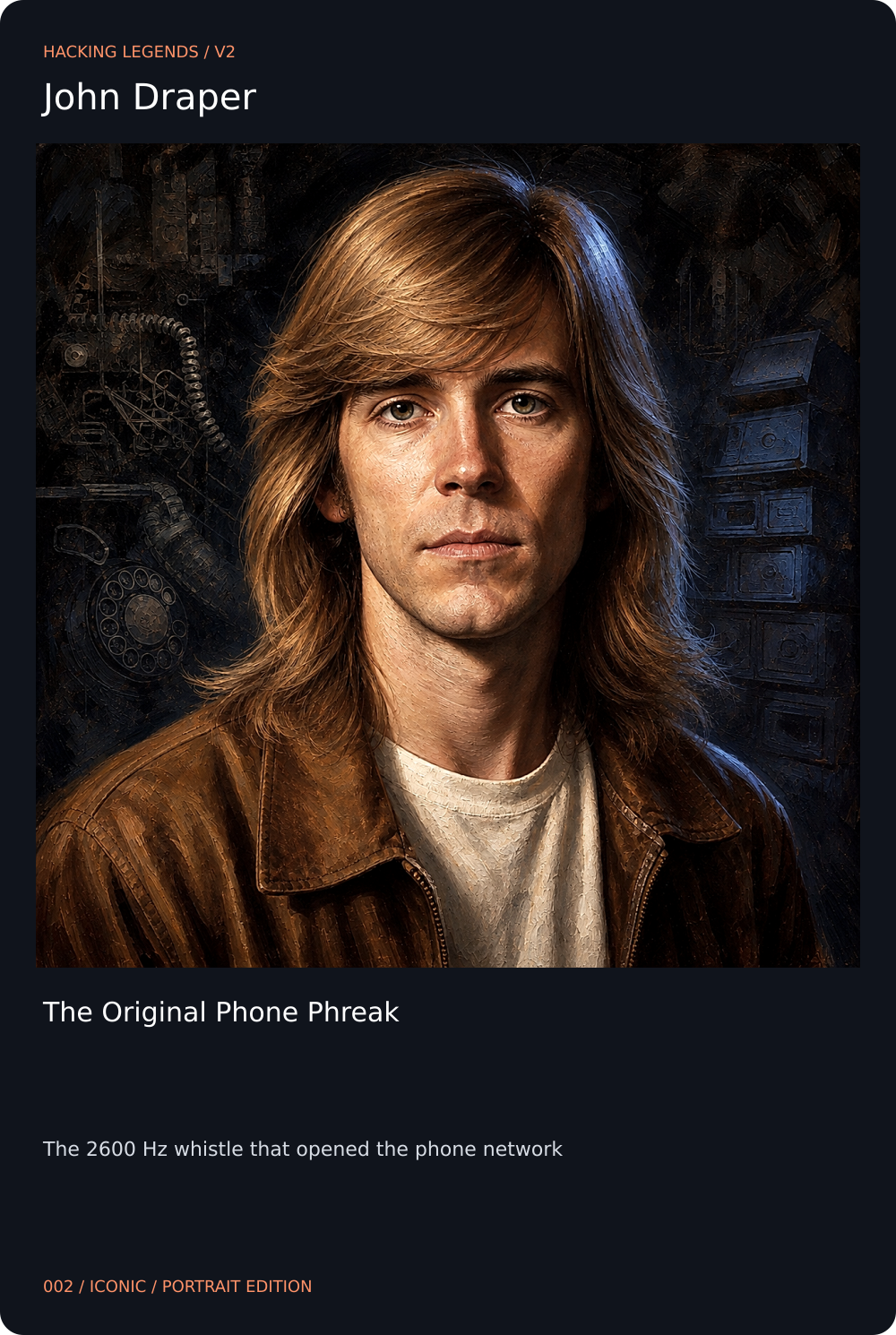
John Draper card front
John Draper“Captain Crunch”The Original Phone PhreakThe 2600 Hz whistle that opened the phone network
Phone phreakingBlue boxes
USA1970s–1980s94

Discovered that a toy whistle packed in a cereal box produced the exact 2600 Hz tone AT&T used to signal a free trunk line. The blue-box scene that grew from it pulled in two young Californians named Wozniak and Jobs, and drew the blueprint for every generation of hacker that followed.

Locked inCard page
003Iconic
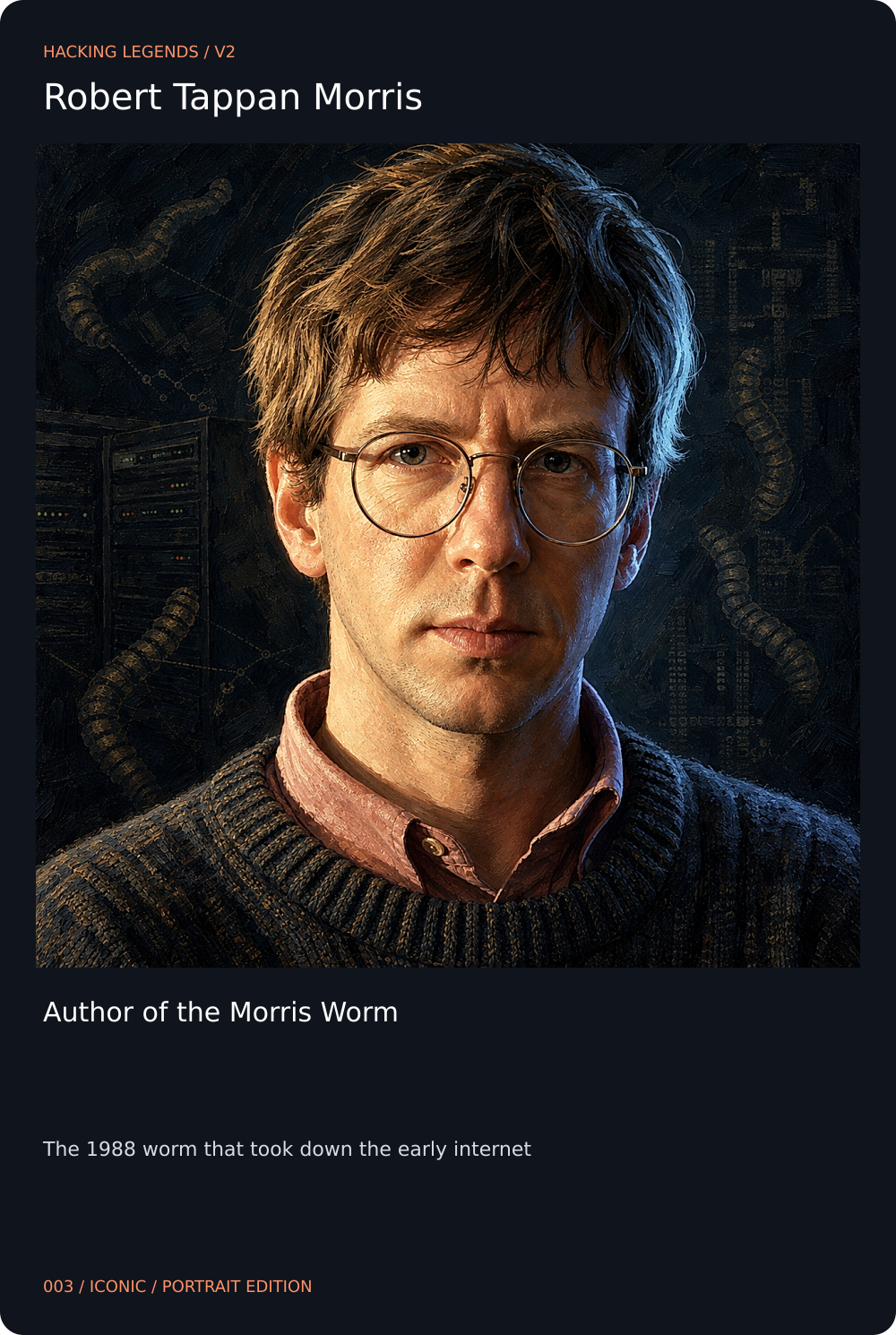
Robert Tappan Morris card front
Robert Tappan MorrisAuthor of the Morris WormThe 1988 worm that took down the early internet
WormsUnix internals
USA1988–present96

Released a self-replicating program from MIT in November 1988 that reinfected hosts far faster than intended and knocked out a large share of the machines on the internet. First person convicted under the Computer Fraud and Abuse Act. Went on to become an MIT professor and a co-founder of Y Combinator.

Locked inCard page
004Iconic
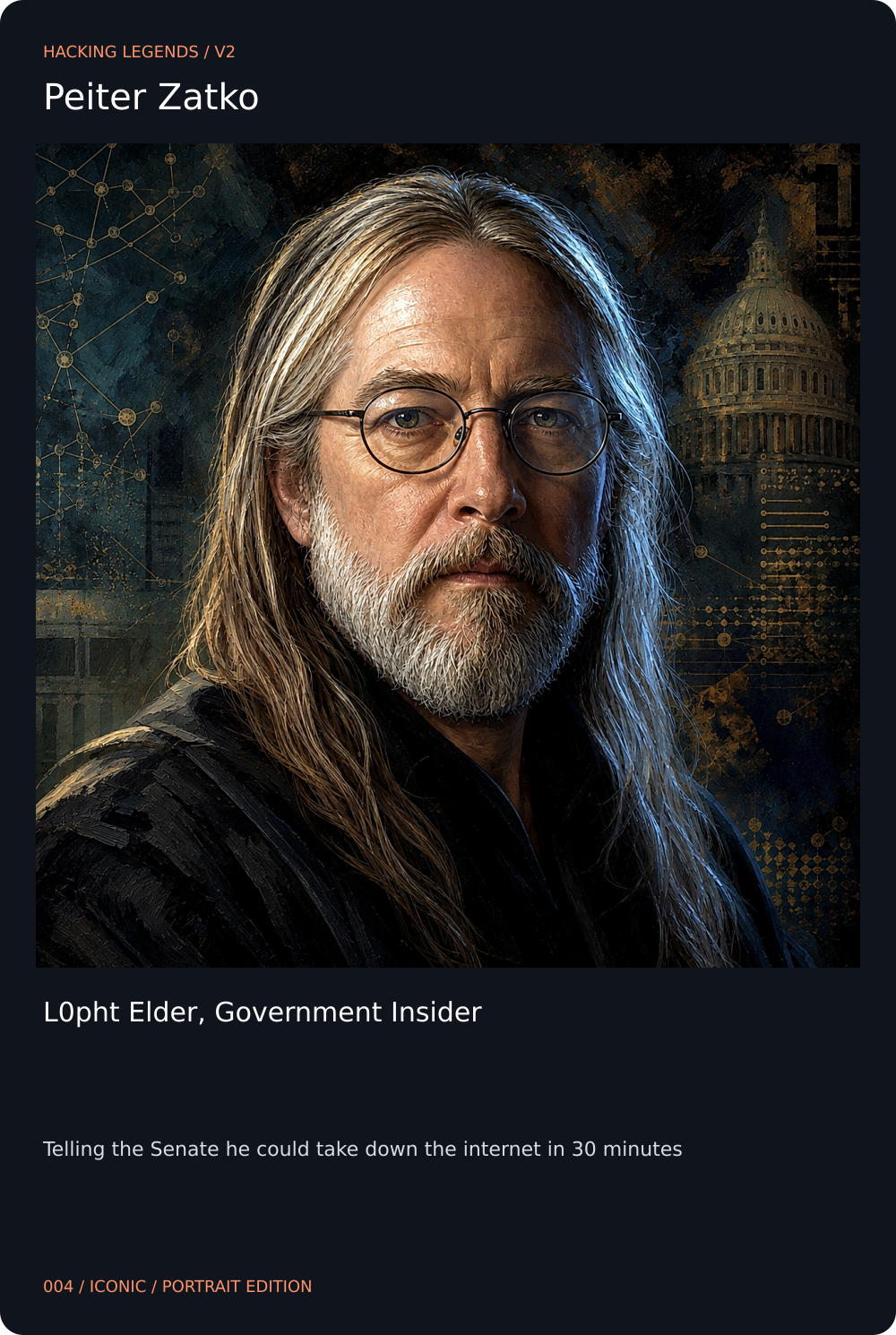
Peiter Zatko card front
Peiter Zatko“Mudge”L0pht Elder, Government InsiderTelling the Senate he could take down the internet in 30 minutes
Vulnerability researchPolicyPassword cracking
USA1990s–present95

Front man of L0pht Heavy Industries and co-author of L0phtCrack. In 1998 the crew testified before the US Senate under their handles and warned that the internet could be taken down in half an hour. Later ran cyber programs at DARPA, worked security at Google and Stripe, and blew the whistle on Twitter’s security posture in 2022.

Locked inCard page
005Legendary
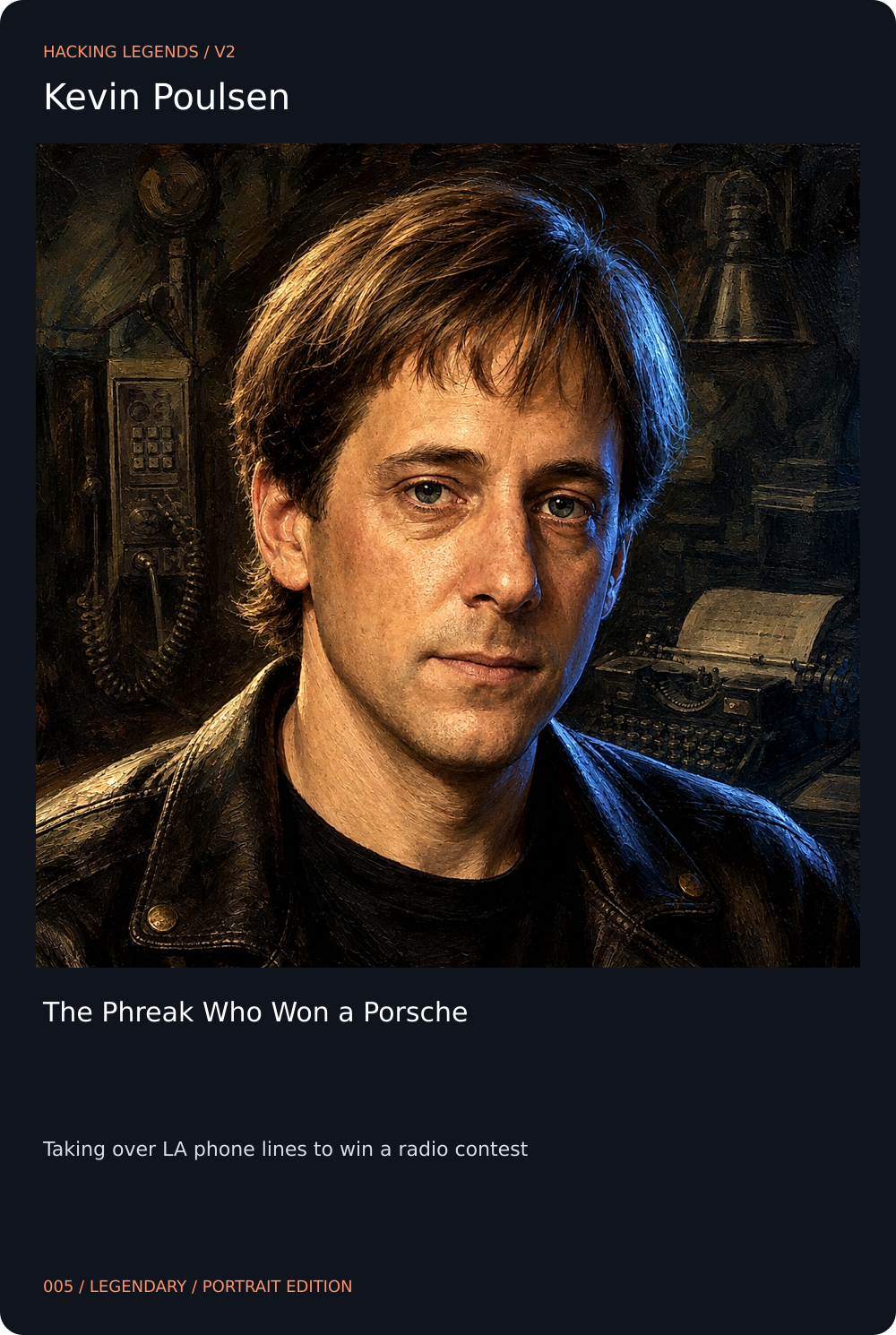
Kevin Poulsen card front
Kevin Poulsen“Dark Dante”The Phreak Who Won a PorscheTaking over LA phone lines to win a radio contest
Phone phreakingJournalism
USA1980s–present88

Seized control of every telephone line into KIIS-FM to guarantee he was caller 102 and won a Porsche. Ran from the FBI, was profiled on Unsolved Mysteries, and served time. Reinvented himself as an investigative journalist at Wired and helped build SecureDrop, the whistleblower system used by newsrooms worldwide.

Locked inCard page
006Legendary
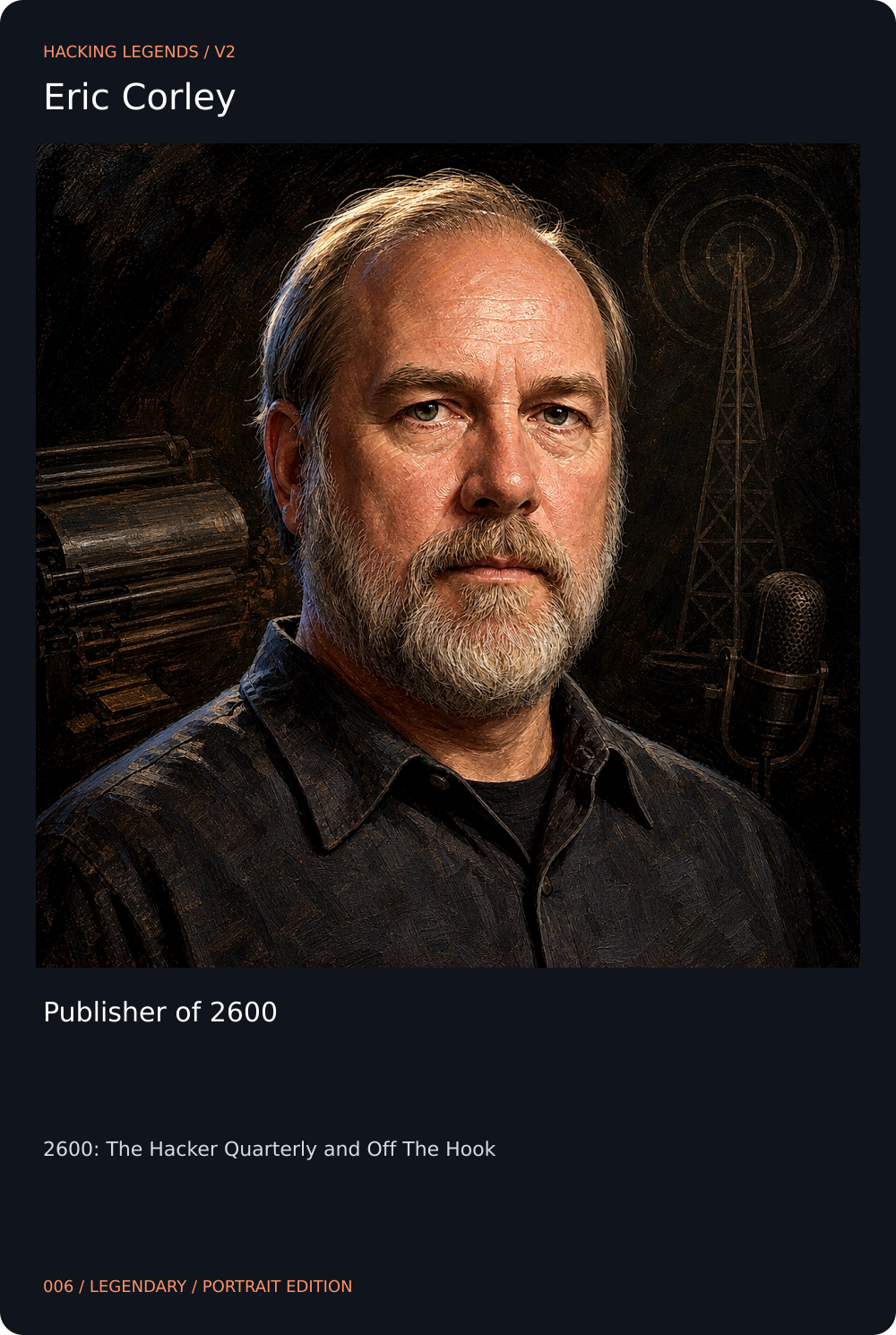
Eric Corley card front
Eric Corley“Emmanuel Goldstein”Publisher of 26002600: The Hacker Quarterly and Off The Hook
PublishingRadioActivism
USA1984–present90

Founded 2600: The Hacker Quarterly in 1984 and has been broadcasting Off The Hook on WBAI since 1988. Organizer of the HOPE conferences and a defendant in the DeCSS case, where the courts first wrestled with whether publishing code is speech.

Locked inCard page
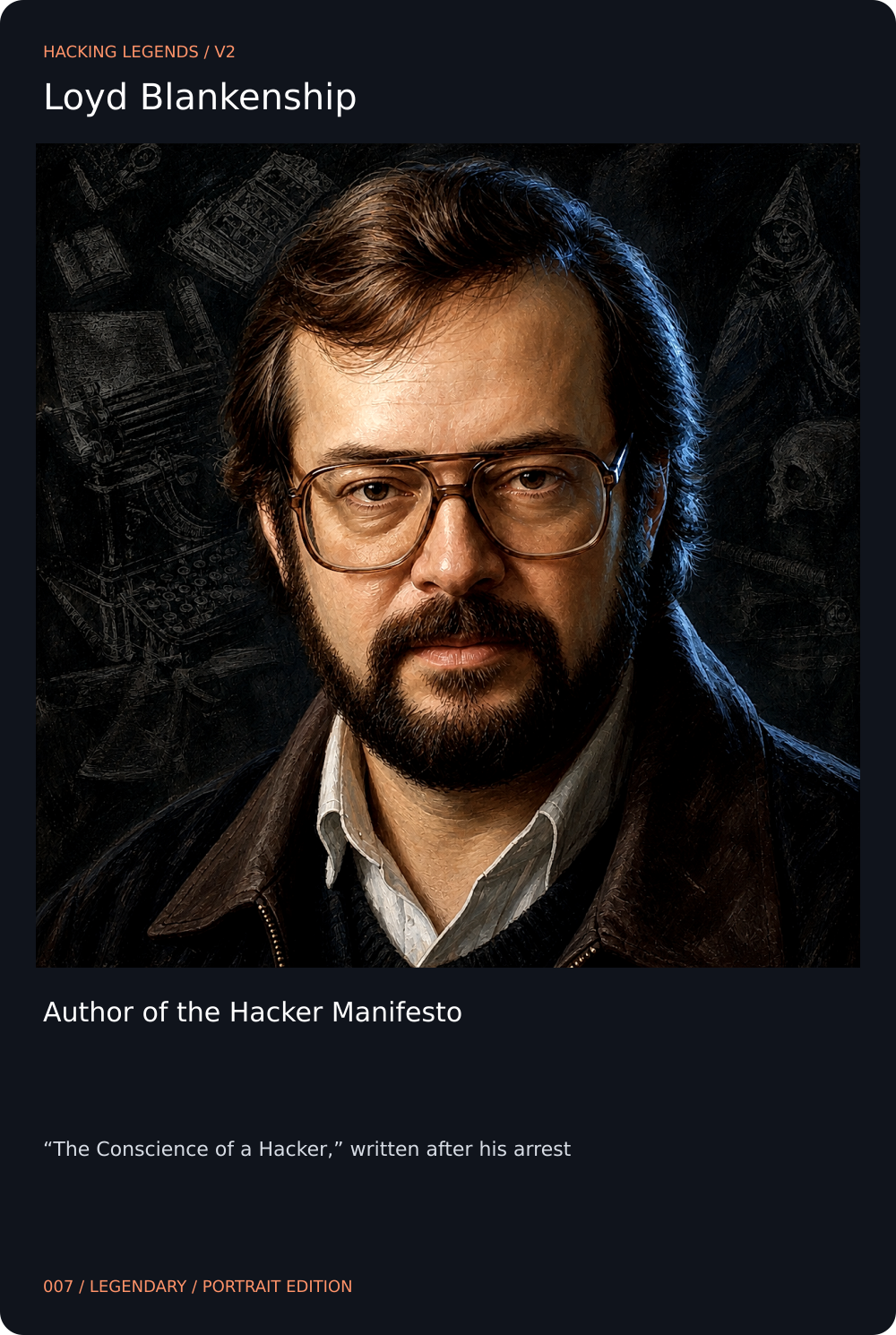
007Legendary
Loyd Blankenship card front
Loyd Blankenship“The Mentor”Author of the Hacker Manifesto“The Conscience of a Hacker,” written after his arrest
WritingLegion of DoomGame design
USA1980s–1990s87

Member of the Legion of Doom who, hours after being arrested in 1986, wrote the essay that Phrack published as The Conscience of a Hacker. Later wrote GURPS Cyberpunk for Steve Jackson Games — the manuscript the Secret Service seized in a raid that helped spark the founding of the EFF.

Locked inCard page
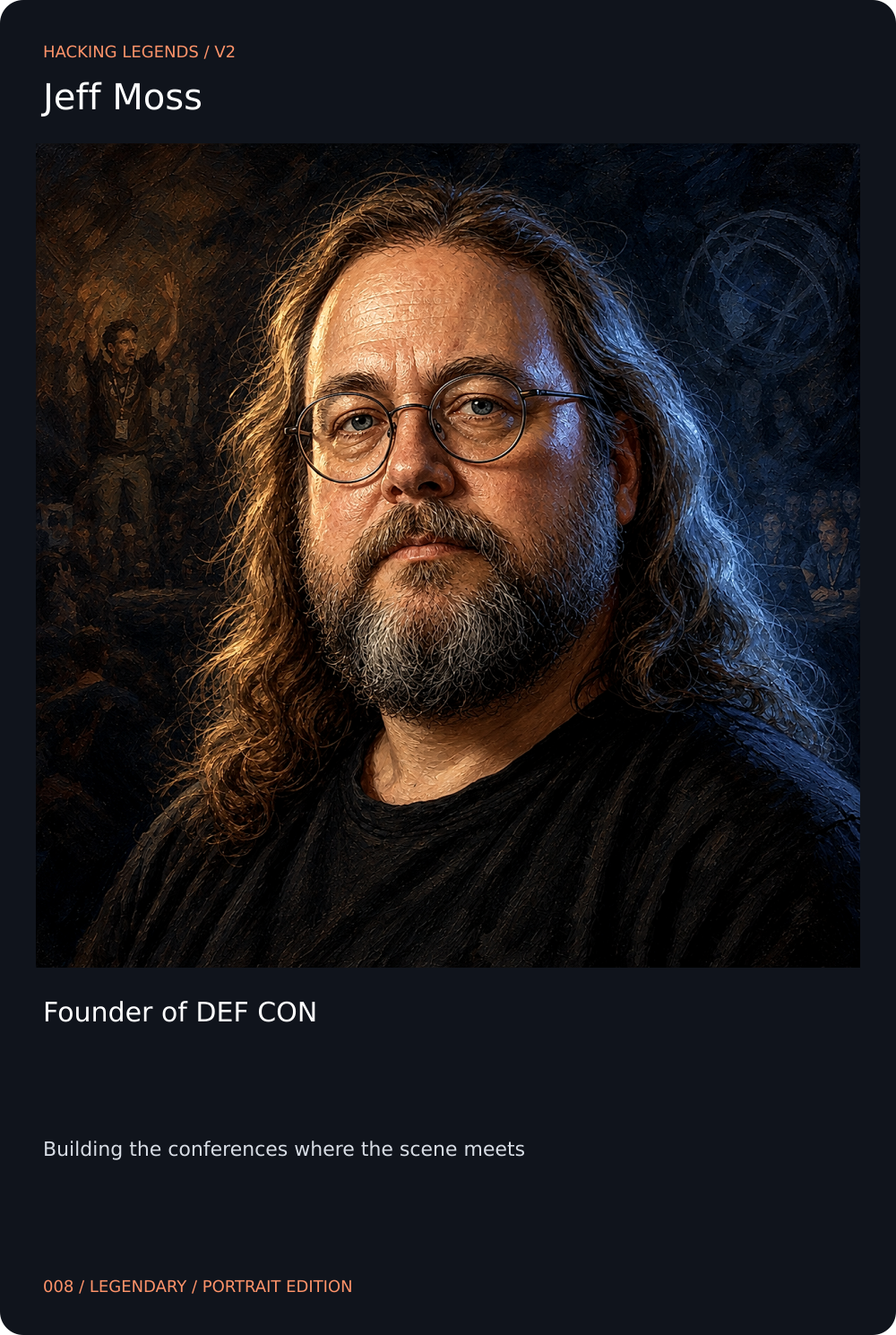
008Legendary
Jeff Moss card front
Jeff Moss“Dark Tangent”Founder of DEF CONBuilding the conferences where the scene meets
CommunityConferencesPolicy
USA1993–present89

Threw a going-away party for a friend in Las Vegas in 1993 and accidentally founded DEF CON, now the largest hacker gathering on earth. Also founded Black Hat, served on the US Homeland Security Advisory Council, and spent years translating between the underground and the institutions that fear it.

Locked inCard page
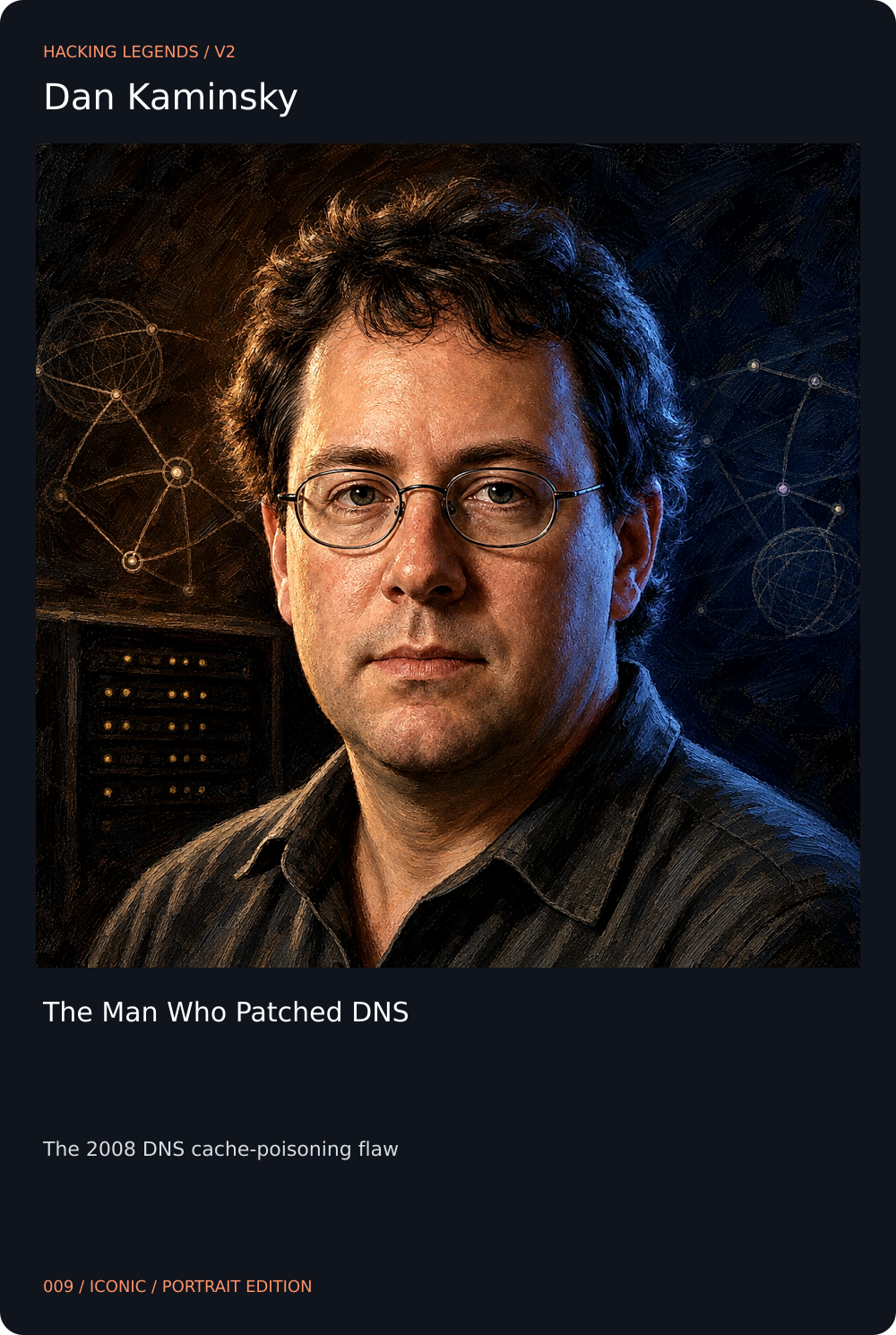
009Iconic
Dan Kaminsky card front
Dan KaminskyThe Man Who Patched DNSThe 2008 DNS cache-poisoning flaw
DNSProtocol researchCoordinated disclosure
USA2000s–202195

Found a flaw that let an attacker poison DNS caches and quietly redirect any name on the internet. Instead of publishing, he organized a secret multi-vendor patch effort and got the whole internet fixed on one coordinated day in July 2008. Died in 2021 at 42, and the industry has not stopped talking about him since.

Locked inCard page
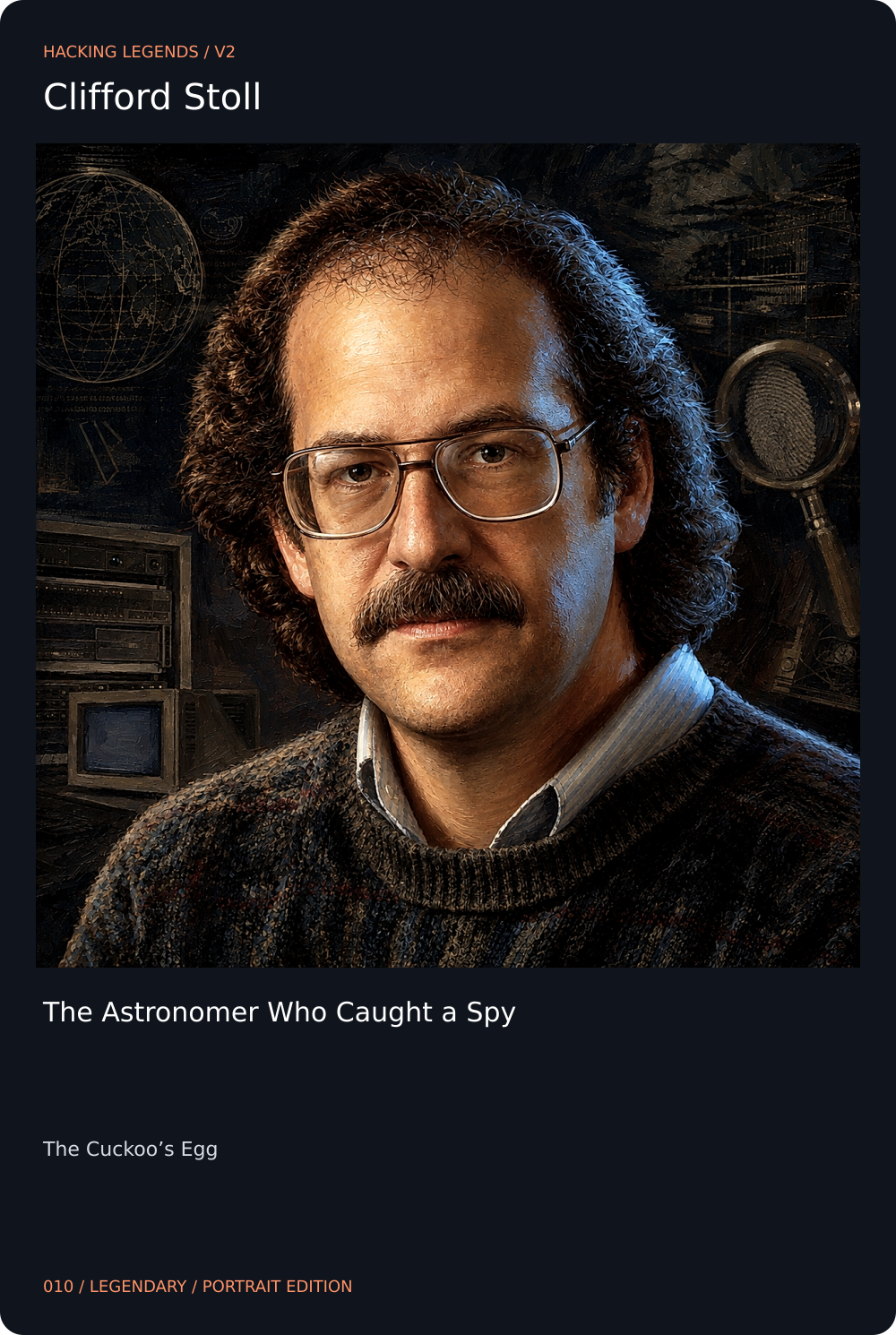
010Legendary
Clifford Stoll card front
Clifford StollThe Astronomer Who Caught a SpyThe Cuckoo’s Egg
Incident responseForensicsWriting
USA1986–198988

Chased a 75-cent accounting error at Lawrence Berkeley Lab all the way to Markus Hess, a West German hacker selling US military data to the KGB. His logbooks and homemade tripwires invented network intrusion detection by hand, and The Cuckoo’s Egg is still the best on-ramp anyone ever wrote.

Locked inCard page
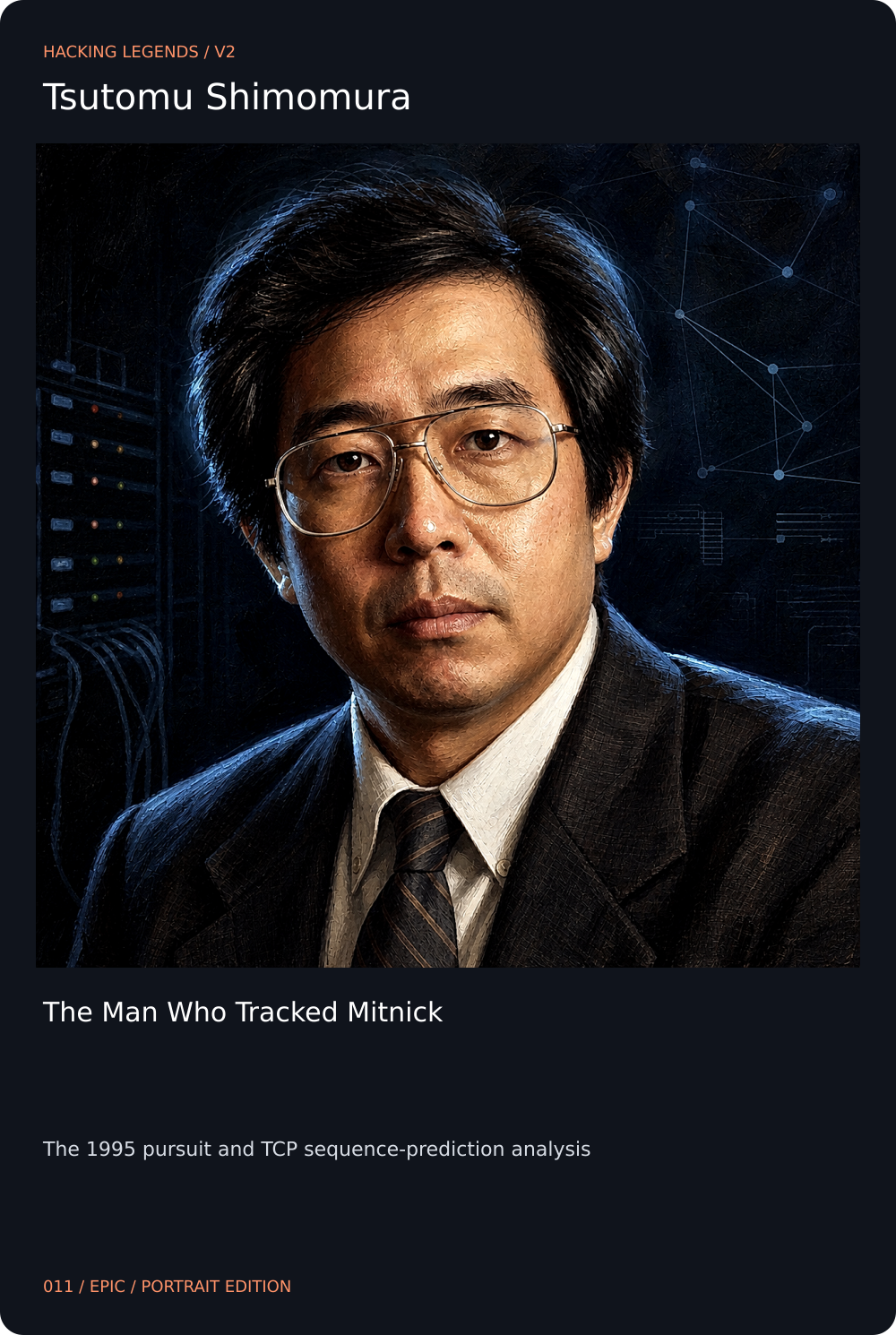
011Epic
Tsutomu Shimomura card front
Tsutomu ShimomuraThe Man Who Tracked MitnickThe 1995 pursuit and TCP sequence-prediction analysis
Network forensicsTCP/IP
Japan / USA1990s82

Computational physicist at San Diego Supercomputer Center whose own machines were broken into on Christmas Day 1994. His analysis of the IP-spoofing and TCP sequence-prediction attack, and the cell-tracking work that followed, led federal agents to Kevin Mitnick in Raleigh in February 1995.

Copy draftedCard page
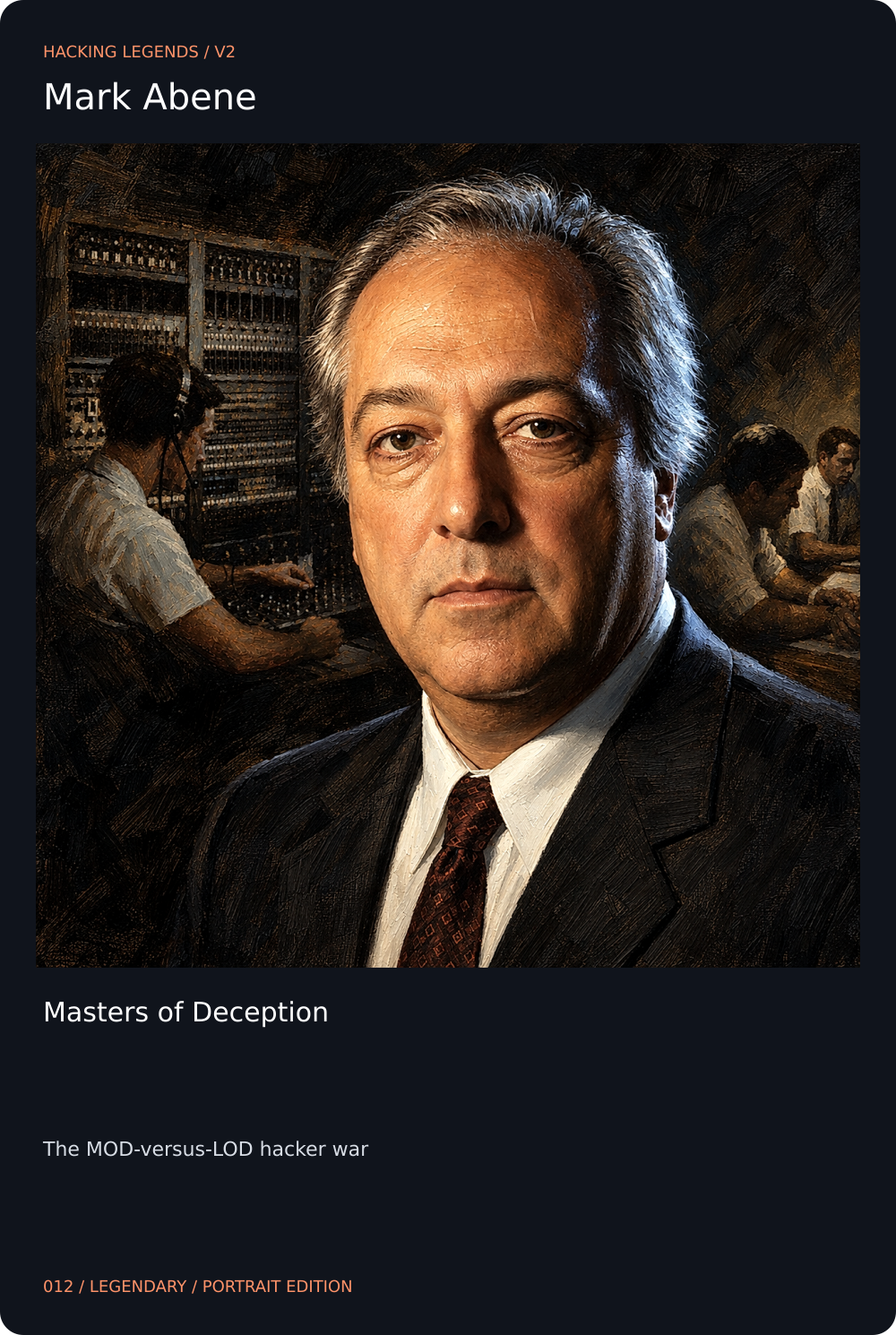
012Legendary
Mark Abene card front
Mark Abene“Phiber Optik”Masters of DeceptionThe MOD-versus-LOD hacker war
Telecom switchingCrews
USA1980s–1990s84

Teenage authority on telephone switching systems and the public face of Masters of Deception. His 1994 prison sentence was widely read as a message being sent to a whole generation; New York magazine had already named him one of the city’s smartest people.

Copy draftedCard page
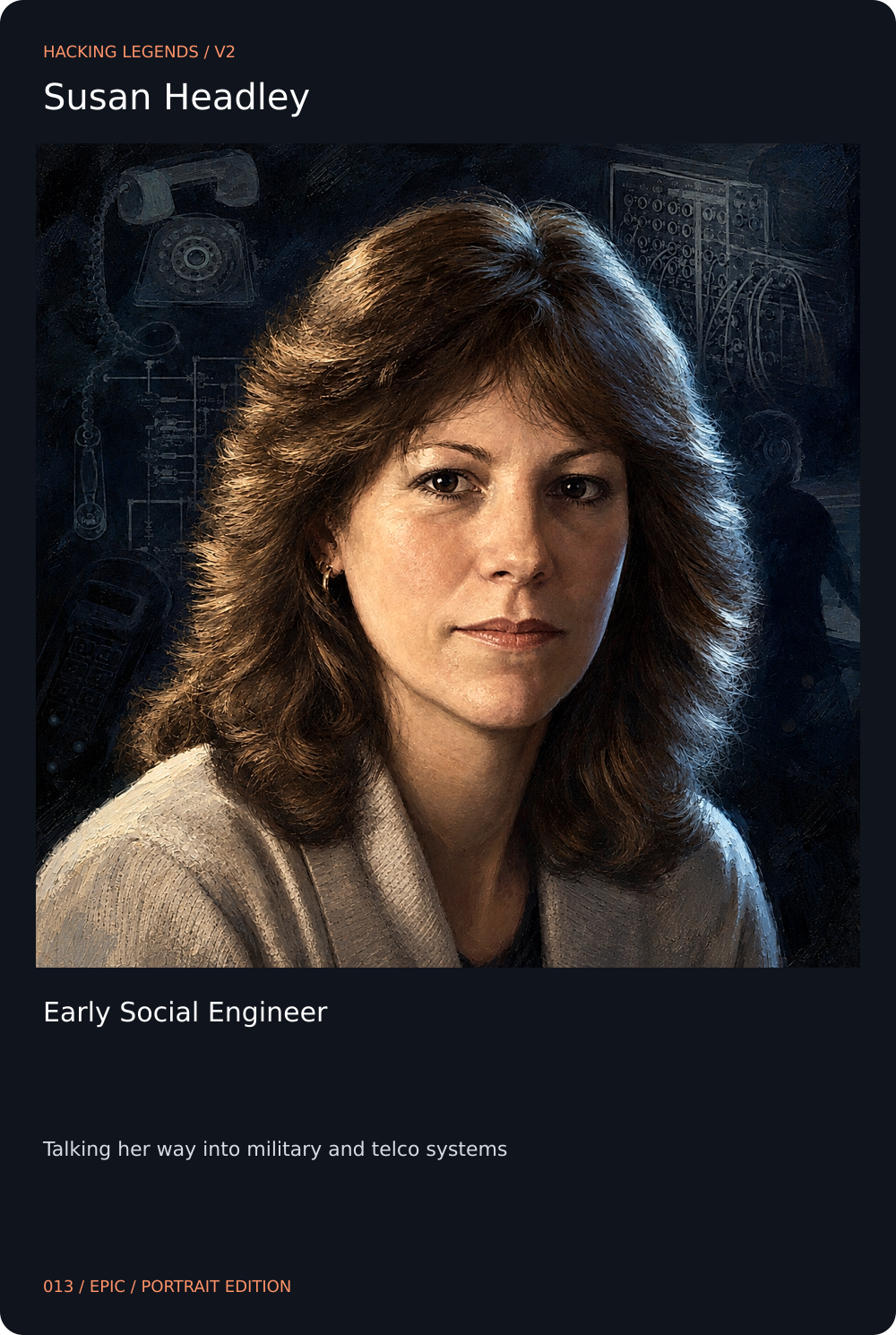
013Epic
Susan Headley card front
Susan Headley“Susan Thunder”Early Social EngineerTalking her way into military and telco systems
Social engineeringPhone phreaking
USA1970s–1980s78

Ran in the same Los Angeles phreaking circles as Mitnick and Lewis De Payne and specialized in the human layer — pretext calls, trashed printouts, borrowed credentials. One of the very few women documented in the earliest scene, and she walked away from it entirely.

Copy draftedCard page
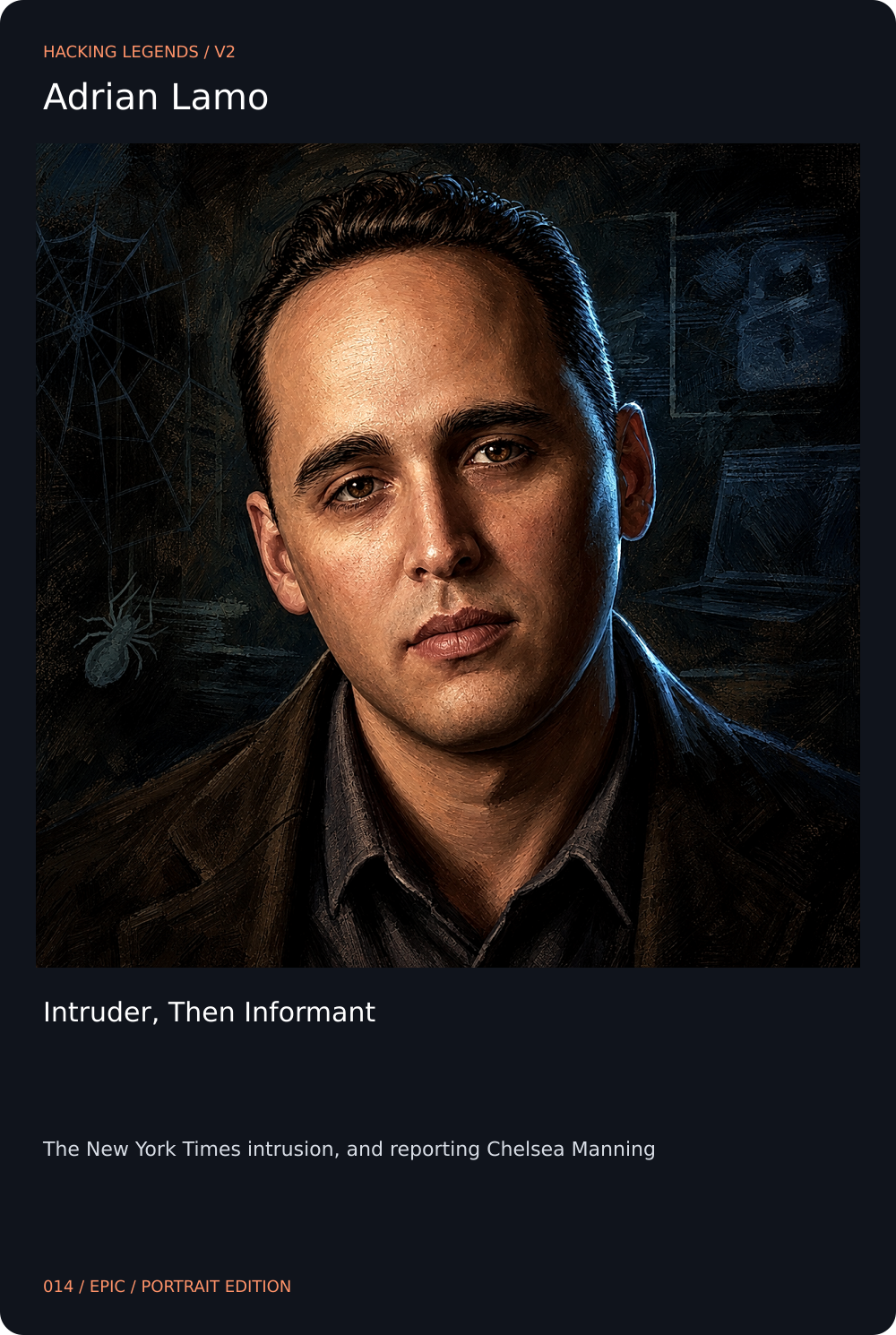
014Epic
Adrian Lamo card front
Adrian Lamo“The Homeless Hacker”Intruder, Then InformantThe New York Times intrusion, and reporting Chelsea Manning
Web intrusionMisconfiguration hunting
USA2000s–201880

Broke into Microsoft, Yahoo and The New York Times from library terminals and coffee shops, usually telling the victim afterwards. In 2010 he reported Chelsea Manning to the authorities after she confided in him — a decision that split the community permanently. Died in 2018.

Copy draftedCard page
015Epic
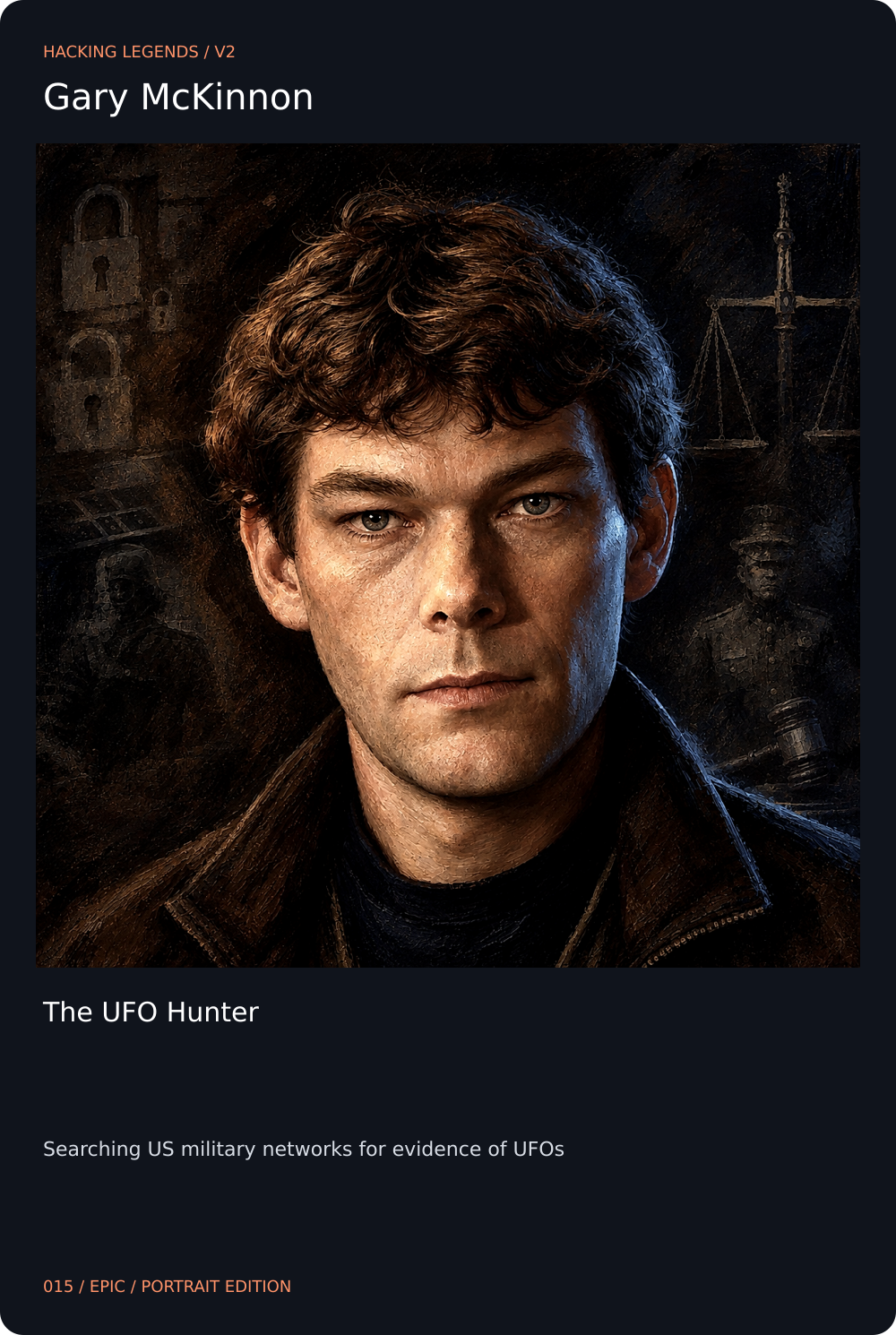
Gary McKinnon card front
Gary McKinnon“Solo”The UFO HunterSearching US military networks for evidence of UFOs
Default credentialsExtradition law
UK2001–200276

Scanned US military and NASA networks for machines with blank administrator passwords and found plenty. US prosecutors called it the biggest military computer hack of all time; a decade-long extradition fight ended in 2012 when the UK Home Secretary blocked it on human-rights grounds.

Copy draftedCard page
016Epic
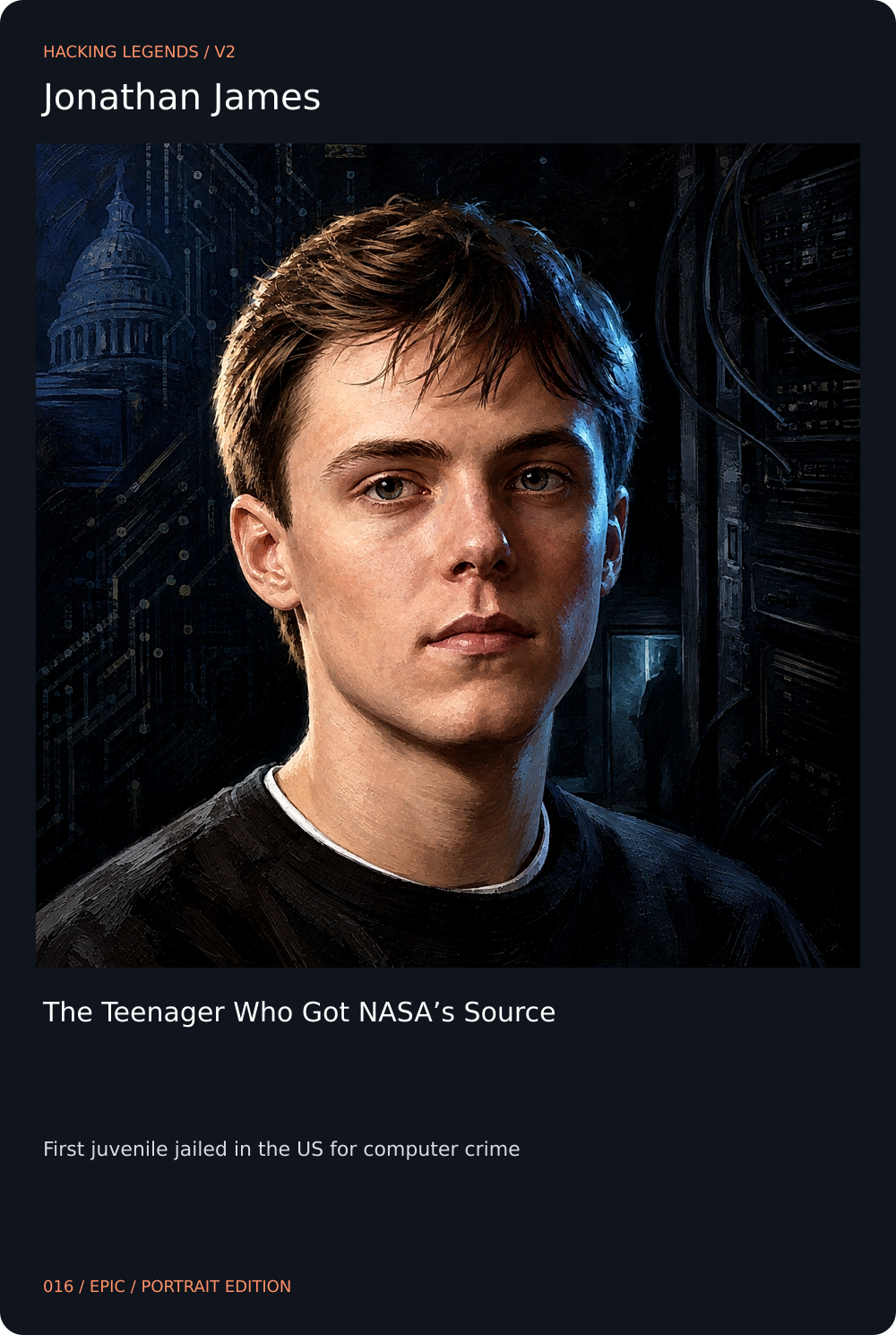
Jonathan James card front
Jonathan James“c0mrade”The Teenager Who Got NASA’s SourceFirst juvenile jailed in the US for computer crime
Government networksBackdoors
USA1999–200877

At fifteen, installed a backdoor on a Defense Threat Reduction Agency server and downloaded NASA software supporting the International Space Station. Sentenced in 2000 as the first juvenile incarcerated for cybercrime in the US. Died by suicide in 2008 while under investigation in an unrelated case he denied any part in.

Copy draftedCard page
017Legendary
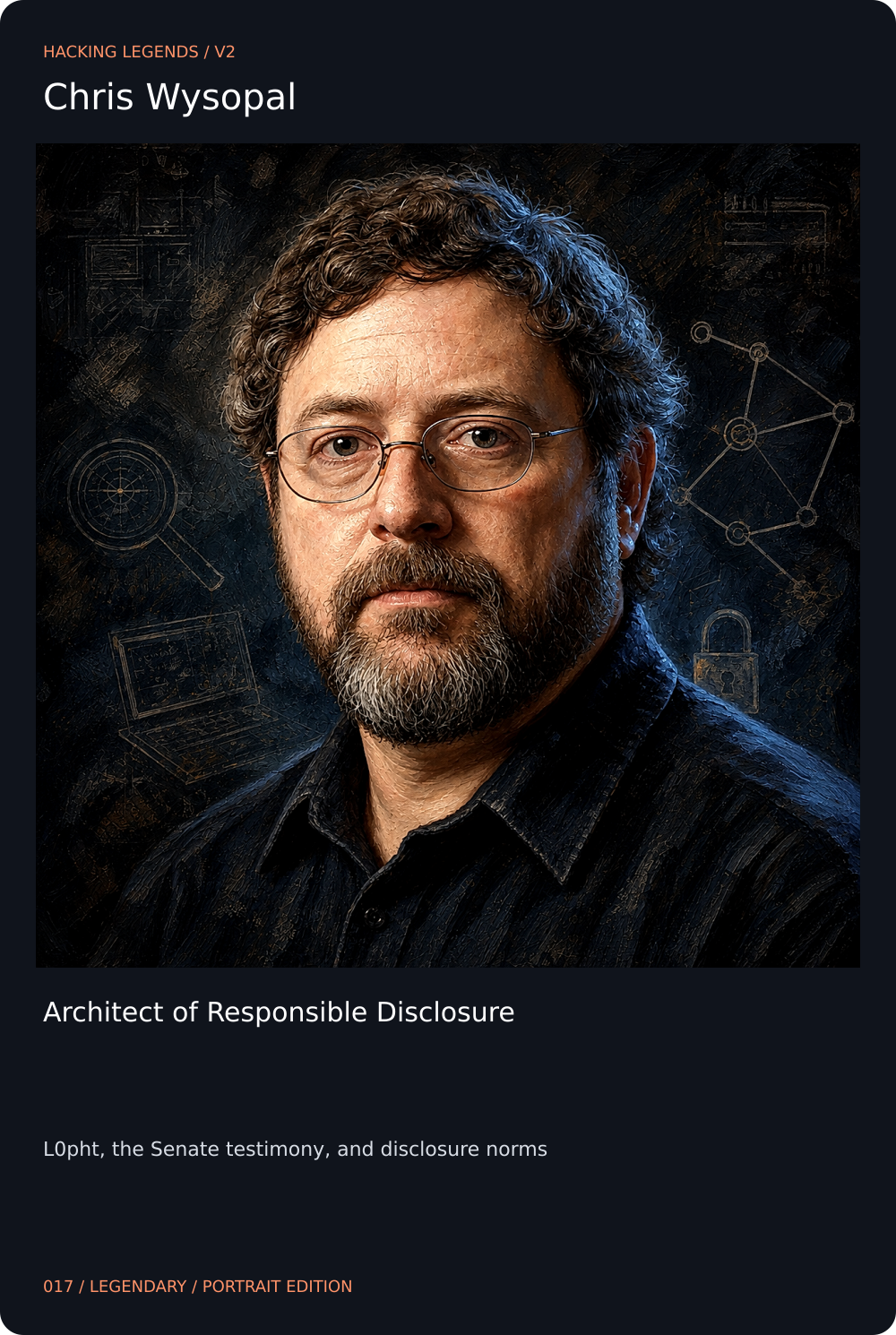
Chris Wysopal card front
Chris Wysopal“Weld Pond”Architect of Responsible DisclosureL0pht, the Senate testimony, and disclosure norms
Vulnerability researchAppSecDisclosure policy
USA1990s–present86

One of the seven L0pht members who testified to the Senate in 1998. Spent the following decades turning ad-hoc bug reporting into a process the industry could live with, then co-founded Veracode to make application security something you can actually buy.

Copy draftedCard page
018Legendary
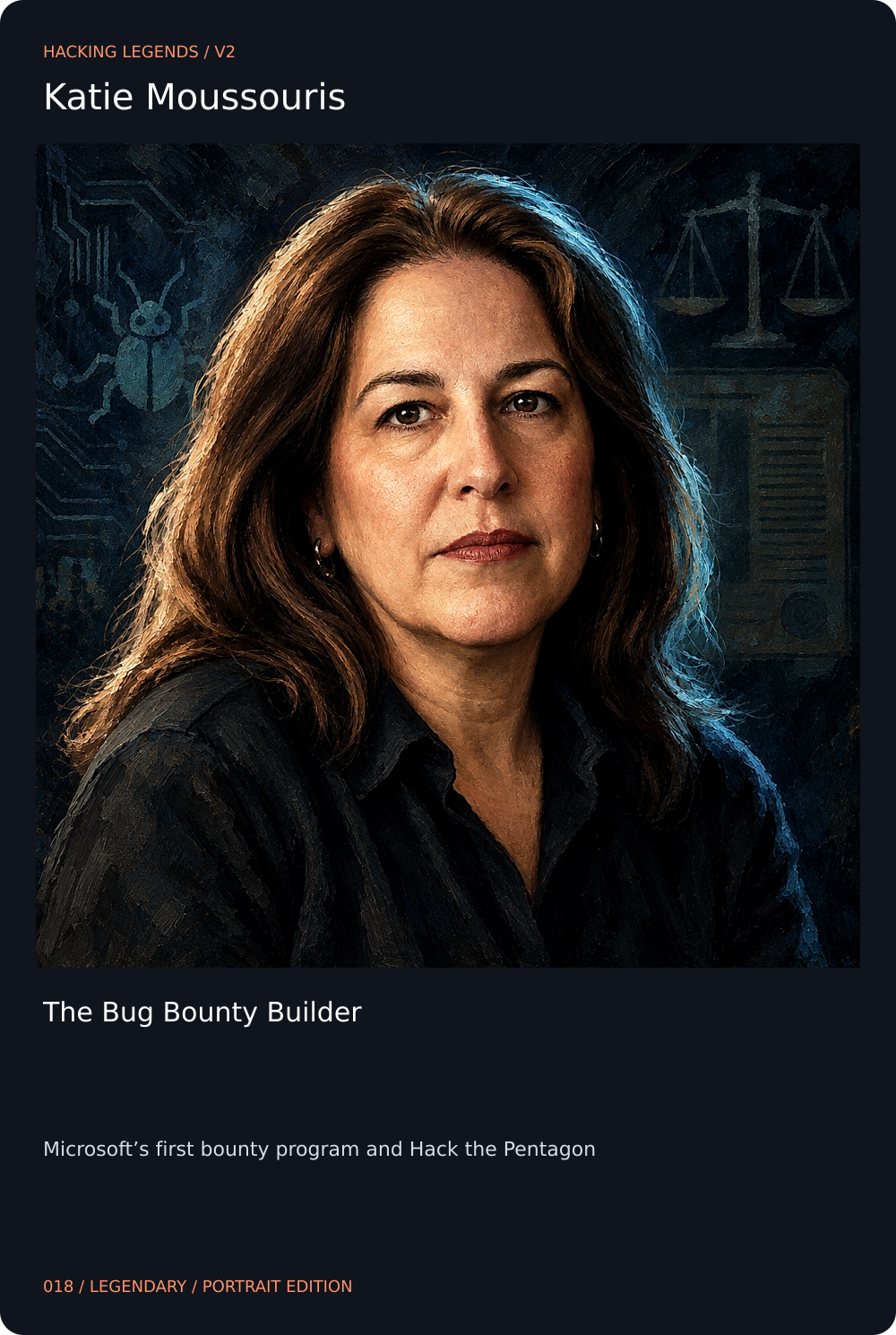
Katie Moussouris card front
Katie MoussourisThe Bug Bounty BuilderMicrosoft’s first bounty program and Hack the Pentagon
Bug bountiesPolicyExport controls
USA2000s–present87

Created Microsoft’s first bug bounty program, then ran Hack the Pentagon, the first bounty program in the history of the US federal government. Fought to keep defensive research from being criminalized under the Wassenaar Arrangement, and founded Luta Security.

Copy draftedCard page
019Legendary
Joanna Rutkowska card front
Joanna RutkowskaBlue PillHypervisor rootkits and Qubes OS
RootkitsVirtualizationSecure OS design
Poland2006–present88

Presented Blue Pill at Black Hat 2006, a rootkit that moved a running OS into a hypervisor beneath it, and coined the Evil Maid attack for machines left unattended. Then built the answer: Qubes OS, a desktop that assumes compromise and isolates by compartment.

Copy draftedCard page
020Legendary
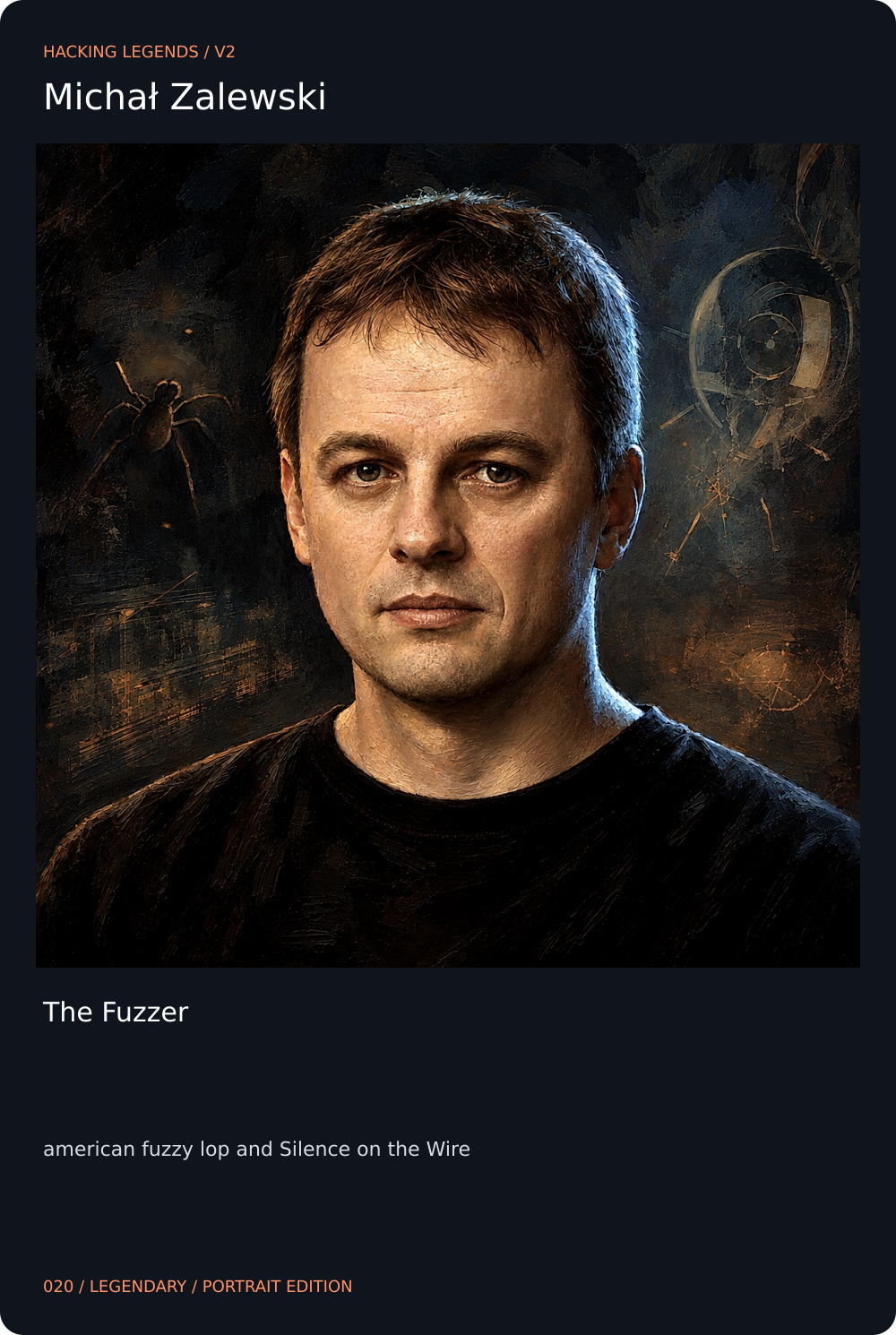
Michał Zalewski card front
Michał Zalewski“lcamtuf”The Fuzzeramerican fuzzy lop and Silence on the Wire
FuzzingBrowser securityPassive recon
Poland2000s–present89

Wrote afl, the coverage-guided fuzzer that found thousands of bugs across the software everyone depends on and reset the state of the art for everyone else. Author of Silence on the Wire and The Tangled Web, and a long-time browser security lead at Google.

Copy draftedCard page
021Legendary
Alexander Peslyak card front
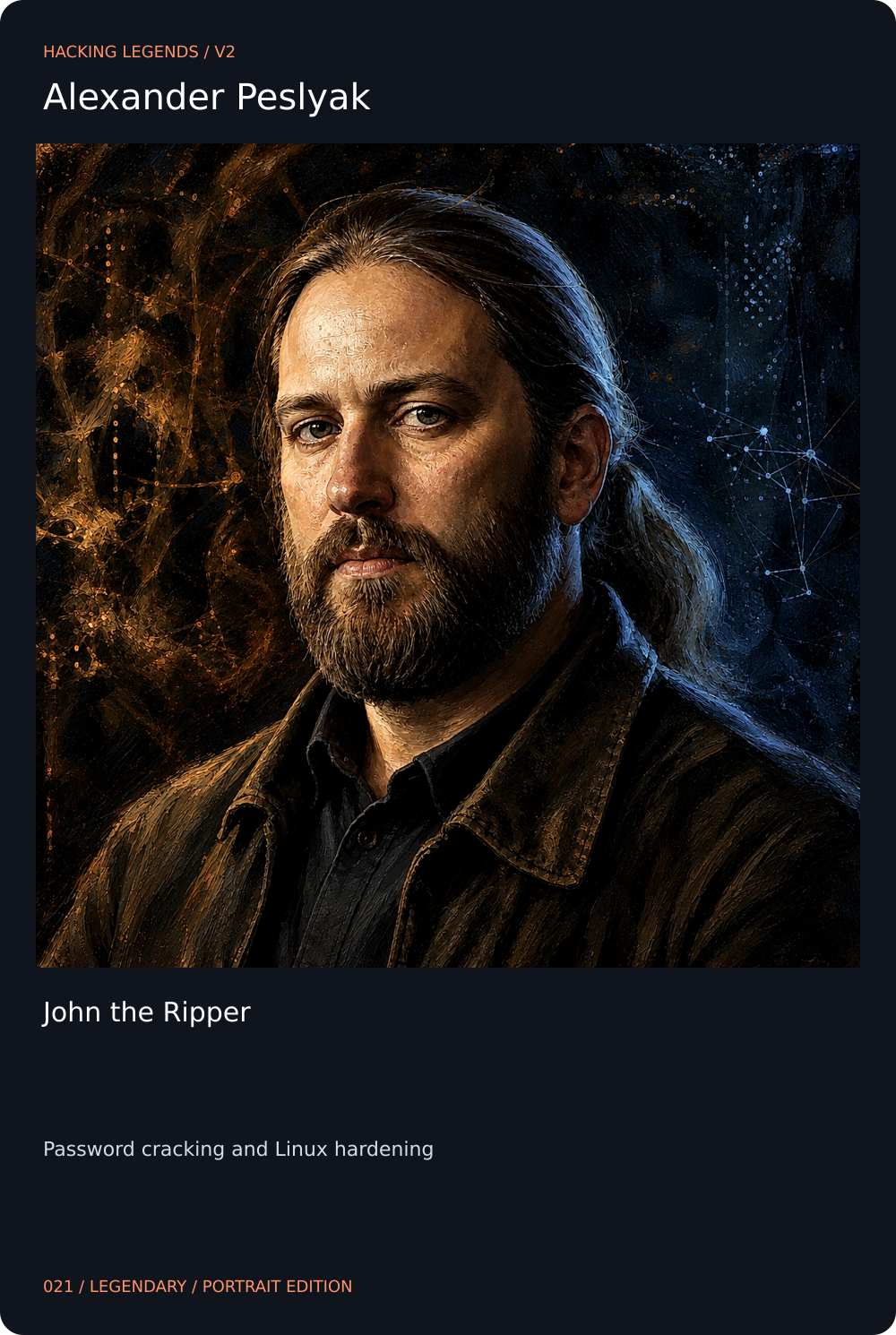
Alexander Peslyak“Solar Designer”John the RipperPassword cracking and Linux hardening
Password crackingKernel hardeningDisclosure
Russia1990s–present85

Wrote John the Ripper, still the reference password cracker three decades on. Founded Openwall, pioneered non-executable stack patches for Linux, published early return-into-libc work, and runs the oss-security list where the industry argues about disclosure in public.

Copy draftedCard page
022Legendary
HD Moore card front
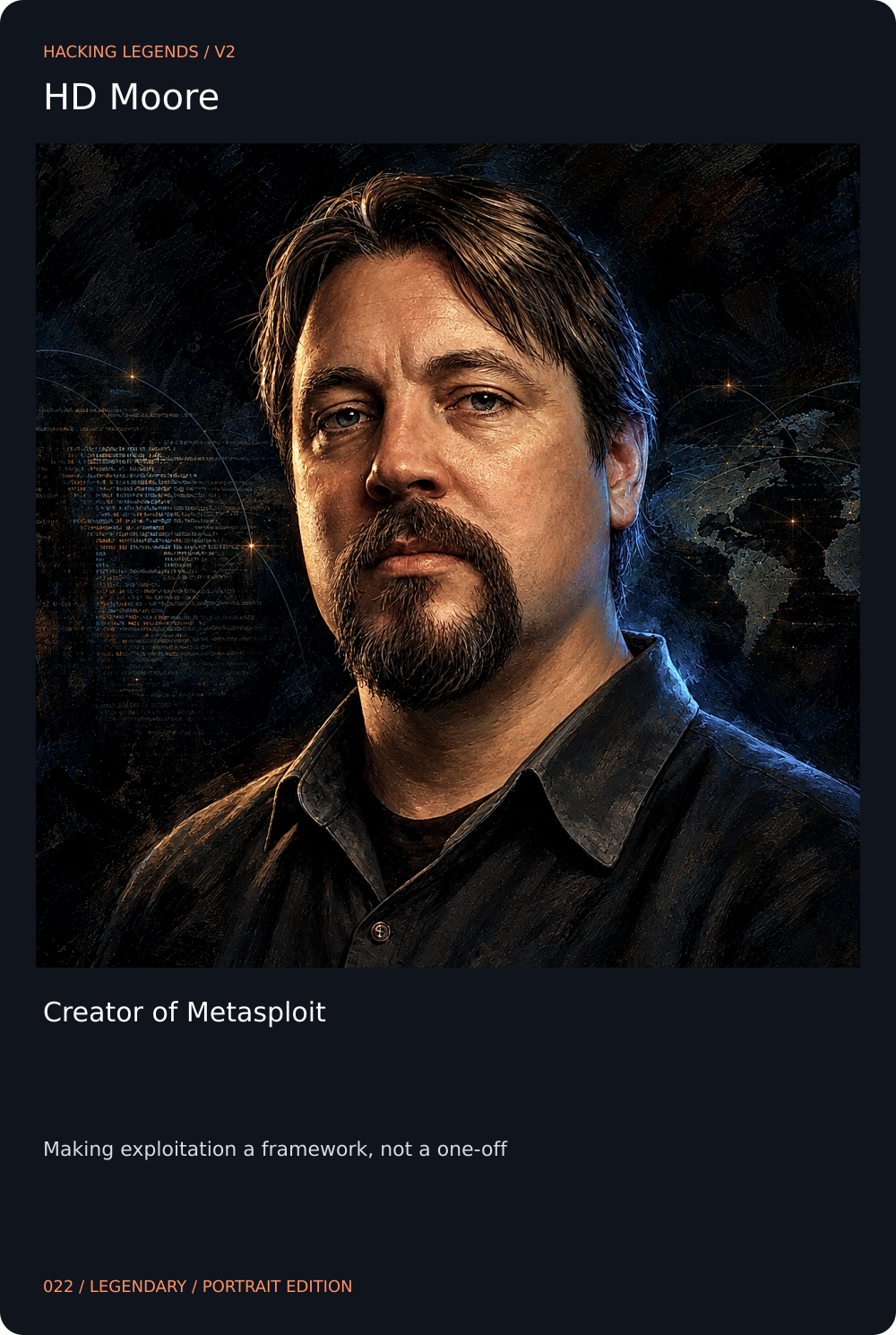
HD MooreCreator of MetasploitMaking exploitation a framework, not a one-off
Exploit developmentInternet-wide scanning
USA2003–present90

Released Metasploit in 2003 and turned exploit development from scattered one-off code into a shared, modular framework every penetration tester now learns first. Later ran internet-wide scanning projects that mapped just how much of the internet is quietly exposed.

Copy draftedCard page
023Legendary
Barnaby Jack card front
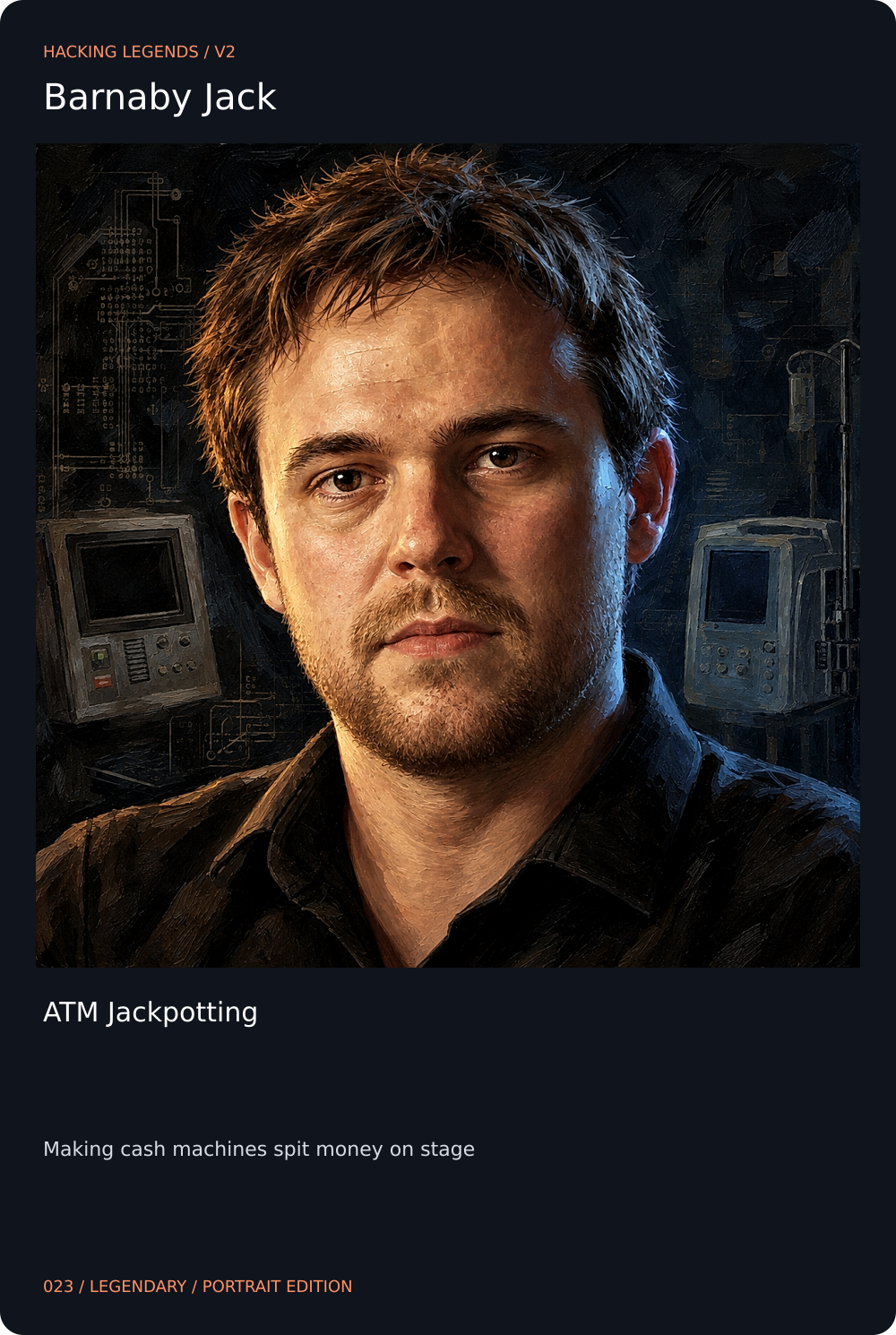
Barnaby JackATM JackpottingMaking cash machines spit money on stage
Embedded systemsMedical devicesATMs
New Zealand2000s–201384

Walked onto the Black Hat 2010 stage, ran his Jackpotting demo, and made two ATMs pour out cash in front of the room. Then turned to insulin pumps and pacemakers, showing that implanted medical devices could be attacked wirelessly. Died in 2013, days before he was due to present that research.

Copy draftedCard page
024Epic
Charlie Miller card front
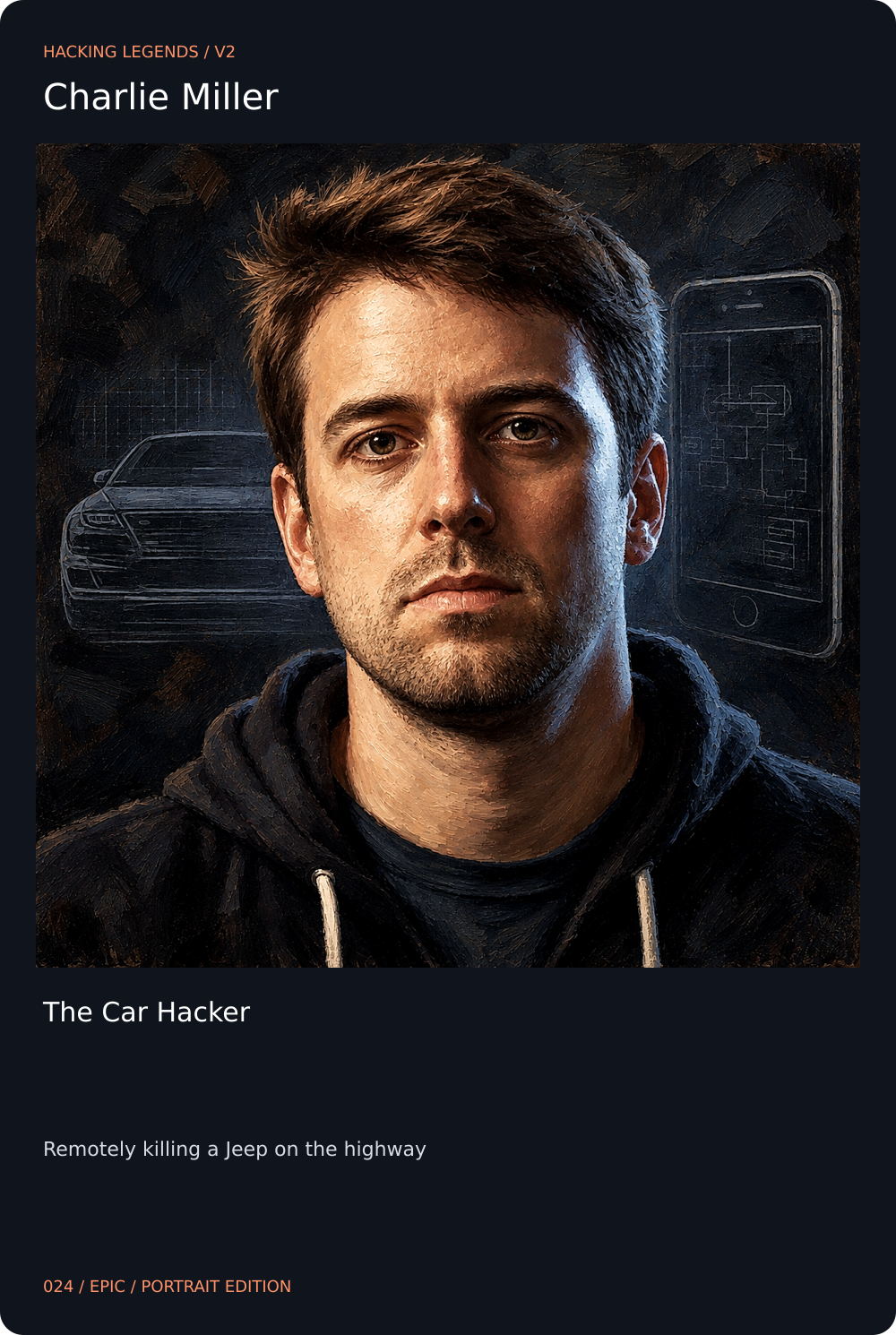
Charlie MillerThe Car HackerRemotely killing a Jeep on the highway
AutomotiveiOSPwn2Own
USA2007–present83

Won Pwn2Own repeatedly, was the first to publicly exploit the iPhone, and then, with Chris Valasek, cut the transmission of a Jeep Cherokee on a live highway from a couch miles away. Chrysler recalled 1.4 million vehicles. Automotive security became a real discipline overnight.

Copy draftedCard page
025Rare
Chris Valasek card front
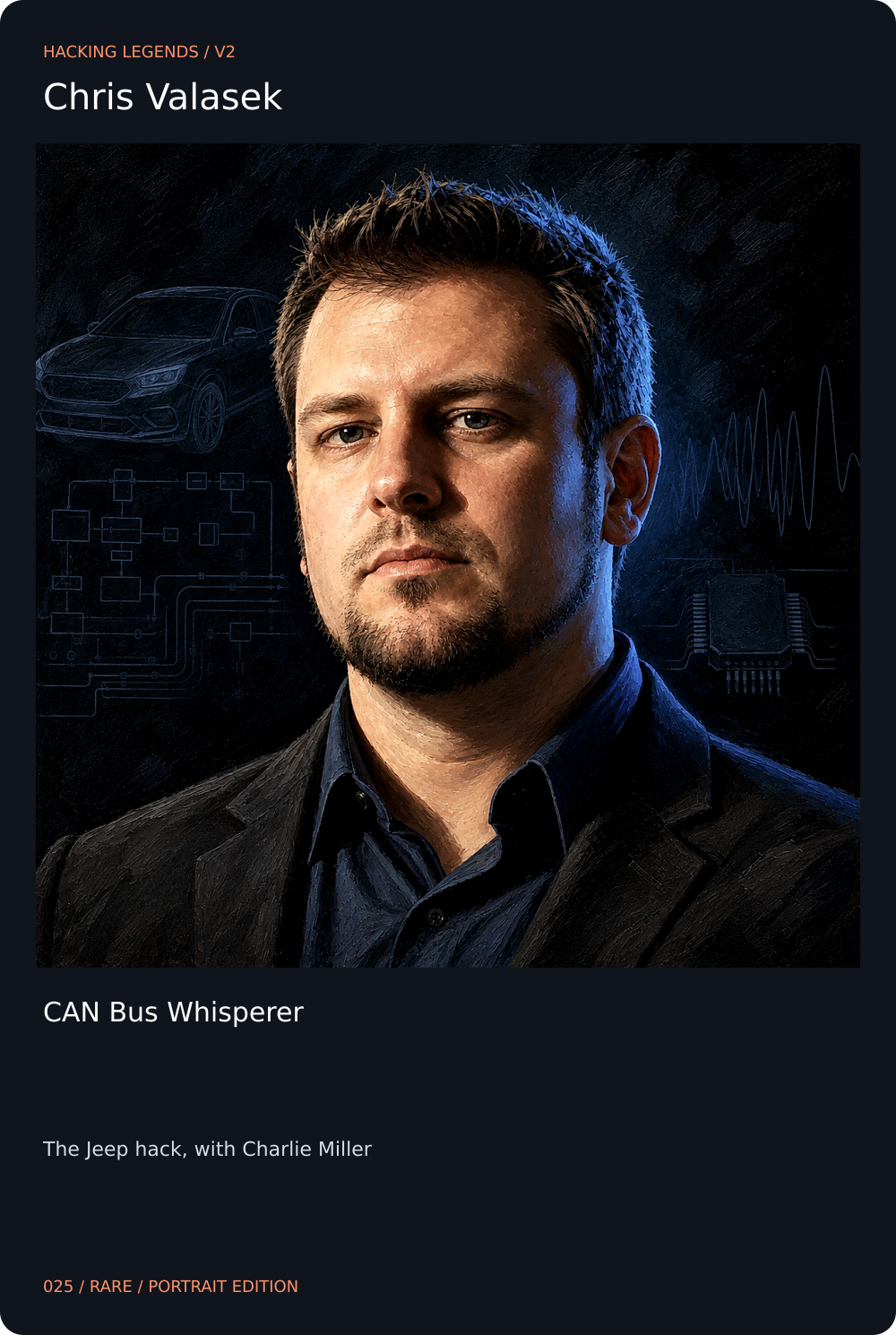
Chris ValasekCAN Bus WhispererThe Jeep hack, with Charlie Miller
AutomotiveCAN busVehicle networks
USA2010s–present76

Reverse-engineered the internal networks of production vehicles and, with Miller, demonstrated full remote control of a Jeep Cherokee in 2015. Both went on to build security teams inside the autonomous-vehicle industry they had just put on notice.

NominatedCard page
026Epic
Samy Kamkar card front
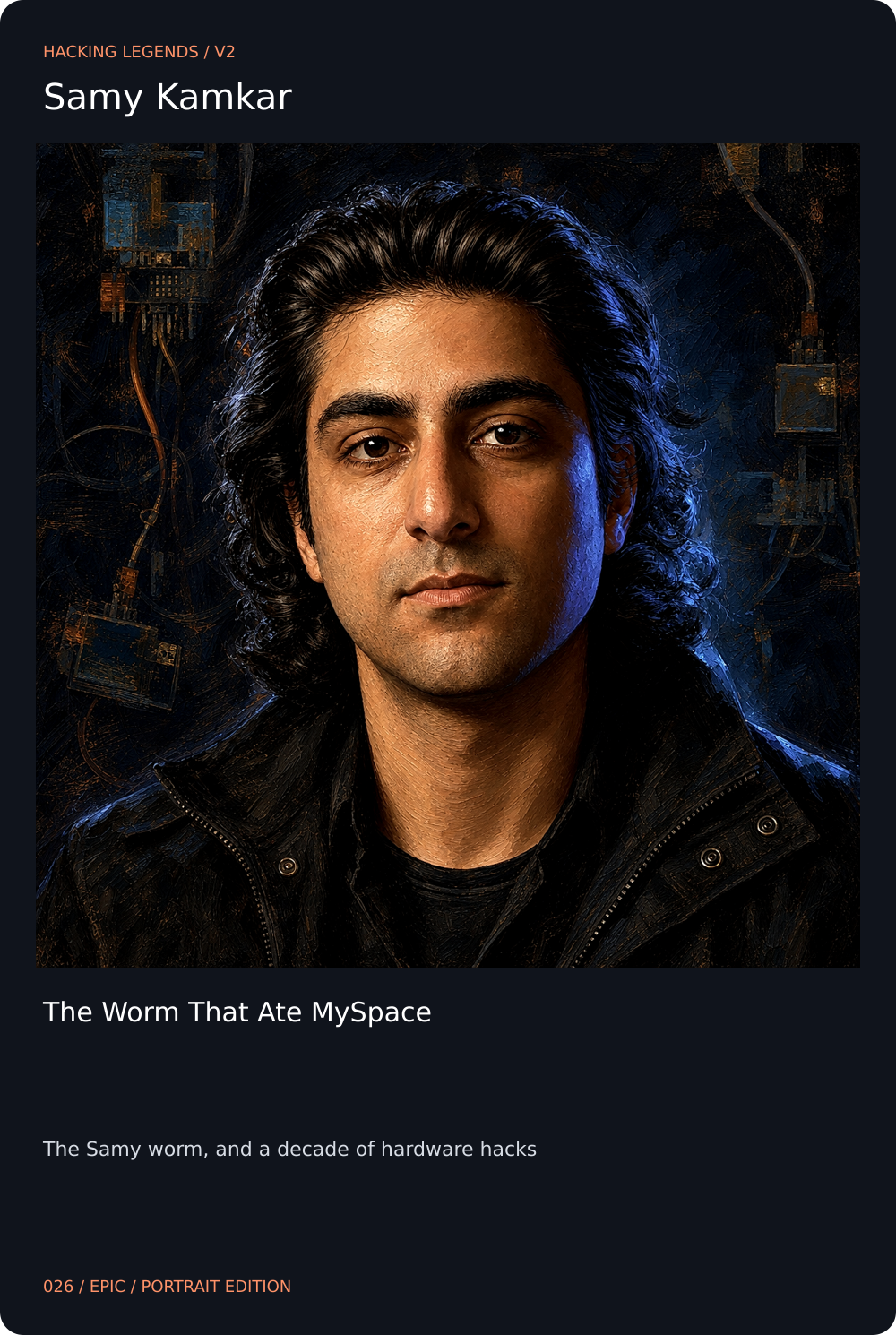
Samy KamkarThe Worm That Ate MySpaceThe Samy worm, and a decade of hardware hacks
XSSHardwareRadio
USA2005–present81

Released a self-propagating cross-site scripting worm in 2005 that added over a million MySpace friends in under a day and took the site down. After his sentence he kept publishing: SkyJack, OwnStar, KeySweeper, and a long line of garage-door and car-key radio attacks explained on video for anyone.

Copy draftedCard page
027Epic
George Hotz card front
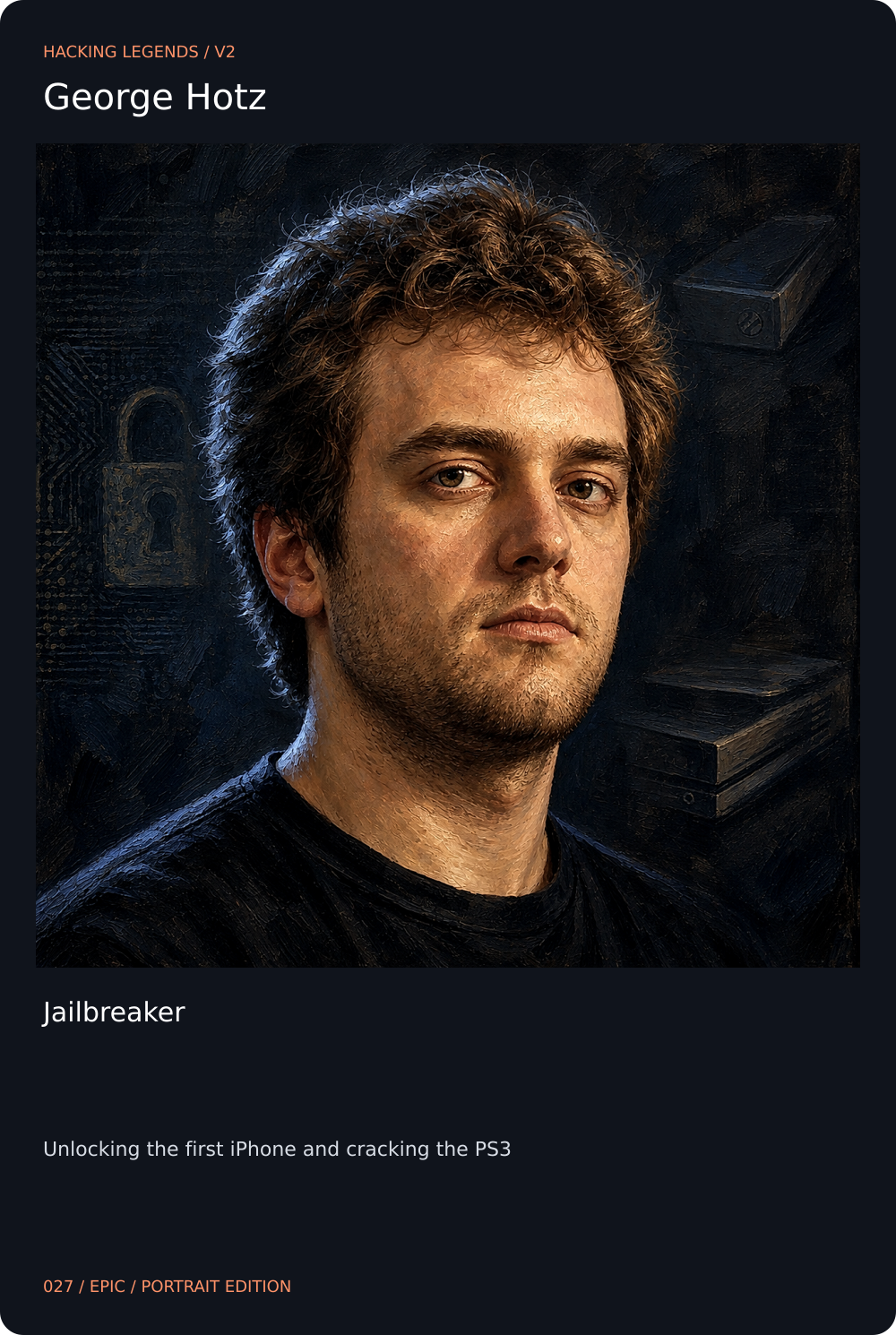
George Hotz“geohot”JailbreakerUnlocking the first iPhone and cracking the PS3
JailbreakingConsole securityReverse engineering
USA2007–present82

At seventeen, unlocked the original iPhone from its carrier. Then published PlayStation 3 root keys and was sued by Sony, in a case that became a rallying point for the right to modify hardware you own. Later founded comma.ai and worked on open self-driving.

Copy draftedCard page
028Epic
Marcus Hutchins card front
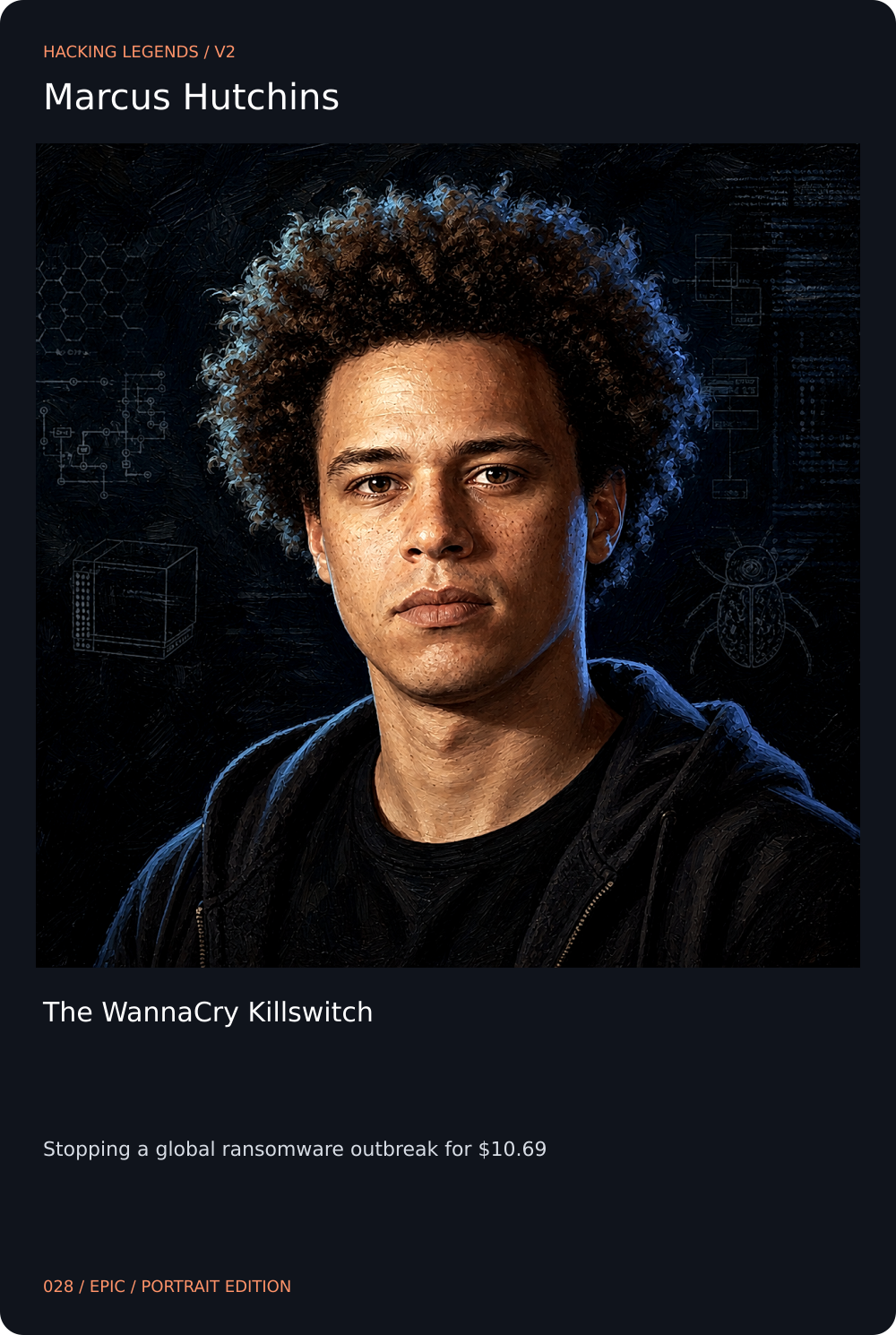
Marcus Hutchins“MalwareTech”The WannaCry KillswitchStopping a global ransomware outbreak for $10.69
Malware analysisReverse engineeringBotnets
UK2017–present85

Reversing WannaCry as it tore through hospitals in May 2017, he spotted an unregistered domain in the code and bought it, unintentionally triggering the killswitch that halted the outbreak. Arrested months later over earlier banking-malware code he had written as a teenager; he pled guilty, was sentenced to time served, and now works in threat research.

Copy draftedCard page
029Epic
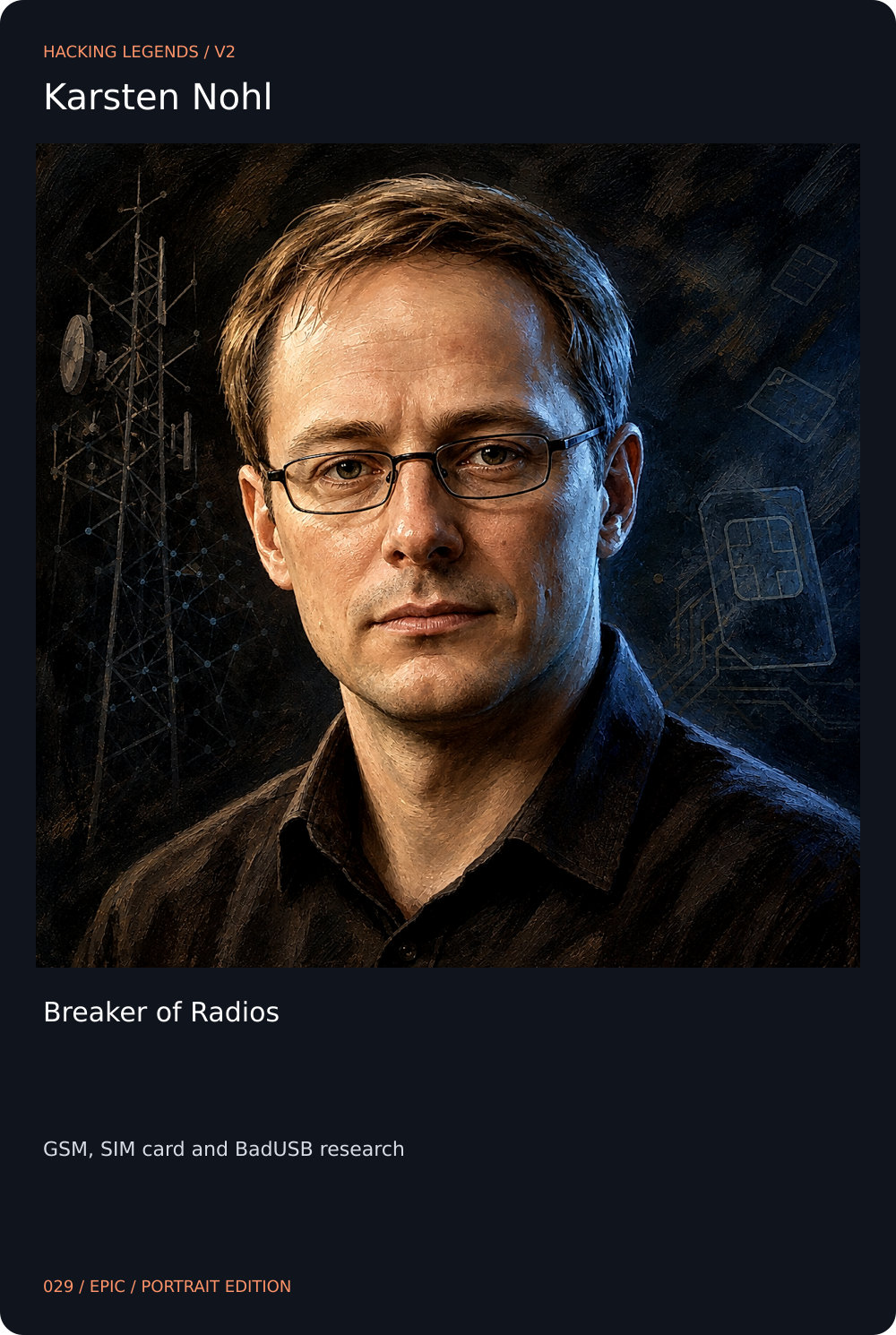
Karsten Nohl card front
Karsten NohlBreaker of RadiosGSM, SIM card and BadUSB research
Mobile networksSmartcardsFirmware
Germany2008–present83

Cracked GSM’s A5/1 encryption with rainbow tables, showed millions of SIM cards could be hijacked over the air with a text message, broke Mifare smartcards, and with Jakob Lell released BadUSB — proof that any USB device’s firmware can be reprogrammed to lie about what it is.

Copy draftedCard page
030Legendary
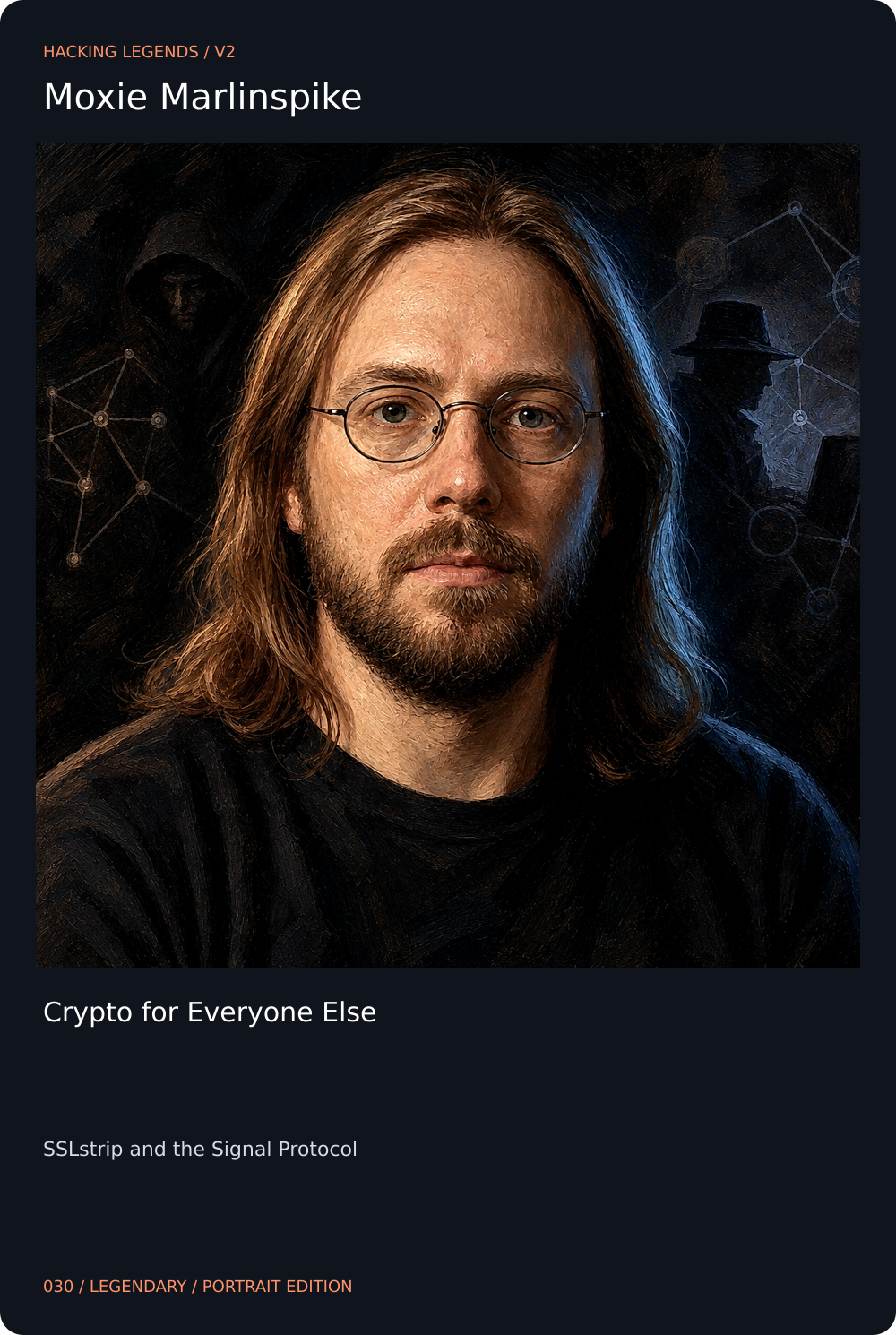
Moxie Marlinspike card front
Moxie MarlinspikeCrypto for Everyone ElseSSLstrip and the Signal Protocol
TLS attacksApplied cryptographySecure messaging
USA2009–present91

Demonstrated SSLstrip and a run of attacks that exposed how fragile the certificate authority system really was. Then built Signal and the double-ratchet protocol behind it, which WhatsApp and others adopted — quietly putting end-to-end encryption in front of billions of people.

Copy draftedCard page
Selection

What earns a card

Documented

It has to be on the record

Every card cites public reporting, court records, conference talks or the person’s own writing. No rumours, no scene folklore presented as fact.

Consequential

Something changed after them

A protocol got patched, a law got written, an industry got built, or a generation copied the technique. Notoriety alone does not earn a card.

Honest

Convictions get printed too

Several legends in this set went to prison. The cards say so plainly. Documenting a history is not endorsing every part of it.

Who are we missing?

Series Two is community-curated in the open, exactly like Series One. Nominate a legend, challenge a stat line, or rewrite a scouting report — every card starts as a pull request.