Series Four In progress

Gods of AI

The architects. The people who worked out backpropagation, attention and reinforcement learning, and the ones who wrote the frameworks, the kernels and the quantisers the whole field runs on — 50 cards, weighted deliberately toward those who gave the work away.

Every portrait here is painted from a real, identified photograph, and the source is credited on the card. All of them have one.

Roster drafted50/50
Cards locked50/50
Portraits from a verified photo50/50
The working roster

50 names, ordered by set number

Open the scouting report for the paper or repository behind each claim, or go to a card's own page. Nothing here is final until the set is frozen — argue with any of it on GitHub.

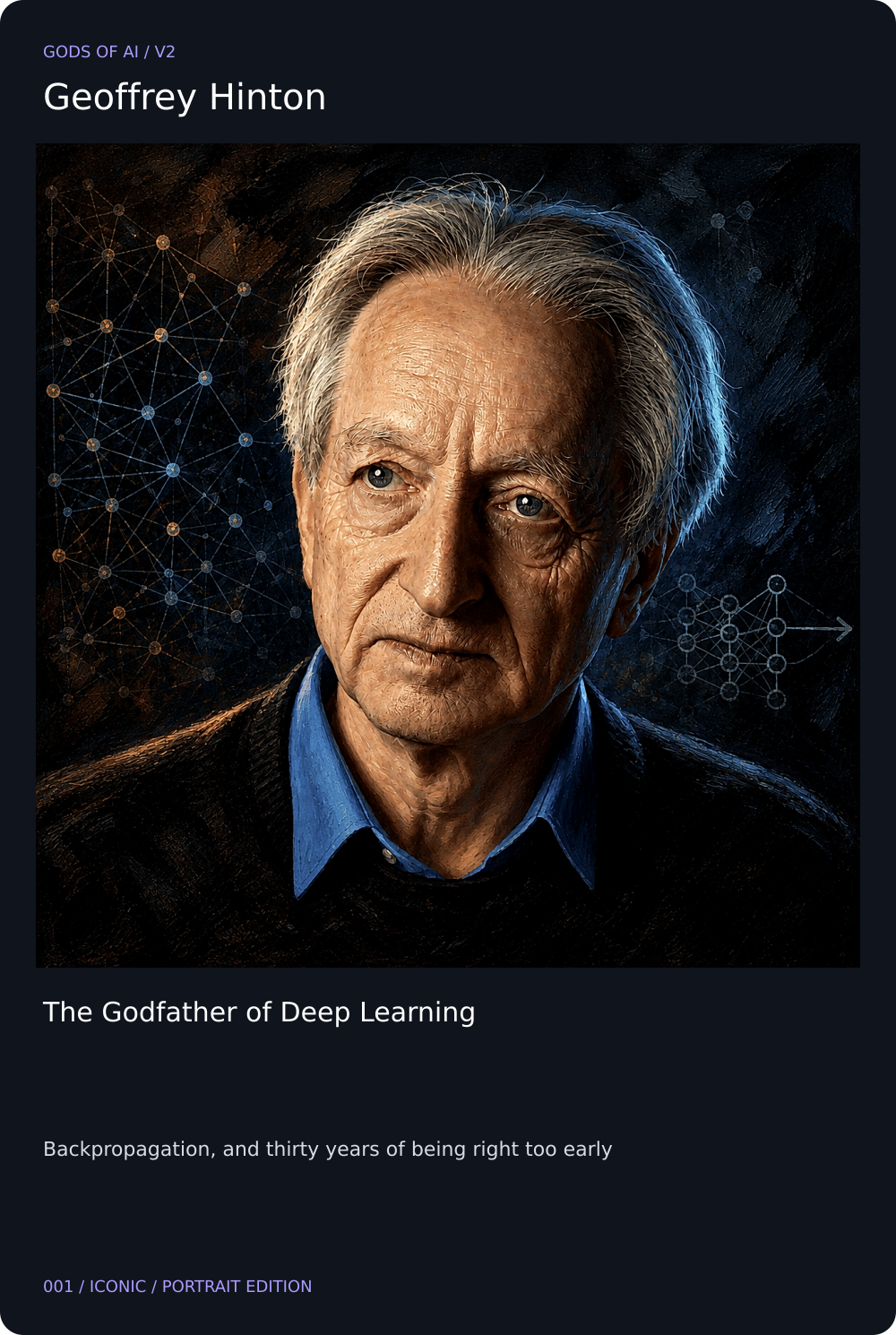
001Iconic
Geoffrey Hinton card front
Geoffrey HintonThe Godfather of Deep LearningBackpropagation, and thirty years of being right too early
Neural networksBackpropagationDeep learning
UK / Canada1986–present99

Co-authored the 1986 paper that made backpropagation practical, then spent the AI winter insisting neural networks would work while the field moved on. Was proved right in 2012 when his students won ImageNet by a margin nobody could argue with. Shared the 2018 Turing Award and the 2024 Nobel Prize in Physics, and left Google to speak freely about the risks.

Locked inCard page
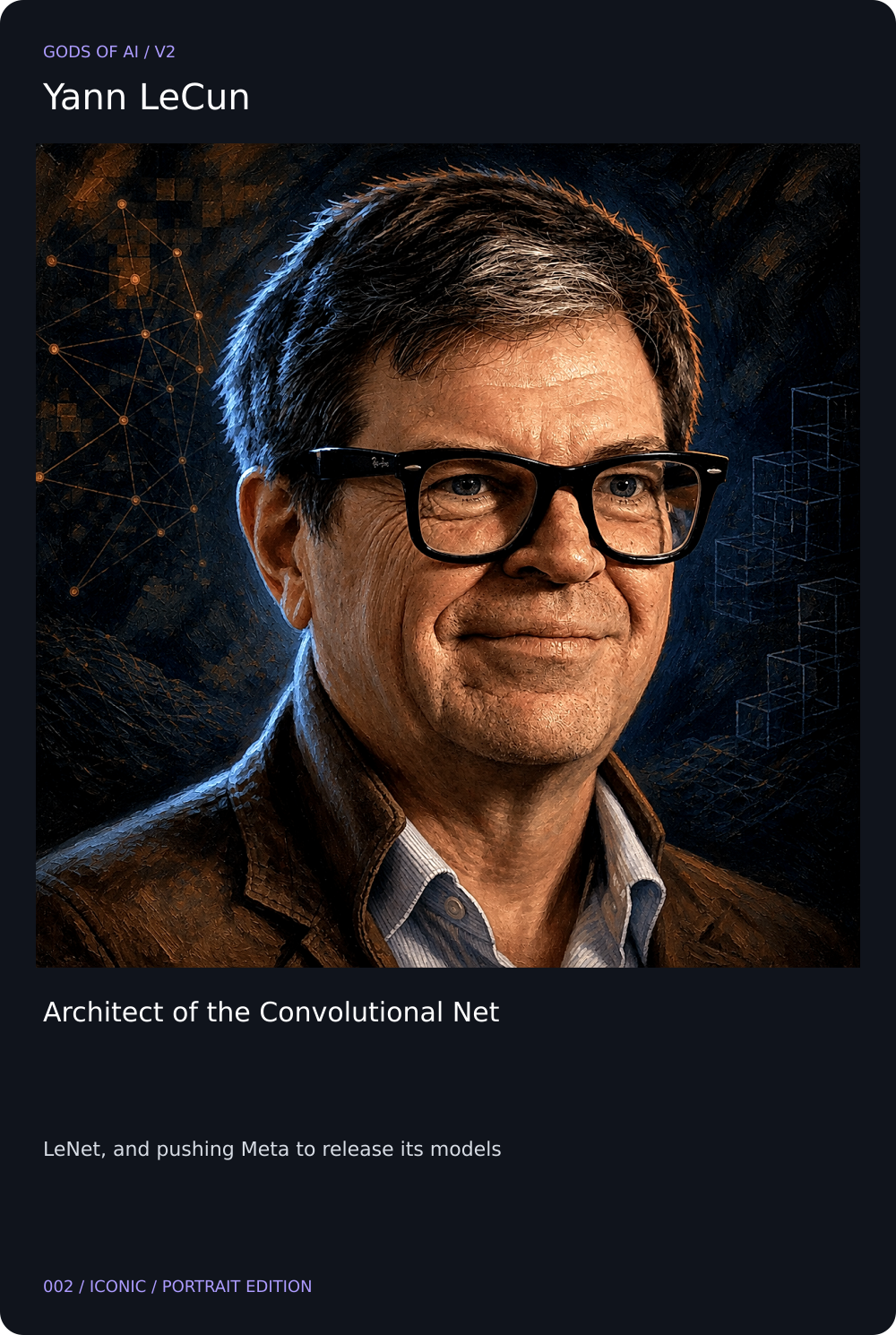
002Iconic
Yann LeCun card front
Yann LeCunArchitect of the Convolutional NetLeNet, and pushing Meta to release its models
Convolutional networksSelf-supervised learningOpen models
France / USA1989–present97

Built LeNet in the late 1980s and had convolutional networks reading cheques at industrial scale while the rest of the field doubted them. Shared the 2018 Turing Award. As Meta’s chief AI scientist he has been the loudest senior voice for releasing weights rather than gatekeeping them, which is a large part of why open-weight models exist at all.

Locked inCard page
003Iconic
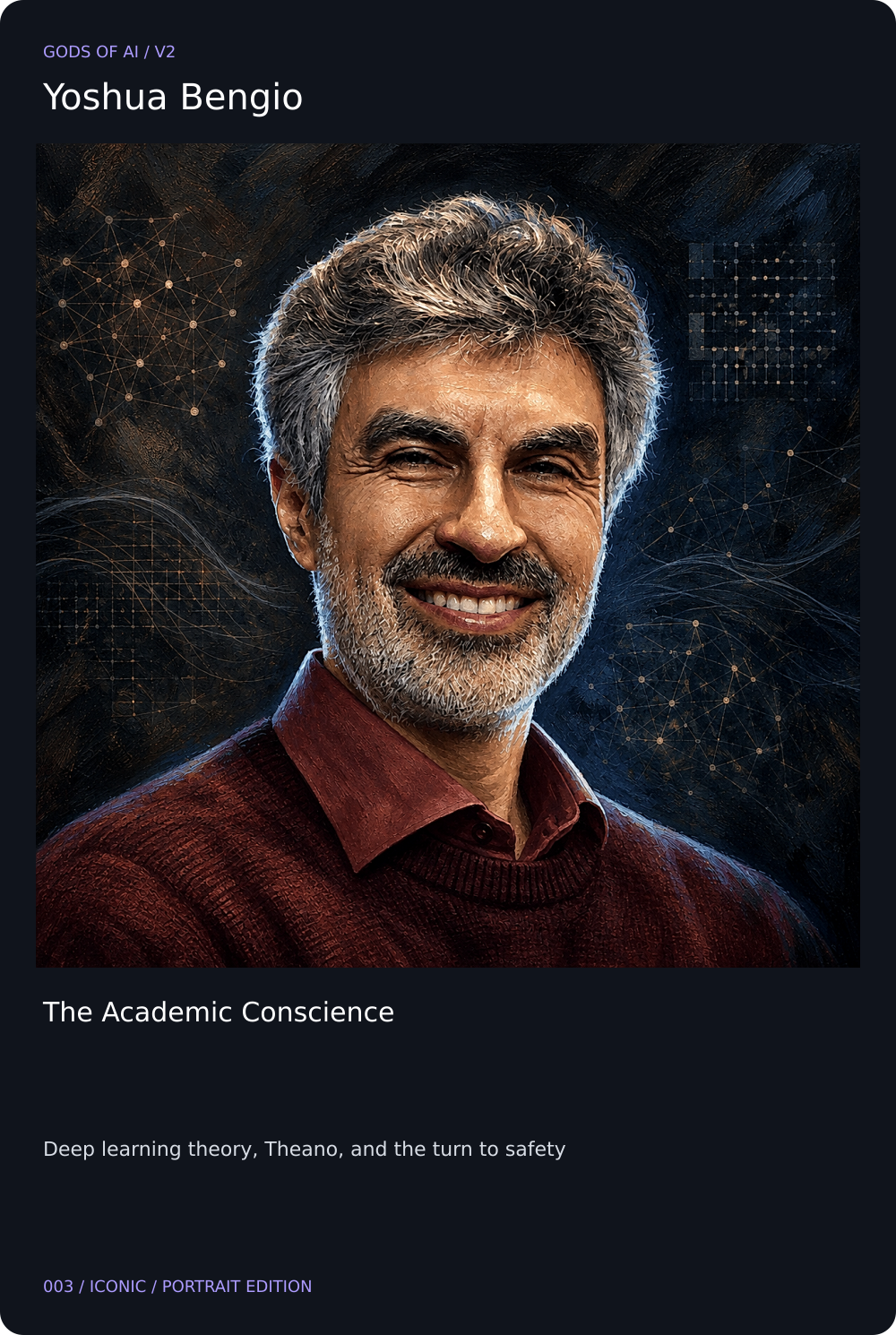
Yoshua Bengio card front
Yoshua BengioThe Academic ConscienceDeep learning theory, Theano, and the turn to safety
Deep learningRepresentation learningAI safety
Canada1991–present96

Third of the 2018 Turing Award trio, and the one who stayed in the university. Founded MILA, whose lab produced Theano — the framework a generation of researchers learned on before TensorFlow and PyTorch existed. Co-authored the Deep Learning textbook, and now chairs international scientific reporting on AI risk.

Locked inCard page
004Legendary
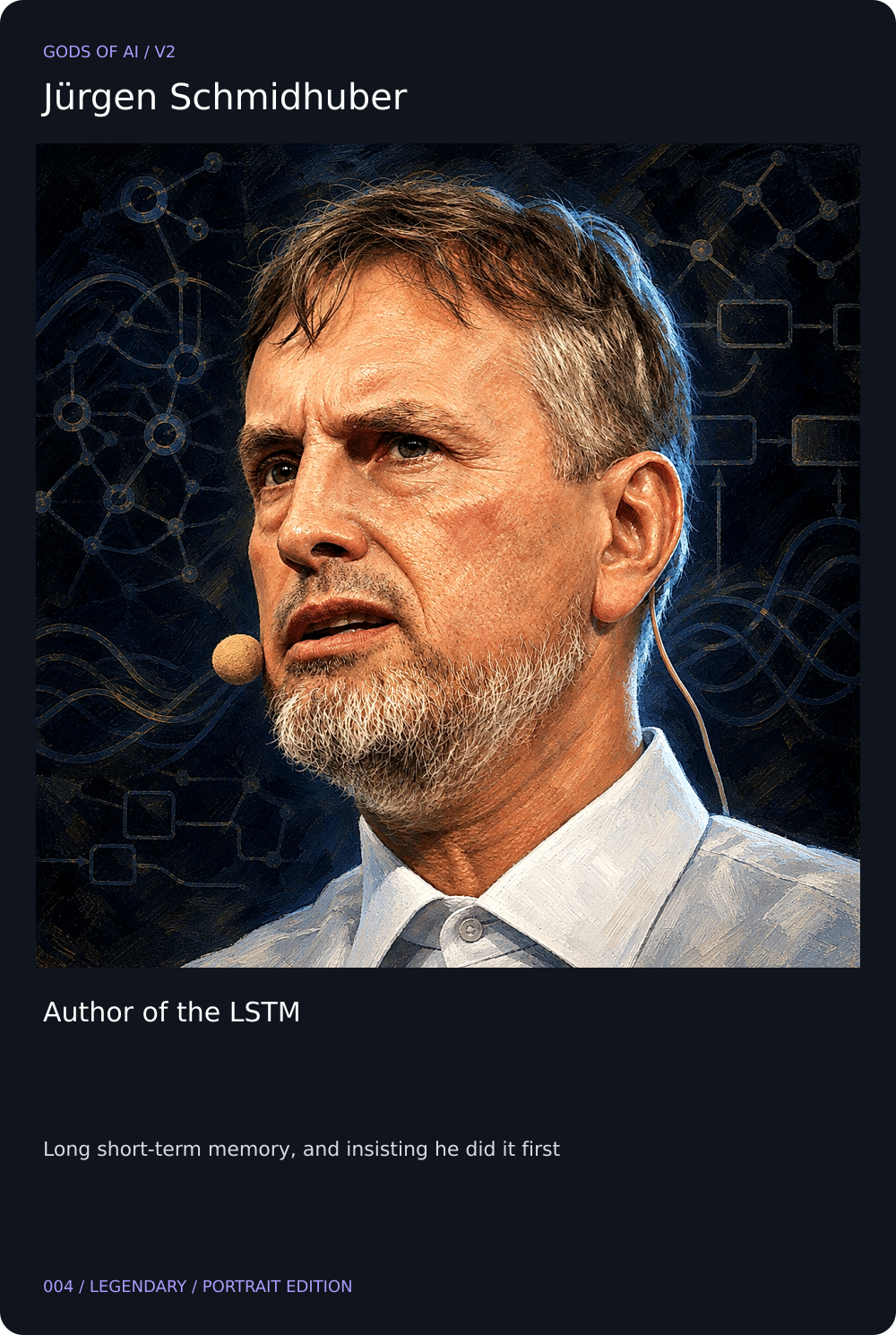
Jürgen Schmidhuber card front
Jürgen SchmidhuberAuthor of the LSTMLong short-term memory, and insisting he did it first
Recurrent networksLSTMMeta-learning
Germany1997–present92

With Sepp Hochreiter published long short-term memory in 1997, the architecture that made sequence learning work and which ran speech recognition and translation on a billion phones before transformers arrived. Also did early work on meta-learning, artificial curiosity and GAN-adjacent ideas, and is famous for pointing out, at length, when the field forgets its own history.

Locked inCard page
005Iconic
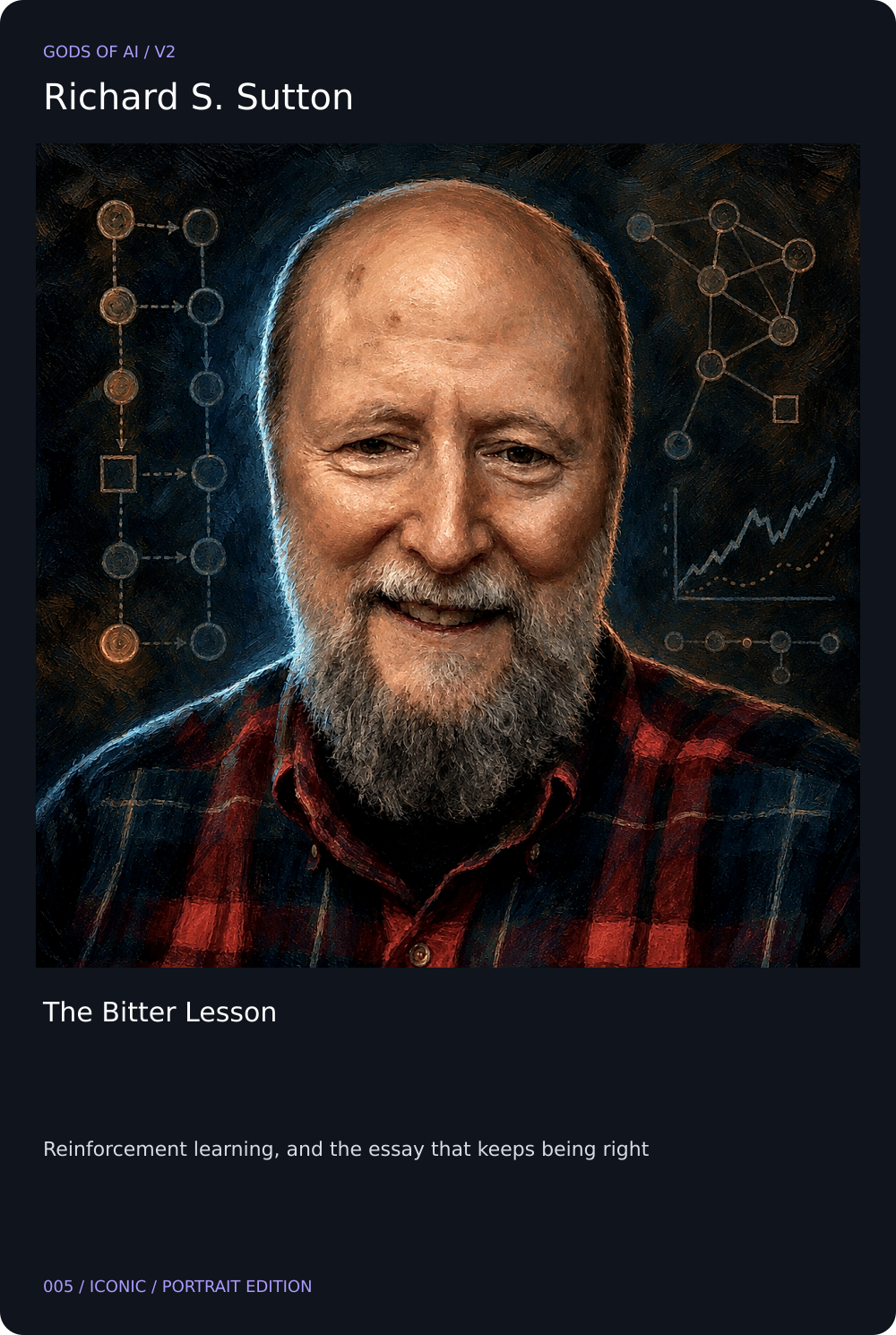
Richard S. Sutton card front
Richard S. SuttonThe Bitter LessonReinforcement learning, and the essay that keeps being right
Reinforcement learningTemporal-difference learningAGI
USA / Canada1988–present95

Invented temporal-difference learning and co-wrote Reinforcement Learning: An Introduction, the textbook the whole field learned from and which is free online. His 2019 essay “The Bitter Lesson” — that general methods plus compute beat handcrafted human knowledge — has become the most-cited two pages in modern AI. Shared the 2024 Turing Award.

Locked inCard page
006Legendary
Andrew Barto card front
Andrew BartoCo-Founder of Reinforcement LearningActor-critic methods and the RL textbook
Reinforcement learningControlNeuroscience-inspired AI
USA1983–present90

With Sutton, built reinforcement learning into a coherent field from the actor-critic architecture onward, and co-wrote the textbook that defined it. His work tied machine learning back to animal learning and dopamine-driven reward prediction, which turned out to describe both. Shared the 2024 Turing Award.

Locked inCard page
007Legendary
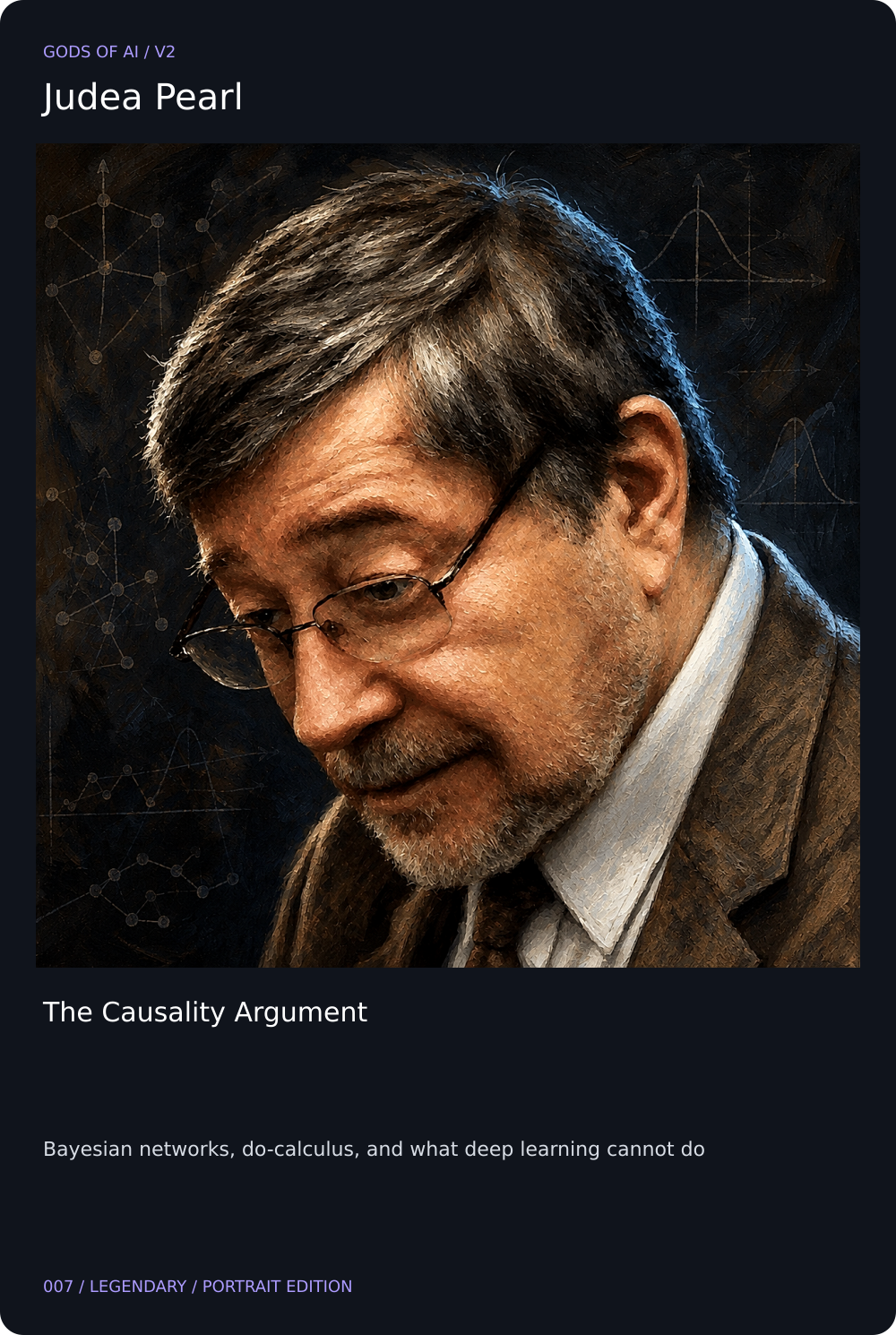
Judea Pearl card front
Judea PearlThe Causality ArgumentBayesian networks, do-calculus, and what deep learning cannot do
Probabilistic reasoningCausal inferenceBayesian networks
Israel / USA1988–present91

Made probabilistic reasoning tractable with Bayesian networks, then built the formal machinery of causal inference — do-calculus, counterfactuals, the ladder of causation. Turing Award, 2011. Spends much of his time arguing that systems which only fit correlations are missing the thing that makes reasoning work, an argument the scaling era has not settled.

Locked inCard page
008Iconic
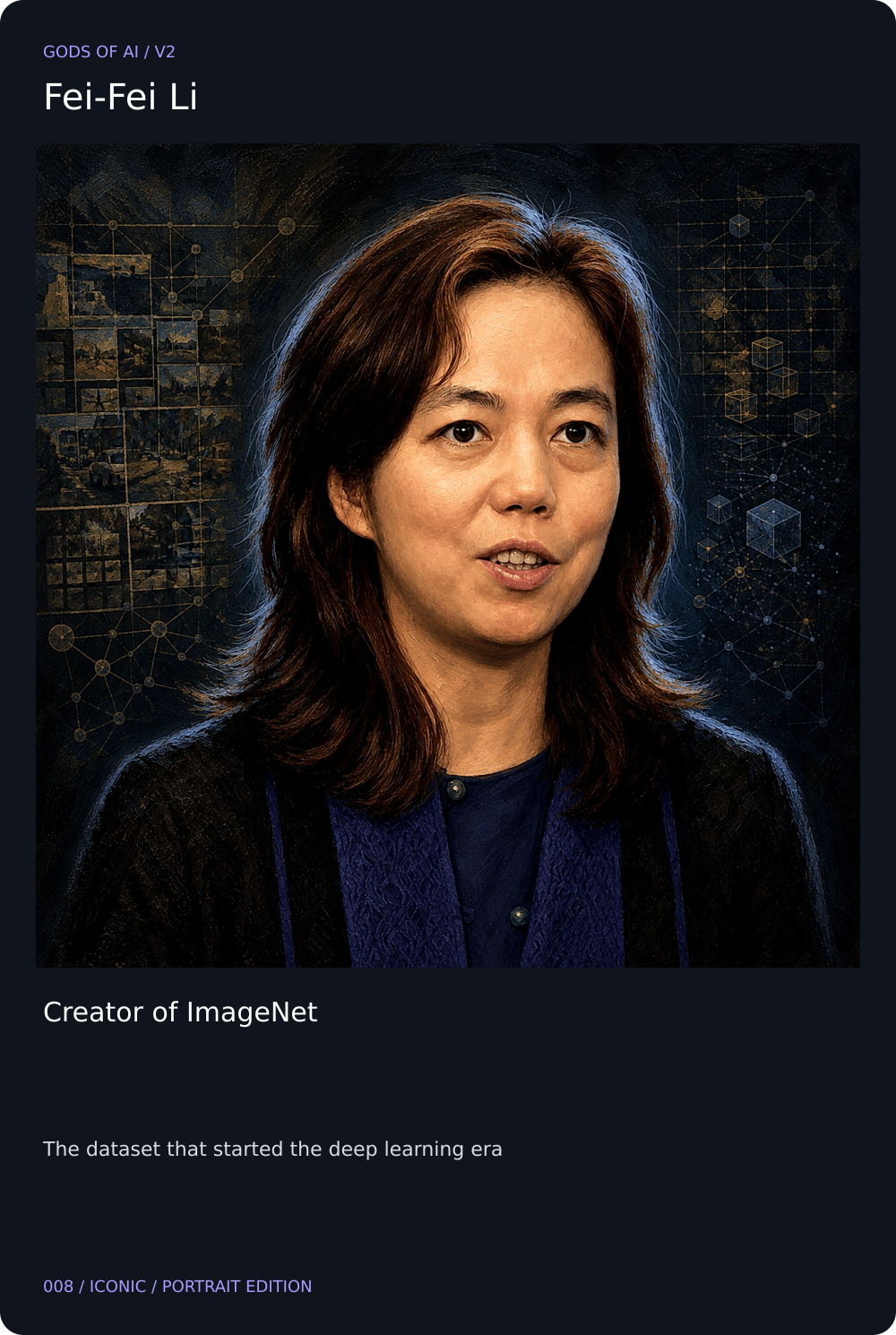
Fei-Fei Li card front
Fei-Fei LiCreator of ImageNetThe dataset that started the deep learning era
Computer visionDatasetsHuman-centred AI
China / USA2009–present95

Built ImageNet when the field believed better algorithms mattered more than more data, and gave it away. The 2012 competition on that dataset is the moment deep learning stopped being a minority position. Founded Stanford HAI, served as chief scientist of AI at Google Cloud, and has pushed hard on who gets a say in how this technology is built.

Locked inCard page
009Iconic
Ashish Vaswani card front
Ashish VaswaniFirst Author on the TransformerAttention Is All You Need
TransformersAttentionSequence modelling
India / USA2017–present96

Lead author of the 2017 paper that threw out recurrence and convolution and kept only attention. Every large language model since is a transformer, which makes those eight pages the most consequential architecture paper of the century so far. Later co-founded Adept and then Essential AI.

Locked inCard page
010Legendary
Noam Shazeer card front
Noam ShazeerThe Efficiency ObsessiveThe Transformer, mixture-of-experts, and Character.AI
TransformersMixture of expertsInference efficiency
USA2017–present93

Transformer co-author whose fingerprints are on most of what made the architecture fast: multi-query attention, sparsely-gated mixture-of-experts, the Mesh-TensorFlow work on model parallelism, and the T5 line. Left Google to found Character.AI, then returned to lead Gemini. Widely regarded as the best engineer in the room on making big models cheap.

Locked inCard page
011Epic
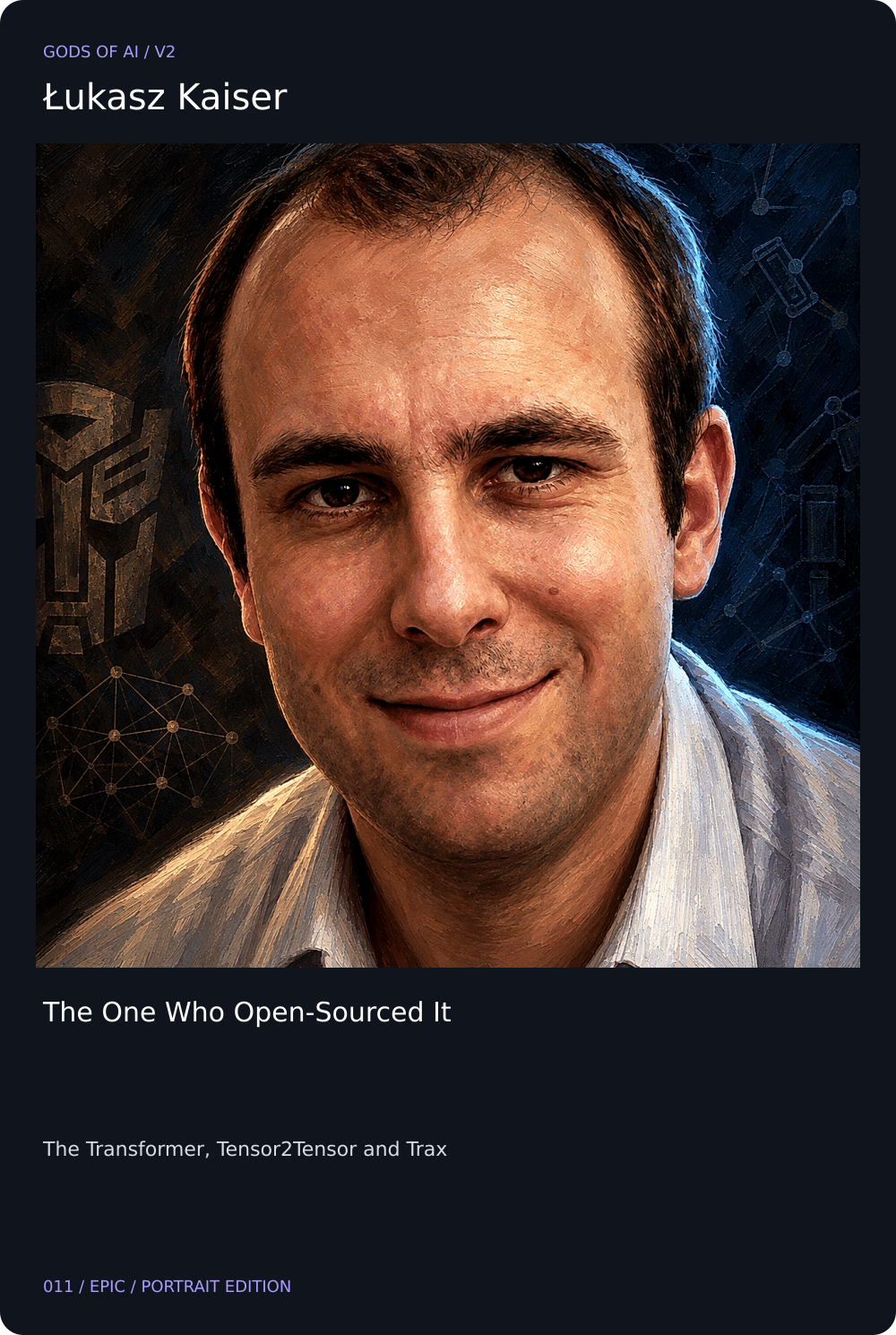
Łukasz Kaiser card front
Łukasz KaiserThe One Who Open-Sourced ItThe Transformer, Tensor2Tensor and Trax
TransformersML frameworksReasoning models
Poland / USA2017–present88

Transformer co-author who also built and released Tensor2Tensor, the open library that put a working transformer implementation in everyone’s hands within weeks of the paper, and later Trax. Moved to OpenAI to work on the reasoning-model line. The gap between publishing an architecture and everyone being able to run it was largely his to close.

Locked inCard page
012Epic
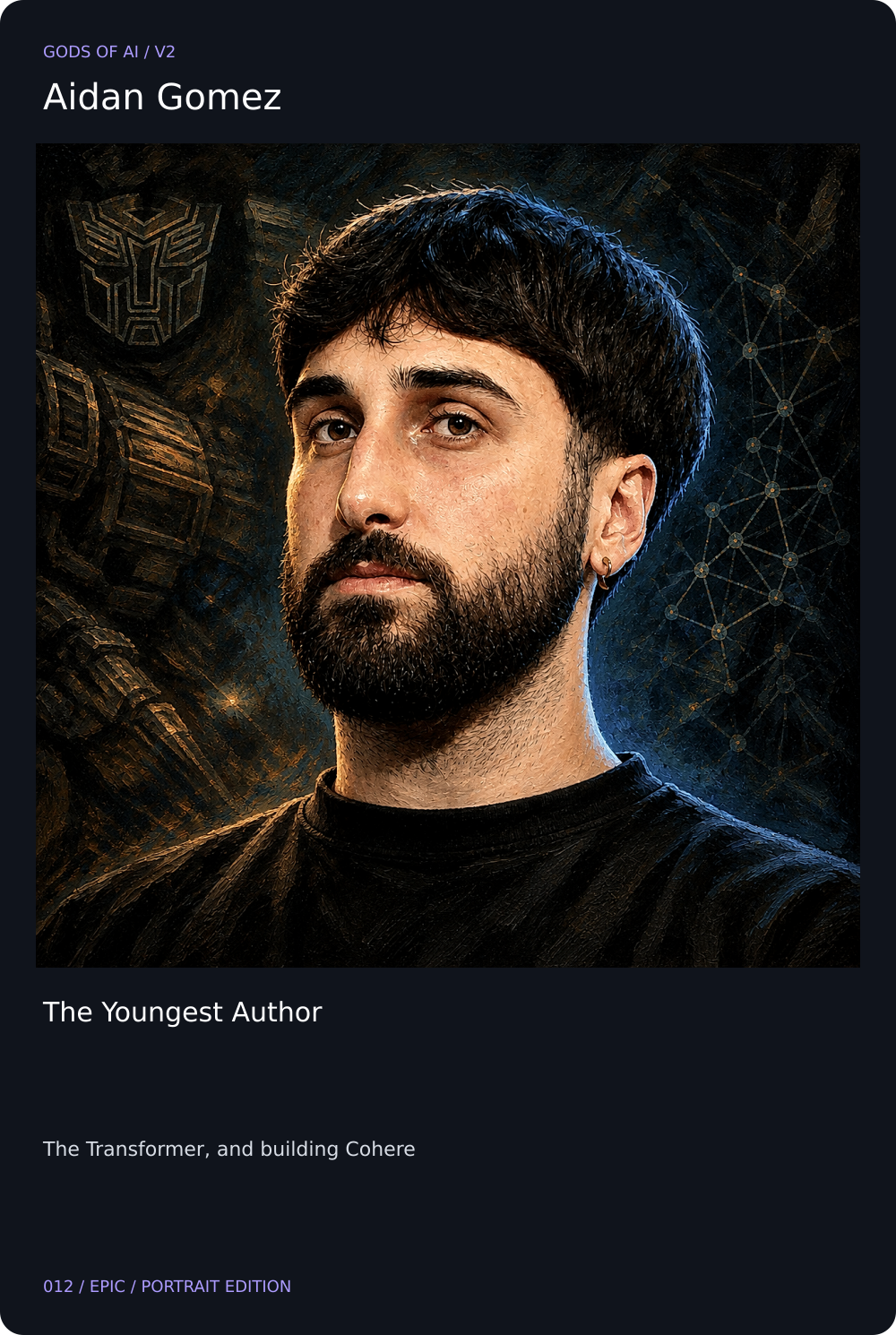
Aidan Gomez card front
Aidan GomezThe Youngest AuthorThe Transformer, and building Cohere
TransformersLanguage modelsEnterprise AI
Canada2017–present85

Was an intern when he became a co-author on Attention Is All You Need. Co-founded FOR.ai and then Cohere, building large language models for enterprises, and Cohere Labs has released open-weight multilingual models including the Aya family with a strong emphasis on languages the field usually ignores.

Locked inCard page

013Legendary
Alex Krizhevsky card front
Alex KrizhevskyAuthor of AlexNetThe 2012 result that ended the argument
Convolutional networksGPU trainingComputer vision
Ukraine / Canada2012–present93

Wrote the CUDA code that trained AlexNet on two consumer GPUs and won ImageNet 2012 by a margin so large it settled the question of whether deep learning worked. Released cuda-convnet so others could reproduce it. Also assembled CIFAR-10 and CIFAR-100, which remain the default first datasets for anyone learning the field.

Locked inCard page

014Iconic
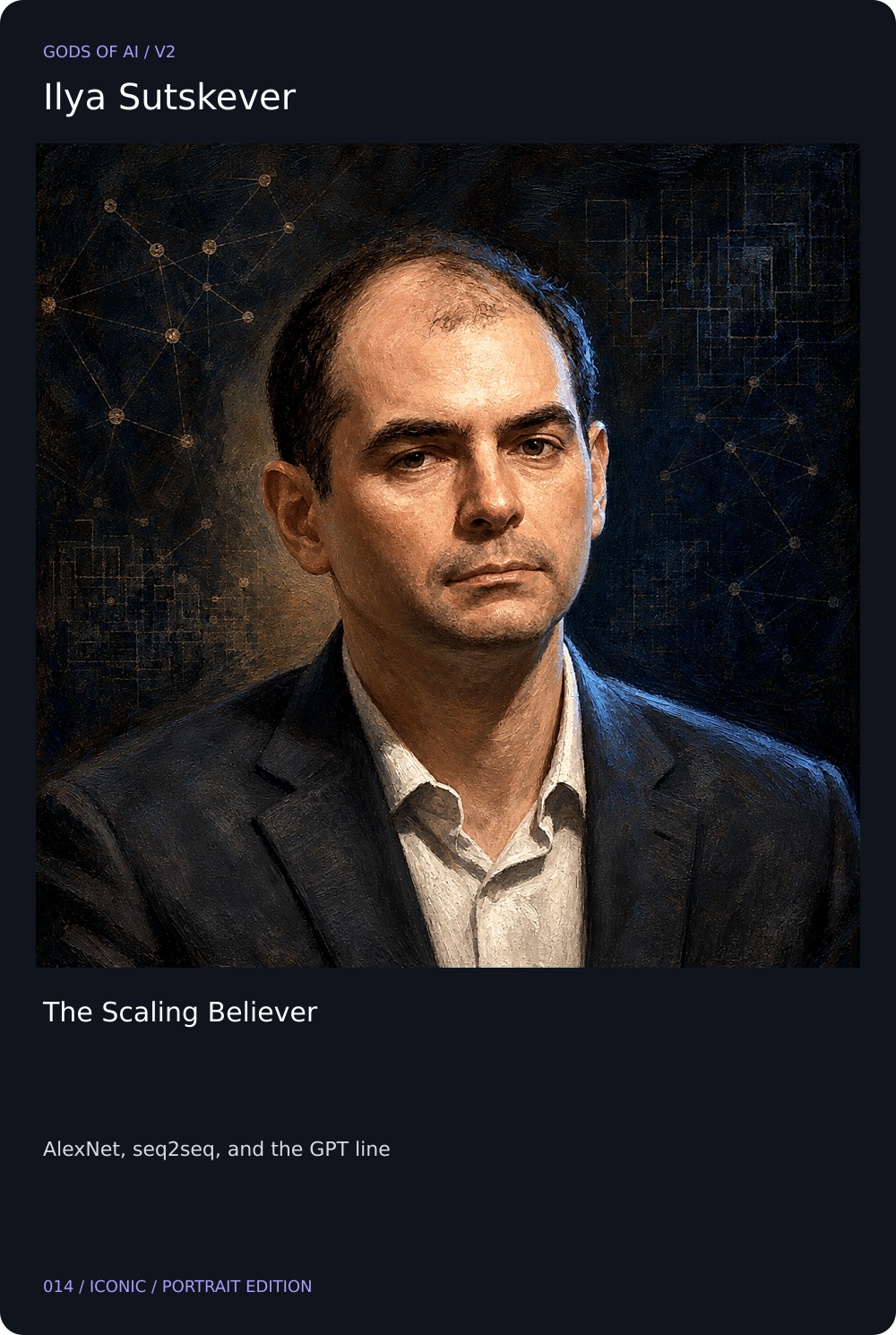
Ilya Sutskever card front
Ilya SutskeverThe Scaling BelieverAlexNet, seq2seq, and the GPT line
Deep learningLanguage modelsAlignment
Russia / Israel / Canada2012–present96

Co-author of AlexNet, then of sequence-to-sequence learning, then co-founder and chief scientist of OpenAI through the GPT series. The through-line of his career is a conviction that scale plus the right objective gets you most of the way, held earlier and harder than almost anyone. Left in 2024 to found Safe Superintelligence.

Locked inCard page
015Legendary
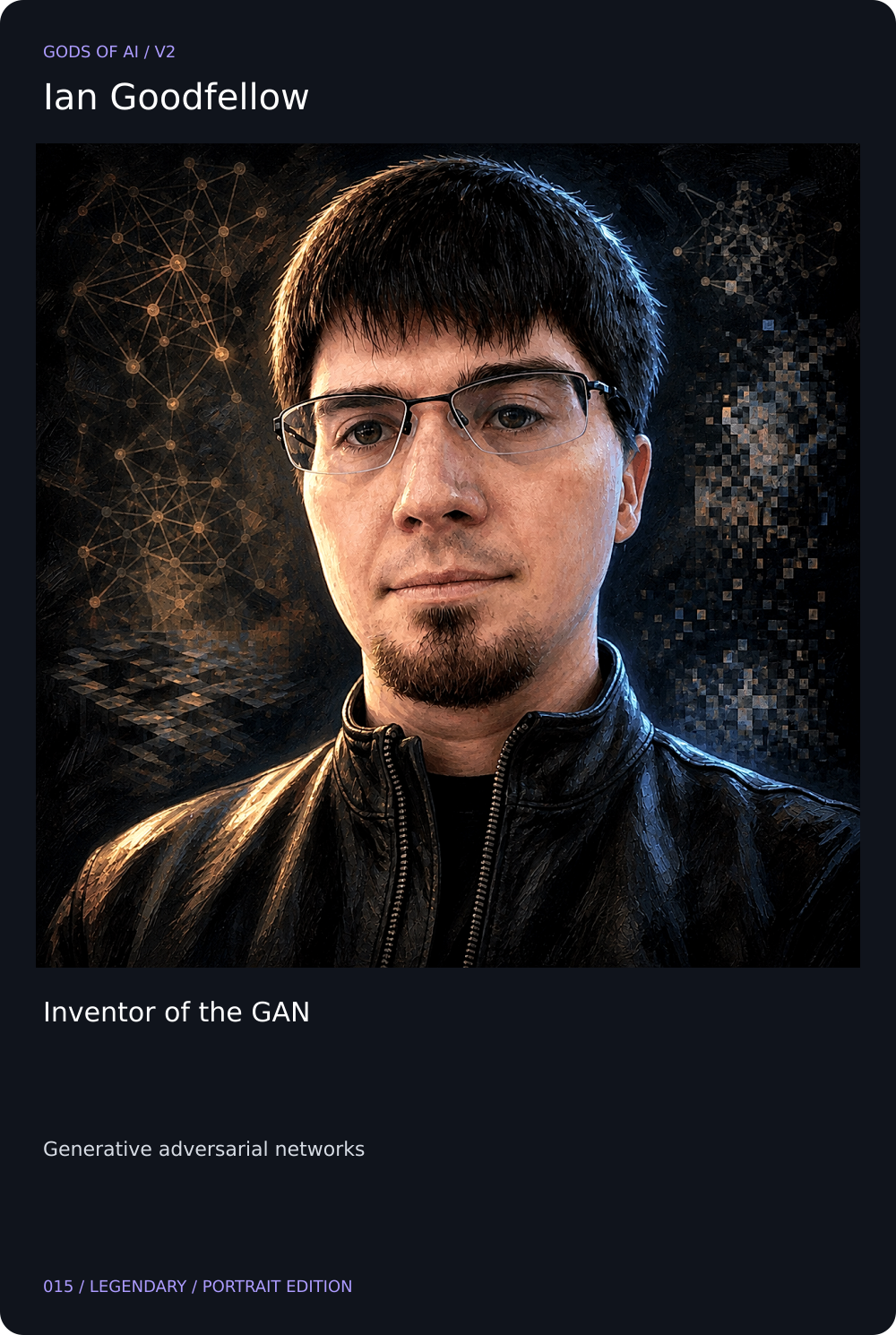
Ian Goodfellow card front
Ian GoodfellowInventor of the GANGenerative adversarial networks
Generative modelsAdversarial examplesDeep learning
USA2014–present90

Proposed generative adversarial networks in 2014 — two networks trained against each other — and gave image generation its first decade. Co-wrote the Deep Learning textbook with Bengio and Courville, which is free to read online, and did foundational work on adversarial examples that became its own subfield.

Locked inCard page
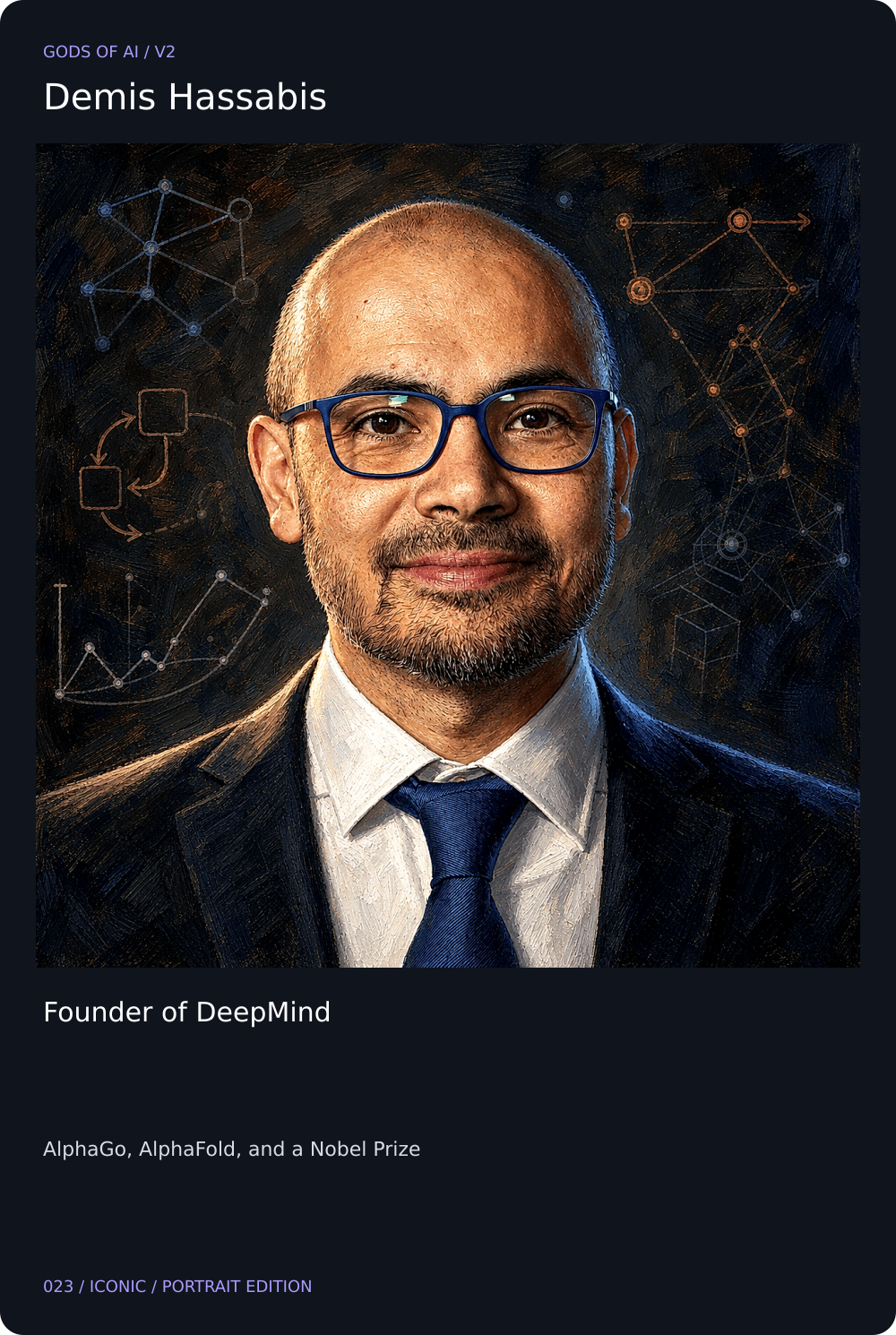
016Legendary
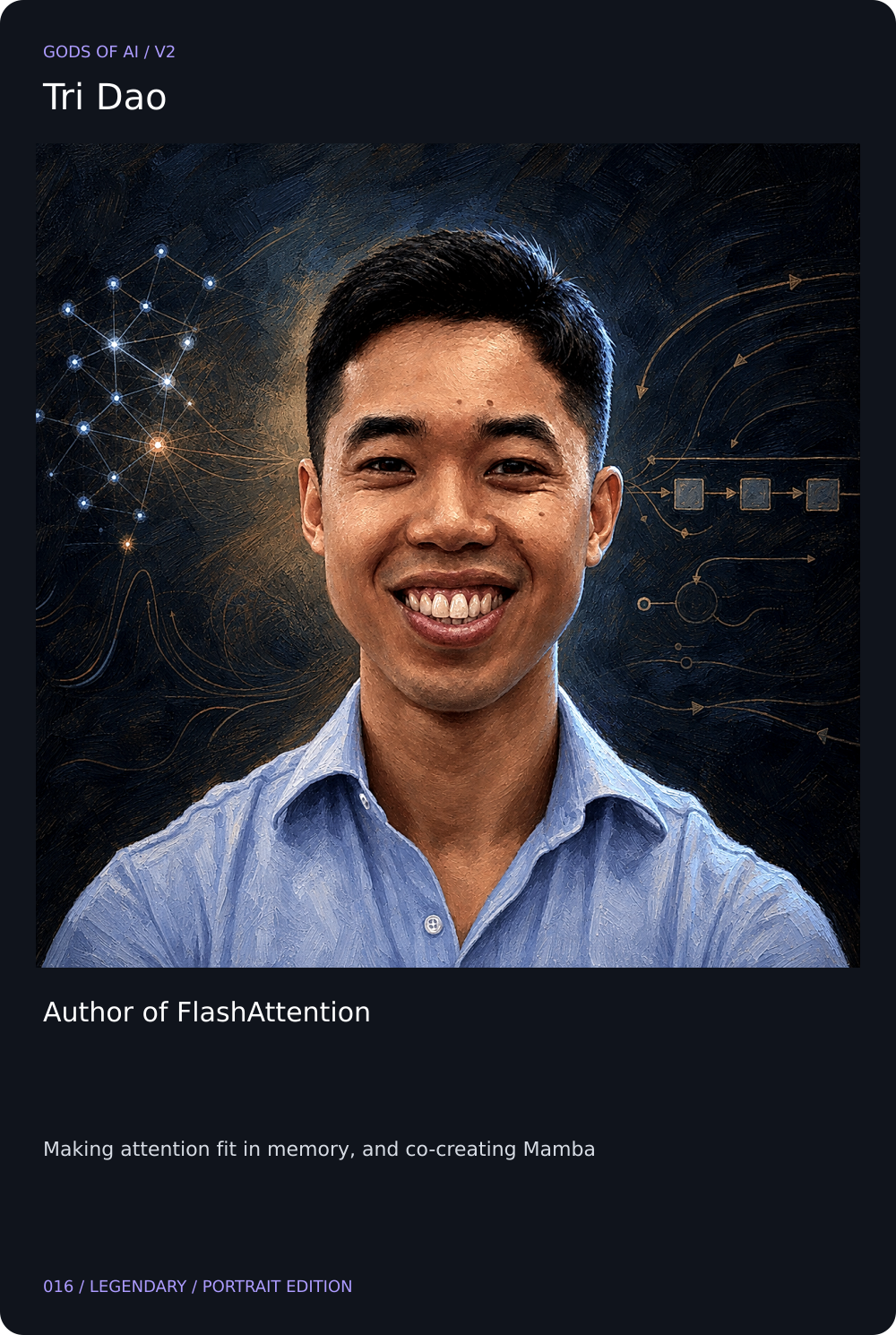
Tri Dao card front
Tri DaoAuthor of FlashAttentionMaking attention fit in memory, and co-creating Mamba
Efficient attentionState space modelsGPU kernels
Vietnam / USA2022–present89

Wrote FlashAttention, an IO-aware exact attention kernel that cut memory use enough to make long contexts practical, and released it openly — it is now in essentially every training stack in the world. Co-created the Mamba state space architecture with Albert Gu, also open. Chief scientist at Together AI and a Princeton professor.

Locked inCard page
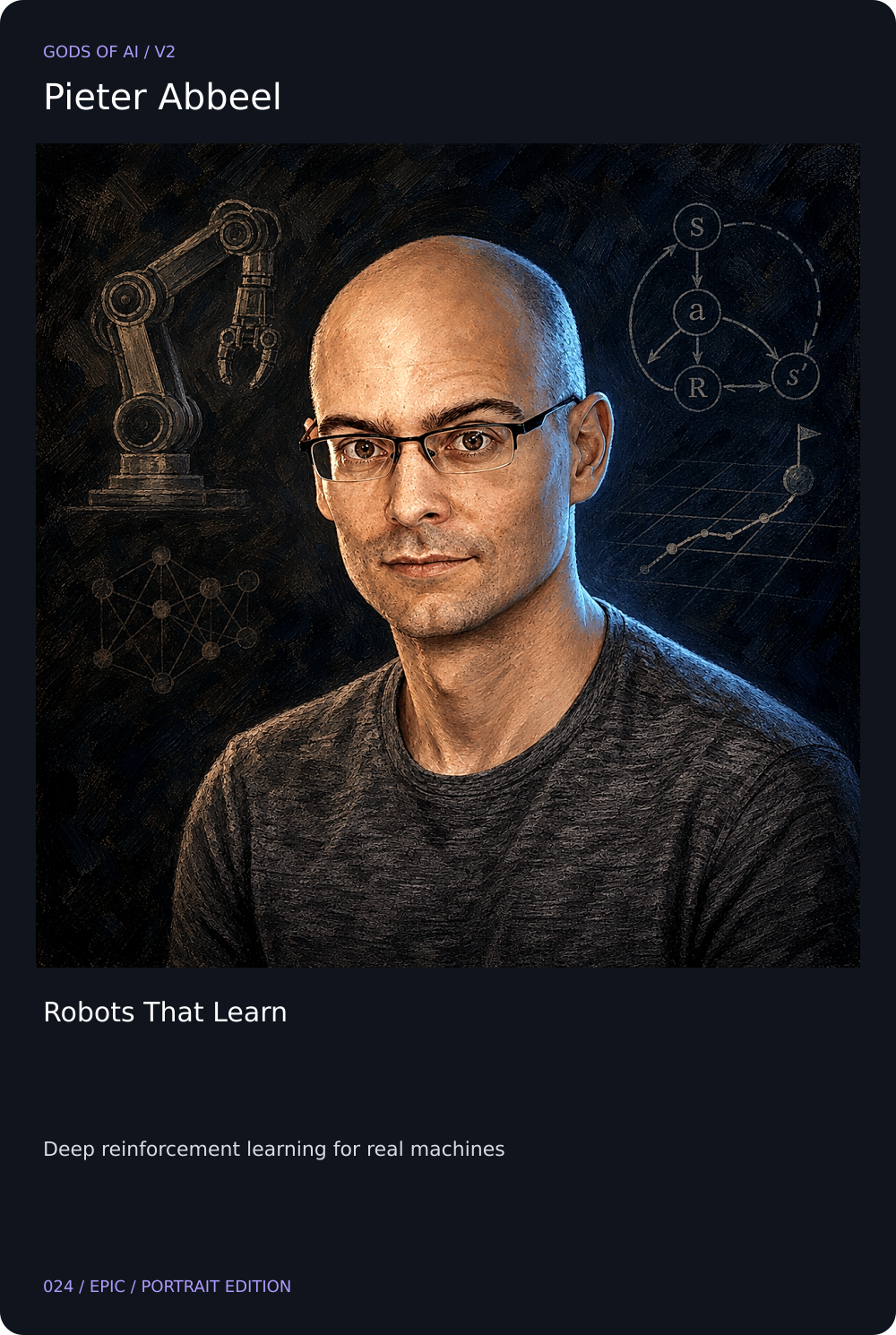
017Epic
Albert Gu card front
Albert GuThe State Space AlternativeS4 and Mamba, the credible challenge to attention
State space modelsLong sequencesArchitecture research
USA2021–present85

Developed structured state space models — S4 and its successors — showing that sequence modelling with linear-time scaling could compete with quadratic attention on long inputs. Co-created Mamba with Tri Dao and released it openly. The most serious architectural alternative to the transformer to come out of the last decade.

Locked inCard page
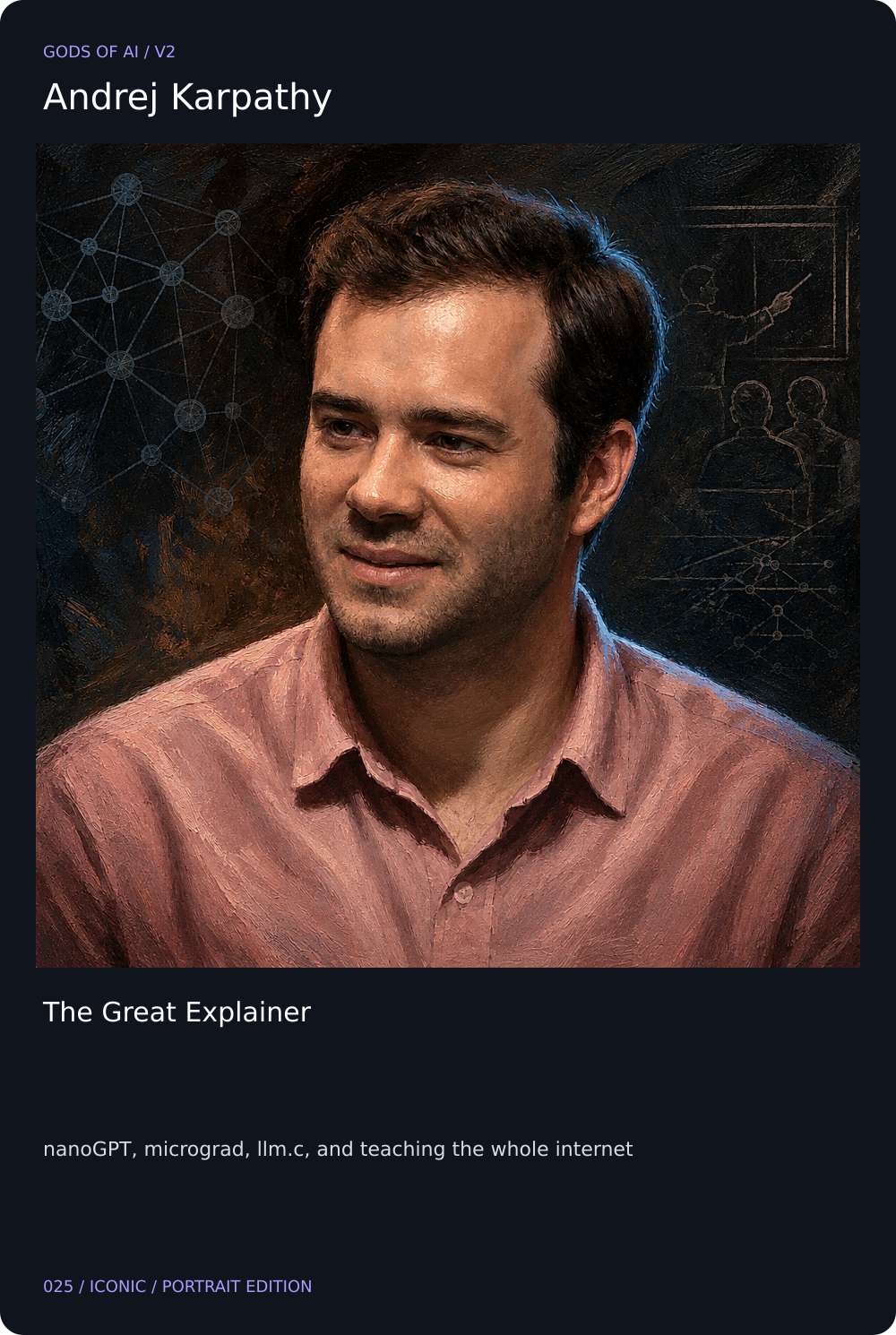
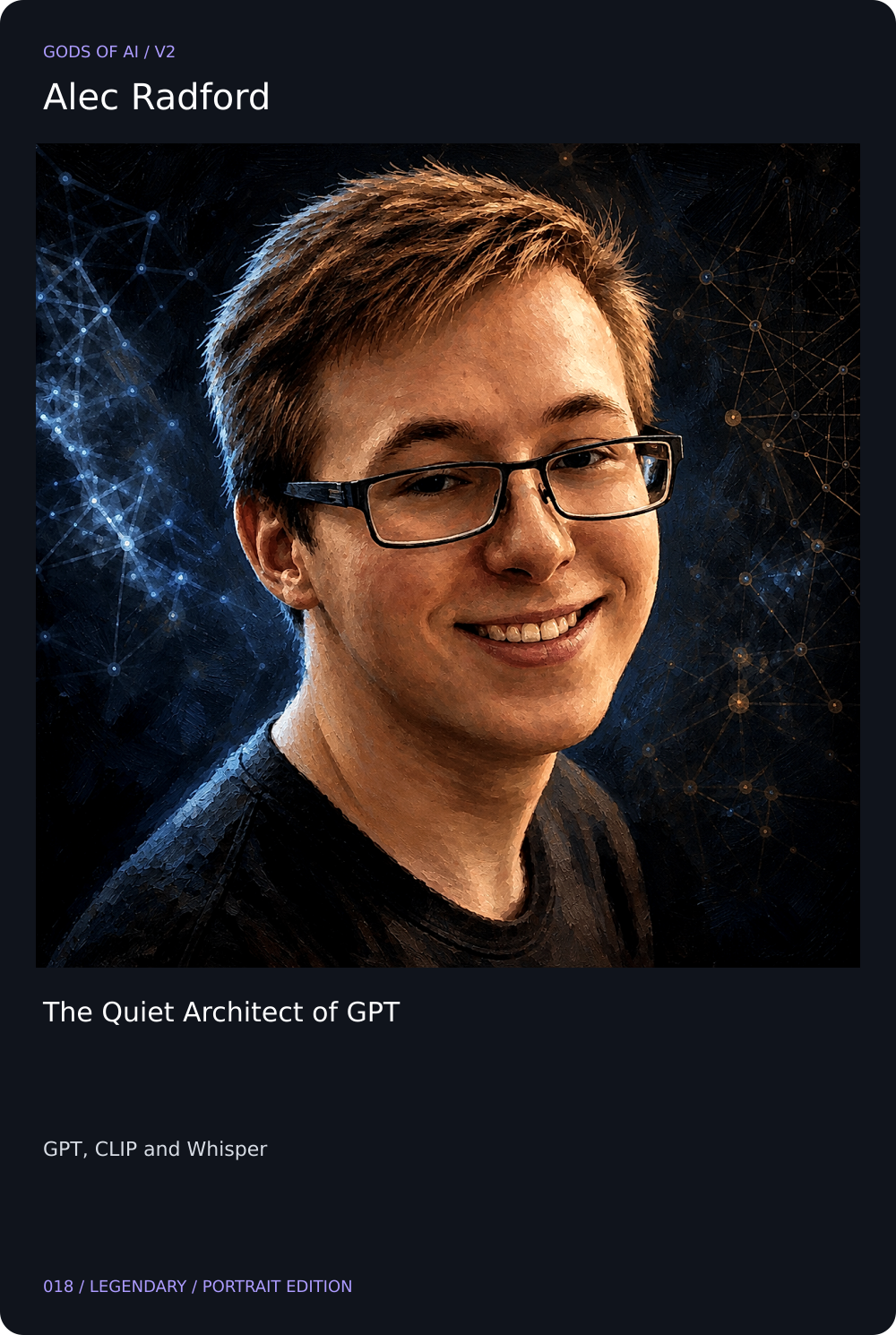
018Legendary
Alec Radford card front
Alec RadfordThe Quiet Architect of GPTGPT, CLIP and Whisper
Language modelsMultimodal modelsSpeech
USA2015–present93

First author on the original GPT paper, on GPT-2, on CLIP and on Whisper — an unusual concentration of foundational work in one person. DCGAN before that. Whisper was released openly with weights and remains the default speech recognition model for anyone who does not want to send audio to an API.

Locked inCard page
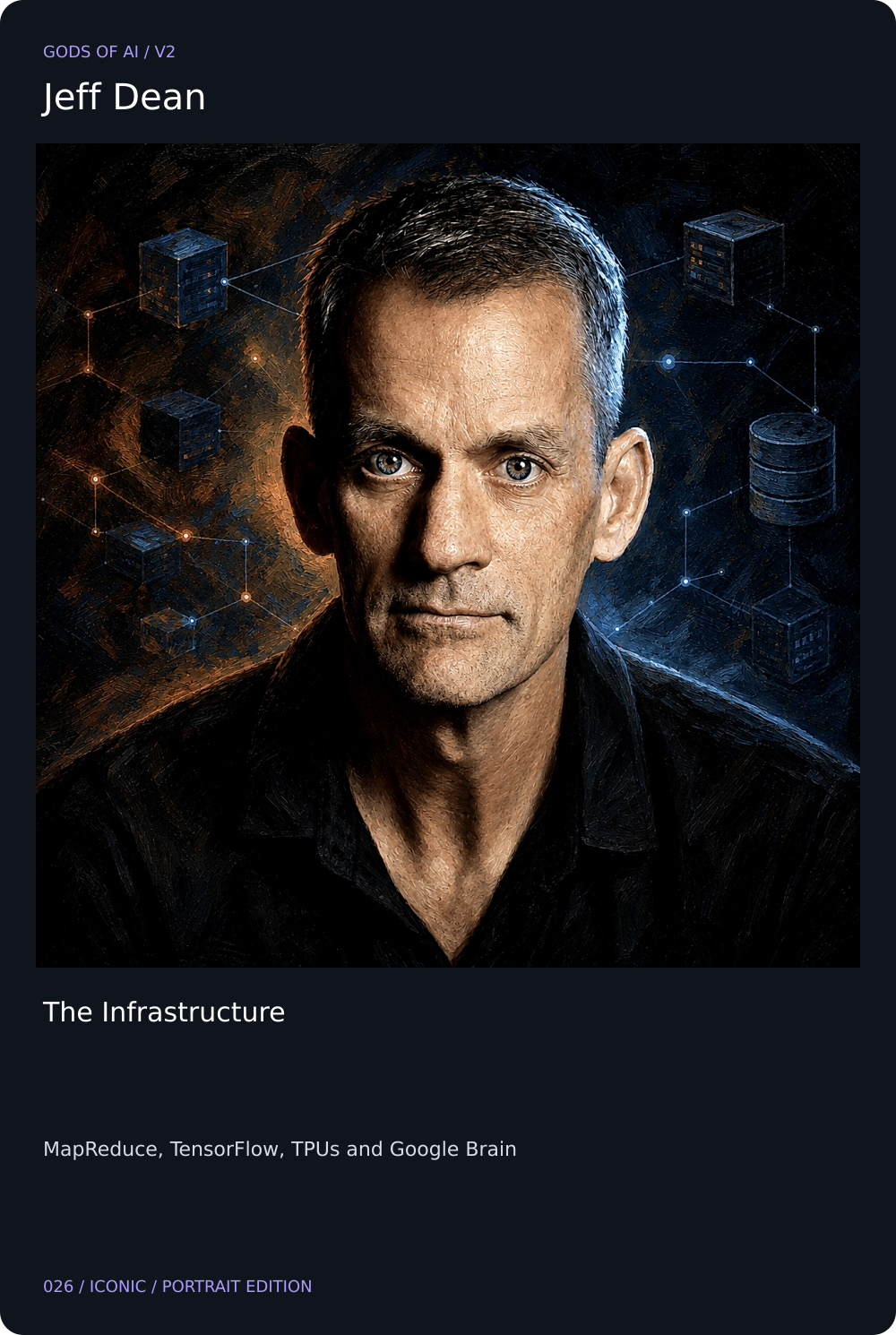
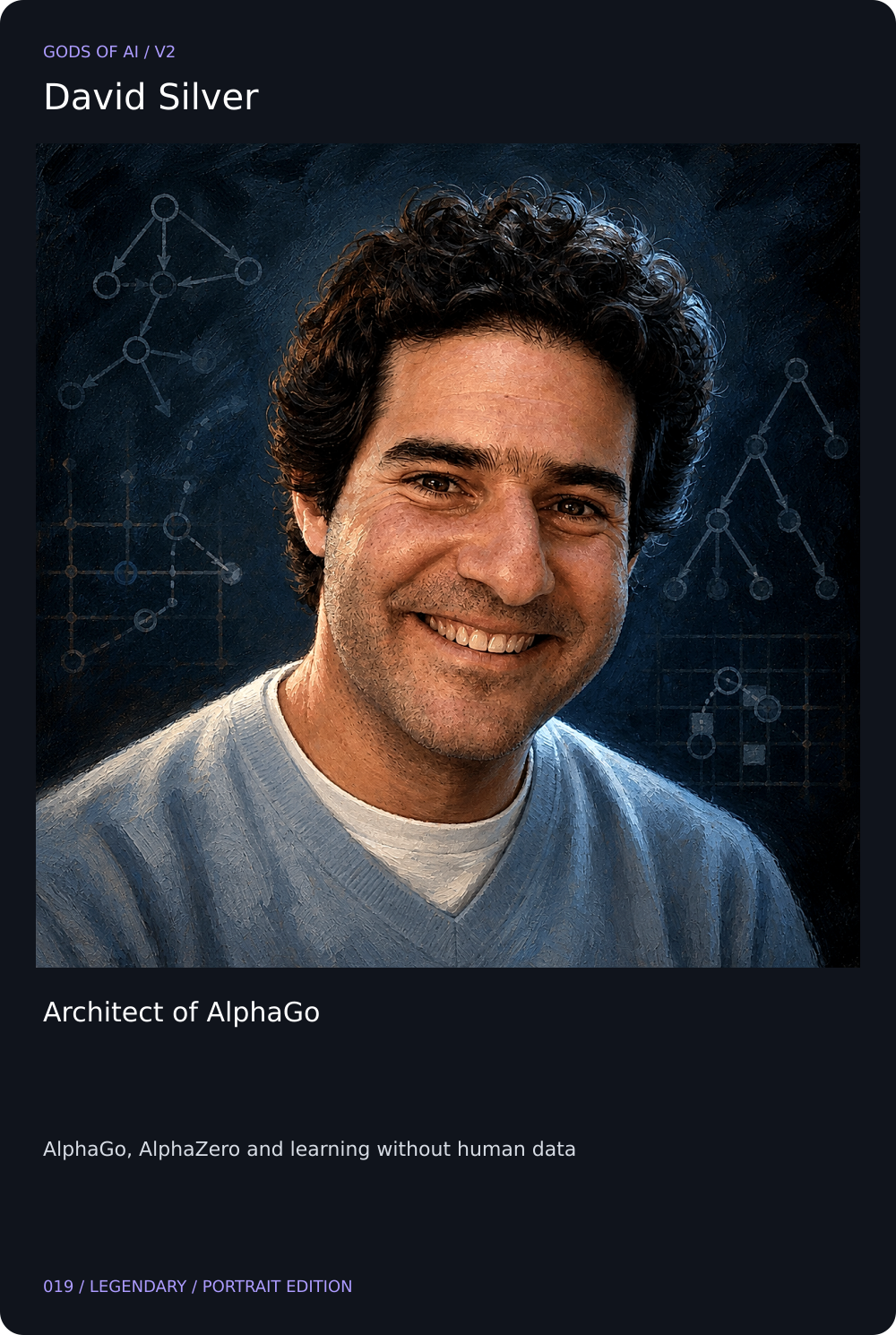
019Legendary
David Silver card front
David SilverArchitect of AlphaGoAlphaGo, AlphaZero and learning without human data
Reinforcement learningSearchSelf-play
UK2016–present92

Led the AlphaGo work that beat Lee Sedol in 2016, a result the field had expected to be a decade away, then AlphaZero — which threw away the human games entirely and taught itself Go, chess and shogi from the rules. His RL lecture series, free on YouTube, taught the subject to a generation.

Locked inCard page

020Epic
Oriol Vinyals card front
Oriol VinyalsFrom Seq2Seq to GeminiSequence-to-sequence, AlphaStar, and leading Gemini
Sequence modelsMulti-agent RLLarge models
Spain / UK2014–present89

Co-authored sequence-to-sequence learning and Pointer Networks, led AlphaStar to grandmaster level at StarCraft II — a far messier problem than board games — and is now a lead on Gemini. One of the few researchers whose career spans the pre-transformer, game-playing and frontier-model eras at the top of each.

Locked inCard page
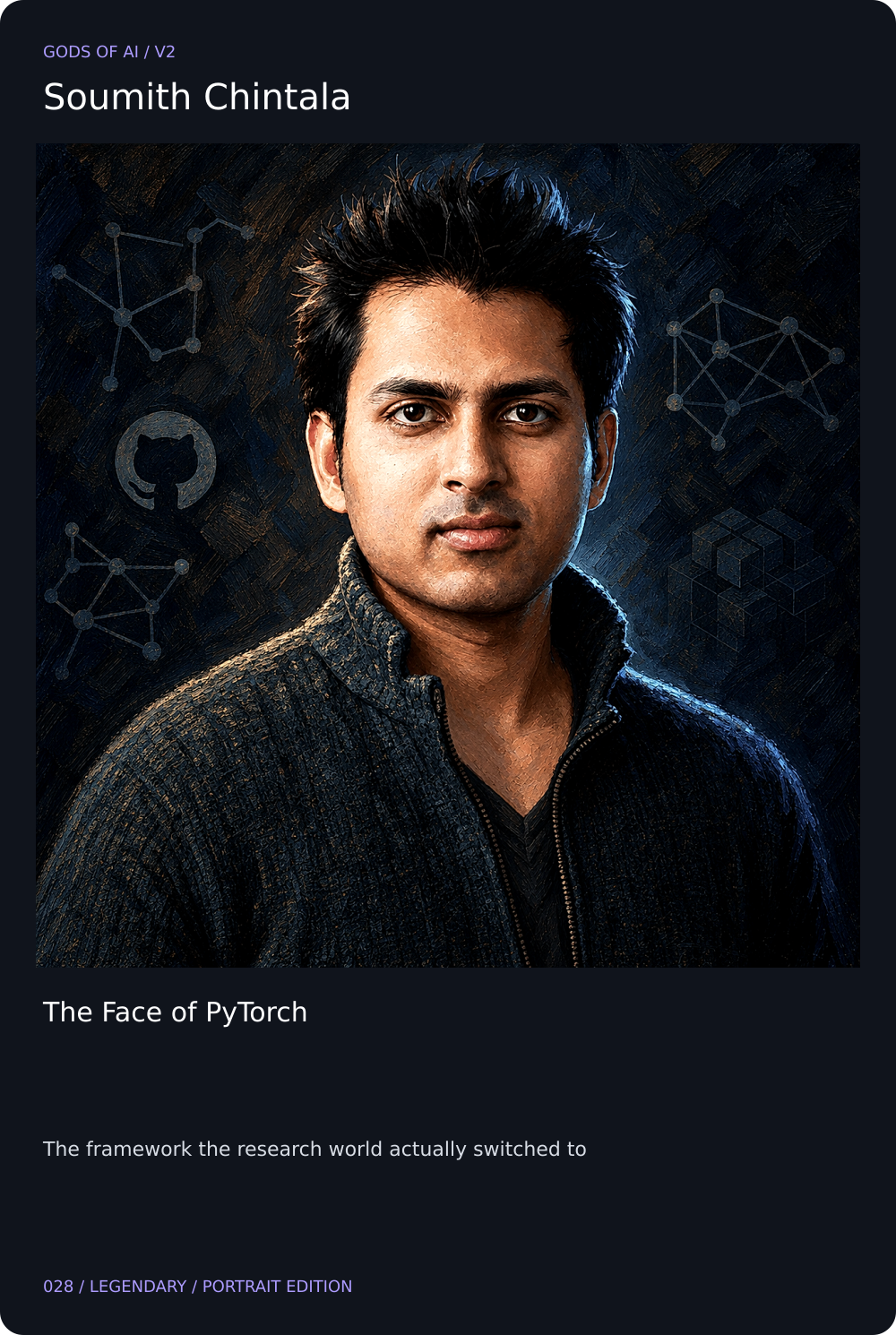
021Iconic
John Jumper card front
John JumperArchitect of AlphaFoldSolving protein structure prediction, and releasing it
Structural biologyDeep learningOpen science
USA2020–present95

Led AlphaFold 2, which solved a fifty-year-old grand challenge in biology to experimental accuracy. DeepMind then released the code and predicted structures for essentially every known protein, free, which is the part biologists actually talk about. Shared the 2024 Nobel Prize in Chemistry.

Locked inCard page
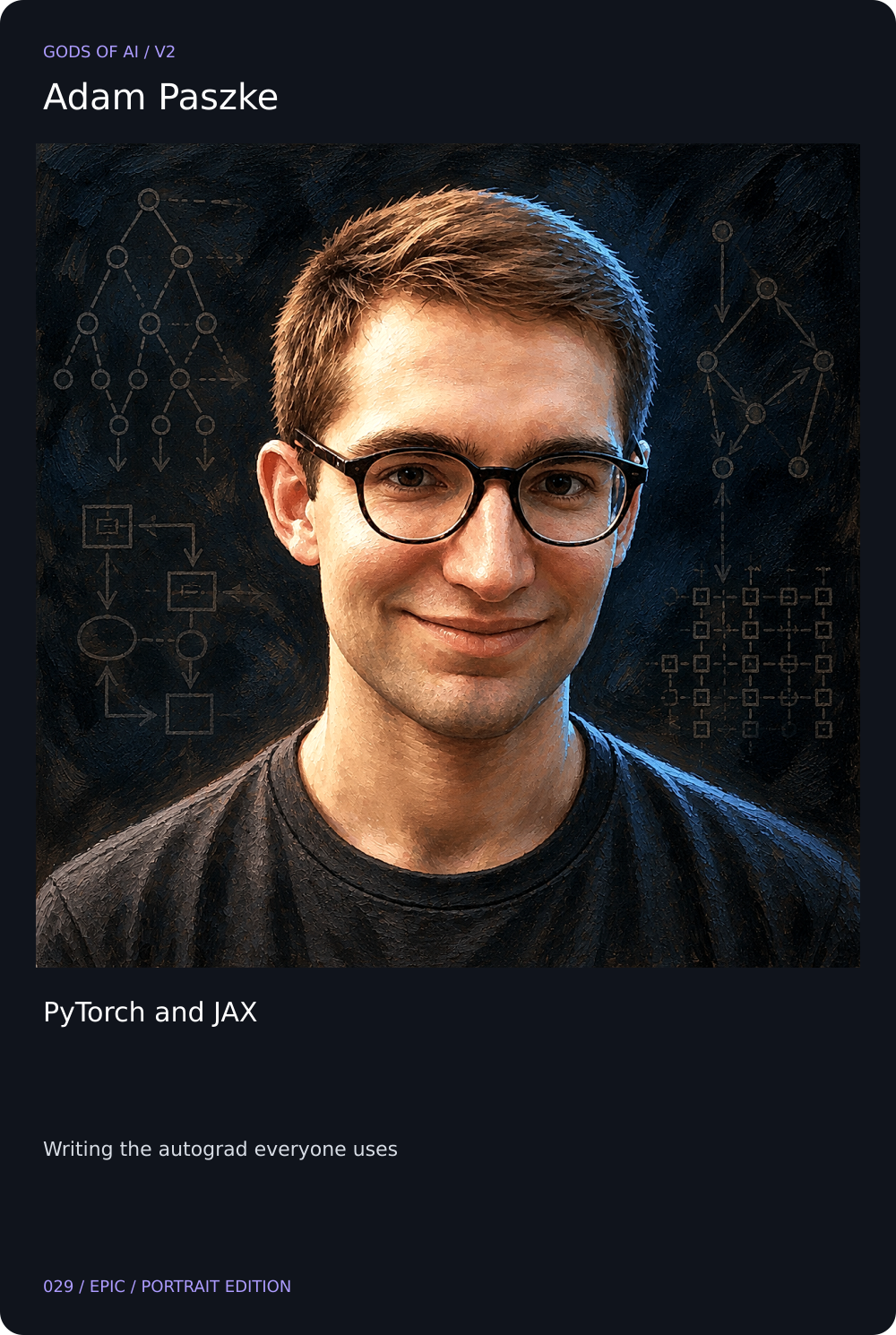
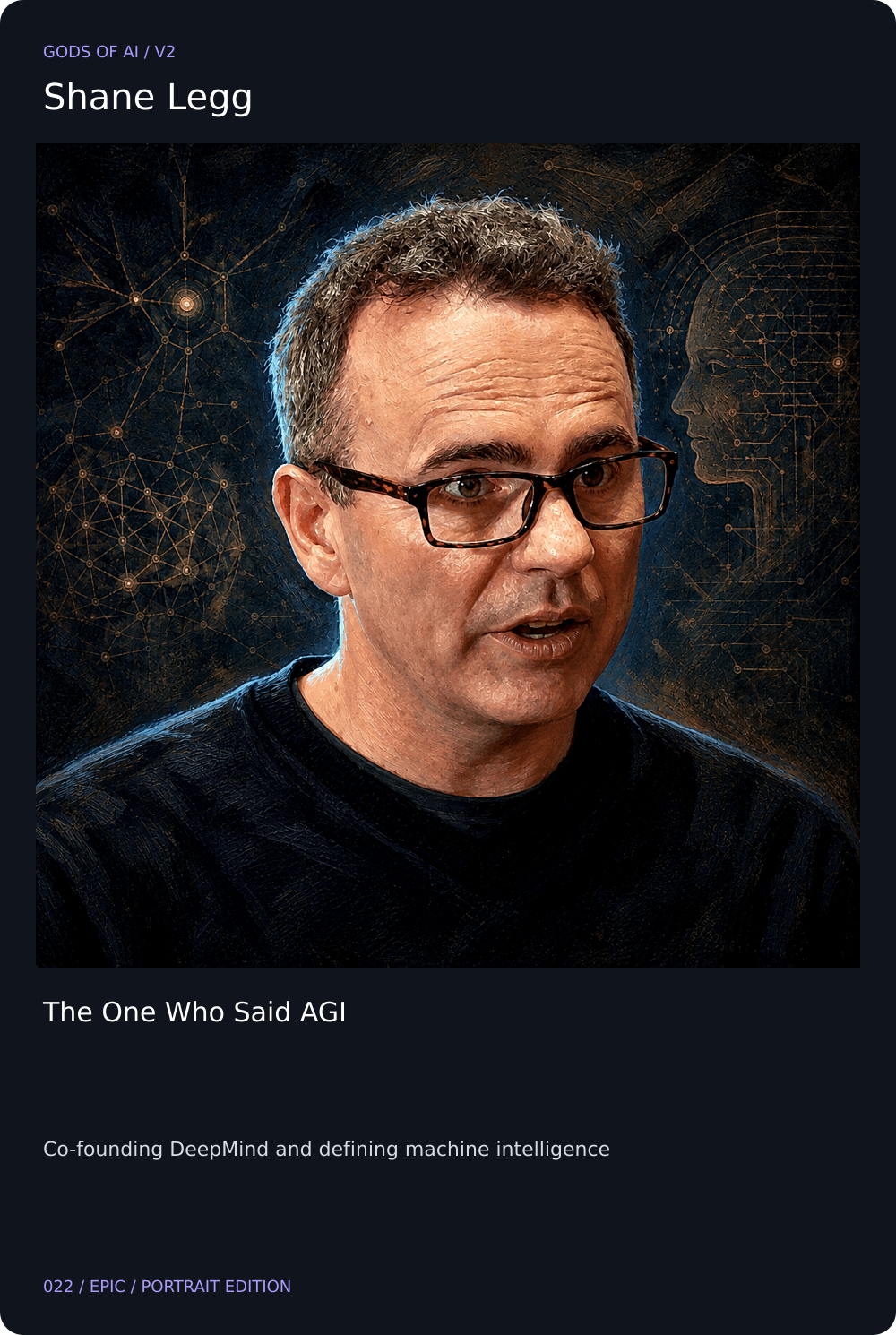
022Epic
Shane Legg card front
Shane LeggThe One Who Said AGICo-founding DeepMind and defining machine intelligence
AGIMachine intelligence theorySafety
New Zealand / UK2010–present88

Co-founded DeepMind with Hassabis and Suleyman and is chief AGI scientist there. His doctoral work with Marcus Hutter produced a formal definition of machine intelligence, and he popularised the term AGI at a point when saying it out loud was a career risk. Has publicly held a rough timeline for human-level AI since 2011.

Locked inCard page
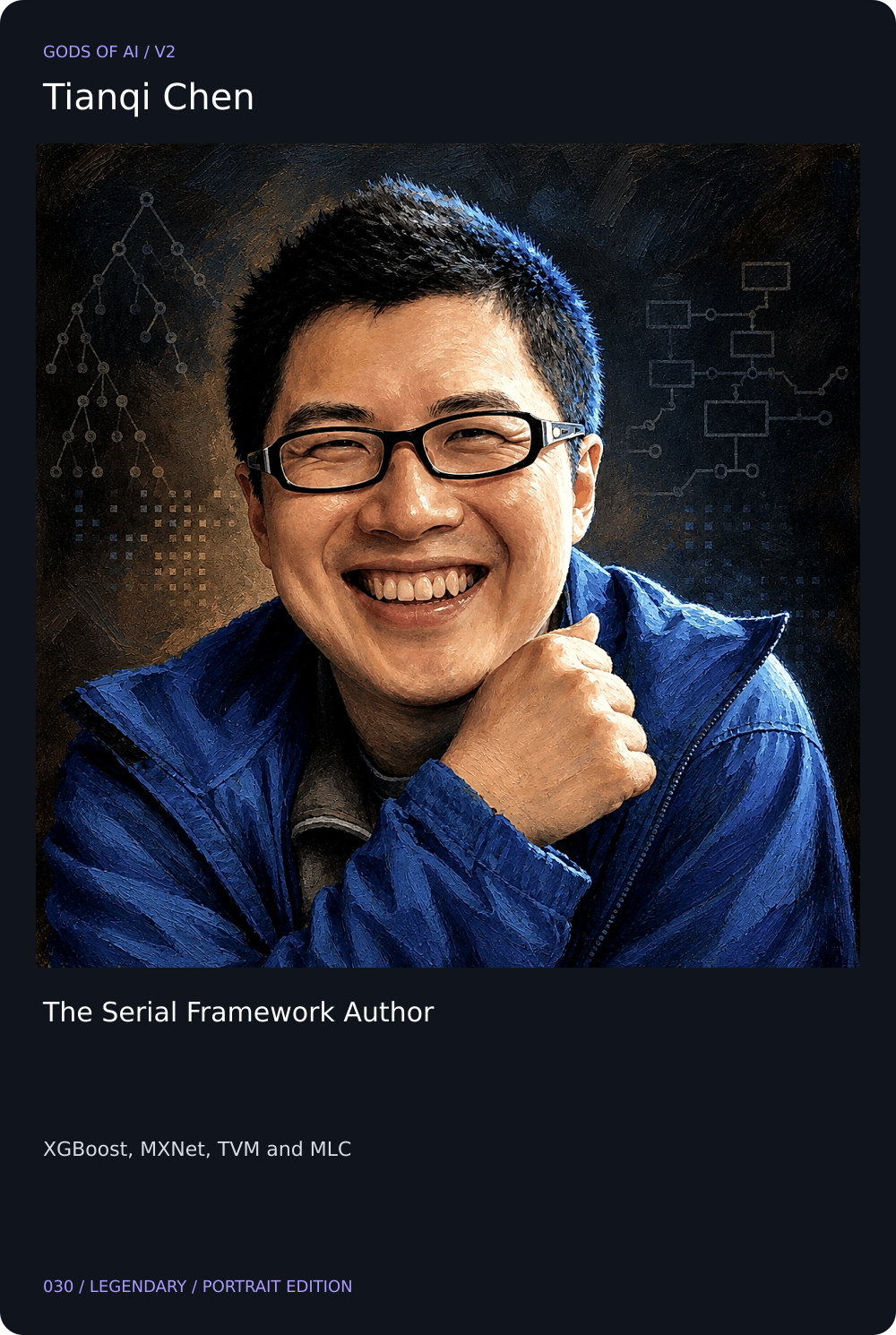
023Iconic
Demis Hassabis card front
Demis HassabisFounder of DeepMindAlphaGo, AlphaFold, and a Nobel Prize
Reinforcement learningScientific AINeuroscience
UK2010–present96

Chess prodigy, then games developer, then neuroscientist, then founder of DeepMind — the lab that produced DQN, AlphaGo, AlphaZero and AlphaFold. Shared the 2024 Nobel Prize in Chemistry for the last of those. Has been consistent for two decades that the point of building intelligence is to use it on science.

Locked inCard page
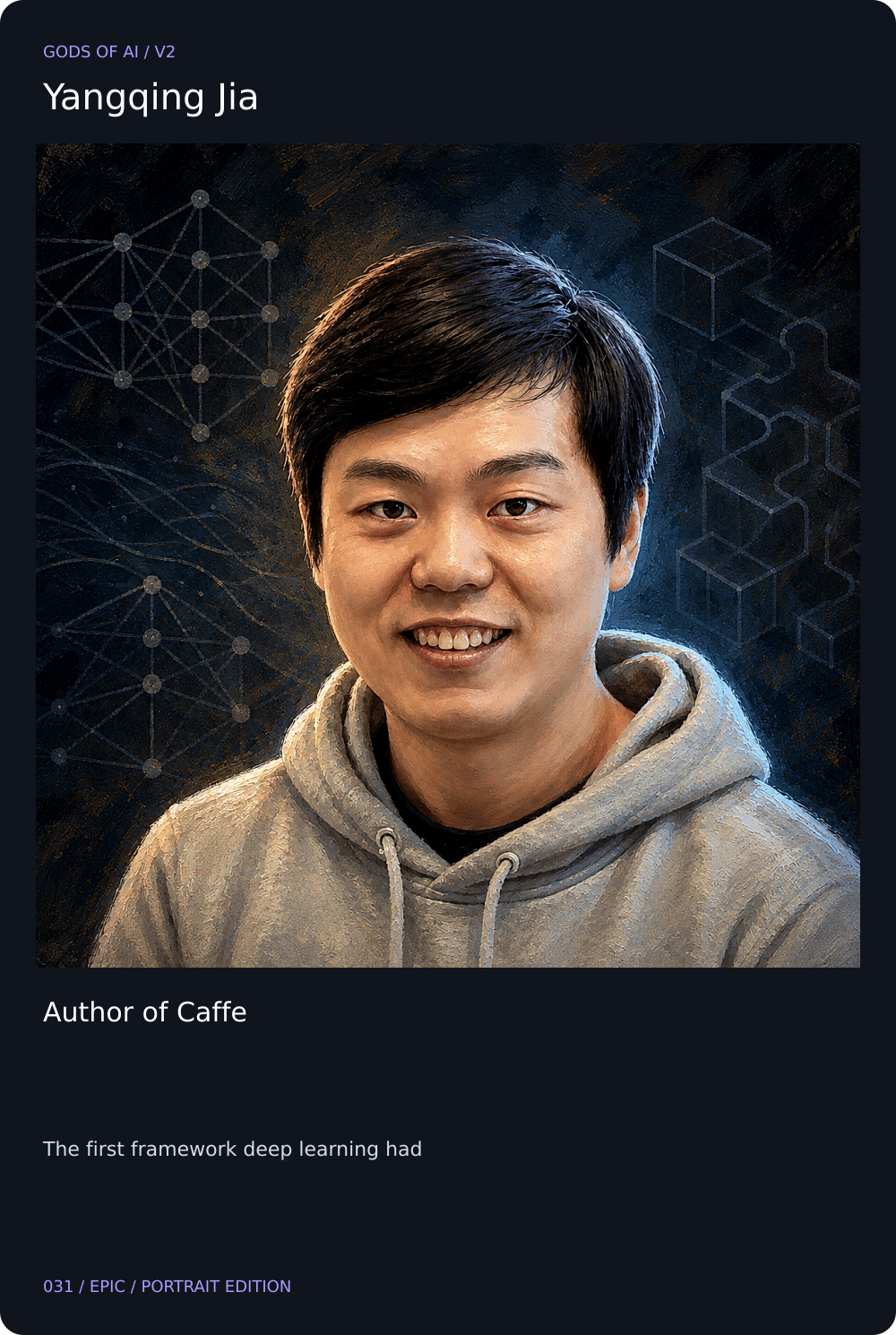
024Epic
Pieter Abbeel card front
Pieter AbbeelRobots That LearnDeep reinforcement learning for real machines
RoboticsReinforcement learningImitation learning
Belgium / USA2010–present85

Berkeley professor who moved deep RL out of simulators and onto physical robots, with apprenticeship learning, domain randomisation and the BAIR lab’s long run of open releases. Co-founded Covariant, and his Deep RL Bootcamp and course materials are freely available and are how a lot of people learned the subject.

Locked inCard page

025Iconic
Andrej Karpathy card front
Andrej KarpathyThe Great ExplainernanoGPT, micrograd, llm.c, and teaching the whole internet
Neural networksTeachingOpen source
Slovakia / Canada / USA2015–present92

Founding member of OpenAI, then director of AI at Tesla, but the reason he is on this card is the teaching: char-rnn, CS231n, micrograd, nanoGPT, llm.c and the Zero to Hero series, all free, all readable. He has probably taught more working engineers how a transformer actually works than every university course combined.

Locked inCard page
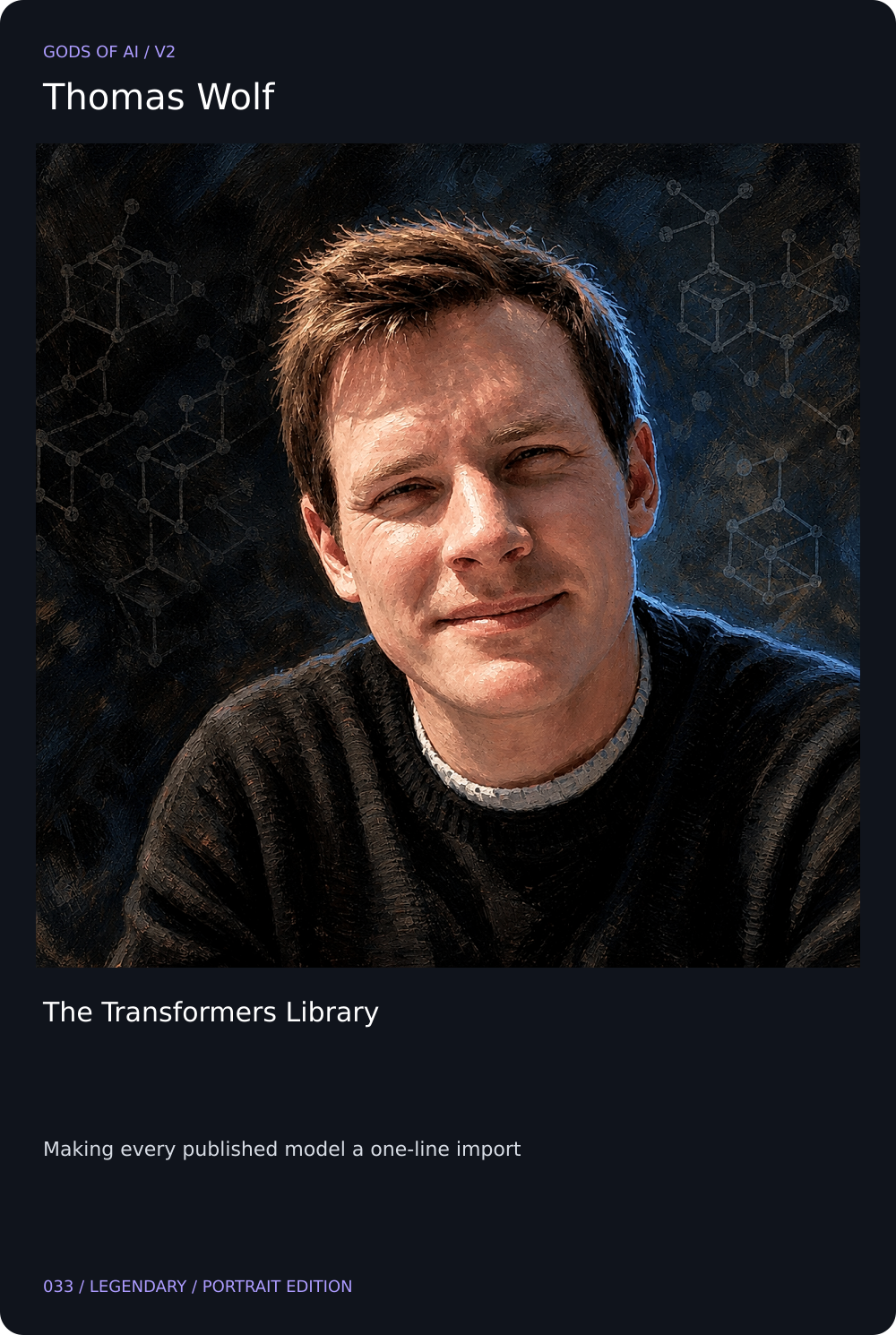
026Iconic
Jeff Dean card front
Jeff DeanThe InfrastructureMapReduce, TensorFlow, TPUs and Google Brain
Distributed systemsML infrastructureModel training
USA2011–present95

Built much of the distributed systems layer modern computing runs on — MapReduce, BigTable, Spanner — then co-founded Google Brain and drove DistBelief, TensorFlow and the TPU programme. TensorFlow being released openly in 2015 is a large part of why the deep learning boom was not confined to a handful of labs.

Locked inCard page
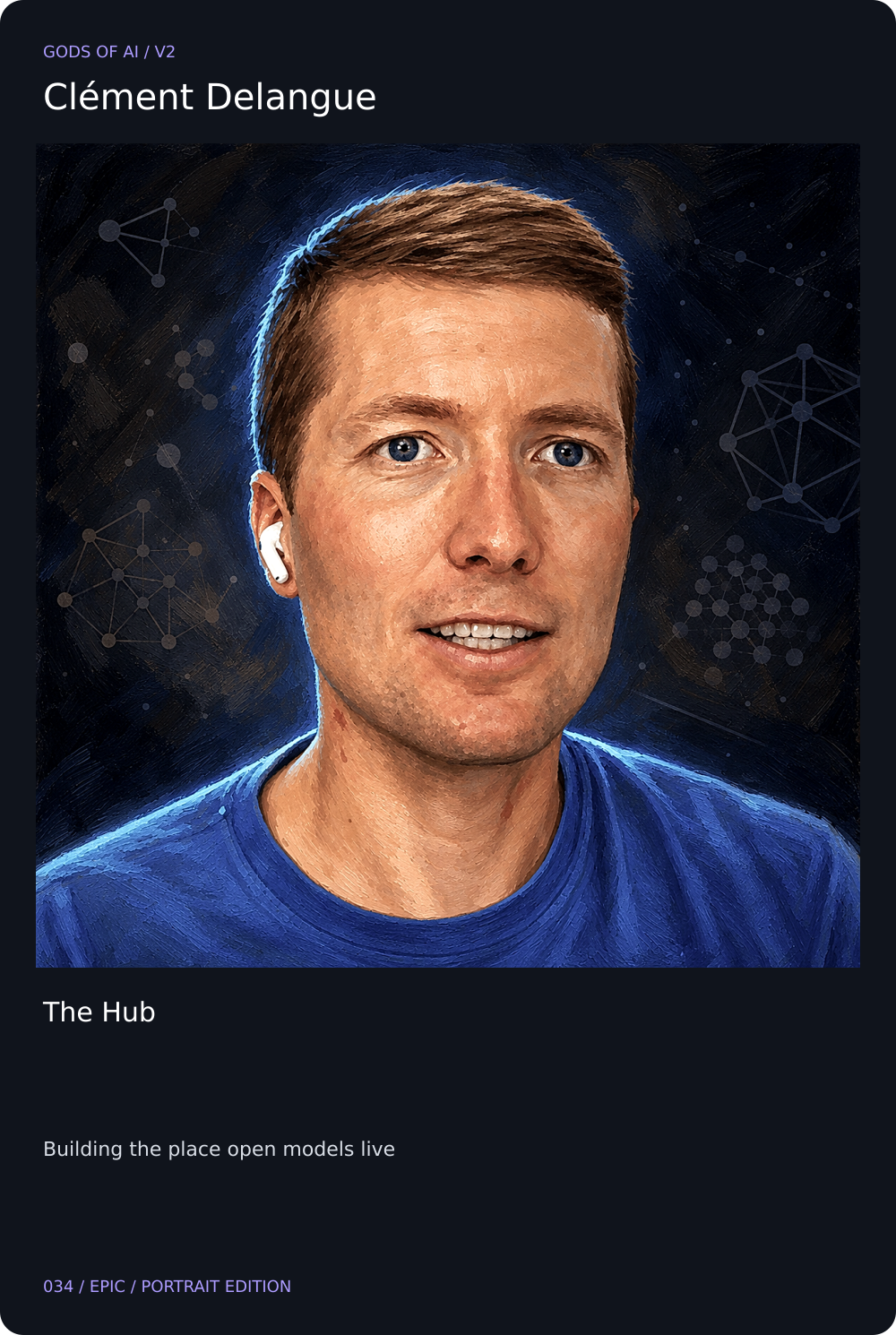
027Rare
Rajat Monga card front
Rajat MongaThe TensorFlow LeadTurning DistBelief into something the public could use
ML frameworksDistributed trainingOpen source
India / USA2015–present82

Led TensorFlow engineering at Google, taking the internal DistBelief system and shipping it as an open-source framework with a public API, documentation and a community. For several years TensorFlow was simply how machine learning was done outside a handful of labs, and that was an engineering and release-management achievement as much as a research one.

Locked inCard page
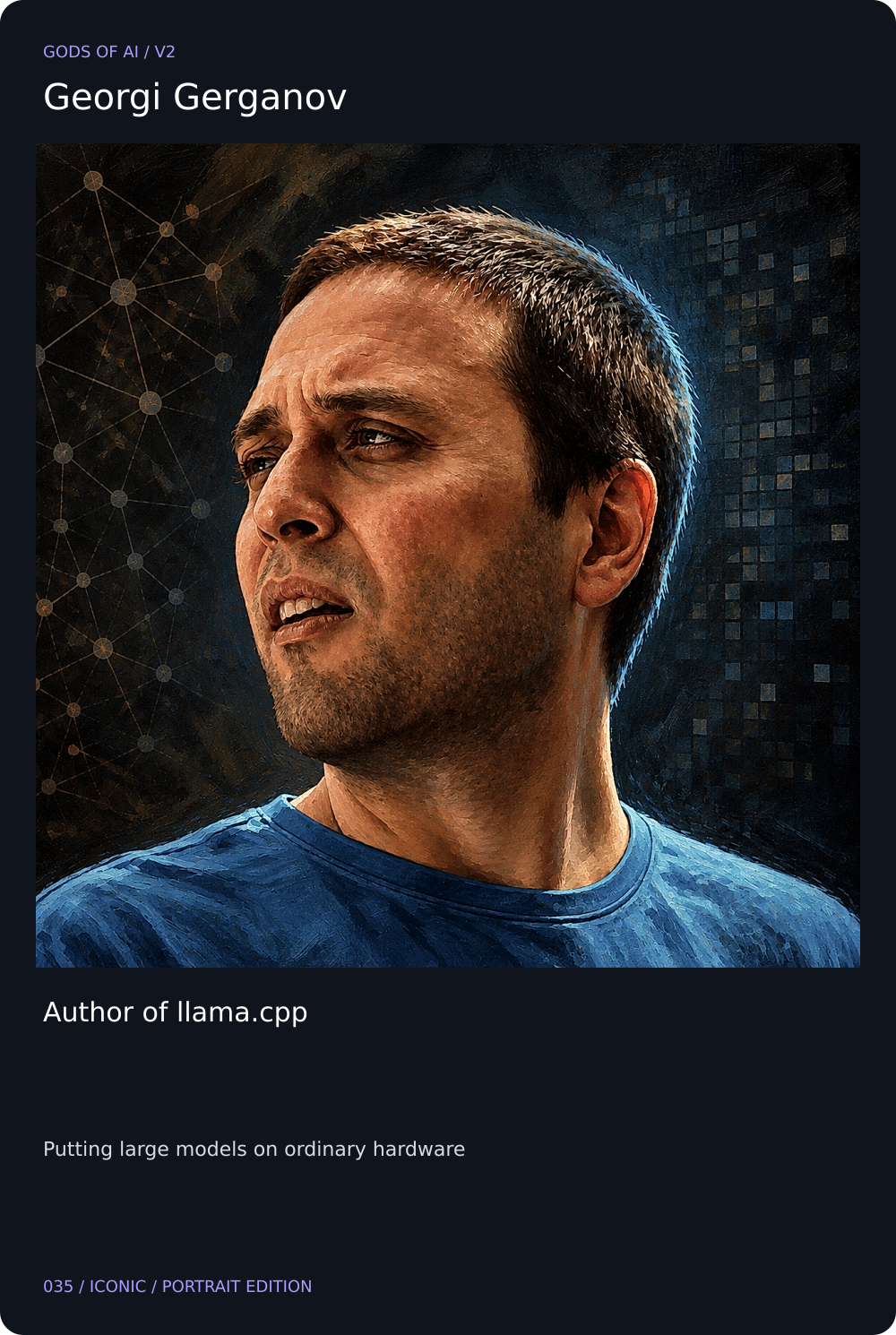
028Legendary
Soumith Chintala card front
Soumith ChintalaThe Face of PyTorchThe framework the research world actually switched to
ML frameworksOpen sourceCommunity
India / USA2016–present91

Co-created and led PyTorch, which won the research community by being straightforwardly pleasant to debug when the alternative was not. Ran it as a genuinely open project with an unusually visible maintainer, shepherded it into the Linux Foundation, and co-authored DCGAN along the way. Almost every model in this set was trained in his framework.

Locked inCard page
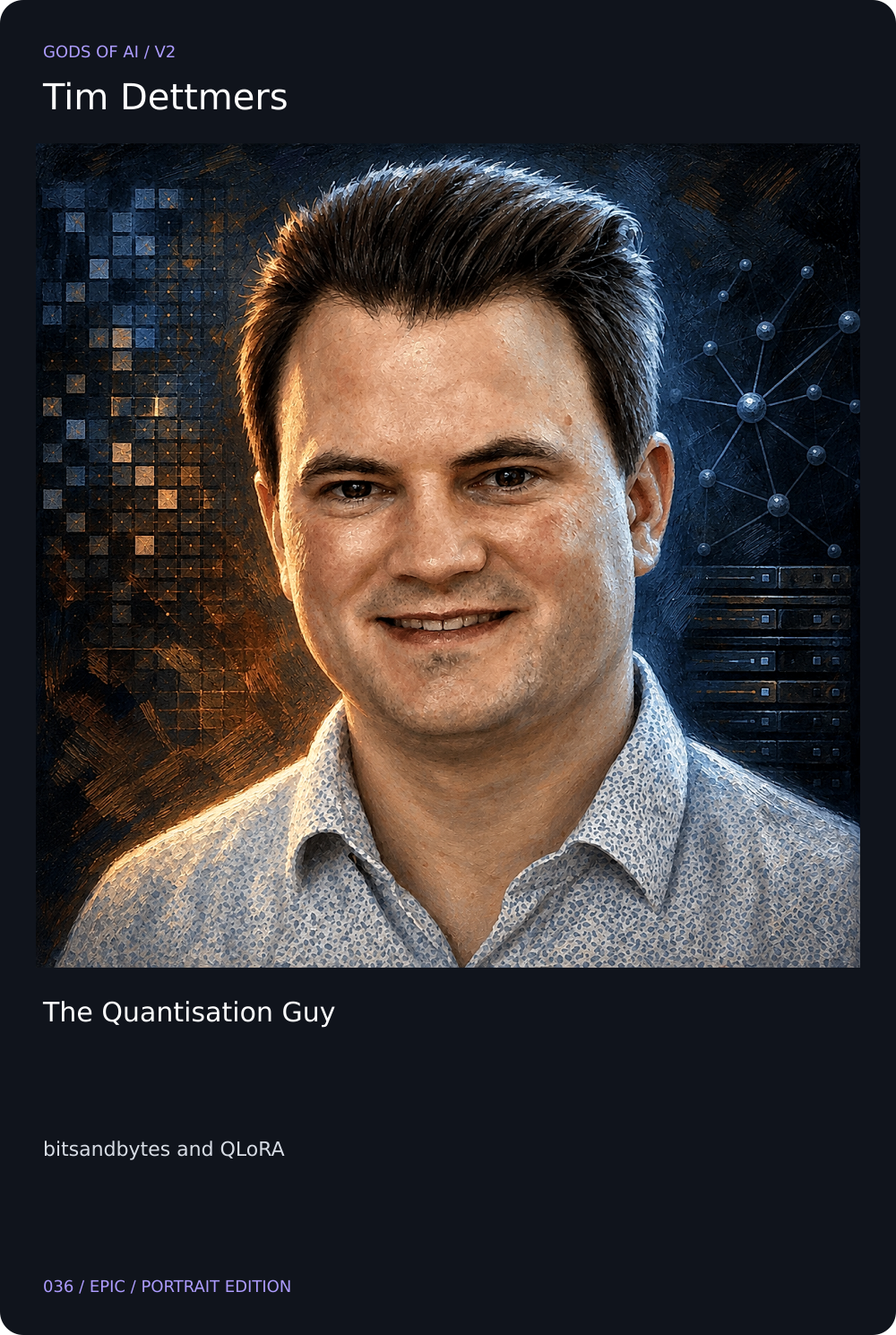
029Epic
Adam Paszke card front
Adam PaszkePyTorch and JAXWriting the autograd everyone uses
Automatic differentiationCompilersML frameworks
Poland2016–present86

Wrote the original PyTorch autograd engine as a student and is first author on the PyTorch paper, then moved to Google and became a core author of JAX. Two of the three frameworks serious research runs on have his design decisions inside them, which is an unusual thing to be able to say.

Locked inCard page
030Legendary
Tianqi Chen card front
Tianqi ChenThe Serial Framework AuthorXGBoost, MXNet, TVM and MLC
Gradient boostingML compilersOn-device inference
China / USA2014–present89

Wrote XGBoost, which won a remarkable share of Kaggle competitions and is still the default for tabular data. Then co-created MXNet, then Apache TVM for compiling models to any hardware, then MLC-LLM for running models on phones and browsers. Every one of them open, and each solved a bottleneck the field was about to hit.

Locked inCard page
031Epic
Yangqing Jia card front
Yangqing JiaAuthor of CaffeThe first framework deep learning had
ML frameworksModel interchangeInference
China / USA2013–present85

Wrote Caffe as a Berkeley PhD student and released it, giving computer vision its first widely usable deep learning framework at exactly the moment the field needed one. Later built Caffe2 at Facebook, co-created ONNX so models could move between frameworks, and led large-scale AI infrastructure at Alibaba before founding Lepton AI.

Locked inCard page
032Legendary
François Chollet card front
François CholletAuthor of KerasThe API that made neural networks approachable, and ARC
ML frameworksAPI designAbstraction and reasoning
France / USA2015–present89

Wrote Keras, whose entire premise was that building a neural network should not require a PhD in the framework, and it became the on-ramp for an enormous number of practitioners. Also created the ARC benchmark and its prize, a deliberate test of fluid reasoning that current models still find hard — a useful corrective to benchmark saturation.

Locked inCard page
033Legendary
Thomas Wolf card front
Thomas WolfThe Transformers LibraryMaking every published model a one-line import
Open modelsLibrariesCommunity
France2018–present90

Co-founder and chief scientist of Hugging Face, and the driving force behind the transformers library, which turned "reproduce this paper" from a week of work into an import statement. Led the BigScience collaboration that produced BLOOM, one of the first genuinely open large multilingual models, built by a thousand researchers in the open.

Locked inCard page
034Epic
Clément Delangue card front
Clément DelangueThe HubBuilding the place open models live
Open modelsPlatformsCommunity
France / USA2016–present87

Co-founded Hugging Face and turned it from a chatbot app into the default distribution point for open models, datasets and demos. Whatever you think of the company, the Hub is the reason an open-weight release can reach everyone the day it lands, and the reason a small lab can ship a model at all.

Locked inCard page
035Iconic
Georgi Gerganov card front
Georgi GerganovAuthor of llama.cppPutting large models on ordinary hardware
InferenceQuantisationLocal models
Bulgaria2022–present91

Wrote ggml, whisper.cpp and llama.cpp — dependency-free C implementations that run large models on laptops, phones and Raspberry Pis. The GGUF format and its quantisation schemes are how most people actually run a model locally. Arguably did more for practical access to open models than any lab release.

Locked inCard page
036Epic
Tim Dettmers card front
Tim DettmersThe Quantisation Guybitsandbytes and QLoRA
QuantisationEfficient fine-tuningAccessible training
Germany / USA2021–present86

Worked out how to run and fine-tune large models in 8-bit and then 4-bit without wrecking them, shipped it as bitsandbytes, and followed with QLoRA — which put fine-tuning a 65B model on a single consumer GPU. His hardware guides are the reference for anyone deciding what to buy.

Locked inCard page
037Legendary
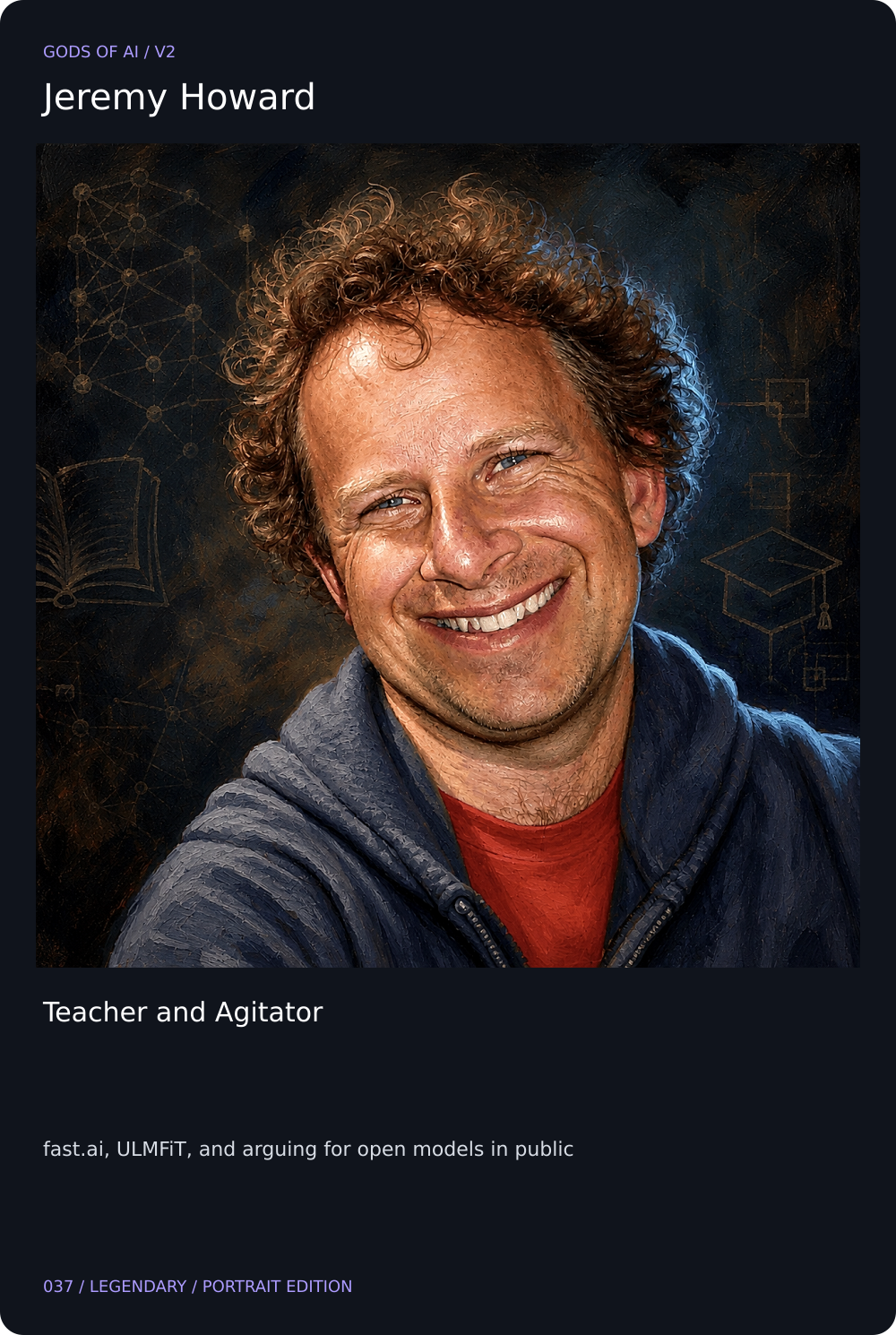
Jeremy Howard card front
Jeremy HowardTeacher and Agitatorfast.ai, ULMFiT, and arguing for open models in public
Transfer learningEducationOpen model policy
Australia2016–present88

Co-authored ULMFiT, which brought transfer learning to NLP before the GPT line, and founded fast.ai, whose free courses and library have trained an enormous number of practitioners on the premise that you do not need a PhD to do this. Has been one of the most persistent public voices against regulating open-weight models out of existence.

Locked inCard page
038Legendary
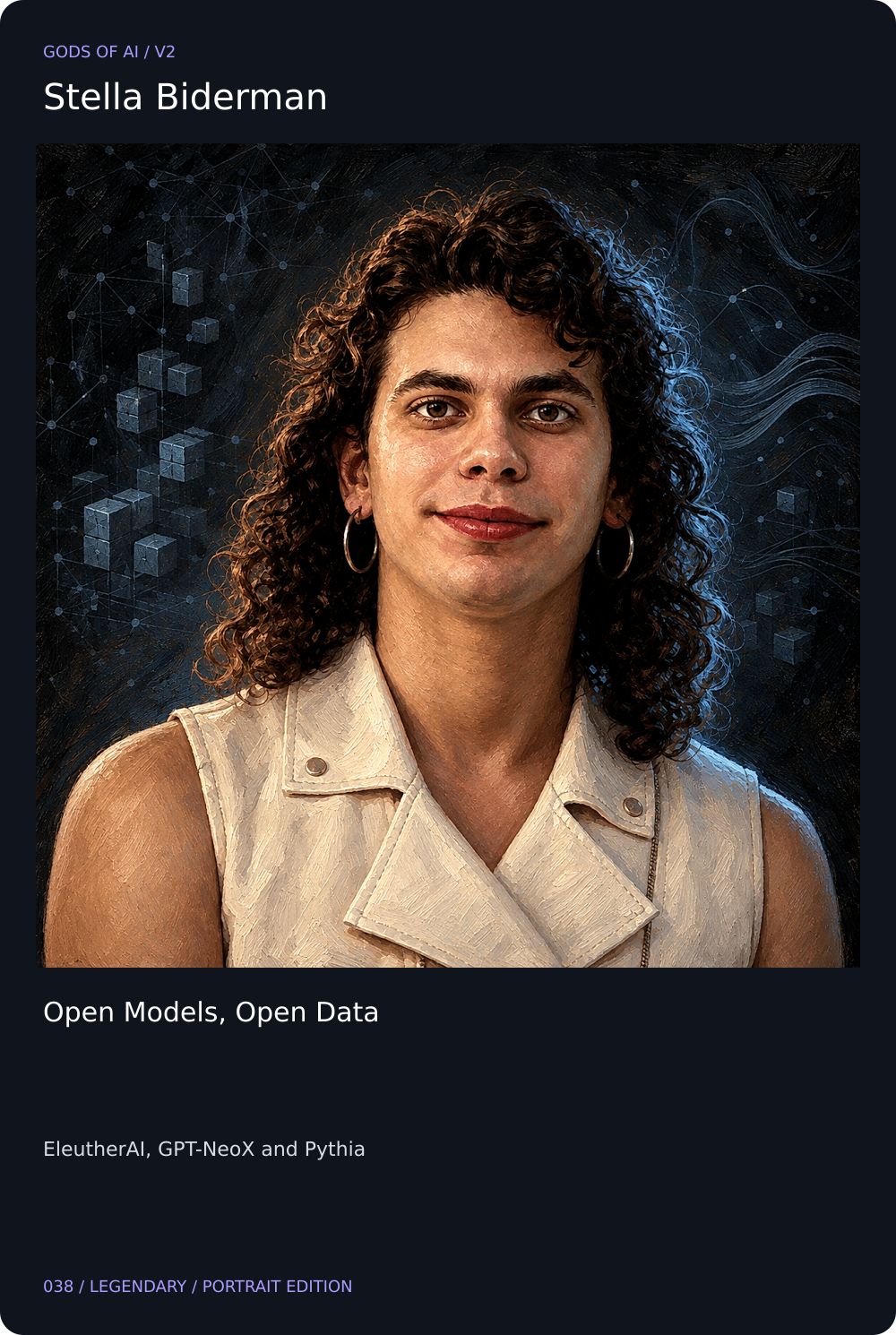
Stella Biderman card front
Stella BidermanOpen Models, Open DataEleutherAI, GPT-NeoX and Pythia
Open language modelsTraining dataReproducibility
USA2020–present87

Executive director of EleutherAI, the volunteer collective that trained and released GPT-Neo, GPT-J and GPT-NeoX when nothing comparable was public, and built the Pile. Led Pythia, a suite of models released with every training checkpoint and the data order — which made a whole class of interpretability and memorisation research possible for the first time.

Locked inCard page
039Epic
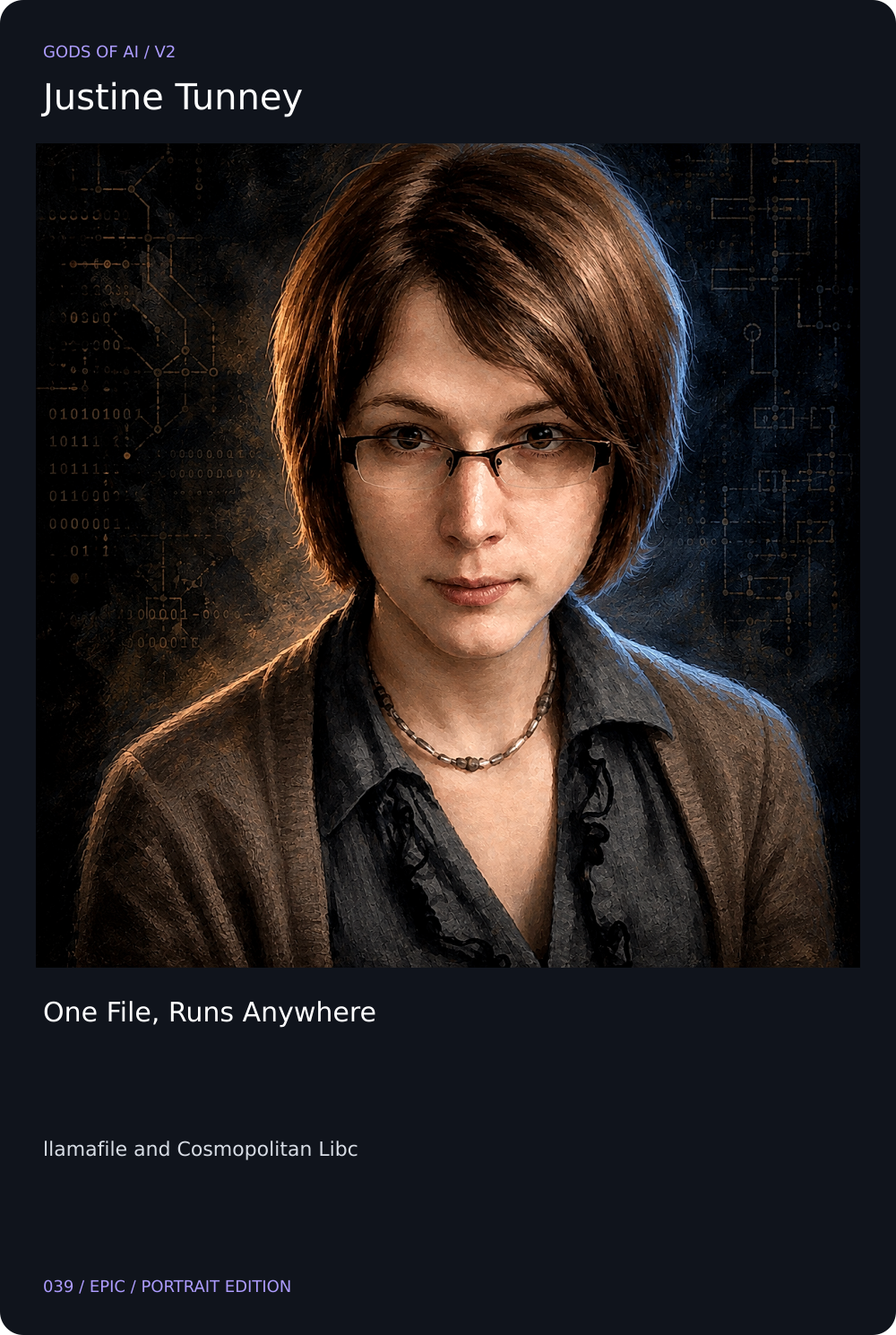
Justine Tunney card front
Justine TunneyOne File, Runs Anywherellamafile and Cosmopolitan Libc
Systems programmingPortable binariesLocal inference
USA2020–present84

Wrote Cosmopolitan Libc, which produces a single binary that runs natively on Linux, macOS, Windows and BSD, then used it to build llamafile — a whole language model and its runtime in one executable file you can copy to a machine and run. Also contributed substantial CPU inference speedups back to llama.cpp.

Locked inCard page
040Legendary
Guillaume Lample card front
Guillaume LampleLead Author of LLaMAThe model release that created the open-weight ecosystem
Language modelsOpen weightsEfficient training
France2023–present91

Led LLaMA at Meta, showing that a smaller model trained on far more tokens beat much larger ones — and then it reached the public. Nearly every open fine-tune, quantisation and local-inference project of the following two years traces to those weights. Co-founded Mistral, which has kept releasing open-weight models under permissive licences.

Locked inCard page
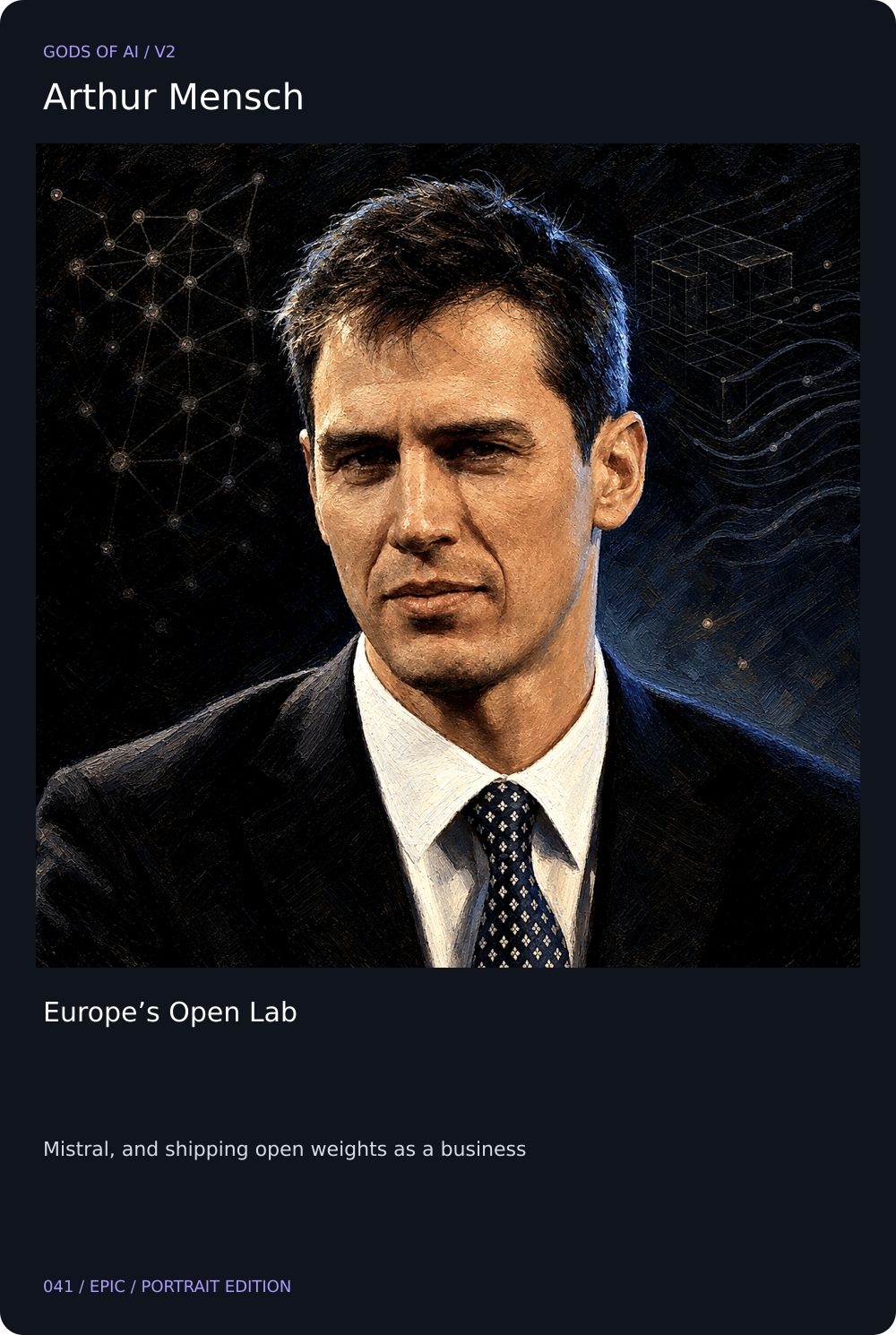
041Epic
Arthur Mensch card front
Arthur MenschEurope’s Open LabMistral, and shipping open weights as a business
Language modelsOpen weightsEfficient inference
France2023–present86

Worked on Chinchilla and Flamingo at DeepMind, then co-founded Mistral and released Mistral 7B and Mixtral under Apache 2.0 — models good enough that "open weights" stopped being a compromise. Made the case, commercially rather than rhetorically, that a frontier lab can give the weights away and still have a business.

Locked inCard page
042Legendary
Robin Rombach card front
Robin RombachAuthor of Latent DiffusionStable Diffusion
Diffusion modelsGenerative imageryOpen weights
Germany2022–present90

Lead author of the latent diffusion paper — run the diffusion in a compressed latent space and image generation suddenly fits on a consumer GPU — which became Stable Diffusion. Its open release in 2022 put image generation in everyone’s hands overnight and set off both an explosion of tooling and a still-unresolved argument about training data.

Locked inCard page
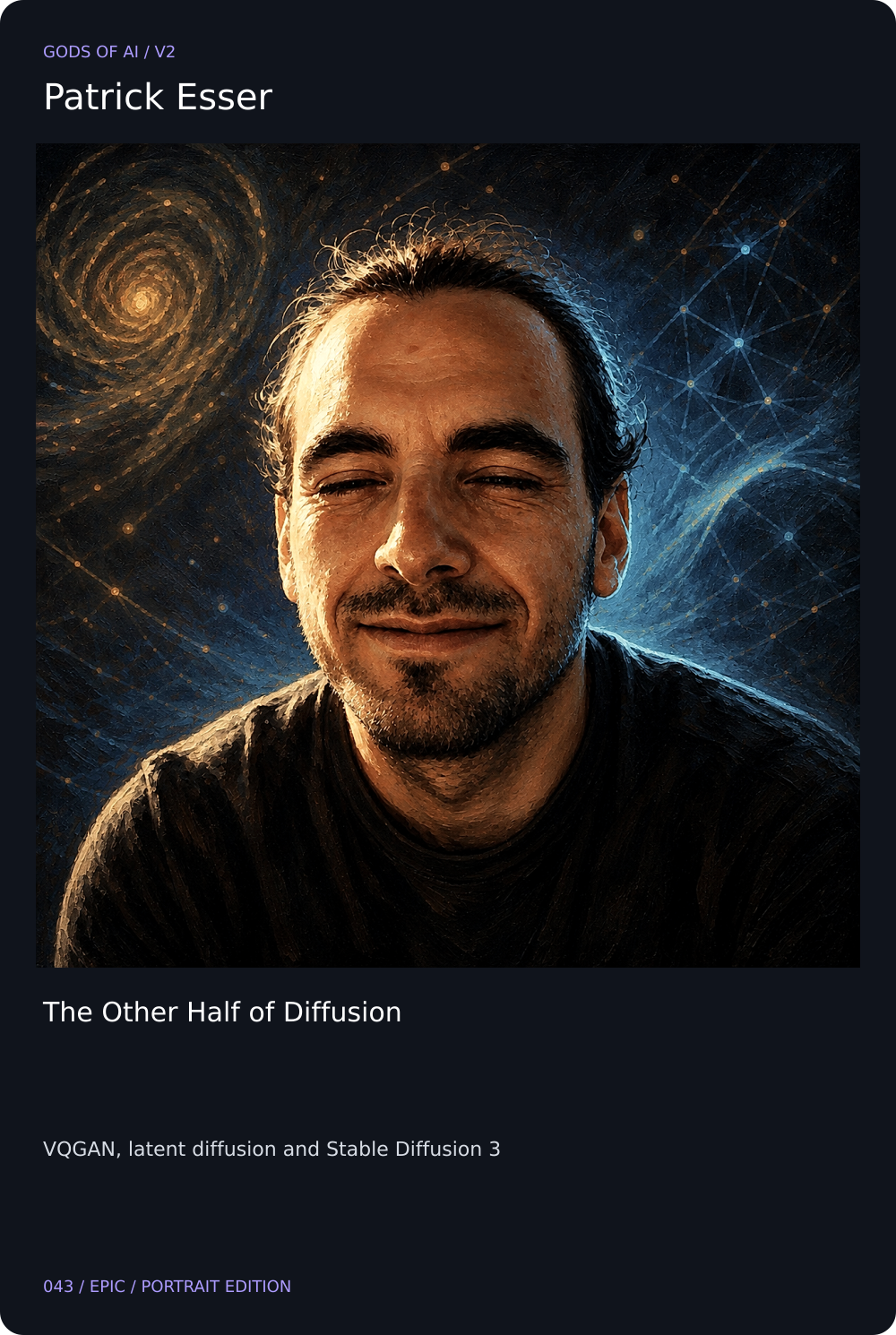
043Epic
Patrick Esser card front
Patrick EsserThe Other Half of DiffusionVQGAN, latent diffusion and Stable Diffusion 3
Generative modelsDiffusionImage synthesis
Germany2021–present85

Co-authored VQGAN — the taming-transformers work that made high-resolution generation tractable — and then latent diffusion and Stable Diffusion. Later led the rectified-flow architecture behind Stable Diffusion 3 and moved to Black Forest Labs for the FLUX models, which were also released with open weights.

Locked inCard page
044Epic
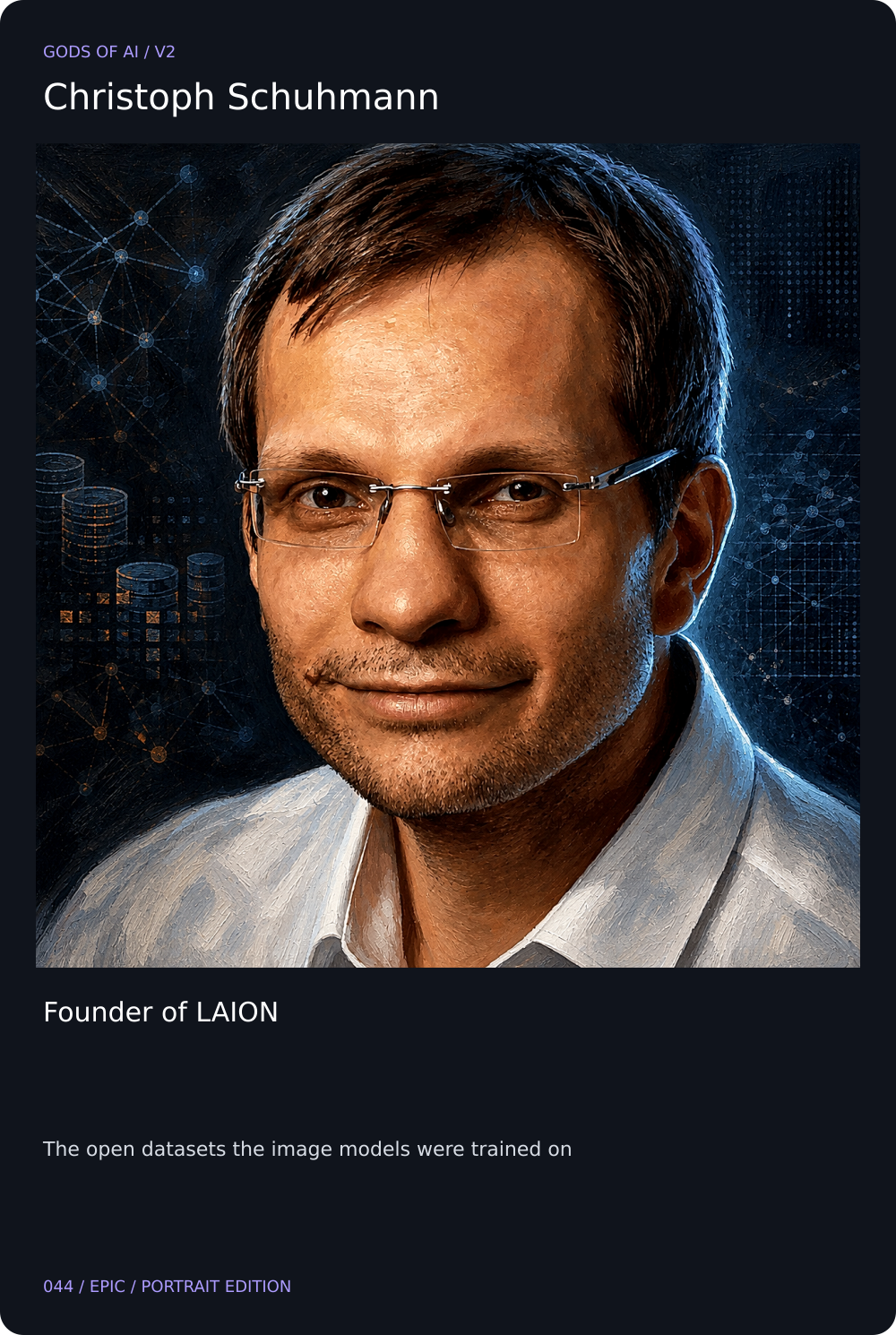
Christoph Schuhmann card front
Christoph SchuhmannFounder of LAIONThe open datasets the image models were trained on
Open datasetsMultimodal dataCommunity research
Germany2021–present84

A schoolteacher who organised a volunteer effort to assemble LAION-400M and LAION-5B, the open image-text datasets that Stable Diffusion and OpenCLIP were trained on. Before LAION, the data behind multimodal models was private by default; afterwards, anyone could inspect it — including the researchers who found serious problems in it.

Locked inCard page
045Epic
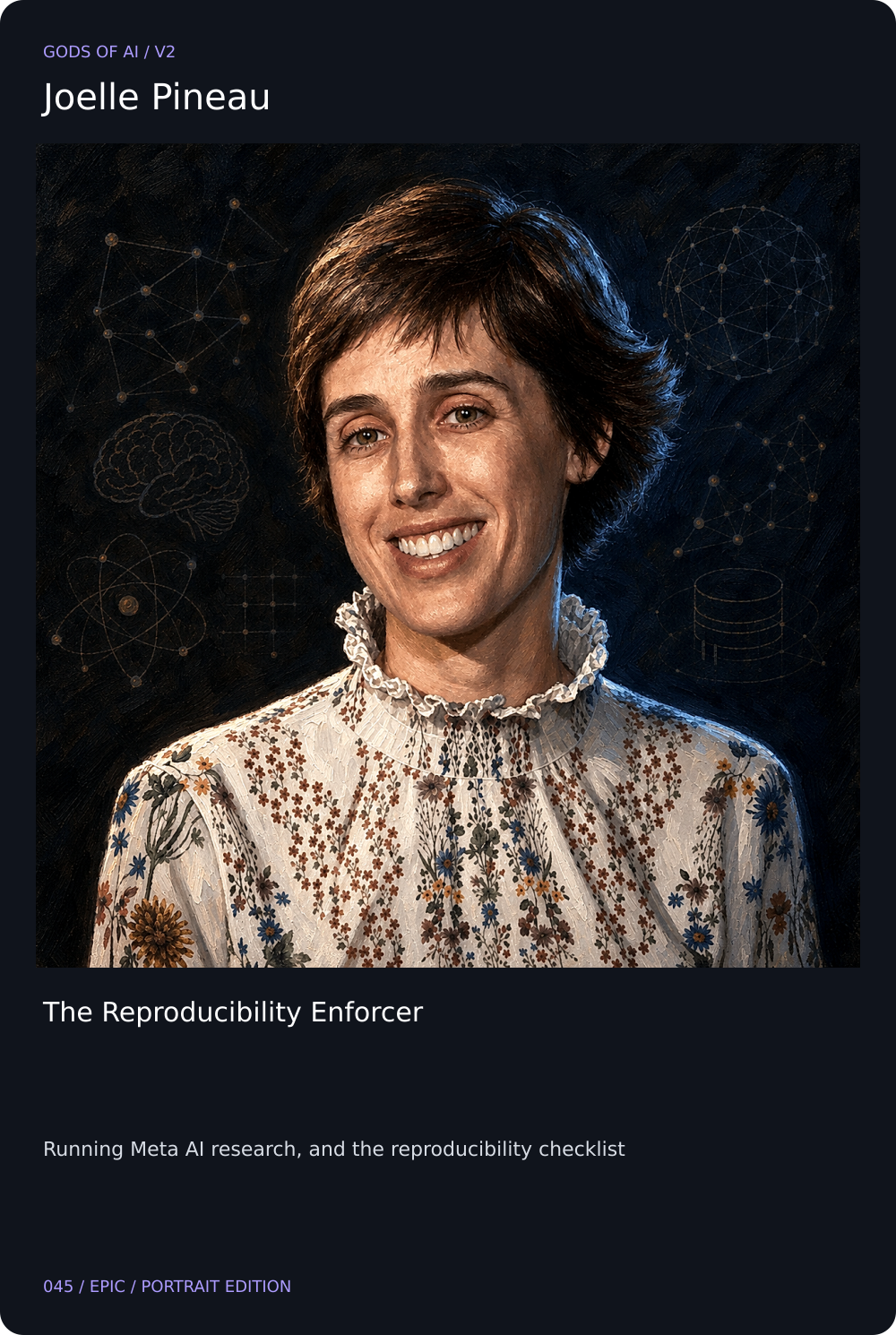
Joelle Pineau card front
Joelle PineauThe Reproducibility EnforcerRunning Meta AI research, and the reproducibility checklist
Reinforcement learningOpen scienceResearch leadership
Canada2017–present86

McGill professor and long-time head of Meta’s AI research, during which FAIR released PyTorch, LLaMA, and a long run of open models and code. Created the machine learning reproducibility checklist adopted by NeurIPS, forcing the field to state its assumptions and publish enough to be checked.

Locked inCard page
046Legendary
Chris Olah card front
Chris OlahOpening the Black BoxDistill, feature visualisation and mechanistic interpretability
InterpretabilityVisualisationScientific communication
Canada2015–present87

Did the feature-visualisation and circuits work that turned "what is the network doing" from a shrug into a research programme, and co-founded Distill to publish it in a form people could actually understand. Co-founded Anthropic, where the interpretability team continues to publish its findings openly.

Locked inCard page
047Epic
Paul Christiano card front
Paul ChristianoThe RLHF PaperLearning from human preferences
AlignmentPreference learningAI safety
USA2017–present87

Lead author of deep reinforcement learning from human preferences, the technique that became RLHF and turned raw language models into things that follow instructions — the single largest reason chat assistants work at all. Later founded the Alignment Research Center and moved to the US AI Safety Institute.

Locked inCard page
048Epic
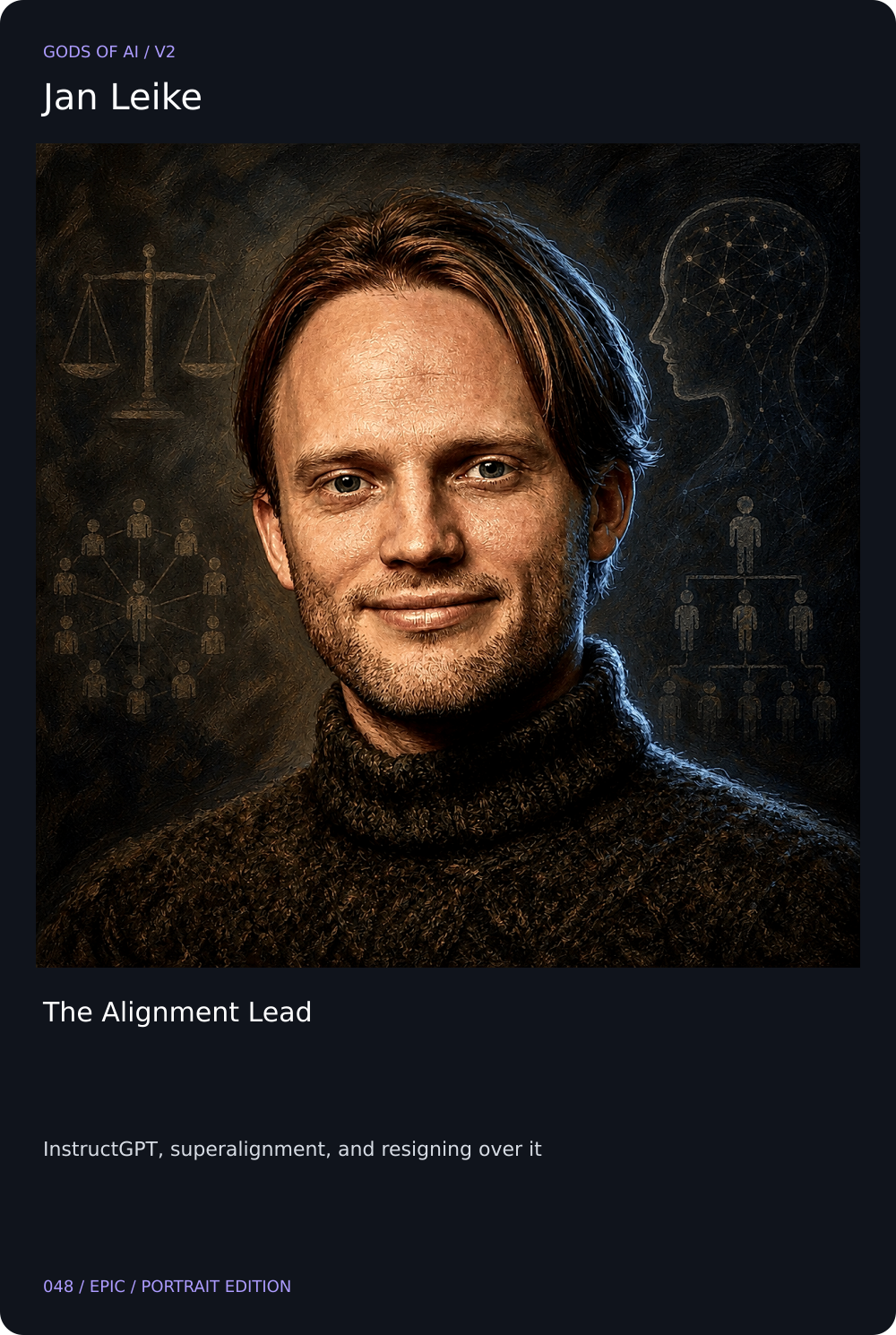
Jan Leike card front
Jan LeikeThe Alignment LeadInstructGPT, superalignment, and resigning over it
AlignmentRLHFScalable oversight
Germany2018–present84

Co-led the work that turned RLHF into InstructGPT and then ChatGPT, and headed OpenAI’s superalignment effort. Resigned publicly in 2024 saying safety culture had lost out to shipping, which is a rare thing for someone at that level to say on the record, and moved to Anthropic to continue the work.

Locked inCard page
049Legendary
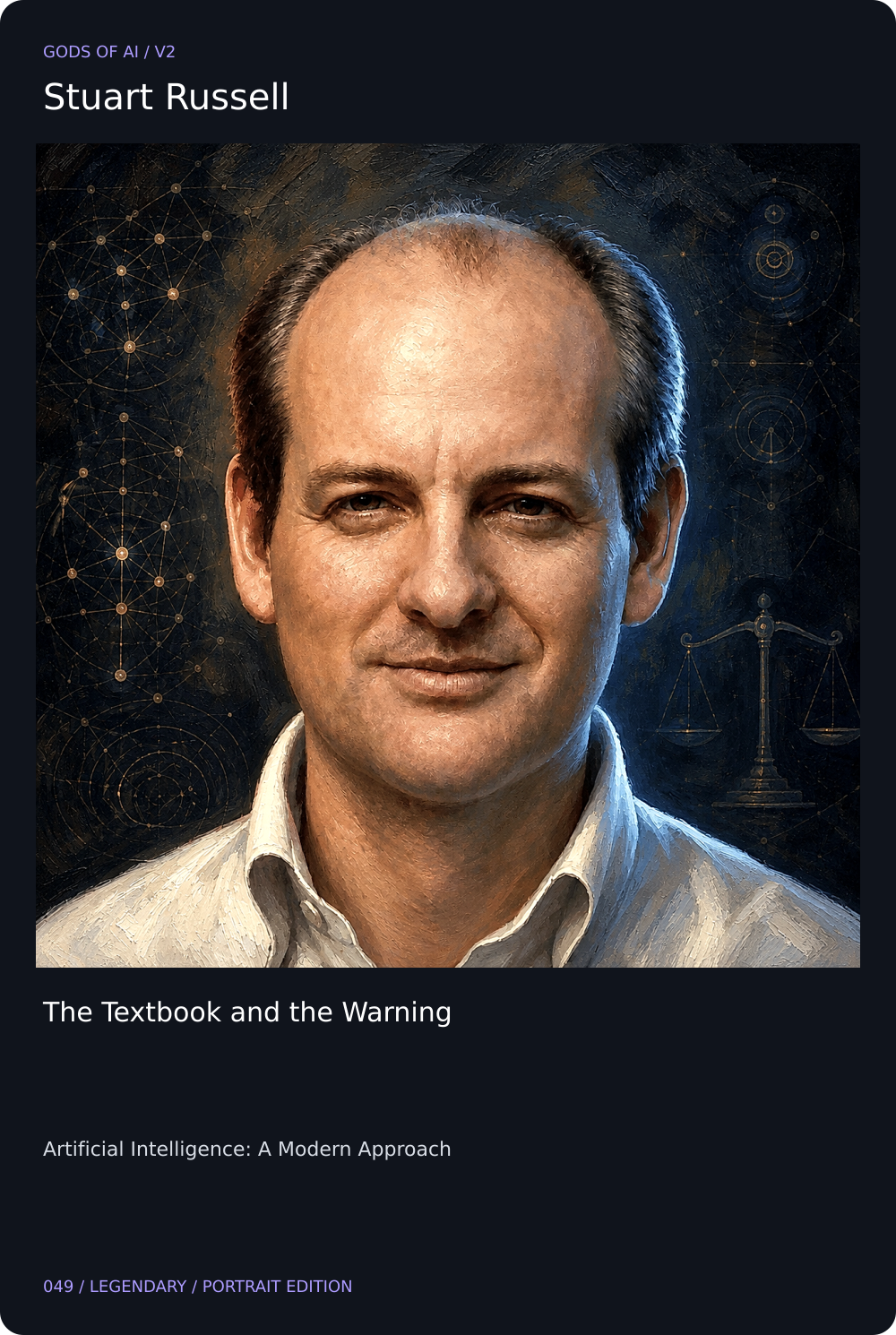
Stuart Russell card front
Stuart RussellThe Textbook and the WarningArtificial Intelligence: A Modern Approach
AI foundationsValue alignmentPolicy
UK / USA1995–present89

Co-wrote Artificial Intelligence: A Modern Approach with Peter Norvig, the textbook that has taught the subject in essentially every university for thirty years. Then spent the later part of his career arguing that optimising a fixed objective is the wrong design, and that systems should be uncertain about what humans want.

Locked inCard page
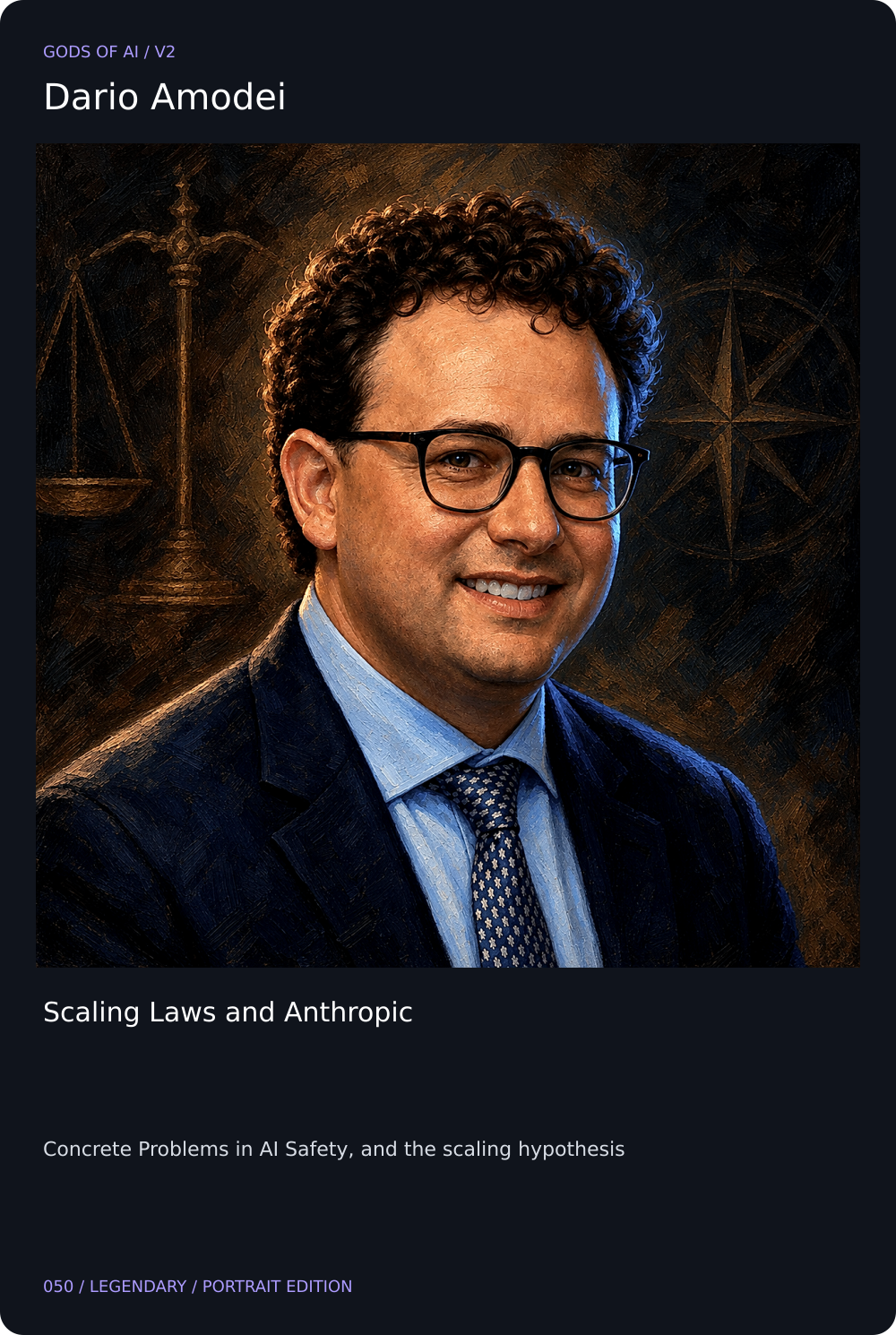
050Legendary
Dario Amodei card front
Dario AmodeiScaling Laws and AnthropicConcrete Problems in AI Safety, and the scaling hypothesis
ScalingAlignmentFrontier models
USA2016–present91

Co-authored Concrete Problems in AI Safety, which gave safety research a concrete agenda, and led the GPT-2 and GPT-3 work where the scaling laws were established. Left OpenAI to co-found Anthropic, whose interpretability and Constitutional AI research is published openly even though the models are not.

Locked inCard page
Selection

What earns a card

Architects

They designed something

An idea, a model or a piece of infrastructure that the field is built on. Running a lab is not the qualification; having your name on the thing everyone uses is.

Open

Giving it away counts double

This is an open source card series, so the weights, the code, the data and the teaching are scored explicitly. A merely good open contribution outranks a brilliant closed one.

Documented

Cite the paper or the repo

Every card links the artefact behind the claim — the arXiv entry, the GitHub repository, the prize citation. If we cannot link it, it does not go on the card.

Real faces

No invented likenesses

A portrait is painted from an identified photograph of that person, credited to the photographer or the source. Where none exists, the card carries no face rather than a fabrication.

Who are we missing?

Fifty slots for a field moving this fast means the cuts were brutal, and the openness score is a judgement you are welcome to dispute. Nominate an architect, challenge a stat line, or rewrite a scouting report — every card starts as a pull request.